Book an open dayGet info and updates

icon_cup_red.svg

Ranked 3rd in London Moderns for Nursing (Guardian University Guide 2025).

icon_rocket_red.svg

LSBU Nursing & Midwifery graduates are the highest paid amongst all London Modern university graduates, and fifth highest in the UK one year after graduating (DfE LEO data 2025).

icon_people_red.svg

Dedicated facilities: We have two children's skills laboratories, set up like nursing wards for learning manual handling of patients, basic life support skills and skills specific to the field of nursing.

Overview

Fit for practice

Approved by the Nursing and Midwifery Council, our course ensures that you will be taught an exceptionally high-quality curriculum, as well as being registered to practice as a midwife on graduation.  BSc (Hons) Midwifery at LSBU will give you the skills and experience needed to become a compassionate, effective and highly empathetic Midwife. This course acknowledges and celebrates inclusion, diversity and equity in both our teaching and in the practical philosophy we aim to instil in you and your classmates, with cultural safety being a predominant feature of our teaching. We recognise that students come from a range of diverse backgrounds and our teaching staff embed this awareness into the curriculum.

“I have been able to empower myself to aid my learning needs, my peers, other students, and in turn the families in my care.” Midwifery student Rachel Brackpool

Thanks to our location in central London and our partnerships with several leading NHS trusts, such as, University College London Hospitals, Queen's Hospital – Barking, Havering and Redbridge Trust, Whipps Cross Hospital, Royal London Hospital, Newham General Hospital, Guys & St Thomas' Hospital (GSTT), Croydon University Hospital and Homerton Hospital, you will have the opportunity to work with a diverse population.

“The theory sounds so easy,” she explains, “but when a situation is before you it’s quite different, it’s real life. A hospital placement helps you to do the work yourself, rather than just talk about it.” Anna Mary Oyet, Student midwife.

Your time on  campus will be spent learning in state-of-the-art facilities that mirror real-world delivery wards. This experience, combined with guidance from your expert and passionate teaching staff, will help you approach your placement with confidence and professionalism.

“Our Clinical Practice Facilitators are extremely welcoming and supportive, regularly check in with us to make sure things are going well and are always ready to listen when things may not be going well. I did my three-week Leadership placement at Newham University Hospital and could not have asked for a better three weeks.” Ayah Mohammed Bashir, Student midwife.

As well as learning a range of practice-based skills and building a theoretical understanding of patient care and childbirth, you will learn to work collaboratively with service users as well as interdisciplinary teams that are found in maternity settings. These newly acquired skills will culminate in you taking on the midwife’s role as a colleague, scholar, and leader in your Third Year.

The BSc (Hons) Midwifery course aims to:

  • Develop midwives who meet the Standards of proficiency for midwives (NMC 2019) and become eligible for registration with the Nursing and Midwifery Council (NMC).
  • Develop midwives who will act as leaders and change agents, aware of the significance of innovation, creativity and best available evidence in the evaluation and development of woman-centred care and the maternity services.
  • Promote collaborative working with service users, interdisciplinary and multiagency teams in contemporary midwifery practice.
  • Develop midwives who recognise their own strengths and exercise responsibility for their own professional and career development.

This course is approved by the Nursing and Midwifery Council (NMC). It is designed in partnership with healthcare providers, current students, service users and commissioners; based around the framework of NMC standards and the Lancet series to ensure the highest quality care for women and their families and an excellent quality of education for the student midwives.

Students will have an opportunity to support and provide care for women and their families through the continuum of childbirth including those who require additional care. You'll have an opportunity to develop your practice skills, applying your learning in a variety of maternity settings.

Midwifery at London South Bank University

Key features

  • The programme leads to registration with the NMC with very high employability for successful students.
  • The programme philosophy acknowledges and celebrates equality, diversity and inclusion across education and practice environments and embraces cultural safety as a fundamental feature of midwifery education.
  • Students are given opportunities to apply their theoretical knowledge and understanding to enhance their clinical skills by participating in innovative annual peer-supported clinical skills weeks, facilitated by academic and clinical practice midwives.
  • Students are given the opportunity to enhance their knowledge and understanding of midwifery issues by selecting a local, national, international or specialist elective placement opportunity during the final year of the programme.
  • Students are given the opportunity to gain a Certificate in Enterprise during the programme.
  • A variety of assessment methods used to tailor for a diverse learning style and ensure all students are facilitated to excel.

Course Content

What will I learn? 

One of the main things you will learn on this course is how to frame childbirth as a natural   process that many women and birthing people will go through in their lives. You will build a strong foundation of midwifery skills and theory, allowing you to become an effective decision maker in supporting and managing the more complex cases you may encounter in your career.

“The midwifery team at LSBU are nothing short of amazing. Every single lecturer, individually and collaboratively, is supportive and empathetic. They have always gone above and beyond to be available for us, whether it be an academic query or a personal issue.” Ayah Mohamed Bashir, Student Midwife.

Throughout this course you will meet the theoretical and practical standards set by the Nursing and Midwifery Council enabling you to meet a high standard of care focusing on holistic, women-centred care, recognising complications, accessing appropriate assistance and carrying out emergency measures with/or without medical aid. Throughout this course you will learn a range of highly useful skills, including infant feeding, record keeping, medicines management, venepuncture, abdominal palpation, vaginal examination, the management of obstetric emergencies, neonatal resuscitation, and the systematic assessment of the newborn.

This module provides the student with an introduction to the functioning of the human body and focuses on the structure and function of all systems at a preliminary level. It presents an opportunity to explore essential concepts such as the organisation of the body, homeostasis, anatomy and physiology, necessary to underpin midwifery practice and as a basis for learning the fundamentals of pharmacology. This module equips students with the necessary science base to inform the performance of clinical skills which will be further developed throughout the programme.

The module will introduce the student to the principles of professionalism, including the role of the midwife and the role of the NMC in the regulation of midwifery. The student will be introduced to the key concepts of professionalism within contemporary midwifery, with a key focus on role and responsibilities of the midwife. Concepts such as critical thinking, decision-making, reflection and the use of evidence will be introduced within the context of innovation. This module will enable the student to engage with the importance of maintaining their own wellbeing as professionals and understand the issues of wellbeing and resilience alongside the provision of support. 

This module will enable the student to develop an understanding of physiological childbirth and the principles and provision of holistic midwifery care applied across pregnancy and the childbirth continuum. Detailed anatomy and physiology as applied to pregnancy, labour and birth and the postnatal/neonatal period is included. The module will introduce the student to the newborn physical examination, which forms part of Public Health England’s newborn and infant screening programme. The professional role of the midwife will be explored and applied to the development of core midwifery knowledge and skills, professional behaviour, and effective communication skills essential to support the student’s practice learning experience. 

This module introduces the epidemiological principles and current evidence and data on public health strategies, health promotion, health protection, and safeguarding. The student will use this evidence to inform conversations with women, their partners, and families, as appropriate to their needs and preferences. 

This is a work-based module designed to introduce students to aspects of practice assessment and their use of the Midwifery On-going Record of Achievement (MORA). Students are supported to accurately document evidence of achievement of required skills and proficiencies for the completion of the first year of the programme as directed by the NMC (2019) Standards of Proficiency for Midwives. This module will enable the student to understand expectations of professional behaviour and the development of academic knowledge and skills specific to the first year of practice. A focus is placed on supporting the student to understand the use of reflection and the self-assessment of progress within practice learning. The acquisition of skills and proficiencies is under the supervision of practice assessors and practice supervisors. 

This module considers the nature of evidence to support the provision of safe and effective midwifery care for women, newborn infants and families. Students will be introduced to key research terms and given the opportunity to develop their knowledge of research methodologies and the processes involved in planning and conducting ethical research and the use of evidence. The module will equip students with the skills to appraise evidence and assess its appropriateness for implementation to support evidence informed midwifery practice. 

This module prepares the student to care for women with altered health during pregnancy and women with pre-existing conditions. Students will be equipped with the skills and knowledge to recognise deviations from the norm, signs of compromise and deterioration and plan, escalate and coordinate care to ensure that women achieve an optimum outcome. The principles of evidence based best practice for the first line management of complications and additional needs of women will be provided. 

This module will enable the student to explore mental health disorders that develop during the perinatal period and gain an understanding of the care of women with pre-existing maternal mental health conditions. It will present the student with an opportunity to examine how socio-cultural, obstetric and psychological factors may increase women’s vulnerability to mental distress and the development of anxiety, depression and psychosis during pregnancy and childbearing period. The importance of assessment in the provision of appropriate care and support of women and in the recognition of deterioration of women’s mental health state will be discussed. An exploration of the mental health support services that are available for women and their families both locally and nationally will be explored. The impact of maternal mental ill health on family relationships and the importance of supporting attachment and bonding will be discussed and explored in the context of safeguarding, and the role of interdisciplinary and interagency working.

This module will focus upon the application of women centred care and the benchmarks used to describe normality in everyday practice. The woman’s journey with her family will be considered during other non-midwifery pathways and the influence of the medical model on childbirth.  The student will reflect on the concept of physiological childbirth and the role of the midwife in recognising how physiological deviation from the normal can impact on the promotion of women centred care. The student will begin to consolidate the importance of communication with the family through caseloading and the interdisciplinary, multiagency and interprofessional teams and the contribution of the role of the midwife.

This module provides the student with an opportunity to explore the theoretical underpinnings of quality improvement in the maternity services. Students are enabled to critically explore the contribution of risk and evidence as interrelated factors which play a part in the promotion of a safe and effective maternity service. An opportunity will be provided for students to participate in identifying issues of concern, engage in the process of investigation and disseminate findings to facilitate change. This module will enable the student to recognise the role of the midwife as a key change agent in the process of quality assurance and improvement, working with service users and as a member of a multi-disciplinary team, to improve the safety and effectiveness of care. 

This module equips the student to implement first-line emergency management of complications and/or additional care needs for the woman, the foetus, and newborn infant when signs of compromise and deterioration or emergencies occur with the input of the multidisciplinary team. 

This module will provide the student with the opportunity to consolidate previous knowledge and build upon knowledge and skills relating to the newborn infant. This includes aspects relating to the Newborn Infant Physical Examination (NIPE). The successful student will acquire the necessary in-depth knowledge and skills to conduct a systematic examination of the newborn. 

This module enables the student to consider the key aspects in the transition to professional practice and registration with the Nursing and Midwifery Council. A focus on the midwife as a scholar, leader and colleague, encompasses the areas of teaching and supervision of students, management skills and professional development. 

This is a work-based module which focuses on the consolidation of learning in preparation for registration with the Nursing and Midwifery Council. This module supports the achievement of key aspects within the MORA which focus on decision making, accountability and autonomy in caseload midwifery. This includes planning care, responding to need and optimising the normal processes where possible. The module will focus on the empowerment of women through evidence-based practice which will include priorities of care for a diverse population, the promotion of physiological birth and the management of complex situations. Students will be encouraged to develop their own skills in managing individual caseloads and liaising with the interdisciplinary team under the direction of a practice supervisor. 

Where will I learn?

Explore life at LSBU from anywhere - Take a virtual tour to explore our campus, discover key facilities and experience what student life is like.

Structure

  • Students are expected to be in theory block 50% and practice block 50% each year.
  • Modules vary from 0 credits to 40 credits.
  • Students will be expected to work a variety of shifts including, evenings, weekends, bank holidays and night shifts.
  • Students must have occupational health and Enhanced DBS clearance prior to starting placement.

Some compulsory skills sessions may take place in the evening depending on capacity of rooms and resources.

Expectation from students to complete:

  • Minimum 2300 hours of clinical practice over the length of the programme.
  • Estimated 10 hours per 1 credit value of a module which includes blended learning, face to face, online and self-directed learning as adult learners.

Note all clinical and theory hours will be accounted for.

Key Topics and Skills

The proficiencies expected for each year reflect the theme for the learning and teaching for the modules undertaken building from the first year where the focus is very much on normality, the second year on complexities, culminating in the midwife’s role as a colleague, scholar, and leader in the third year.

Learning in Practice Level 4 - Participation Universal care, Continuity of care, Relationship building, Infant feeding, Communication, Public health, Medicines administration, Record keeping

Learning in practice Level 5 & level 6 - Contribution Universal care, Continuity of care, Relationship building, Infant feeding, Communication, Public health, Medicines administration, Record keeping. In addition - Interdisciplinary working and Additional and emergency care Supervision and delegation, Management, Responding to vulnerability

Practice skills teaching, learning and assessment are a key focus of the curriculum and continue to be enhanced and developed. The Standards for student supervision and assessment (NMC 2018) and NMC Standards for pre-registration midwifery programmes (2019) provide the framework on which the strategy for practice skills learning, teaching and assessment is built. This dictates that all skills in Domain 6 will be assessed in practice and have been incorporated in the MORA.

SimBaby and SimMom

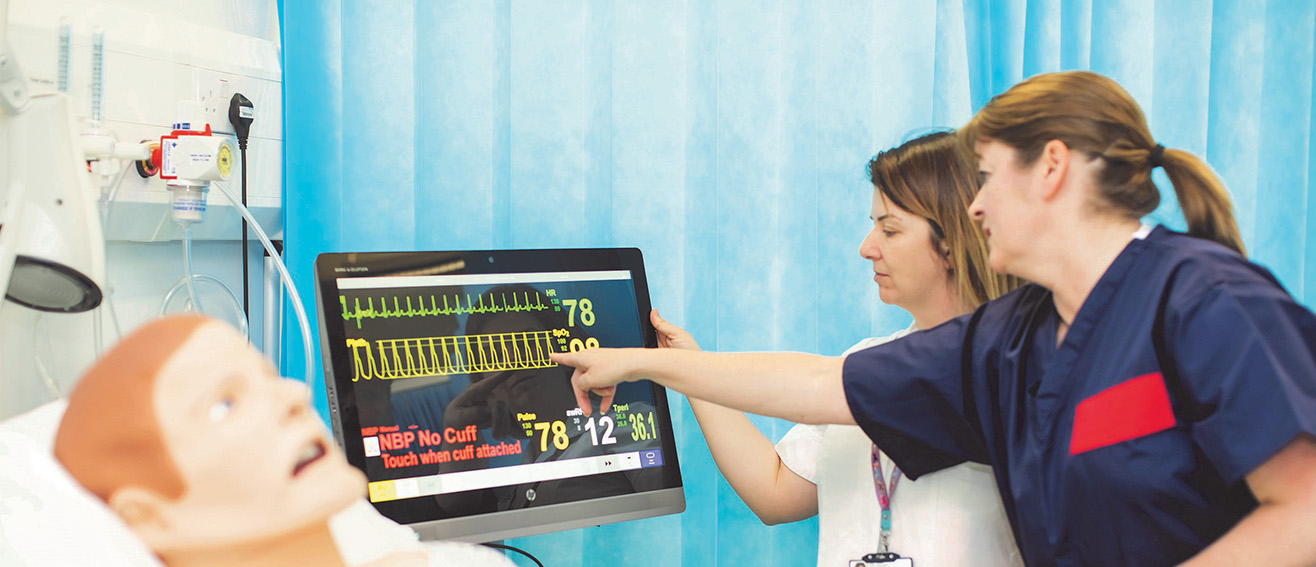
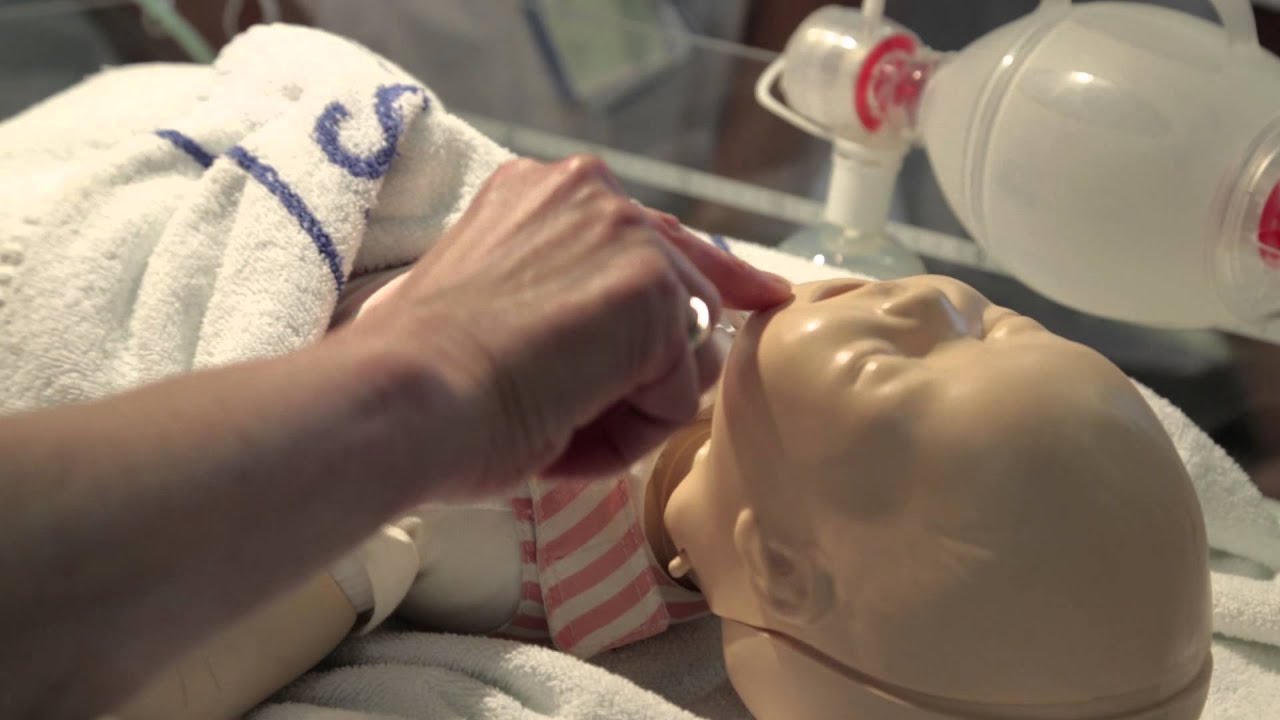
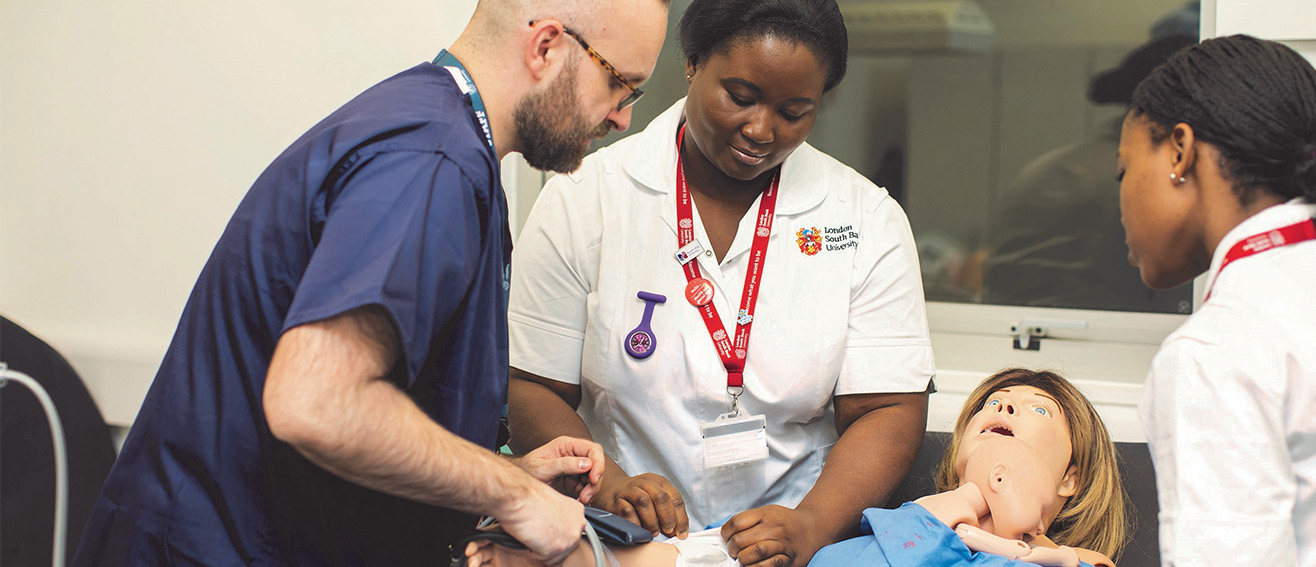
The nursing and midwifery wards have simulator mannequins: SimBaby and SimMom. These life-size mannequins are computer controlled and can be programmed with various clinical conditions. These are operated by a computer in real-time and so respond to a student's actions. They also allow students to see the outcome of specific interventions in certain scenarios, which could make the client better or deteriorate quite quickly. They can be set up to simulate the range of delivery environments available to labouring women. The students can rehearse dealing with emergencies in a simulated setting.

The mannequins are used to teach students how to recognise clinical signs, and to also associate those clinical signs with the actions they are taking to care for the patient. SimMom has fully accurate anatomy and can breathe, blink, sweat, speak and groan in pain as well as have a pulse.

Teaching and Assessment 

How will I learn?

Clinical placements are the best way for you to learn the skills, gain the experience and the build the practical and communication skills needed to be an effective Midwife. During this time, you will be fully supported by the un i versity lecturers and Midwives in practice.

Your time on campus will be spent building your skills and theory knowledge, helping you enter these real clinical settings with confidence. You will learn in a variety of different ways, including use of our SimBaby and SimMom facilities.

These life-size mannequins are computer controlled and can be programmed with various clinical conditions. These are operated by a computer in real-time and so respond to your actions, allowing you to see the outcome of specific interventions in certain scenarios, and how these effect the patient. They can be set up to simulate the range of birth environments available to birthing women, allowing you to rehearse managing emergencies in a simulated setting.

Other types of assessment include written assignments, care studies, oral and poster presentations, literature searching and critical appraisal, and exams specific to Midwifery (Objective Structured Clinical Examinations and Midwifery On-going Record of Achievement).

Assessment methods are specified in each module descriptor with details in the individual module guides; these are designed to test the module and course learning outcomes. These are mapped to the professional standards outlined in the Future midwife: Standards of proficiency for midwives (NMC, 2019) and will be assessed through either coursework and/or clinical proficiencies.

The types of assessments adopted include:

  • Written assignments: such as narrative and reflective essay, case study, evidence-based scenarios and critical analysis assignments, to develop integration of theory and practice and to critically examine selected aspects of care and suggest strategies for quality improvement..
  • Care studies: to develop skills in articulating knowledge and decision-making processes.
  • Oral and poster presentations: to enable the student to demonstrate their ability to identify relevant information and articulate practice focused decisions based on their assessment and interpretation.
  • Literature searching and critical appraisal: to identify and examine the evidence for quality of midwifery care.
  • Examinations: to test underpinning knowledge and decision making.

A variety of assessment methods are used to assess practical skills. These include:

  • Objective Structured Clinical Examinations (OSCEs), modified viva, practice scenarios to provide a simulated experience in which knowledge and skills can be demonstrated.
  • Case reviews, history taking and assessment skills.
  • The achievement of identified proficiencies is assessed in practice with the use of the practice assessment document - Midwifery On-going Record of Achievement (MORA).

The Midwifery academic team is made up of qualified midwives with a wealth of experience and knowledge of the midwifery profession. Team members hold professional teaching qualifications, Masters and PhDs, which enable a more rich and invigorating learning experience, and enhance their ability to adapt to new and innovative teaching and learning methods.

Students will also have input from midwifery placement facilitators, specialist clinicians and practice educators who hold joint appointments between the university and the Trusts.

LSBU prides itself on the support that is offered to the students in university and placement and are committed and dedicated to ensuring all students have an excellent learning experience to enhance their professional development.

Personal tutoring

As a Health and Social Care student, you will be allocated a named tutor during your first three weeks at LSBU.  The role of your tutor is to be your primary contact for academic and professional development support.

Your tutor will support you to get the most of your time at LSBU, providing advice and signposting to other sources of support in the University. They should be the first person at the university that you speak to if you are having any difficulties that are affecting your work. These could be academic, financial, health-related or another type of problem.

You will have appointments with your personal tutor at least once a semester for 45-60 minutes throughout your course. You can contact your tutor for additional support by email or phone.

Careers

What’s in it for me? 

Employability Service

At LSBU, we want to set you up for a successful career. During your studies – and for two years after you graduate – you’ll have access to our Employability Service, which includes:

  • An online board where you can see a wide range of placements: part-time, full-time or voluntary. You can also drop in to see our Job Shop advisers, who are always available to help you take the next step in your search.
  • Our Careers Gym offering group workshops on CVs, interview techniques and finding work experience, as well as regular presentations from employers across a range of sectors.

Our Student Enterprise team can also help you start your own business and develop valuable entrepreneurial skills.

Midwifery as a career

Many graduates take their first posts as qualified practitioners in the NHS Trusts and hospitals where they gained experience during their training. The degree enhances employability through its emphasis on a vocational approach to teaching, leading to a professional qualification and registration with the Nursing and Midwifery Council (NMC).

Most of the roles are in the NHS, although there are opportunities at private hospitals, clinics and abroad. Day-to-day the work can be varied, as midwives have a range of responsibilities. Providing advice to women and their families; diagnosing, monitoring and examining women during pregnancy and coordinating care with other professionals and agencies, are all typical activities. There are also opportunities to enter education in roles such as practice development midwife, midwifery lecturer or lecturer-practitioner, research and management.

Recent graduates have become specialist midwives in teenage pregnancy, HIV, and smoking cessation counselling, whilst others have gone on to work in children's centres or become consultant midwives.

Interpersonal skills and salary

Being able to keep a calm head under pressure is essential, as are excellent people skills and good physical and mental stamina. Due to the nature of the work, many midwives do shift work around the clock, including weekends and bank holidays. Salaries for newly qualified midwives are set at Band 5, which starts at £24, 907 – with band 6 midwives earning between £31, 365 to £37, 890. Midwives working at a senior level Band 7, can earn in the region of £38, 890 to £44, 503 with consultant midwives earning from £51, 168 to £73, 664.

Professional Development

As a graduate from this course, you will be able to apply for further study at postgraduate level. Find out more about postgraduate study through our online CPPD prospectus.

The programme has been jointly validated by LSBU and the NMC. On completion of the course, you are eligible to be placed on the NMC professional register.


Nursing and Midwifery Council logo

The Nursing and Midwifery Council regulates nurses and midwives in England, Wales, Scotland, Northern Ireland and the Islands.


Placements

During the course you will spend 50% of your time involved in academic study and 50% in clinical practice within a broad variety of healthcare settings. A clinical practice placement allows you to put theory into practice by working with a range of health professionals in clinical situations to develop the skills, knowledge and experience required to become a competent midwife. Although sometimes initially challenging, practice learning is one of the most interesting and exciting aspects of learning to be a midwife where you can apply theory to practice.

Clinical settings

We are proud to partner with:

  • University College London Hospitals
  • Queen's Hospital - Barking , Havering and Redbridge Trust
  • Whipps Cross Hospital
  • Royal London Hospital
  • Newham General Hospital
  • Guys & St Thomas' Hospital (GSTT)
  • Croydon University Hospital
  • Homerton Hospital

Support in Practice

Whilst in the clinical placement we ensure our midwifery students receive continuous support and guidance from a dedicated midwifery placement facilitators and other supervisors and assessors made up of registered midwives and other health practitioners. This is strengthened by the support of academics who help bridge the gap between university and practice such as Link lecturer, personal tutor and Academic assessor roles.

Skills week
Our midwifery students have an opportunity to participate in a skills week once a year which encourages inter-cohort working and learning to simulate real scenarios and provide a realistic perspective for students.

Simulation
A range of high fidelity and low fidelity equipment is used to simulate practice and support students to consolidate their skills.

LSBU CareerSmart is your ultimate gateway to career success. Our innovative programme is designed to ensure you graduate with more than just a degree, providing the support you need to stand out in a competitive job market. We've got all the tools you need, including:

  • AI Powered Career Sets - Get instant personalised feedback on your CV and cover letter by submitting it via our AI powered career tool.
  • Gamification Interviews - Get ready to pass those interviews with unlimited training access to our gamification interviews and psychometric tests!
  • Personalised Career Development Dashboard - Keep up with your skills progression with free access to practical assessments, LinkedIn learning, mentoring, and industry-standard facilities.

We understand that you’re in the driver’s seat of your career, which is why we’re committed to matching your passion and energy every step of the way.

Find out more

Entry Level Requirements

    Applicants to this course will need to meet the following entry criteria:

  • 112 UCAS points
  • A Level BBC and GCSEs A*-C Maths, English and Science or equivalent (reformed GCSEs grade 4 or above); or;
  • BTEC National Diploma DMM and GCSEs Maths, English and Science A*-C (reformed GCSEs grade 4 or above) or equivalent; or;
  • 112 UCAS Tariff points from an Access to HE Diploma in Midwifery or related subjects and GCSEs Maths, English A*-C (reformed GCSEs grade 4 or above) or equivalent; or;
  • NVQ Level 3 in Care with at least one year of relevant work experience and GCSEs Maths, English and Science A*-C (reformed GCSEs grade 4 or above) or equivalent; or;
  • Equivalent level 3 qualifications worth 112 UCAS points and GCSEs Maths, English and Science A*-C (reformed GCSEs grade 4 or above) or equivalent.
  • Recognition of prior learning is not permitted for pre-registration midwifery programmes (NMC 2019)

    English Language
    If English is not your first language, you must achieve a minimum score of 7.0 overall or equivalent, with not less than 7.0 in the listening and reading sections, and not less than 7.0 in the writing and speaking sections, for the International English Language Test Score (IELTS) at the time of application.

    Foundation Year
    Been out of study for a long time? Or maybe you haven’t met the entry requirements of your chosen degree? Our entry year acts as a bridge to degree-level studies.

Choose your country

  • Afghanistan
  • Albania
  • Algeria
  • Angola
  • Argentina
  • Australia
  • Austria
  • Azerbaijan
  • Bahrain
  • Bangladesh
  • Barbados
  • Belgium
  • Botswana
  • Brazil
  • British Council Women in STEM Scholarships
  • Bulgaria
  • Cambodia
  • Cameroon
  • Canada
  • Chile
  • China
  • Colombia
  • Croatia
  • Cyprus
  • Czech Republic
  • Denmark
  • Dominican Republic
  • Egypt
  • Estonia
  • Ethiopia
  • Finland
  • France
  • Gambia
  • Georgia
  • Germany
  • Ghana
  • Greece
  • Hungary
  • India
  • Indonesia
  • Iran
  • Iraq
  • Ireland
  • Italy
  • Jamaica
  • Japan
  • Jordan
  • Kazakhstan
  • Kenya
  • Kuwait
  • Latvia
  • Lebanon
  • Libya
  • Lithuania
  • Luxembourg
  • Malaysia
  • Malta
  • Mauritius
  • Mexico
  • Mongolia
  • Morocco
  • Myanmar
  • Nepal
  • Netherlands
  • New Zealand
  • Nigeria
  • Norway
  • Oman
  • Pakistan
  • Poland
  • Portugal
  • Qatar
  • Romania
  • Russian Federation
  • Saudi Arabia
  • Senegal
  • Serbia
  • Sierra Leone
  • Singapore
  • Slovakia
  • Slovenia
  • Somalia
  • South Africa
  • South Korea
  • Spain
  • Sri Lanka
  • Sweden
  • Switzerland
  • Thailand
  • Trinidad and Tobago
  • Tunisia
  • Turkiye
  • Uganda
  • Ukraine
  • United Arab Emirates
  • United States of America
  • Uzbekistan
  • Venezuela
  • Vietnam
  • Zambia
  • Zimbabwe

Additional Info

If you do not have the required English and Maths qualifications needed to satisfy the entry requirements for this programme, we have courses available at our partner College that you can take to upskill in these areas. Find out more at South Bank College.

Need further information?

Call us on 0800 923 8888 to discuss entry requirements.

More contact info

Apply

Course delivery modes and application methods

Mode Duration Start date Application code Application method
Full-time 3 years September B720 UCAS

This course is not open to international students.

Interview  

As part of the selection process you'll be expected to attend an MMI interview. Find out more.

Personal statement

See our top tips for writing your personal statement.

Results

If you are unsuccessful in your application to LSBU for this year you cannot apply through UCAS Extra or Clearing. However you can apply for the following year.  It is important that you read the comments in the results statement so that you are prepared for any other interviews you may have.

International applicants

If you’re an International student (non-EU national) the application process may involve further steps. Contact the International Office as soon as possible to discuss the admissions steps and the immigration requirements: internat@lsbu.ac.uk or +44 (0) 20 7815 6189.

Accommodation

Once we have made you an offer, you can apply for accommodation. You can rent from LSBU and you’ll deal directly with the university, not third party providers. That means we can guarantee you options to suit all budgets, with clear tenancy agreements and all-inclusive rents that include insurance for your personal belongings, internet access in each bedroom and on-site laundry facilities.

Or, if you’d rather rent privately, we can give you a list of landlords – just ask our Accommodation Service.

Read more about applying for accommodation at LSBU.

Finance

You don't need to wait for a confirmed place on a course to start applying for student finance. Read how to pay your fees as an undergraduate student.

Home/EU postgraduate students and research students should apply through our dedicated application system.

Full details of how to do this are supplied on our How to apply section for postgraduate students and our How to apply section for research students.

International applicants should use our international application system. Full details can be found on our How to apply section for international students.

See our admissions policy (PDF File 1,043 KB) and complaints policy (PDF File 516 KB).

How to Apply

International students

International applicants can apply directly to LSBU and should consult our international how to apply guide for further information on the application process and key dates.

Accommodation

Students should apply for accommodation at London South Bank University (LSBU) as soon as possible, once we have made an offer of a place on one of our academic courses. Read more about applying for accommodation at LSBU.

Prepare to start

We help our students prepare for university even before the semester starts. To find out when you should apply for your LSBU accommodation or student finance read the How to apply tab for this course.

Prepare to start

Disclosure Barring Service (DBS)

All pre-registration students need to be DBS cleared before going on placement. You’ll need to have an enhanced DBS check even if you have had one before and will not be able to go on placement until this is complete.

The DBS process is not difficult but can take some time so it's best to get started as soon as you receive your email. You will receive the email during Summer before the start of the programme commencement.

DBS update service

If you're part of the DBS update service, your subscription is up to date and you already have a DBS certificate, please bring in your original green DBS certificate for the document check. To take advantage of the update service, your certificate needs to be classified as 'Enhanced' and workforce must be listed as 'Adult and Child'. If you have any queries, please email us at hscdbsoh@lsbu.ac.uk.

How to complete  your DBS

Our DBS supplier, Verifile, will send you an email with all the details you need to complete your DBS.

Verifile will give you instructions to log into their system and complete your personal details and information. To complete the process, you'll need your passport or driving licence and 5-year address history including dates when you moved in/out.

You can use your application number to track the progress of your DBS.

When you've finished, your Disclosure Statement will be mailed to the most recent address in your submission, so please make sure it's correct. We don't automatically receive a copy of this Statement, which is why we need you to bring it in as part of the next step.

Frequently asked questions

Only Social Work applicants need to pay for their DBS. It costs £46 and can be purchased on our online store.

Please include any and all major and minor, spent and unspent convictions, cautions, warning and reprimands, even if they relate to juvenile offences or seem trivial or unimportant. Some minor offences will not prevent you from going on placement or being offered a place on your course, but still need to be reviewed so it’s best to be honest and include everything. Also, the more information you include about any offences can help reduce the time it takes to assess them. 

Yes, you do. You need to have an up-to-date DBS. Once you have received the email from our DBS supplier make sure you start the process straight away. All details of how to do this will be outlined in the email. If you don’t complete your DBS in the timeframe given, we may withdraw your offer even if term has already started. So it’s important that you get started as soon as you receive the email. 

Government legislation requires all Higher Education Institutions who offer courses where students may come into unsupervised contact with children or vulnerable adults to have this check. These checks also help us to ensure duty of care to our students, and create a safer environment for patients seen by our students. 

As part of the University’s admissions process, declarations of any offence may be referred to a virtual panel made up of senior managers from partner NHS Trusts and/or other sectors within Health and Social Care. Any DBS that is considered by the panel will be anonymised. The panel members then deliberate and make a recommendation whether the application be rejected, accepted or request further information or documents. 

If you have declared an offence, we might ask for more information from you in writing which will help the panel make a decision. Once your declaration has been referred to the panel it can take up to 28 working days to be processed. 

You need to put your current address on your DBS application because this is where your Statement will be mailed. If you’ve moved house between submitting and receiving your DBS, make sure you have mail forwarding set up so that you’ll receive your statement. If you’ve moved recently, make sure you have proof of your new address (such as a new bank statement) to bring for your document checks. 

If you’ve lost your statement you will need to pay £46 to purchase a new one. 

Yes. If your application has been rejected due to your DSB declaration/discloser, you will be sent a letter to confirm this. There will be instructions in the letter about how you can appeal and which supporting information you need to provide. Once a decision has been made you will receive a letter from the School Executive Team. 

Document Check

Once you have completed the online part of the DBS process, you will need to produce three accepted documents from this list (PDF File 248 KB) to be verified.

Southwark: Southwark Student Help Desk in the K2 building Monday – Friday between 9am-11am or 1pm-4pm 

If you’re not able to come to campus, you can get your documents checked and certified at the Post Office for a fee of £10.50. To do this, make photocopies of your three accepted ID documents and take your DBS form, copies and originals of your documents to the Post Office. The Post Office will stamp the form and photocopies and given them back to you. Email your post office receipt, stamped form and stamped documents to hscdbsoh@lsbu.ac.uk

Occupational Health (OH)

An exciting part of many of our Health and Social Care courses is the opportunity to learn off-campus and work with patients, clients and/or service users. Before you start, we need to make sure that you have the correct levels of immunisations.

Questionnaire

Once you have enrolled, students will be asked to complete an occupational health check, the first part is completing an online questionnaire sent from our occupational health provider.

GP appointment

The second part of your occupational health check is to get any inoculations that you may need from your GP. When attending your GP appointment, please take printed copies of these two documents with you.

Vaccination Screening Advisory Letter (PDF File 126 KB)
GP Vaccination and Screening History (PDF File 117 KB)

Occupational Health appointment

After these steps are complete you will receive an email from OHWorks Ltd inviting you to attend an appointment on-campus with an Occupational Health Nurse. These appointments take place during the week and sometimes when your classes have already started.

The OH team have prepared this guide (PDF File 588 KB) which outlines what to expect at each stage. If you have queries or concerns about your Occupational Health clearance or inoculations please contact the Occupational Health team.

Frequently asked questions

Yes - government legislation advises that everyone must be double vaccinated to work in a health care setting with effect from 1 April 2022.

Contact the OH team at lsbu@ohworks.co.uk who will be able to advise you. 

Please contact the OH team to reschedule at least 48 hours in advance. Remember that you won’t be able to go on placement until you’re cleared. 

Yes. Tell the OH Nurse about all conditions including specific learning difficulties even if you’ve declared these in the past. This will allow us to make reasonable adjustments whilst you’re on placement. 

The information you share with the OH Nurse will be treated with confidence, meaning that it won’t be automatically shared with the DDS team. The DDS team can help you to receive support for your lectures, assignments and exams so it’s worth to register with them and provide evidence of your condition if you need this support.

Numeracy practice

Before starting your course, you may want to check or practice your numeracy skills. The National Numeracy Challenge is a free online tool that helps you learn, revise and quiz your essential numeracy skills. You’ll also be able to get a certificate to show your efforts.

Enrolment and Welcome Week

Before you start your course we’ll send you information on what you’ll need to do before you arrive and during your first few days on campus. You can read about the process on our new students pages.

Uniforms

Most placements and some practical sessions in our skills laboratories will require you to wear a uniform and name badge. You will be measured for uniforms specific to your course as part of your Welcome Week activities after enrolment. In the meantime, we have prepared answers to frequently asked questions that you might find useful.

Students are not allowed to wear false nails, false eyelashes, jewellery or nail polish, as part of the trust uniform policies. All uniforms require students to be bare below the elbow for infection control purposes.

Frequently asked questions

Yes, LSBU will supply you with uniforms for your placement with the exception of Social Work and Health and Social Care BSc students who are not required to wear uniforms for their placements. 

Nursing and midwifery students will receive two pairs of trousers, three tunics and a name badge. Polo shirts will be issued instead of tunics for students studying mental health nursing, physiotherapy, chiropractic and sport rehabilitation. ODP students will receive one set of scrubs top and trousers. 

The items are to last for the duration of your programme of study.

A measuring and distribution service will be available by the uniform provider at Southwark campus. As garments are fitted for work purposes they need to allow for flexibility of movement so it’s best to have the uniform provider measure you up. 

You can request a longer tunic for religious or medical reasons. To do this, you should advise the uniform supplier at the measuring session. These tunics are 2 inches longer and sleeves finish just above the elbows. Due to infection control, full length sleeves are not permitted. 

Name badges are professional and need to include your formal names. 

You can order a replacement name badge direct with the uniform provider. Badges need to be worn at all times when you are at placement. 

You are welcome to purchase additional items at Work in Style. You will need to log in using your student ID and then follow the step-by-step instruction. Please note that dresses are not available. 

You should try on your uniforms the day you receive them so that the staff at the measuring service can help arrange any size exchanges. If you choose not to try on your uniforms and require different sizes at a later date you will need to purchase these through the uniform provider’s online portal at your own cost. 

They are yours to keep – you do not need to return the garments. 

Practice placements

Most health and social care courses’ practice placements will operate outside normal working hours e.g. evenings, nights, weekends and bank holidays.

Holidays

Your holiday periods will not follow the normal University timetable because of placements. You’ll receive more details once you start your course.

Fees

United Kingdom

£9790

Tuition fees for home students

International

£N/A

Tuition fees for international students

Tuition fees are subject to annual inflationary increases. Find out more about tuition fees for Undergraduate or Postgraduate courses.

full-time

Full-time Year 1 - All Available Courses

BSc (Hons) Midwifery (FT) - Year 1 FT Southwark SEPT
The fee shown is for entry 2026/27
UK fee: £9790 International fee: £
AOS/LSBU code: 3644 Session code: 1FS00
Total course fee for this location/stream:

* The full amount is subject to fee increases, the total shown below is based on current fees.

UK: £29370
International: £N/A

Full-time Year 2 - All Available Courses

BSc (Hons) Midwifery (FT) - Year 2 FT Southwark SEPT
The fee shown is for entry 2026/27
UK fee: £9790 International fee: £
AOS/LSBU code: 3644 Session code: 2FS00
Total course fee for this location/stream:

* The full amount is subject to fee increases, the total shown below is based on current fees.

UK: £29370
International: £N/A

Full-time Year 3 - All Available Courses

BSc (Hons) Midwifery (FT) - Year 3 FT Southwark SEPT
The fee shown is for entry 2026/27
UK fee: £9790 International fee: £
AOS/LSBU code: 3644 Session code: 3FS00
Total course fee for this location/stream:

* The full amount is subject to fee increases, the total shown below is based on current fees.

UK: £29370
International: £N/A

For more information, including how and when to pay, see our fees and funding section for undergraduate students.

Please check your fee status and whether you are considered a Home, EU or International student for fee-paying purposes and for our regulatory returns, by reading the UKCISA regulations.

See our Tuition Fees Regulations (PDF File 630 KB) and Refund Policy (PDF File 775 KB).

Possible fee changes

The University reserves the right to increase its fees in line with changes to legislation, regulation and any government guidance or decisions.

The fees for international students are reviewed annually and the University reserves the right to increase the tuition fees to reflect increased costs of delivery and to maintain an a high-quality student experience. This increase would be no more than Consumer Prices Index (CPI) increases plus 5%.

Scholarships

We offer several types of fee reduction through our scholarships and bursaries. Find the full list and other useful information on our scholarships page.

Are you an international student looking to kickstart your global career at LSBU? If so, our new LSBU Future Global Graduate Awards could help you benefit from the high-quality, career focused education that LSBU offers. Find out more about our Global Graduate Awards.

Contact information

UK Course Enquiries

International team enquiry

Discover Uni Key Information

Register your interest