


Overview
The BSc (Hons) Sport and Exercise Science with Foundation Year provides students with an alternative route into the undergraduate degree programme if the entry requirements for the BSc cannot be met. The Foundation Year will develop academically confident “level 4 ready” students through the provision of a supportive learning environment at Foundation Level that nurtures the development of the theoretical knowledge, and academic and practical skills necessary to successfully study the BSc (Hons) Sport and Exercise Science degree.
This 4-year course will develop both a detailed understanding of the subject areas that underpin sport and exercise performance and relevant employability skills and competencies through the embedding of a cohesive blend of professional and academic skills and the provision of career support. There are also opportunities for volunteering and engaging in extra-curricular activities at university.
Several of the modules in the foundation year are shared with other courses enabling you to learn about other subjects. If at the end of semester 1 you wish to change your specialism you can do so.
Why study Sport and Exercise and Health Sciences at LSBU?
- link
- During your studies you can obtain professional qualifications to become a Fitness Instructor and Personal Trainer
- heart
- During your studies you have the opportunity to be trained as a Sports Ambassador and earn money working in local sport community projects
- check-circle
- The course is endorsed by the Chartered Institute for the Management of Sport and Physical Activity (CIMSPA)
- smile
- The course is aligned to the standards of the British Association of Sport and Exercise Sciences (BASES) and you can gain coaching awards through Sports Coach UK and National Governing Bodies at LSBU Active
- futbol
- We’re ranked 1st among London moderns and 2nd in London for Overall Score (Complete University Guide 2022)
- heart
- We’re ranked joint 1st in the UK for Research Intensity in Sports Science (Complete University Guide 2022)
| ModeFull-time | Duration4 years | Start dateSeptember | Application codeC61F | Application method UCAS |
Course Accreditations
-

CIMPSA
Watch our video to see how you can make yourself at home studying at LSBU.
Location
London South Bank University student union is located at 103 Borough Rd, London SE1 0AA.
If you are visiting our Southwark Campus, you may wish to use our downloadable campus map (PNG File 466 KB). For information on accessibility, see our DisabledGo access guides. See our location page for more details.
Entry Level Requirements
Need further information? Call us on 0800 923 8888 to discuss entry requirements.
To be considered for entry to the course applicants would normally need at least 1 A level in a science subject or a minimum of 64 UCAS points from an equivalent L3 qualification as follows:
Choose your country
Select country here:
Missing English and Maths qualifications?
If you do not have the required English and Maths qualifications needed to satisfy the entry requirements for this programme, we have courses available at our partner College that you can take to upskill in these areas. Find out more at South Bank College.
Advanced entry
If you have already completed some studies at another university, we may be able to consider you for advanced entry. Please see our advanced entry page for more information.
United Kingdom
£9790
Tuition fees for home students
International
£17400
Tuition fees for international students
Tuition fees are subject to annual inflationary increases. Find out more about tuition fees for Undergraduate or Postgraduate courses.
-
Full-time
full-time
BSc (Hons) Sport and Exercise Science (With Foundation Year) (FT) - Year 1
UK fee: £9790 International fee: £17400 AOS/LSBU code: 5930 Session code: 1FS00 Total course fee: * The full amount is subject to fee increases, the total shown below is based on current fees.
UK: £39160 International: £69600 BSc (Hons) Sport and Exercise Science (With Foundation Year) (FT) - Year 2
UK fee: £9790 International fee: £17400 AOS/LSBU code: 5930 Session code: 2FS00 Total course fee: * The full amount is subject to fee increases, the total shown below is based on current fees.
UK: £39160 International: £69600 BSc (Hons) Sport and Exercise Science (With Foundation Year) (FT) - Year 3
UK fee: £9790 International fee: £17400 AOS/LSBU code: 5930 Session code: 3FS00 Total course fee: * The full amount is subject to fee increases, the total shown below is based on current fees.
UK: £39160 International: £69600 BSc (Hons) Sport and Exercise Science (With Foundation Year) (FT) - Year 4
UK fee: £9790 International fee: £17400 AOS/LSBU code: 5930 Session code: 4FS00 Total course fee: * The full amount is subject to fee increases, the total shown below is based on current fees.
UK: £39160 International: £69600
Note: Extra costs may be incurred for coaching awards not typically delivered by LSBU Active's Academy of Sport.
For more information, including how and when to pay, see our fees and funding section for undergraduate students.
Please check your fee status and whether you are considered a Home, EU or International student for fee-paying purposes and for our regulatory returns, by reading the UKCISA regulations.
See our Tuition Fees Regulations (PDF File 391 KB) and Refund Policy (PDF File 775 KB).
Possible fee changes
The University reserves the right to increase its fees in line with changes to legislation, regulation and any government guidance or decisions.
The fees for international students are reviewed annually and the University reserves the right to increase the tuition fees to reflect increased costs of delivery and to maintain an a high-quality student experience. This increase would be no more than Consumer Prices Index (CPI) increases plus 5%.
Scholarships
We offer several types of fee reduction through our scholarships and bursaries. Find the full list and other useful information on our scholarships page.
International students
The course is not currently open to international students.
International applicants can apply directly to LSBU and should consult our international how to apply guide for further information on the application process and key dates.
Course delivery modes and application methods
| Mode Full-time | Duration 4 years | Start date September | Application code C61F | Application method UCAS |
Accommodation
Once we have made you an offer, you can apply for accommodation. You can rent from LSBU and you’ll deal directly with the university, not third party providers. That means we can guarantee you options to suit all budgets, with clear tenancy agreements and all-inclusive rents that include insurance for your personal belongings, internet access in each bedroom and on-site laundry facilities.
Or, if you’d rather rent privately, we can give you a list of landlords – just ask our Accommodation Service.
Read more about applying for accommodation at LSBU.
Finance
You don't need to wait for a confirmed place on a course to start applying for student finance. Read how to pay your fees as an undergraduate student.
Prepare to start
Applicant events
After you’ve received your offer we’ll send you emails about events we run to help you prepare for your course.
Enrolment
Before you start your course we’ll send you information on what you’ll need to do before you arrive and during your first few days on campus. You can read about the process on our Enrolment pages.
Foundation level
At foundation level the course will develop the scientific disciplines which underpinning the study of sport and exercise science (biology; chemistry and physics) and the role of sport and exercise science in the development of athlete populations and the promotion of health and wellbeing. The different sub-disciplines of sport and exercise science, their role in supporting athlete development and health and well being will be introduced in the foundation year.
- Introduction to Academic Skills for the Applied Sciences
This module provides an introduction to the skills needed for undergraduate academic study, with a particular focus on those of writing, to ensure a successful entry into level 4 of the BSc programmes of the School of Applied Sciences. - Foundation Maths for Science
This module is designed to provide students with the mathematical knowledge and skills necessary for transition to level 4 study of science subjects. The module is designed for a mixed cohort of students with some prior learning experience and students with below A-level mathematical background. - Foundations of Biology
This module is designed to introduce the fundamental principles of biology at a foundational level. It serves as a preparatory module for students who plan to undertake a science-based degree programme. Areas of study will include the organisation of living things, control and coordination of biological processes and genetics. - Foundations of Chemistry
This module builds on the concepts and skills introduced in semester 1, at a level between GCSE and Advanced level. It builds knowledge of basic chemistry elements and continues building on the mathematical understanding developed in semester 1. It serves as a preparatory module for students intending to undertake science-based undergraduate degree courses in the university. - Foundations of Human Nutrition
This module will deliver foundation knowledge in nutrition, covering the basics of the science of nutrition, supporting students to progress to study baking, bioscience, biomedical, forensic science, sports science or psychology. The module will provide both scientific information and skills required to interpret nutritional guidelines into practical recommendations. - Foundations of Sport and Exercise Science
This module serves as a preparatory module for students intending to go on to study Sport and Exercise Science at undergraduate level. It will horizontally align itself with other S-level modules by introducing the subject area with respect to the basic and interdisciplinary sciences; and therefore, develop students’ knowledge of the role of biology, chemistry, physics and psychology in sports performance. - Exercise Testing & Prescription
This module builds foundational knowledge in anatomy, physiology, and energy systems to support effective exercise programming. It introduces students to the professional responsibilities of a Gym Instructor, aligned with CIMSPA standards, and equips them with practical skills in client consultation, pre-exercise screening, and health-related fitness assessment. Students will also learn to interpret assessment data and design tailored, goal-driven exercise programmes with confidence and competence. - Functional Anatomy and Kinesiology
This module introduces the scientific foundations of human movement, including musculoskeletal anatomy, anatomical terminology, and core principles of kinesiology and biomechanics. It also develops students’ practical skills in anatomical palpation for clinical application. - Human Physiology
This module introduces students to the integrated functions of the human body. It develops foundational knowledge in cellular, tissue, and organ system physiology, introduces key concepts in exercise physiology, and equips students with analytical skills for interpreting laboratory data in health and exercise contexts. - Nutrition, Health and Disease
This module aims to introduce students to the fundamental principles of human nutrition as a multidisciplinary perspective relating to human health and wellbeing, with an introduction to the role of nutrition in sport and exercise. Key concepts of nutritional requirements, food chemistry, macro and micronutrient functions will be explored, and dietary recommendations for the maintenance of health and well-being examined. The role of nutrition in the context of physical activity will be introduced. - Sport Psychology and Coaching
This module explores sport psychology and coaching through an ecological dynamics perspective whilst introducing the application of psychological concepts in exercise and performance. Students develop knowledge of factors that are important for the development and optimisation of sports performance, whilst also learning to design and deliver coaching sessions that promote positive, inclusive, and challenging environments. Emphasis is placed on practical coaching experience, critical analysis, and reflective practice, enabling students to integrate theory and evidence into real-world coaching. - Applied Biomechanics
This module will introduce students to the mechanical principles that underpin sports performance and common movement patterns. Students will then apply this knowledge to a real-world context (eg, sports injury) throughout the semester. There will be a series of problem-based learning tasks, each focussing on applying an experimental technique/equipment to the context in question. At the end of this module, students will have enhanced their foundational knowledge of kinesiology and biomechanics and further developed their analytical and digital literacy skills. - Strength and Conditioning
This module will develop students’ knowledge of training theory and advance their understanding of training programme design. It will focus on how to optimise physiological responses and adaptations to exercise training, including the use of nutritional ergogenic strategies. The module will also give coaching and technical knowledge in weightlifting and other training methodologies. - Placement
This placement module provides an opportunity for students to gain essential practice-based experience within the in-house sports clinics (for students on the Sport Rehabilitation pathway) and the Human Performance Centre (for students on the Sport, Exercise and Health pathway).
It will advance students’ theoretical understanding and practical skills to safely and autonomously deliver therapy and/or fitness and health assessments, and introduce evidenced based therapeutic techniques used in the treatment of acute and chronic neuromusculoskeletal injuries. In addition, students will be upskilled in employability techniques and develop their professional competencies required within the sport, exercise and health sector. - Research Methods
This module provides a foundational introduction to statistics and research methods, equipping students with essential digital literacy skills using tools like Microsoft Excel and SPSS. Students will gain practical experience in organizing, analyzing, visualizing, and interpreting both qualitative and quantitative data. The curriculum also explores the full research process—from study design to writing experimental reports—while fostering critical engagement with academic literature and promoting awareness of ethical considerations and workplace risk assessment. By the end of the module, students will have chosen a research project title which they will work on in their self-managed time with their allocated supervisor during semester 2 and into Level 6. - Physical Activity and Health
This module explores the role of physical activity in promoting health and wellbeing throughout life. It advances students’ understanding of human physiology and examines the scientific and public health foundations of current activity guidelines, the risks of inactivity, and methods for assessing physical activity and behaviour change. Students will also investigate how social, environmental, and policy factors influence participation and health literacy, using evidence to inform effective practice. - Sport Psychology 2
This module advances students’ understanding of sport and exercise psychology by exploring psychological factors influencing performance and overall well-being. It emphasizes the integration of theory, research, and applied practice, with a strong focus on the biopsychosocial model of health. Students will engage in practical learning through three structured experiments that illustrate key psychological principles in sport and exercise contexts. Alongside these practicals, students will critically evaluate psychological strategies for enhancing performance. The module prepares students for professional roles in sport, and exercise science. - Research Project
This module requires students to plan, carry out, report and defend an extended piece of research in a chosen topic within sport, exercise and health sciences. Students’ knowledge and understanding of the entire research process and their particular chosen topic will be further developed from Research Methods in Level 5 with timetabled classes, self-managed time in laboratories, field or clinic environments, and through scheduled meetings with their supervisor. A pre-requisite for experimental work is successful approval of an ethics application. - Advanced Strength and Conditioning
This module deepens students’ understanding of the scientific foundations of strength and conditioning, while fostering the ability to critically evaluate and design evidence-based programmes and recovery strategies. It emphasizes athlete assessment and monitoring, alongside the development of technical and instructional skills. Students also cultivate reflective interpersonal and professional competencies essential for working effectively with individual athletes and teams. - Applied Sport Psychology
This module provides the opportunity for students to further their knowledge of the biopsychosocial model of health. It develops skills in assessment and clinical decision-making to address psychological contributors to health, while equipping students with strategies to improve participation, enjoyment, and recovery. Key areas include the psychological role in injury rehabilitation, return-to-play, and long-term wellness, as well as managing pain behaviours and performance issues through evidence-based psychological approaches. - Exercise Prescription for Special Populations
This module explores the role of exercise in supporting special populations, framed by current policy, evidence, and professional standards. Students will develop their knowledge of health and behaviour change and further understand the physiological, psychological, and social factors influencing participation. They will go on to explore epidemiology and health research and learn how common pathologies and chronic illnesses impact on the body and how they can be managed with the suitable prescription of exercise. This module is mapped to the professional standard of ‘working with people with long-term conditions’ allowing students to be a specialized exercise practitioner upon completion of their studies. - Environmental Exercise Physiology
This module focuses on building a scientific understanding of how environmental conditions and travel impact human physiology, particularly in athletic and performance contexts. Students will critically assess ergogenic aids and technologies aimed at enhancing recovery and performance under such challenges. Through hands-on experience, they will refine practical skills in physiological testing and gain confidence in interpreting data to deliver clear, evidence-based recommendations.
Year 1
Year 2
Year 3
Facilities
Sport and Exercise Science Research Centre (SESRC)
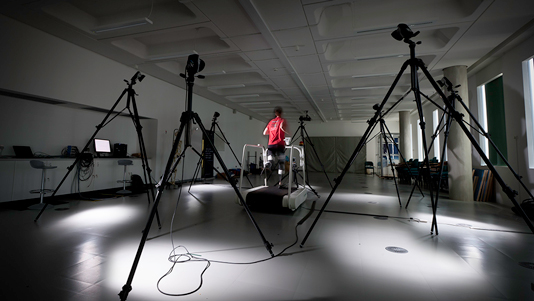
The laboratories of the Sport and Exercise Science Research Centre (SESRC) are equipped with specialised and industry standard equipment with ongoing research into Environmental Psychophysiology and Musculoskeletal Biomechanics. Teaching is research-informed and you will get to use these facilities as you progress through the degree. You can take a virtual tour below.
LSBU Active
You'll have access to a range of sports facilities and equipment, including a fully equipped fitness suite with SMART Centre Technology, a Functional Training Zone, Free Weights Room and Sports Hall. Please visit our LSBU Active pages for more information.
Careers
Employability Service
At LSBU, we want to set you up for a successful career. During your studies – and for two years after you graduate – you’ll have access to our Employability Service, which includes:
- An online board where you can see a wide range of placements: part-time, full-time or voluntary. You can also drop in to see our Job Shop advisers, who are always available to help you take the next step in your search.
- Our Careers Gym offering group workshops on CVs, interview techniques and finding work experience, as well as regular presentations from employers across a range of sectors.
Our Student Enterprise team can also help you start your own business and develop valuable entrepreneurial skills.
The course has employability embedded within its curriculum. Additional to the practical skills-based modules in all levels of study, you will take a work-based module in Level 5 to develop your practitioner skills; and then in Level 6 you have the option to choose a Placement module, which has been designed to empower you to pursue a specialist area of knowledge within the Sport and Exercise sector. In addition, you can boost your CV by gaining extra curricular nationally recognised sporting qualifications such as UK Coaching Certificates and Gym and Personal Trainer awards, which are taught by LSBU Active's Academy of Sport at the University.
Three typical career pathways for a Sport and Exercise Science graduate are: I) Elite Sport and Performance; ii) Clinical Exercise, Health and Fitness and iii) Research, Teaching, Coaching and Sport Development.
For most job roles within these pathways (e.g Coach, School Teacher, Higher Education Lecturer, Research Fellow, Physiotherapist, Sports Therapist, Clinical Exercise Physiologist, Personal Trainer, Sports Scientist) a post-graduate or professional qualification is required. Our Master’s programme in Sport and Exercise Science has been designed with these career pathways in mind and has 40 credit specialist areas of study embedded within the curriculum to allow students to advance their knowledge and professional competencies towards their intended career pathway.
Others have developed their own sports-related businesses, or have taken postgraduate teacher training qualifications.
Every year a professional panel is invited to speak with the students about the career paths they took following their graduation and are invited to make internships and placements available to our students.
Partners
We work with leading partners including:
- Active Communities Network
- British Cycling
- European Space Agency
- Lanserhof London
- SilverFit
- The Altitude Centre
Teaching and Assessment
The course delivery includes blended learning which allows you to experience the same high-quality teaching, but with flexible modes of delivery of online and on campus.
Study hours
All modules carry 200 notational hours (20 credits) of study apart from Research Project which carries 400 notional hours(40 credits). Face-to-face (synchronous) contact time for a given module is typically 39 hours; therefore, students are expected to dedicate in excess of 150 hours of self-directed learning.
Support
We will support you throughout your studies. The University provides all students access to the virtual learning environment, Moodle, so materials and online support are available when you need them.
We provide one-to-one support via our professional tutoring system. Your tutor will help you understand coursework feedback, offer guidance as you plan your career, and advise you on work experience to ensure you get the most out of the course.
Teaching is also supported through seminars, online learning environments and specialist advice sessions for topics such as statistics and research methods. In addition to the facilities provided by the university, our laboratories have dedicated computing and experimental equipment.
| Time spent in lectures and seminars | Self-directed learning | |
|---|---|---|
| Year 1 | 29% | 71% |
| Year 2 | 26% | 74% |
| Year 3 | 24% | 76% |
Assessment
The course uses a blend of formative and summative assessment. Formative assessment provides structured feedback to support students in the summative task; therefore, scaffolding the approach to assessment and ensuring appropriate development of critical thinking, academic writing, practical and technical comprehension, and creativity.
Most modules are assessed by coursework only, using a blended approach to assessment (written essays, lab reports, oral presentations, oral defences). At level 4, knowledge and understanding is typically assessed via written reports and multiple choice questionnaires. As students progress through the course, their transferrable skills are scrutinised more with oral presentations becoming a more common form of assessment. Each module has a 20 credit accumulation and transfer apart from Research Project in Level 6, which has 40 credits assigned to it for student study hours.
In order to obtain an award, students must pass modules and gain the required number of credits as stated in the LSBU regulations for taught BSc programmes.
Personal Tutoring
As an undergraduate Applied Sciences student, you will be allocated a named tutor during your first three weeks at LSBU. The role of your tutor is to be your primary contact for academic and professional development support.
Your tutor will support you to get the most of your time at LSBU, providing advice and signposting to other sources of support in the University.
Your tutor should be the first person at the university that you speak to if you are having any difficulties that are affecting your work. These could be academic, financial, health-related or another type of problem.
In your first semester you will attend a series of weekly personal tutor group sessions to introduce you to elements such as the module structure and the Moodle site, as well as workshops on assessment expectations.
Key topics and skills
Students will develop their intellectual skills such that they are able to:
- Evaluate and analyse problems relating to human performance and suggest appropriate solutions in the context of academic study.
- Apply subject-specific concepts.
- Appraise the effects of intervention on sport and exercise performance.
- Critically reflect upon personal and observed practices.
Students will acquire and develop practical skills such that they are able to:
- Undertake laboratory and field work competently and safely.
- Recognise and respond to ethical, moral, health and safety and other issues.
- Execute a piece of independent work using appropriate media to communicate the findings in a way which demonstrates the ability to synthesise information and knowledge.
- Design and implement training and/or exercise regimes.
- Act upon the outcome of the reflective analysis of a practical or professional skill.
Students will acquire and develop transferrable skills such that they are able to:
- Manage and be able to adapt to a study schedule.
- Effectively communicate ideas, arguments and concepts via a range of media to a variety of audiences.
- Use the full range of sources of information, citing references properly.
- Demonstrate appropriate numerical skills.
- Be competent in the use of information technology e.g. word processing, spreadsheets, presentation software, internet).
Register your interest
Gecko content requires marketing cookies
This content is provided by a third party. To view it, please enable marketing cookies. This may involve the processing of personal data.