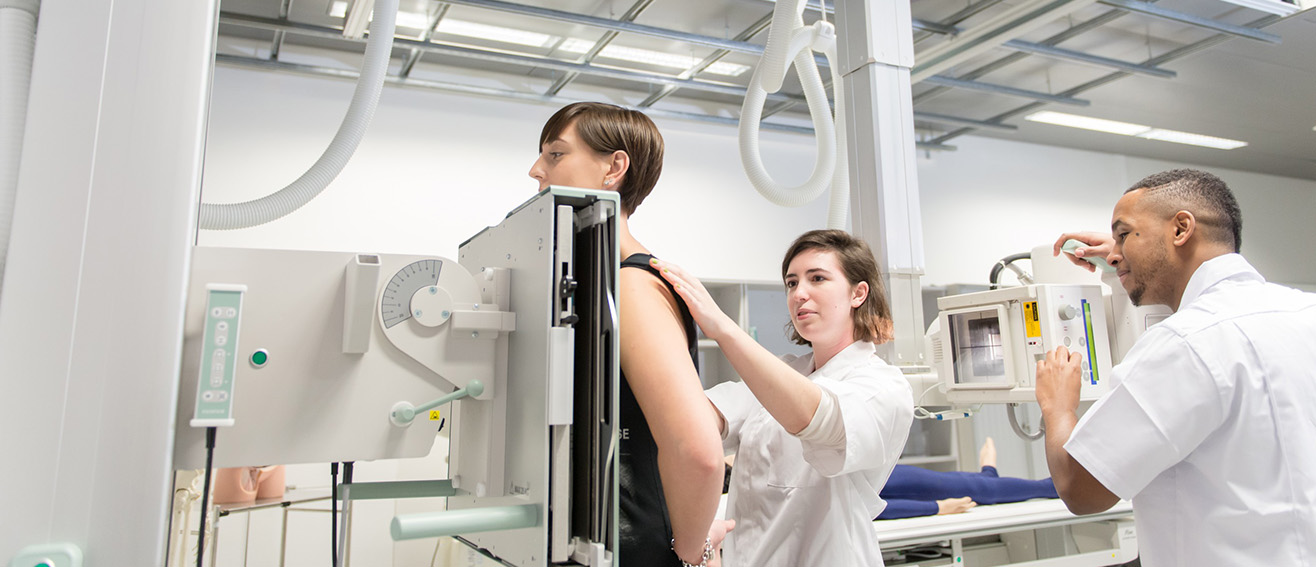



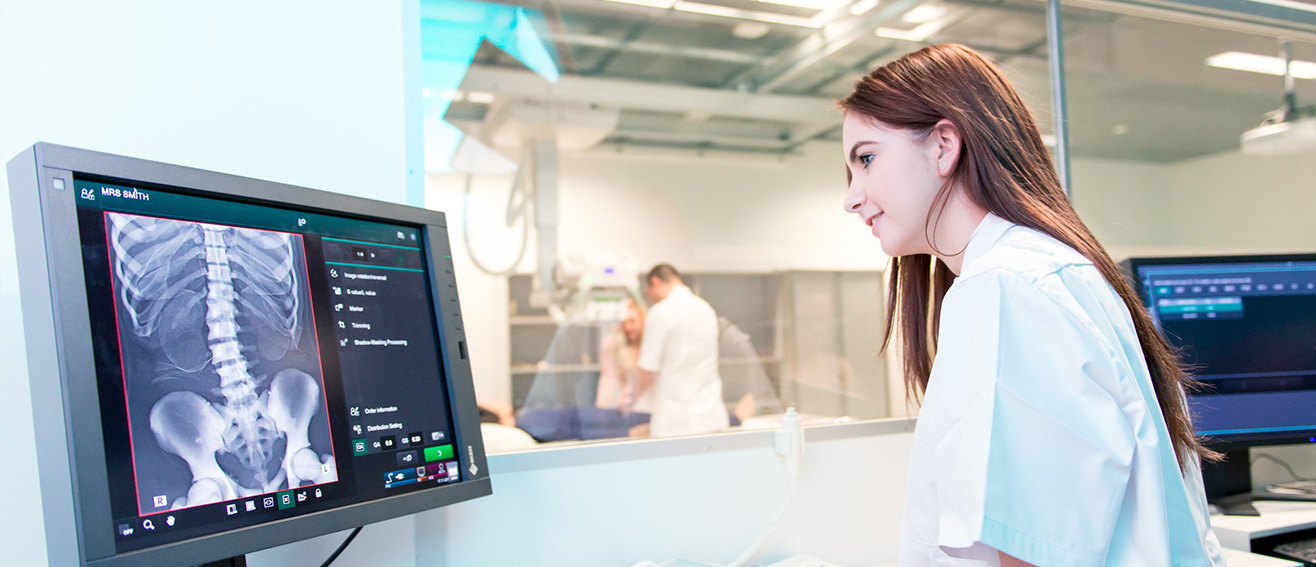
This is a foundation module aimed at students who will be working with ionising radiation in a clinical environment. The module commences with the basic concept of atomic structure and then builds on this to explain how x-rays are produced, how radiation interacts with matter, and understanding the equipment (kV and MV) used in radiotherapy practice. This module will also introduce students to the key principles of radiation dosimetry, dose distribution and plan interpretation. Assessment method: 100% exam.
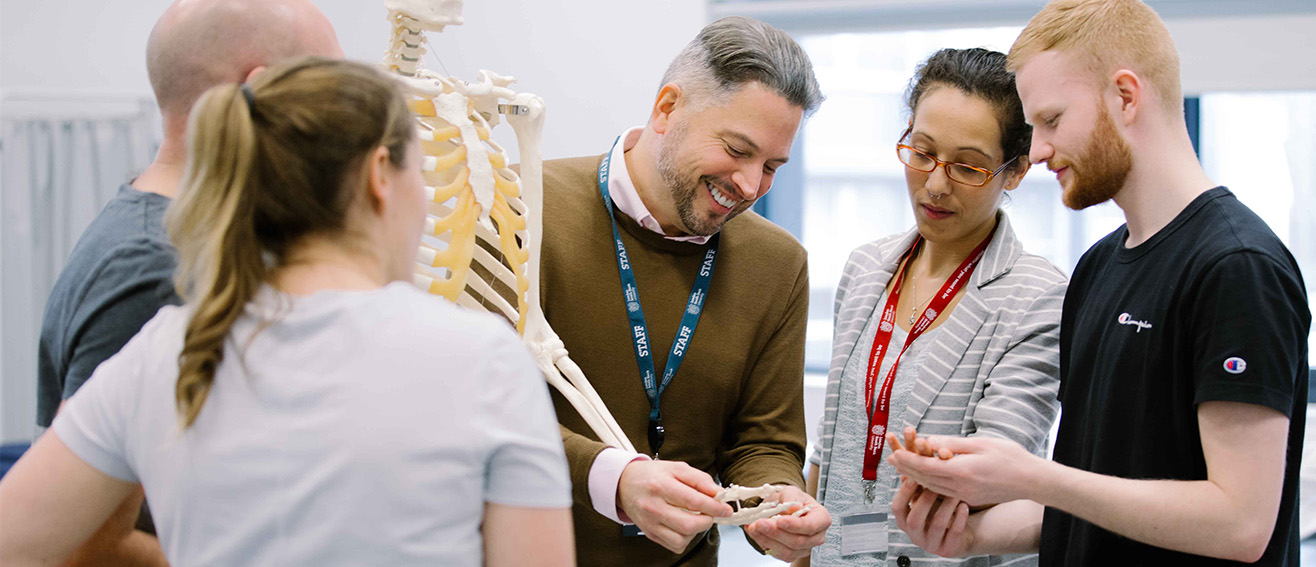
This module is designed to provide students with the foundation knowledge of anatomy and function of the systems comprising the human body and changes resulting from the development of malignant disease. Assessment method: 100% exam.
This module is an introduction to the discipline of oncology and the concept of holistic care in the management of people with cancer, with reference to evidence based practice. Assessment method: 100% exam.
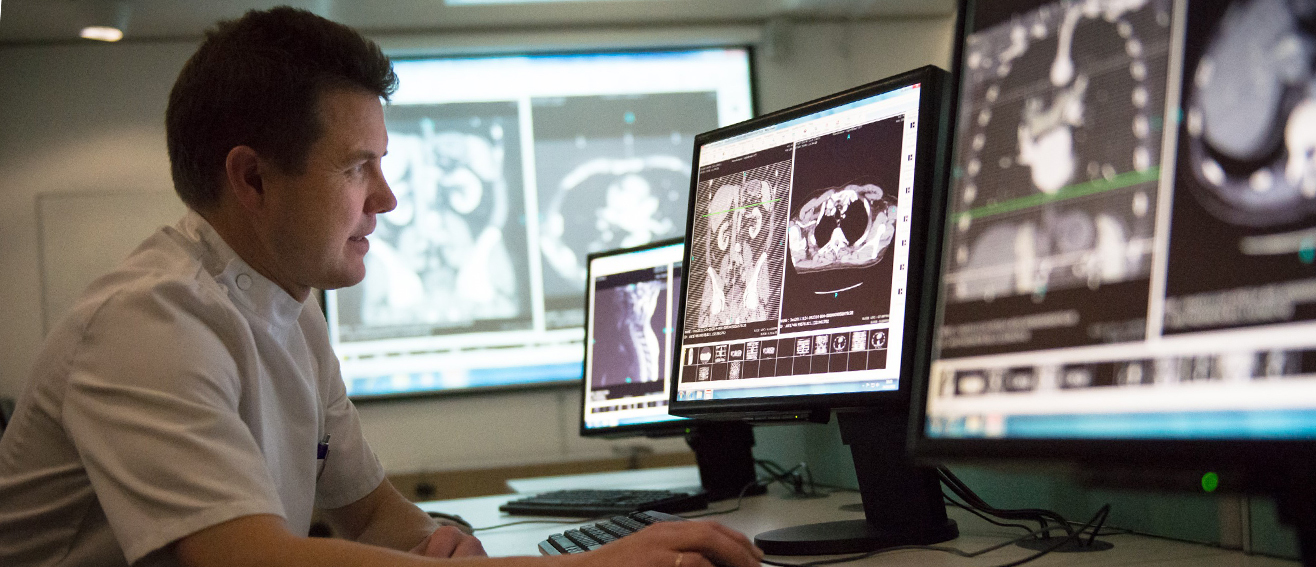
This module provides a practical and theoretical introduction to the professional practice of radiotherapy. This module complements the knowledge and learning gained synergistically within clinical practice by focussing on the acquisition of basic clinical skills and knowledge required for the safe, accurate planning and treatment of patients with cancer.
Assessment method:
Clinical portfolio Pass/ Fail
50% Presentation
50% Poster
During this module you’ll be introduced to the place and value of inter-professional and collaborative working in health and social care delivery. The module aims to support the development of the necessary communication, personal, partnership working and reflective practice skills required to meet the needs of clients/carers and diverse populations who are at the centre of inter-professional health and social care delivery.