
Book an open dayGet info and updates

icon_cup_red.svg

All our BSc Psychology courses and our MSc Psychology conversion course, are accredited by The British Psychological Society.

icon_rocket_red.svg

We’re ranked 4th among London Modern Universities for Psychology (Guardian University Guide 2025).

icon_people_red.svg

High-level theory made accessible (100% of students agree staff are good at explaining things, NSS 2025).

Overview

Learn the secrets of the most complicated thing in the universe; the human brain.

Our minds are utterly fascinating and endlessly complex. Each one is unique, moulded by our genes, our society, upbringings and our experiences. This complexity is what makes the study of human psychology so fascinating and rewarding for people like you. With a focus on the study of mental, emotional and psychological problems, you will work to centre and champion the lived experiences of others, learning to apply highly scientific theory and research skills with empathy and care. This BPS-accredited (British Psychological Society) pathway is designed to give you a strong foundation in the core areas of psychology during your first two years, following the core BSc Psychology course.

One of the key reasons I chose LSBU was the fact that many of the lecturers are not only academics but also actively practising psychologists or participate in current research projects. This blend of theory and practice brings our learning to life and helps us understand psychology beyond the classroom, which I believe is essential for building real-world knowledge and preparing us for future careers."
Margot Farnes,  BSc (Hons) Psychology, Clinical Psychology student.

You’ll get the chance to take on an optional Placement Year as part of your studies. Past students have gone on to apply their skills in the NHS, train as detectives in the police force, and take on roles in the likes of marketing, wellbeing and social care. In your final year on Psychology (Clinical Psychology) you’ll have the opportunity to specialise in areas such as clinical psychology, neuropsychology, addictive behaviours, and mental health. If you’re considering a future career in any of these fields, this pathway lets you tailor your studies to suit your interests. Studying on this course is a great opportunity to build the knowledge, skills, and experience needed for further training or a career in clinical, neuropsychological, or mental health settings.

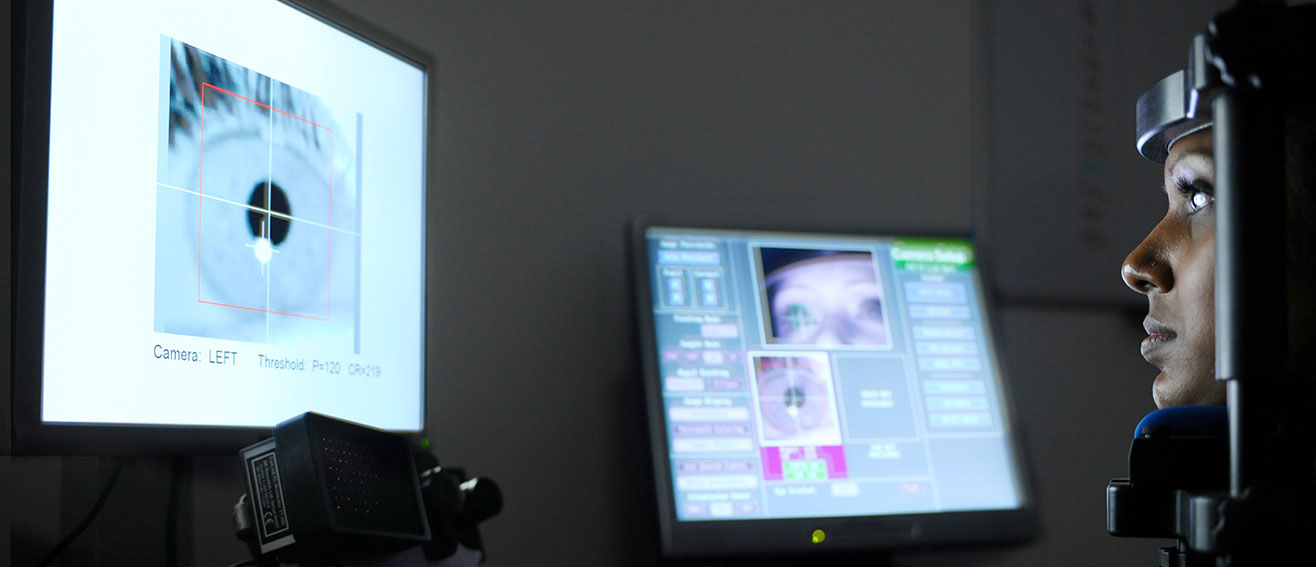
Psychology is crucial for solving the problems of the modern world. We work to understand what drives prejudice, why some children grow up to commit crime while others don’t, how to tackle addiction and depression, how to change societal behaviour to protect the climate, and how to heal communities after trauma. Prepare yourself to tackle real-world challenges by undertaking practical experiments in our industry ready facilities that includes eye-tracking software, VR, early years development facilities, state of the art neuroscientific tools like electroencephalography and a psychophysiology lab, and a pub lab. You’ll learn to think and act like a scientist here, exploring the ins and outs of psychological research and application, and getting you ready for industry or post-graduate study, to get you where you want to go next. You can find a detailed look at each of the modules.

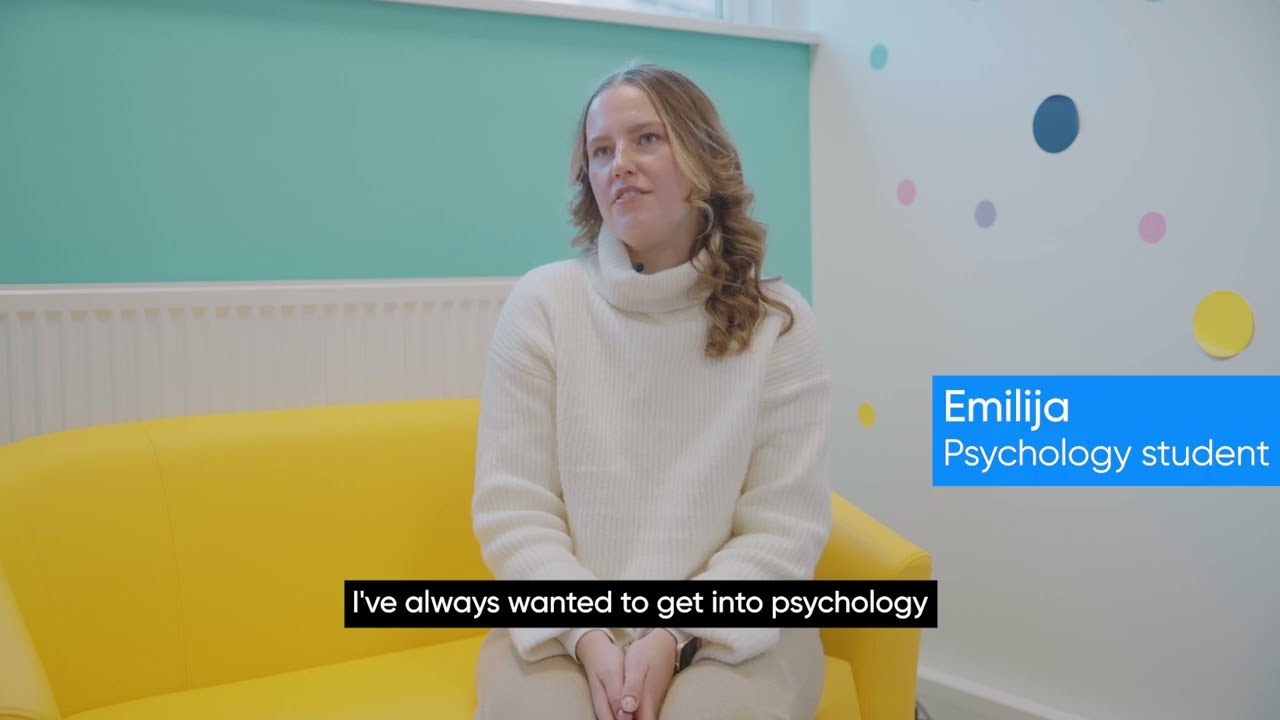
Meet Emilija, a Psychology student

Is this course right for me?

If you are ready and willing to ask the big questions about the human condition, doing the hard work to learn more about the human mind and it is innerworkings then this course is right for you. If you are willing to take your empathy further, centring the lived experience of mental health and distress, then this is right for you. If you to learn how psychology research can inform policy and create a better society, then this course is right for you.

Above all though, if you are hungry to create your own version of success then LSBU is right for you. Because the making of you does not begin and end with just your degree, everything that is brought you here today is part of your story; your experiences, the life you have lived, the skills you have gained and the goals you are chasing.

Not only do we see this, but we value that in you. We’re not in the business of forcing you into moulds, instead we’re here to help you break them. If you’re ready to embark on a journey of hard work, fulfilment, and self-discovery, then Psychology at LSBU is right for you.

Course Accreditations

British Psychological Society logo


Where will I learn?

Explore life at LSBU from anywhere - Take a virtual tour to explore our campus, discover key facilities and experience what student life is like.

Course Content

What will I learn?

Your time here will be spent harnessing your passion for psychology and child development and successfully apply legitimate research methods and scientific theory to real-world scenarios and cases. The course includes modules focussing on infant psychology and child development, where you will gather, analyse and understand complex data.

Some examples of the kind of modules you can expect are:

Exploring Real World Psychology

Development of brain and behaviour in infancy

Psychological Research Methods

The Psychology of Learning and Memory

The Psychology of Feelings

Psychology of Addictive Behaviours

And more

"University is such a massive learning experience, both academically and personally, which no doubt has helped develop my communication skills. I really enjoy what I study and am looking forward to my final year. The lecturers are so inspiring and fantastic at connecting with and supporting the students." - Holly Wright, Psychology with Child Development.

This module provides students with an introduction to the study of Psychology as a science. It does this via the study of some of the key conceptual, methodological, and statistical issues that psychologists face when studying human behaviour. As well as issues surrounding experimental design and ethical principles in psychological research, the module also introduces the ways in which descriptive and inferential statistics can be used to analyse and make sense of experimental data. 

This module introduces students to the study of psychology, first by discussing its conceptual underpinnings and historical development and then topics related to living in the world as biological, learning and feeling beings. Block 1 focuses on the philosophical foundations of Psychology, its status as a science and current identity, while Block 2 covers learning from the environment and from others. Block 3 includes evolutionary theory and the relationship of the brain to behaviour and Block 4 covers emotions from biological, psychological and social perspectives. The module provides the knowledge-base necessary for advanced study at level 5 and also the development of skills relating to factual learning, i.e., accessing, organising, assimilating and revising information. 

This module provides students with the opportunity to explore how theories, approaches and evidence from psychology have been applied to the real world. It will introduce students to applied psychology as a discipline, and what is required for entry into the professions recognised by the British Psychological Society, and also those employment opportunities that are appropriate for those who do not wish to pursue a career as an applied psychologist. Topic areas will include the application of biological, and learning aspects of behaviour. Students will have the opportunity to develop employability skills relating to accessing, assimilating and communicating information.

The module introduces students to qualitative research methods. Several lectures and seminars are dedicated to developing understanding of qualitative methods and conducting a qualitative analysis. The remainder of the module considers additional quantitative research designs and statistical analyses using SPSS. The module is assessed by two practical reports: one focused on qualitative methods, and one focused on quantitative methods. 

This module provides students with the opportunity to explore how theories, approaches and evidence from psychology have been applied to the real world. Students will be presented with a number of topics that have been important for understanding how people behave in the ways they do in the real world. Such topic areas will include developmental, cognitive (thinking), social, and individual differences aspects of behaviour. In addition, the topic areas presented and explored in this module will inform students about a diverse range of psychology-related employment opportunities. Study in each of these will provide a framework for advanced study at level 5. In addition to knowledge, the module will provide the opportunity for students to develop skills relating to accessing, assimilating and communicating information, be introduced to a variety of assessment techniques that will be encountered on the course, and develop and be aware of the type of skills that are likely to enhance employability. 

This module introduces topics related to living in the world as a developing, thinking, social and individual being. Topics will include memory, perception, attention, cognitive development, interpersonal behaviour, group behaviour, intelligence, personality and aspects of atypical behaviour. Study in each of these will provide a framework for advanced study at level 5. In addition to knowledge, the module will provide the opportunity for students to develop skills relating to accessing, assimilating and communicating information as well as to be introduced to an assessment technique that will be encountered on the course. 

This module builds on the simple experimental designs covered in the first year (comparing two means) and moves on to single factor and multifactor experiments, their design and the relevant analyses. Students are also introduced to aspects of psychometric testing and test indices. Lectures provide the conceptual framework required for an understanding of research methodology and their supporting statistical tests. Lectures are supported by seminars which help students learn design analysis, data analysis using SPSS and the interpretation of the results of experiments taken from the psychology literature. The module also provides students with the opportunity to design, execute, analyse and report results from practical work. 

Students studying this module will explore three themes, considering them in their own right and also in the light of their development from infancy through to adulthood. Firstly, how we gather and process information from the world around us, covering perception and attention processes. Secondly, how we remember what we have experienced, covering the cognitive and biological machinery underlying short-term and long-term memory structures and how our socio-cultural milieu influences these processes. Thirdly, how we use this information to act in the world, highlighting the ways in which we learn from the information that we have gathered from our environment. 

This module provides students with the opportunity to explore the interdependence between feelings and human behaviour. The module is organised into three distinct themes, relationships, mood and sensations. Within each theme a range of topics will be explored drawing on theory and research from biological, developmental, evolutionary, cross-cultural, cognitive and social psychology. Individual differences will be a key perspective in this module. 

Students will be introduced to multivariate research designs in the first component of this module, and will conduct and report a piece of research using multiple regression. The second component develops students’ knowledge of thematic analysis, and allows them to carry out and report a study using this method. Students will then be allocated to specialist research methods streams. This component will give students an opportunity to gain a more in depth understanding of a specific complex research methodology and its practical application. 

This module provides students with the opportunity to explore a number of the major concepts, theories and methods encountered in understanding how and why we behave in the ways we do when in the presence of other humans. The focus of this module is to understand what psychologists have contributed to understanding our social behaviours according to the real, imagined or implied presence of other individuals. The module focuses on those approaches that have been used to examine a) whether we are social beings and why, b) what the ‘social’ brain looks like, c) how social behaviours develop across the lifespan, d) which mechanisms have been used to explain how we interact with the implied, real or imagined presence of others, e) how culture affects our social interactions, and f) how group membership affects our social behaviours. 

This module provides students with the opportunity to explore and critically evaluate a number of the major concepts, theories and methods encountered in understanding how we communicate with others, solve problems and make decisions. This module will help students to understand the development of human communication, both cognitive and social. Students will learn what different psychologists think intelligence is, how it develops, and how it can be measured. The module will explore the internal and external influences on the development of reasoning and decision making. The module will explore whether innate mechanisms underlie these capacities or whether they develop over time. 

The module requires students to design and implement a substantial piece of independent psychological research related to child development and to produce an extensive report on the project. All students are supervised by a permanent member of academic staff. Students will also engage with reflection on their learning to date, and placement/work based learning. 

This module focuses on infancy, a period of rapid development, and examines the emergence of perceptual, cognitive, and early social skills during the first year of life. Emerging behaviours will also be related to brain development, to facilitate a more thorough investigation of what happens during development. Traditional and more recent methods used to assess both brain and behaviour in infants will also be considered. This module also offers the opportunity to consider dominant debates in developmental psychology, including the relative contributions of nature and nurture to development, and plasticity in the developing brain. The module focuses on both typical and atypical development, and also considers long term impacts of early experience. There is a focus on real world applications of the material covered in the module. 

Plus three options:

Mental health is a highly contested area, with major disagreements amongst psychiatrists, psychologists and service users over the conceptualisation and treatment of mental health problems. This module will examine the theoretical differences between these perspectives, through examining the social, cultural, biological and psychological evidence for the causes and maintenance of mental distress. These factors will be looked at in general, and also in relation to specific forms of distress, such as psychosis, depression, eating disorders and anxiety. The value and efficacy of diagnostic versus formulation approaches for the treatment of mental health problems will also be explored. 

Morbidity and mortality have been shown to be influenced significantly by various socio-demographic factors like age, social class and education. Which factors create the link between these inputs and health-related outputs is less clear.  This module will explore theoretically based psychological processes and mechanisms (e.g. cognitive dispositions and beliefs, social support, etc) which have been shown to relate social inputs with health outcomes. In early sessions students will explore social inequalities in health. During later sessions a number of models used by health psychologists to study related decision making and behaviour will be explored. Throughout all sessions students will be exposed to applied implications and evidence derived from basic theoretical principles. 

This module will begin by outlining key issues in the study of intergroup and intra group psychology and explore social identity approaches. The module then goes on to consider how groups interact with one another (inter-group processes) and also how group members function within the group (intra-group processes). The module combines basic and theory with real social applications. Seminars provide an opportunity to explore issues and research in more depth, and apply theory to real life situations. As well summative assessment via an essay and a set of short answer questions, students will also be required to make a short group presentation as formative assessment. 

This module introduces final year students to theories of addictive behaviour. Conceptual issues surrounding the utility of theories will be addressed, and the empirical evidence for or against each theory will be discussed. Students will have the opportunity to consider recent theories which attempt to synthesise extant models into a comprehensive account of addiction. Students will have the opportunity to apply, and critically evaluate, a number of theories in regards to their ability to explain alcoholism and/or tobacco smoking, both during seminars and in their coursework assignment. Finally, various treatment and preventative approaches, and the evidence for and against each will be examined. 

This module will begin by explaining test construction and validation in detail. The module then goes on to consider a wide variety of psychometric tests available and their appropriateness for use in occupational, clinical and research psychology. Ethical and legal issues surrounding psychometric test use will be covered. Students will gain practical experience of psychometric test use. 

This module centres on the study of brain-behaviour relationships. The focus of the module is to outline a series of disorders and the study of how they impact cognitive functions. Specifically, the module provides students with an understanding of the neural underpinnings of several cognitive functions and how these can be disrupted in a series of disorders. Students are also introduced to methods used in neuropsychology and cognitive neuroscience and issues around recovery and rehabilitation. The module is delivered over 11 weeks, with each lecture followed by a seminar. 

This module is designed primarily for students intending to go on to counselling psychology and psychotherapy postgraduate courses following their degree. Each week includes theoretical and practical components where students are able to try out various approaches in role-plays and triad work. The theoretical component of the module introduces students to key theoretical approaches in counselling psychology and psychotherapy (focusing on humanist/existential and cognitive behavioural) as well as covering various types of therapy (one-to-one, brief therapy, narrative therapy, group based and family therapy). There is a critical emphasis throughout considering issues of power, ethics, difference, and research on therapeutic effectiveness and processes. 

This module focuses on the scientific study of how drugs affect brain function and how such research furthers our understanding of the biological mechanisms underlying behaviour. Topics covered in this module include recreational and abusive use of drugs, cognitive enhancing drugs, the cannabinoid system and the therapeutic potential of cannabis, nicotine and in-depth coverage of the drugs used to treat schizophrenia, anxiety and mood disorders. In these last three lectures, we will look at the use of animals in drug development in clinical psychopharmacology and discuss future avenues of research to develop more acceptable medications for mental health problems. 

Cognitive Science is the scientific study of thought. This module provides students with the opportunity to explore some of the key theoretical debates in contemporary cognitive science, adopting a multidisciplinary approach to understanding the nature of thought and challenging assumptions concerning what it is to be human. The module will address the nature of the human mind in the past, present, and future, frequently using comparative psychology to identify those abilities that make us uniquely human and which mark us out from non-human animals and synthetic organisms. 

This module extends the usual focus of developmental psychology on infancy and childhood to consider a range of factors in development over the lifespan. Issues relating to social, emotional, and cognitive development through childhood and into adolescence will be considered, as will the transition from adolescence into early adulthood. Factors surrounding relationships between children’s drawing and cognitive development will be addressed, together with moral development. The continued impact of developmental disorders (such as dyslexia) in adulthood will be considered, linking these to cognitive function in everyday life (such as educational and employment settings). Typical ageing and neurodegenerative disorders (such as Alzheimer’s disease and Parkinson’s disease) will be considered from both social and cognitive perspectives. 

The Psychology in the Workplace module will cover a range of different topics related to work (or industrial) psychology, cognitive ergonomics, and behaviour in organisational settings. In broad terms, the module will cover issues relating to organisations, individual workers, and inclusive practices It will address such topics as organisational change, the challenge of an ageing workforce, human-machine interaction, stress and work, human error and accident prevention, and designing workplaces and tools for workers with additional needs or in different cultures. 

This module will explore the psychology of theatre, music, and dance arts. Students will be introduced to a variety of topics including, actors’ approaches to the script and inhabiting character, actors’ mental health, equality and diversity in the arts, memory and acting, embodied cognition, music psychology from the audience and the performers’ perspectives, dance psychology (e.g. body / rhythm synchronisation) and drama and music as therapy. These topics will relate to key areas in Psychology, including occupational psychology (e.g. job motivations, security), clinical psychology (e.g. actors’ mental health, performance anxiety), cognitive psychology (e.g. script-work and memory), cognitive neuroscience (e.g. music expectations and emotions, rhythm and synchronisation) and issues of equality and diversity (e.g. “blind casting”, gender pay-gap, harassment). 

This module explores the sex-gender paradigm, sex-and-sexuality, family, and diverse relationship structures through psychological approaches. Engagement extends core Psychology learning-and-teaching on knowledge and learning, feelings, emotions, behaviours, decision-making, identities, biology, human development, and lived experience. Students engage critically with historical and socio-cultural changes, contemporary debates, and applied contexts through a pedagogy of co-production that leverages diversity of student interests.
Psychological, therapeutic, queer-theory and feminist literature are surveyed through a mix of traditional lectures and ‘flipped classroom’ discussion and debate. 

This module covers various aspects of forensic psychology relating to understanding criminal behaviour, investigative methods and trial processes. More specifically, the lectures will relate to psychological theories of crime, eyewitness testimonies, investigative interviewing and offender profiling, decision making in court and dealing with offenders. Students are expected to critically evaluate research findings and demonstrate an understanding of how these findings are/can be applied in practice as well as communicating them to practitioners and laypeople. 

In this module, we will explore how people make decisions and the factors that influence choices (what we decide) and choice process (how we come to that decision), mostly from a cognitive and neuroscientific perspective. We will discuss the ways in which our choices systematically deviate from rationality by exploring heuristics and biases that affect decisions and discuss the role of emotions. For example, we will discover what makes us more willing to take risks, more willing to cooperate, or more altruistic. In the second part of the module, we will explore some of the real-world applications of these findings, for example in clinical settings, policy development or marketing research. 

This module aims to examine the application of psychological knowledge to the understanding of, and care for, individuals that have offended. This module begins by providing an insight into the role of a forensic psychologist, before focusing on reasons why an individual offends across various offence typologies (e.g., sexual offending, street gang membership, firesetting, and intimate partner violence). The role of risk assessment in planning interventions and release will be explored, with the impact of forensic care on service user’s wellbeing emphasised. Approaches to interventions/rehabilitation will be discussed, including imprisonment, risk- and strengths-focused frameworks and creative therapies. Finally, the importance of evidence-based practice in forensic care will be examined. Seminars provide an opportunity to discuss the different reasons why an individual offends and what intervention approaches would be most effective for different clients. 

* Modules are subject to review and change throughout the year.

Teaching and Assessment 

How will I learn?

Practice makes perfect. So, you’ll be putting theory into application as much as possible. Whether that’s group public engagement projects, studying real-life accounts of people with lived experience of mental health problems, or building your professional network through placements, it all comes back to LSBU helping you prepare for life as a graduate.

You’ll be taught by academic staff with specialist expertise in clinical psychology and mental health research, alongside experienced practitioners who bring real-world insight into the classroom. Their combined knowledge ensures your learning is grounded in both cutting-edge research and current professional practice.

From day one, you’ll be learning in our on-campus facilities and laboratories. Our lab complex includes an eye-tracking facility, observation room, children’s psychology room and a pub lab.

“I have encountered several specialised technologies whilst studying my course and had the privilege of using them, such as the electroencephalogram (EEG) and a hyper-realistic lab setting like the LSBU psychology bar and child development lab.”
— Daniela May Senti Vigo, BSc Psychology student

Collaboration and teamwork play a big part in how you’re assessed, with extra marks going towards students who demonstrate equitable treatment during group projects, ensuring all skillsets are accommodated.

Some assessment methods include:

  • Essays
  • Practical reports
  • Scenario-based reports
  • Posters and presentations
  • Portfolio work

Dr Harriet Higgins, Senior Lecturer and Course Leader

Dr Harriet Higgins is a registered Clinical Psychologist and Senior Lecturer, combining experience across clinical practice and education. After gaining a BSc (Hons) in Social Psychology at the London School of Economics, Dr Harriet Higgins completed their professional Doctorate in Clinical Psychology at the University of East London after working as a senior Psychologist for 15 years in the NHS in Community Psychology, Adult and Child settings. Under Dr Harriet Higgins’s leadership, the psychology team was awarded the Anna Leaf national prize for best Parent-infant service in 2018. 
In 2019, Dr Harriet Higgins joined the School of Psychology at LSBU, simultaneously working as part of an independent Psychology and Therapy service and also offering reflective practice groups to Midwives in training in London NHS trusts.

Careers

What’s in it for me? 

This is your future. Your career. Your success. And we’re here for it.

Going to university might just be the biggest investment you ever make, but with us by your side you can turn a degree into a bright future, full of purpose, passion and career you can be proud of (which may be why our graduates earn the highest average salaries across London Modern universities).

With Psychology at LSBU, you get (icons and graphics):

Access to industry-standard facilities such as eye-tracking software, a pub simulator and an early year's development room

All our BSc Psychology courses are accredited by the British Psychological Society. You’ll need this accreditation to be recognised by employers as a psychologist in the industry.

All our full-time academics are active researchers themselves and are involved in research supervision, meaning that your lecturers are up to date and actively involved in analysing and researching current topics in the industry, ensuring that the information you receive is on-trend, as Psychology changes and moves.

Eligibility for Graduate Basis Membership with The British Psychological Society (if you earn a 2:2 or higher), through our professional accreditation (helping you network and make professional connections).

LSBU CareerSmart is your ultimate gateway to career success. Our innovative programme is designed to ensure you graduate with more than just a degree, providing the support you need to stand out in a competitive job market. We've got all the tools you need, including:

  • AI Powered Career Sets - Get instant personalised feedback on your CV and cover letter by submitting it via our AI powered career tool.
  • Gamification Interviews - Get ready to pass those interviews with unlimited training access to our gamification interviews and psychometric tests!
  • Personalised Career Development Dashboard - Keep up with your skills progression with free access to practical assessments, LinkedIn learning, mentoring, and industry-standard facilities.

We understand that you’re in the driver’s seat of your career, which is why we’re committed to matching your passion and energy every step of the way.

Find out more

Entry Level Requirements

112 UCAS points

Or equivalent level 3 qualifications.

If you do not meet the entry criteria above we also review any previous skills, knowledge or experience you have gained outside of your education and are happy to talk through any extenuating circumstances you feel relevant.

Visit UCAS for guidance on the tariff.

Choose your country

  • Afghanistan
  • Albania
  • Algeria
  • Angola
  • Argentina
  • Australia
  • Austria
  • Azerbaijan
  • Bahrain
  • Bangladesh
  • Barbados
  • Belgium
  • Botswana
  • Brazil
  • British Council Women in STEM Scholarships
  • Bulgaria
  • Cambodia
  • Cameroon
  • Canada
  • Chile
  • China
  • Colombia
  • Croatia
  • Cyprus
  • Czech Republic
  • Denmark
  • Dominican Republic
  • Egypt
  • Estonia
  • Ethiopia
  • Finland
  • France
  • Gambia
  • Georgia
  • Germany
  • Ghana
  • Greece
  • Hungary
  • India
  • Indonesia
  • Iran
  • Iraq
  • Ireland
  • Italy
  • Jamaica
  • Japan
  • Jordan
  • Kazakhstan
  • Kenya
  • Kuwait
  • Latvia
  • Lebanon
  • Libya
  • Lithuania
  • Luxembourg
  • Malaysia
  • Malta
  • Mauritius
  • Mexico
  • Mongolia
  • Morocco
  • Myanmar
  • Nepal
  • Netherlands
  • New Zealand
  • Nigeria
  • Norway
  • Oman
  • Pakistan
  • Poland
  • Portugal
  • Qatar
  • Romania
  • Russian Federation
  • Saudi Arabia
  • Senegal
  • Serbia
  • Sierra Leone
  • Singapore
  • Slovakia
  • Slovenia
  • Somalia
  • South Africa
  • South Korea
  • Spain
  • Sri Lanka
  • Sweden
  • Switzerland
  • Thailand
  • Trinidad and Tobago
  • Tunisia
  • Turkiye
  • Uganda
  • Ukraine
  • United Arab Emirates
  • United States of America
  • Uzbekistan
  • Venezuela
  • Vietnam
  • Zambia
  • Zimbabwe

Additional Info

If you do not have the required English and Maths qualifications needed to satisfy the entry requirements for this programme, we have courses available at our partner College that you can take to upskill in these areas. Find out more at South Bank College.

Need further information?

Call us on 0800 923 8888 to discuss entry requirements.

More contact info

Apply

Course delivery modes and application methods

Mode Duration Start date Application code Application method
Full-time 3 years September C805 UCAS
Part-Time 6 years September 5254 Direct to LSBU
Part-time 4.5 years September 4102 Direct to LSBU

International (non Home) applicants should follow our international how to apply guide.

How to Apply

International students

International applicants can apply directly to LSBU and should consult our international how to apply guide for further information on the application process and key dates.

Accommodation

Students should apply for accommodation at London South Bank University (LSBU) as soon as possible, once we have made an offer of a place on one of our academic courses. Read more about applying for accommodation at LSBU.

Prepare to start

We help our students prepare for university even before the semester starts. To find out when you should apply for your LSBU accommodation or student finance read the How to apply tab for this course.

Fees

United Kingdom

£9790

Tuition fees for home students

International

£17400

Tuition fees for international students

Tuition fees are subject to annual inflationary increases. Find out more about tuition fees for Undergraduate or Postgraduate courses.

full-time

Full-time Year 1 - All Available Courses

BSc (Hons) Psychology - CHILD DEVELOPMENT (FT) - Year 1 FT Southwark CHILD SEPT
The fee shown is for entry 2026/27
UK fee: £9790 International fee: £17400
AOS/LSBU code: 3133 Session code: 1FS00
Total course fee for this location/stream:

* The full amount is subject to fee increases, the total shown below is based on current fees.

UK: £29370
International: £52200

Full-time Year 2 - All Available Courses

BSc (Hons) Psychology - CHILD DEVELOPMENT (FT) - Year 2 FT Southwark CHILD SEPT
The fee shown is for entry 2026/27
UK fee: £9790 International fee: £17400
AOS/LSBU code: 3133 Session code: 2FS00
Total course fee for this location/stream:

* The full amount is subject to fee increases, the total shown below is based on current fees.

UK: £29370
International: £52200

Full-time Year 3 - All Available Courses

BSc (Hons) Psychology - CHILD DEVELOPMENT (FT) - Year 3 FT Southwark CHILD SEPT
The fee shown is for entry 2026/27
UK fee: £9790 International fee: £17400
AOS/LSBU code: 3133 Session code: 3FS00
Total course fee for this location/stream:

* The full amount is subject to fee increases, the total shown below is based on current fees.

UK: £29370
International: £52200

part-time

Part-time Year 1 - All Available Courses

BSc (Hons) Psychology - Child Development (PT) - Year 1 PT Southwark Fast Track SEPT
The fee shown is for entry 2026/27
UK fee: £5874 International fee: £10440
AOS/LSBU code: 4102 Session code: 1PS00
Total course fee for this location/stream:

* The full amount is subject to fee increases, the total shown below is based on current fees.

UK: £29370
International: £52200
BSc (Hons) Psychology - Child Development (PT) - Year 1 PT Southwark SEPT
The fee shown is for entry 2026/27
UK fee: £4895 International fee: £8700
AOS/LSBU code: 5254 Session code: 1PS00
Total course fee for this location/stream:

* The full amount is subject to fee increases, the total shown below is based on current fees.

UK: £29370
International: £52200

Part-time Year 2 - All Available Courses

BSc (Hons) Psychology - Child Development (PT) - Year 2 PT Southwark Fast Track SEPT
The fee shown is for entry 2026/27
UK fee: £5874 International fee: £10440
AOS/LSBU code: 4102 Session code: 2PS00
Total course fee for this location/stream:

* The full amount is subject to fee increases, the total shown below is based on current fees.

UK: £29370
International: £52200
BSc (Hons) Psychology - Child Development (PT) - Year 2 PT Southwark SEPT
The fee shown is for entry 2026/27
UK fee: £4895 International fee: £8700
AOS/LSBU code: 5254 Session code: 2PS00
Total course fee for this location/stream:

* The full amount is subject to fee increases, the total shown below is based on current fees.

UK: £29370
International: £52200

Part-time Year 3 - All Available Courses

BSc (Hons) Psychology - Child Development (PT) - Year 3 PT Southwark Fast Track SEPT
The fee shown is for entry 2026/27
UK fee: £5874 International fee: £10440
AOS/LSBU code: 4102 Session code: 3PS00
Total course fee for this location/stream:

* The full amount is subject to fee increases, the total shown below is based on current fees.

UK: £29370
International: £52200
BSc (Hons) Psychology - Child Development (PT) - Year 3 PT Southwark SEPT
The fee shown is for entry 2026/27
UK fee: £4895 International fee: £8700
AOS/LSBU code: 5254 Session code: 3PS00
Total course fee for this location/stream:

* The full amount is subject to fee increases, the total shown below is based on current fees.

UK: £29370
International: £52200

Part-time Year 4 - All Available Courses

BSc (Hons) Psychology - Child Development (PT) - Year 4 PT Southwark Fast Track SEPT
The fee shown is for entry 2026/27
UK fee: £5874 International fee: £10440
AOS/LSBU code: 4102 Session code: 4PS00
Total course fee for this location/stream:

* The full amount is subject to fee increases, the total shown below is based on current fees.

UK: £29370
International: £52200
BSc (Hons) Psychology - Child Development (PT) - Year 4 PT Southwark SEPT
The fee shown is for entry 2026/27
UK fee: £4895 International fee: £8700
AOS/LSBU code: 5254 Session code: 4PS00
Total course fee for this location/stream:

* The full amount is subject to fee increases, the total shown below is based on current fees.

UK: £29370
International: £52200

Part-time Year 5 - All Available Courses

BSc (Hons) Psychology - Child Development (PT) - Year 5 PT Southwark Fast Track SEPT
The fee shown is for entry 2026/27
UK fee: £5874 International fee: £10440
AOS/LSBU code: 4102 Session code: 5PS00
Total course fee for this location/stream:

* The full amount is subject to fee increases, the total shown below is based on current fees.

UK: £29370
International: £52200
BSc (Hons) Psychology - Child Development (PT) - Year 5 PT Southwark SEPT
The fee shown is for entry 2026/27
UK fee: £4895 International fee: £8700
AOS/LSBU code: 5254 Session code: 5PS00
Total course fee for this location/stream:

* The full amount is subject to fee increases, the total shown below is based on current fees.

UK: £29370
International: £52200

Part-time Year 6 - All Available Courses

BSc (Hons) Psychology - Child Development (PT) - Year 6 PT Southwark SEPT
The fee shown is for entry 2026/27
UK fee: £4895 International fee: £8700
AOS/LSBU code: 5254 Session code: 6PS00
Total course fee for this location/stream:

* The full amount is subject to fee increases, the total shown below is based on current fees.

UK: £29370
International: £52200

Psychology at LSBU will cost UK students £9535 a year, and International students will need to pay £16,500.

While these numbers might seem quite daunting at first, it’s important to note that the student loan system is in place to help fund these costs, with plenty of extra financial support available depending on your circumstances, both from the government and from us here at LSBU.

If you’d like to learn more about student loans click here.

For more information, including how and when to pay, see our fees and funding section for undergraduate students.

Please check your fee status and whether you are considered a Home, EU or International student for fee-paying purposes and for our regulatory returns, by reading the UKCISA regulations.

See our Tuition Fees Regulations(%asset_summary_12143%) and Refund Policy (%asset_summary_131085%).

Possible fee changes

The University reserves the right to increase its fees in line with changes to legislation, regulation and any government guidance or decisions.

The fees for international students are reviewed annually and the University reserves the right to increase the tuition fees to reflect increased costs of delivery and to maintain an a high-quality student experience. This increase would be no more than Consumer Prices Index (CPI) increases plus 5%.

Scholarships

We offer several types of fee reduction through our scholarships and bursaries. Find the full list and other useful information on our scholarships page.

Contact information

UK Course Enquiries

International team enquiry

Discover Uni Key Information

Register your interest