
Book an Open DayGet info and updates

icon_cup_red.svg

100% of students on this programme said teaching staff are good at explaining things (National Student Survey 2025). Our graduates go onto work in Axis, and a range of other organisations.

icon_rocket_red.svg

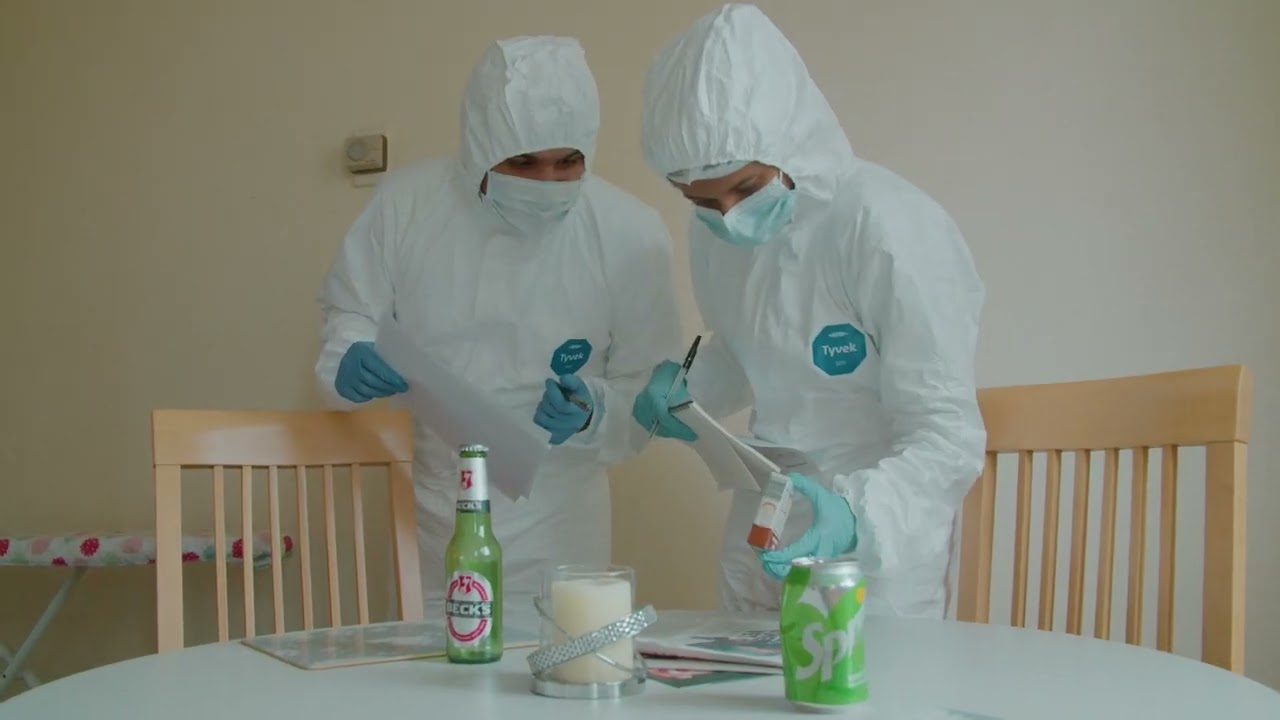
Our specialised facilities include our very own Crime Scene Flat, and an extensive range of analytical instrumentation dedicated to forensic science students

icon_people_red.svg

3rd in the UK and 1st in London for Forensic Science (Guardian University Guide 2025).

Overview

Are you interested in working at the forefront of crime science investigation and as important part of the criminal justice system? Are you excited by the idea of investigating crime scenes using the latest technology and techniques? Do you want to play a crucial role in helping the criminal courts reach their verdict on the guilt of a defendant? Our Forensic Science degree provides you with the theory and practical experience you need to succeed.

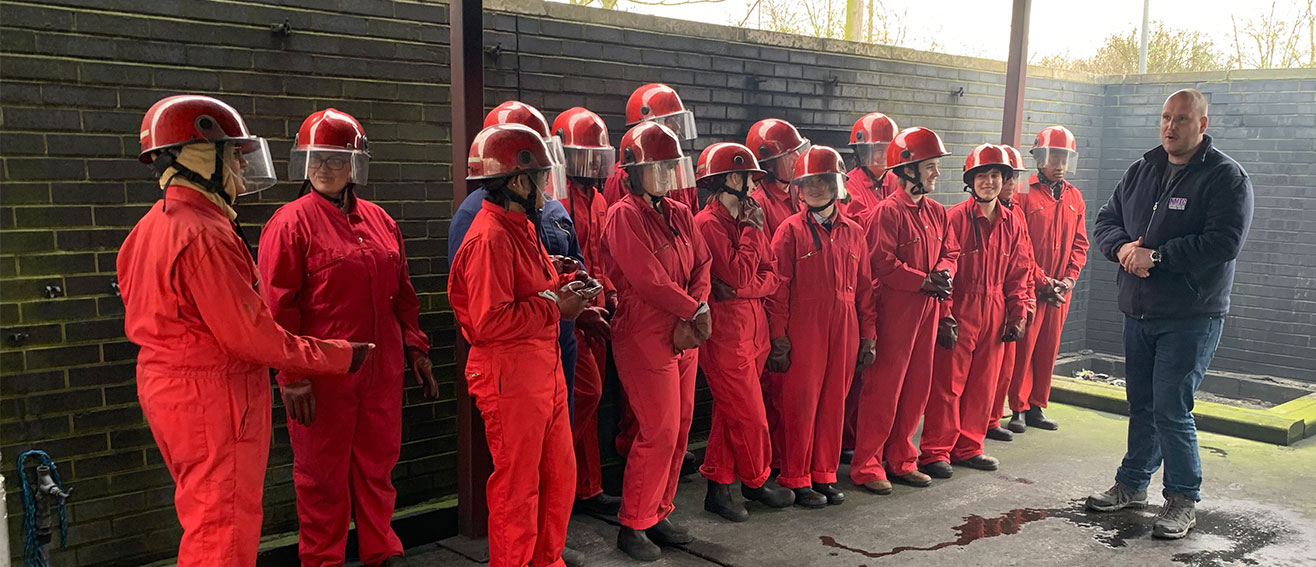
Learn how to correctly analyse a crime scene and interpret the evidence in dedicated labs using specialist equipment, taught by academic experts from a wide range of forensic science disciplines. You’ll have the opportunity to see how these are applied in the real world with enrichment activities and trips focusing on forensic entomology, bone analysis, how fire behaves, and more. Plus, you’ll be able to flex the skills you’ve developed at our crime scene flat, where you’ll gather evidence across a variety of crime scenes in a realistic environment.

Forensic Science

Course Content

Forensic science is the application of scientific techniques to crime investigation with the presentation of evidence in a court of law. This course covers:

  • Biology
  • Chemistry
  • Physics
  • Law
  • Investigative science
  • Weapons technology
  • DNA analysis
  • Scenes of crime investigation
  • Forensic indicators
  • Explosion and fire

The art of delivering and communicating your results as a forensic expert is developed by mock courtroom sessions during the course.

The Forensic Science course is taught by professionals from the forensic science industry. In addition we have visiting scientists based in industry come in to talk about their own jobs and career progression. We place special emphasis on training for both forensic related jobs and the wider scientific industry. For example chemical analysts, science teachers and those jobs which require a significant grounding in investigative analytical sciences. As well as involving industry professionals we also provide student membership of the forensic science professional body; Chartered Society of Forensic Sciences. There is also a sequence of key modules which link to the University Careers hub and involve you in developing your CV and interview skills.

This module is designed to introduce you to the scope and nature of forensic science. One of the main themes through this introductory module is to emphasise the various roles that fall under the forensic science remit and the skills required to perform well in a forensic science laboratory. The module is aimed at students with a basic knowledge of forensic science and aims to enhance this background knowledge. You'll begin the lecture course by appreciating the relevance and application of the role of forensic science in the wider context. This module provides a general overview of what areas may be introduced over the three year degree course. 

This module will provide you with a foundation for the study of science at undergraduate level. The basis for the module will be the context, planning and execution of experimental work, along with analysis and presentation of experimental data. A substantial component of study will involve activities in effective written communication and the writing of laboratory reports in particular. 

 This module centres on the basic skills that all scientists need to be conversant with. It comprises a series of laboratory workshops that give practical experience in the areas of physics. It also introduces one of the central principles of forensic science, that of quantitative measurements and their interpretation and manipulation. The theoretical component of the module is based around understanding the measurement process, the significance of the measurement units and the mathematical manipulation of the data obtained to produce results of use to the analyst. The relevant mathematical skills needed to achieve this will be provided within the module. You'll also be introduced to the main types of electronic measurement transducer and the electrical measurement principles needed to understand the measurement function. On completion of the module, you'll have acquired knowledge in the application of basic mathematical concepts in the treatment and interpretation of measured data, covering areas such as geometry and special measurements, algebraic formulation and manipulation, graphical analysis, statistics and calculus.

 This module will introduce some of the biological materials that can be used as evidence in forensic casework. The module will cover the following:
* The nature and morphology of human and animal hairs. You'll investigate the differences between animal and human hairs in the laboratory.
* The use of immunoassays in forensic science. You'll use ELISA to detect controlled substances in mock body fluid samples.
* The historical use of serology in forensic science. you'll utilise serological techniques to determine if samples are human or animal, and the species of that animal.
* Aspects of forensic entomology and the Body Farm in Texas.
* An introduction to anthropological techniques used in forensic science.
* An introduction into the role of wildlife and plants in criminal investigations. You'll study a range of pollens and diatoms in the laboratory.
The knowledge gained from this module will prepare you for the level 5 Crime Lab modules and the Biological Evidence module at Year 3.

This is an introductory unit providing a foundation in physical sciences relevant to the study of forensic science. The first part of the unit will introduce you to the nature of matter. The second part of the module will look at the classification of materials, including their physical and chemical nature, and will contextualise this in terms of forensic science. 

This module is designed to introduce you to the English legal system. It will look at the main sources of law, the hierarchy of the court system and the doctrine of precedent. It will consider the role of Parliament in the creation of statutes, the rules which are applied to interpret those statutes and the role of the European Institutions. As an example of a statute, this module will look at police powers under the Police and Criminal Evidence Act 1984. The module will also study the structure and the personnel of the legal profession, including the judiciary, the role of lay persons such as magistrates and jurors, the procedure followed at trial and the purposes and scope of sentencing. 
This module will introduce you to fire investigation and fire dynamics, explosions and explosives, and firearms discharge. The main theme linking all aspects of the course is chemical energy release through the oxidative process termed combustion. Explosions are very rapid oxidations and bullets are propelled by an explosive charge normally called a propellant. The course has three main themes:
-Fire dynamics in buildings and fire investigation, explosives and explosions, propellants and ballistics. This course of study is relevant to both incident investigation and criminal investigation. For example, the origin of explosion and fire may point towards criminal intent or may simply be caused by accidental events or negligence. This module will also introduce the analysis of incidents where firearms discharge has occurred, including analysis of firearm discharge residues. The module is supported by laboratory work. 

 This module is designed to introduce you to criminal law. That is, to introduce non-law students to the basic principles of criminal procedure and liability, exploring the statutory and common law sources on which the law is based. You'll be guided through a linear approach to the operation of the criminal process, starting with the institutions and terminology of the criminal law, through the law relating to police powers and aspects of substantive criminal law.

This module will provide you with a basic understanding of the approach and investigation of a crime scene and will provide you with practical knowledge of different types of marks and traces evidence that may be encountered at a crime or other scene. As any object may become physical evidence during a forensic investigation, the module will provide the knowledge on how to search for, recognise, collect, package, preserve, analyse and report upon marks and trace evidence. The concepts of forensic identification, forensic individualisation and forensic documentation will each assume a prominent role. The module consists of both lectures and laboratory practical sessions. The theory for each evidence type will be taught in the lecture sessions and then you'll be expected to carry out laboratory examinations and analysis of the relevant evidence type. 

This module is focussed on the way in which evidence is packaged and recorded at the crime scene and the various procedures and practices which are essential for maintaining the integrity of evidence. The laboratory practicals are recorded using documentation similar to that used in operational forensic laboratories, and the final product will be a written witness statement for a court of law, which will be used to complete a mock courtroom exercise. 

This module is intended to develop your understanding of the research process in the area of applied human sciences. It will provide you with knowledge about main research principles and methodologies for data collection and analysis. You'll gain practical experience in developing a research proposal and analysing data with parametric and non-parametric statistical methods, using both MS Excel and IBM Statistical Package for the Social Sciences (SPSS). 

Modern analytical laboratories house a wide range of analytical instrumentation, which facilitates the detection of a vast array of analytes and, often, their quantification down to PPB (part per billion) or PPT (part per trillion) levels. Irrespective of how sophisticated the instrumentation may be, if it's not used correctly, the results obtained will, at best, be of questionable reliability. It's thus essential that the analyst understands the limitations of each method. This module aims to explain the theoretical basis underpinning the main classes of analytical instrumentation found in most analytical laboratories. You'll be given examples of the applications of each technique, together with explanations of the calculations required in order to interpret the results. You'll gain hands-on experience in the use of most of the methods. 

This module is designed to give you detailed knowledge and a good insight into the field of incident investigation. It will give a formal grounding in those techniques of risk analysis necessary to predict the probability and magnitude of an accident, and will discuss the anatomy of several prominent accidents to exemplify accident analysis, reconstruction and determination of root cause.
This module will also introduce you to fire investigation and fire dynamics, explosions and explosives. This course of study is relevant to both accident investigation and criminal investigation e.g. the origin of explosion and fire may point towards criminal intent or may simply be caused by accidental events or negligence. This module will also introduce the analysis of incidents where firearms discharge has occurred, including analysis of firearm discharge residues. The module is supported by laboratory work. 

This module will involve teaching on the procedures and evidential material commonly encountered at scenes of crime against the person such as rape, murder and assault. The teaching will consist of both lectures and practical laboratory sessions. In-depth lectures on topics such as body fluids, hairs and fibres, blood pattern analysis and identification techniques will provide you with a sound theoretical knowledge base on which to build your practical experience. This theory will then be applied to laboratory examinations of biological evidence. The main aim of the module is to demonstrate the types of evidence commonly found in crimes against the person and to provide you with practical experience in the analysis, interpretation and reporting of this evidence. 

Any individual who practices within the field of forensic science, whether that may be within the role of a forensic scientist or crime scene examiner, must have an in-depth knowledge of the forensic principles and practices employed in a criminal investigation. A sound knowledge of the processes involved in the progression of a criminal case from crime scene to court is essential. This module will provide you with an insight into the standard operating procedures currently used by forensic providers and some of their partner agencies. The module will concentrate heavily on the Case Assessment and Interpretation model used by the forensic providers and Bayesian theory. You'll also gain knowledge of the role of the expert witness and how expert testimony is presented in a court of law. 

The research project will enable you to carry out research on a focused area of forensic science that interests you. It will enable you to apply the concepts and skills you've gained throughout the undergraduate degree programme, while furthering your experience of planning, reviewing and completing a major piece of research, in addition to preparing a large report of the research in the form of a dissertation. 

This module is designed to introduce the function and operation of the law of evidence in the context of criminal matters. It concentrates on the concepts of relevance and judicial discretion and examines the different types of evidence which attract the rules of admissibility and the reasons for that. 

* Modules are subject to review and change throughout the year.

Teaching and Assessment

How will I learn?

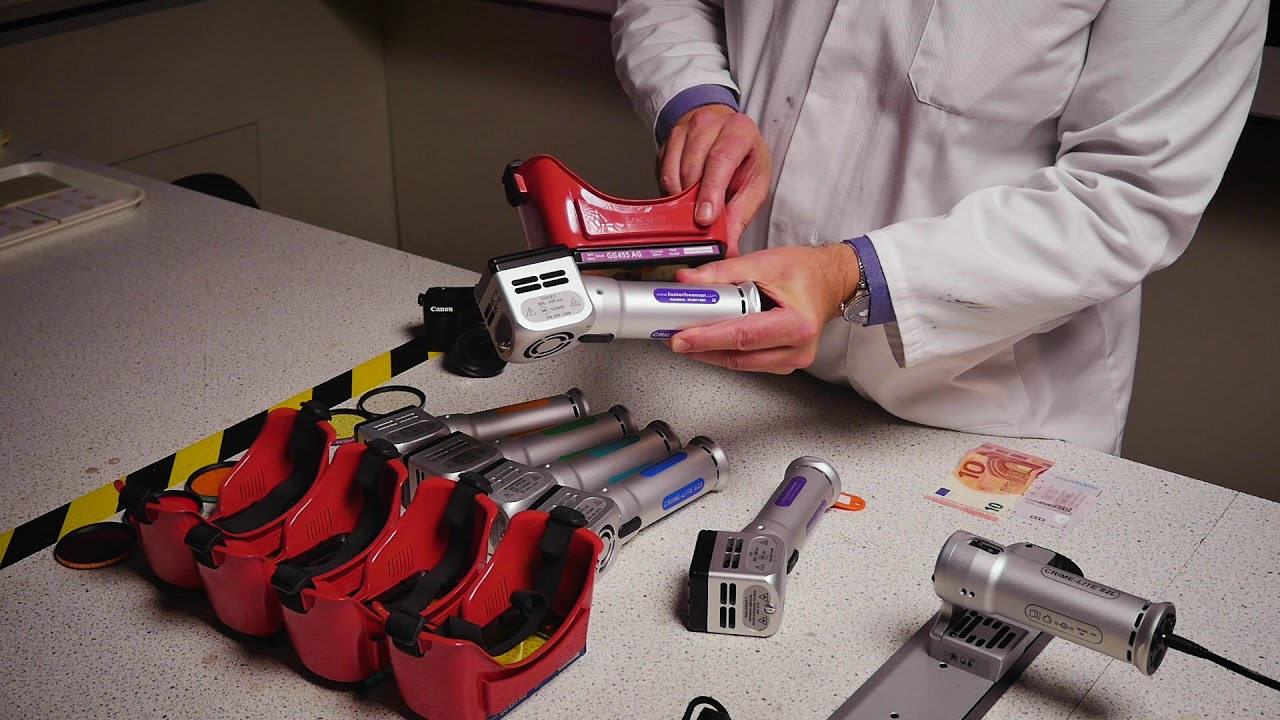
We have recorded all the experiments and practical activities, for instances when students can’t attend campus. Take a look at two examples experiments, the first is a ninhydrin development method to uncover finger marks on paper, and the second provides an overview of fluorescence methods used to search for evidence at a crime scene.

Decorative banner

LSBU Forensic Science - Developing Finger Marks on Paper

LSBU Forensic Science – Crimelite Forensic Light Sources

Percentage of time spent in different learning activities
 Time spent in lectures, seminars and lab-based studySelf-directed learning
Year 132%68%
Year 234%66%
Year 328%72%

Personal Tutoring

As an undergraduate Applied Sciences student, you will be allocated a named tutor during your first three weeks at LSBU. The role of your tutor is to be your primary contact for academic and professional development support.

Your tutor will support you to get the most of your time at LSBU, providing advice and signposting to other sources of support in the University.

Your tutor should be the first person at the university that you speak to if you are having any difficulties that are affecting your work. These could be academic, financial, health-related or another type of problem.

You will have appointments with your personal tutor twice a semester for 15 minutes to one hour throughout your course.  Office drop in times will be made available and you can contact your tutor for additional support by email.

Assessment

Assessment methods are specified in each module guide. Surface learning is assessed formally by both seen and unseen examinations. Deep learning is examined using various coursework pieces, including case studies, essays and case file preparations. Practical skills are examined in the laboratory environment in terms of the quality of your measurements. You will also undergo courtroom examinations and project presentations and vivas, which will examine your ability to process your knowledge under pressure and communicate to different audiences.

For More Information:
Please contact the Course Leader: Hannah Smart, email: smarth3@lsbu.ac.uk

Careers

Employability Service

At LSBU, we want to set you up for a successful career. During your studies – and for two years after you graduate – you’ll have access to our Employability Service, which includes:

  • An online board where you can see a wide range of placements: part-time, full-time or voluntary. You can also drop in to see our Job Shop advisers, who are always available to help you take the next step in your search.
  • Our Careers Gym offering group workshops on CVs, interview techniques and finding work experience, as well as regular presentations from employers across a range of sectors.

Our Student Enterprise team can also help you start your own business and develop valuable entrepreneurial skills.

Forensic science is used to settle an increasing number of criminal cases – making sure law courts have accurate information to determine an outcome of guilty or not guilty. Forensic scientists use a combination of biological, chemical, physical and mathematical methods to obtain and analyse evidence from a variety of sources. These include: blood and other body fluids, hair, textile fibres, glass fragments and finger, footwear and tyre marks.

Many independent forensic laboratories provide services to the criminal justice system.  At LSBU, we offer a whole range of transferable skills to enable careers in forensics and other scientific disciplines.

Scientific journalism, the pharmaceutical industry, environmental monitoring, laboratory-based employment and accident investigation are all popular destinations for forensic science graduates.

You will be prepared for further education and employment through awareness of occupations and Interaction with industry representatives

  1. Understanding the scope of employment opportunities
  2. Understanding the requirements of industry
  3. Role play
  4. Understanding how subject specific module based activities relate to job tasks in industry.
  5. Use information technology to survey and apply for job opportunities
  6. Be aware of postgraduate studies and research which lead to highly specialised job opportunities within the research community or in Industry.
  7. Engage with professional bodies which represent the forensic science profession such as the Chartered Society of Forensic Sciences.
  8. Be aware of wider job opportunities which involve knowledge and skills obtained from the degree course such as science teacher, chemical analyst, information technologist

What to expect from your career

There are three main areas of forensic science: Crime Scene Investigation Laboratory analysis and the Interpretation of scientific data and its presentation in court. Some roles include an aspect of all three. You can expect many hours of work, demanding strong levels of concentration, attention to detail and a methodical approach.

Forensic scientists collect and record evidence from places of interest such as crime scenes, then analyse samples using various laboratory techniques. Some forensic scientists work in-house with the police force, however many are now employed by the private sector or Government laboratories.

Some careers (such as scientific journalism) are unlikely to require further education, although employers will look for relevant experience which can help you stand out from the crowd. Other career options however, such as a toxicologist, will require further training.

Many of our students progress to Masters level courses and some continue on to PhD level. Nearly all our students tend to choose London-based Masters courses based at University College London, Kings College London and Queen Mary University of London in subjects including digital crime and security, forensic toxicology, chemical analysis, forensic anthropology.

Typical salaries

After a few years' experience forensic scientists can be called to court as a reporting officer. This means you need to concisely and confidently explain to the court what you have found. Salaries after three years' experience are usually around £25,000-£30,000, with senior roles paying around £50,000 (Prospects).

Graduate success stories

Recent graduates from this course have gone onto roles with employers such as the emergency services, government agencies, medical laboratories and pharmaceutical companies.

This is the first undergraduate forensic science course in London to have gained professional accreditation from The Chartered Society of Forensic Sciences (CSFS). We also work closely with the Metropolitan Police Service, City of London Police and various forensic science providers.

Forensic Science Society logo
The Chartered Society of Forensic Sciences is an international professional body with members in over 60 countries.

Recent guest lecturers

We have recently held guest lectures by representatives from:

  • City of London Police
  • Metropolitan Police Service
  • Prometheus Forensic Services Ltd.
  • Defence Science & Technology Laboratory
  • Spattered Ltd
  • QinetiQ
  • Home Office Science  - Centre for Applied Science and Technology
  • Felstead Forensic Training
  • Former Forensic Science Service employees

LSBU CareerSmart is your ultimate gateway to career success. Our innovative programme is designed to ensure you graduate with more than just a degree, providing the support you need to stand out in a competitive job market. We've got all the tools you need, including:

  • AI Powered Career Sets - Get instant personalised feedback on your CV and cover letter by submitting it via our AI powered career tool.
  • Gamification Interviews - Get ready to pass those interviews with unlimited training access to our gamification interviews and psychometric tests!
  • Personalised Career Development Dashboard - Keep up with your skills progression with free access to practical assessments, LinkedIn learning, mentoring, and industry-standard facilities.

We understand that you’re in the driver’s seat of your career, which is why we’re committed to matching your passion and energy every step of the way.

Find out more

Entry Level Requirements

112 UCAS points

Or equivalent level 3 qualifications.

If you do not meet the entry criteria above we also review any previous skills, knowledge or experience you have gained outside of your education and are happy to talk through any extenuating circumstances you feel relevant.

Visit UCAS for guidance on the tariff.

A-levels must include a core Science subject (such as maths, physics, biology, or chemistry)

BTEC National Extended Diploma must include a core Science subject (such as maths, physics, biology or chemistry)

Access to HE Diploma Must include 12 credits in a Science related Access (such as maths, physics, biology or chemistry)

Choose your country

  • Afghanistan
  • Albania
  • Algeria
  • Angola
  • Argentina
  • Australia
  • Austria
  • Azerbaijan
  • Bahrain
  • Bangladesh
  • Barbados
  • Belgium
  • Botswana
  • Brazil
  • British Council Women in STEM Scholarships
  • Bulgaria
  • Cambodia
  • Cameroon
  • Canada
  • Chile
  • China
  • Colombia
  • Croatia
  • Cyprus
  • Czech Republic
  • Denmark
  • Dominican Republic
  • Egypt
  • Estonia
  • Ethiopia
  • Finland
  • France
  • Gambia
  • Georgia
  • Germany
  • Ghana
  • Greece
  • Hungary
  • India
  • Indonesia
  • Iran
  • Iraq
  • Ireland
  • Italy
  • Jamaica
  • Japan
  • Jordan
  • Kazakhstan
  • Kenya
  • Kuwait
  • Latvia
  • Lebanon
  • Libya
  • Lithuania
  • Luxembourg
  • Malaysia
  • Malta
  • Mauritius
  • Mexico
  • Mongolia
  • Morocco
  • Myanmar
  • Nepal
  • Netherlands
  • New Zealand
  • Nigeria
  • Norway
  • Oman
  • Pakistan
  • Poland
  • Portugal
  • Qatar
  • Romania
  • Russian Federation
  • Saudi Arabia
  • Senegal
  • Serbia
  • Sierra Leone
  • Singapore
  • Slovakia
  • Slovenia
  • Somalia
  • South Africa
  • South Korea
  • Spain
  • Sri Lanka
  • Sweden
  • Switzerland
  • Thailand
  • Trinidad and Tobago
  • Tunisia
  • Turkiye
  • Uganda
  • Ukraine
  • United Arab Emirates
  • United States of America
  • Uzbekistan
  • Venezuela
  • Vietnam
  • Zambia
  • Zimbabwe

Need further information?

Call us on 0800 923 8888 to discuss entry requirements.

More contact info

Apply

Course delivery modes and application methods

Mode Duration Start date Application code Application method
Full-time 3 years  September F410 UCAS

International applicants can apply directly to LSBU and should consult our international how to apply guide for further information on the application process and key dates.

See our admissions policy (PDF File 1,043 KB) and complaints policy (PDF File 516 KB).

Suggested reading

  • Jackson, ARW & Jackson, JM. Third Edition. (2011) Forensic Science. Pearson Prentice Hall
  • Langford, A et al. (2005) Practical Skills in Forensic Science. Pearson Prentice Hall
  • Finance

    You don't need to wait for a confirmed place on a course to start applying for student finance. Read how to pay your fees as an undergraduate student.

How to apply

International students

International applicants can apply directly to LSBU and should consult our international how to apply guide for further information on the application process and key dates.

Accommodation

Prepare to start

Applicant events
After you’ve received your offer we’ll send you emails about events we run to help you prepare for your course. You’ll also be invited to our Applicant Taster Day so keep your eyes peeled!
Enrolment
Before you start your course, we’ll send you information on what you’ll need to do before you arrive and during your first few days on campus. You can read about the process on our enrolment pages.

Fees

United Kingdom

£9790

Tuition fees for home students

International

£17400

Tuition fees for international students

Tuition fees are subject to annual inflationary increases. Find out more about tuition fees for Undergraduate or Postgraduate courses.

full-time

Full-time Year 1 - All Available Courses

BSc (Hons) Forensic Science (FT) - Year 1 FT Southwark SEPT
The fee shown is for entry 2026/27
UK fee: £9790 International fee: £17400
AOS/LSBU code: 1163 Session code: 1FS00
Total course fee for this location/stream:

* The full amount is subject to fee increases, the total shown below is based on current fees.

UK: £29370
International: £52200

Full-time Year 2 - All Available Courses

BSc (Hons) Forensic Science (FT) - Year 2 FT Southwark SEPT
The fee shown is for entry 2026/27
UK fee: £9790 International fee: £17400
AOS/LSBU code: 1163 Session code: 2FS00
Total course fee for this location/stream:

* The full amount is subject to fee increases, the total shown below is based on current fees.

UK: £29370
International: £52200

Full-time Year 3 - All Available Courses

BSc (Hons) Forensic Science (FT) - Year 3 FT Southwark HONS SEPT
The fee shown is for entry 2026/27
UK fee: £9790 International fee: £17400
AOS/LSBU code: 1163 Session code: 3FS00
Total course fee for this location/stream:

* The full amount is subject to fee increases, the total shown below is based on current fees.

UK: £29370
International: £52200

The individual Tuition Fee for this course is shown above. For more information, including how and when to pay, see our fees and funding section for undergraduate students.

Scholarships

We offer students considerable financial help through scholarships, bursaries, charitable funds, loans and other financial support. The majority of our scholarships are given as direct Tuition Fee discounts and we encourage all eligible students to apply for our National Scholarship Programme (NSP). The NSP features 100 full scholarships that exempt students from all Tuition Fees, and there are many more partial scholarships. Find out more about scholarships and fee discounts for undergraduate students.

Contact information

International team enquiry

Register your interest