
Book an open dayGet info and updates

icon_cup_red.svg

We’re ranked number one among Modern London Universities (Guardian League Table, 2026)

icon_rocket_red.svg

Economics at LSBU is ranked 6th in the UK in 2025, second only to LSE in London, and the top ranked non-Russell Group university in the UK (Guardian League Table, 2025)

icon_people_red.svg

100% of students feel that the teaching staff supported their learning (National Student Survey, 2025)

Overview

This course is subject to change as we are updating our modules for September 2026 entry. We'll publish the new module details as soon as they're confirmed.

Master the economic theory and financial tools needed to shape businesses

At LSBU, you’ll explore economic ideas, schools of thought and historic events which have led the world economy to where it is today. From sustainability to cryptocurrencies, it’ll take you through topics which drive the economy, from Economic Concepts and the Analytical Economist to Financial Decision Making and Corporate Finance and Risk Management.

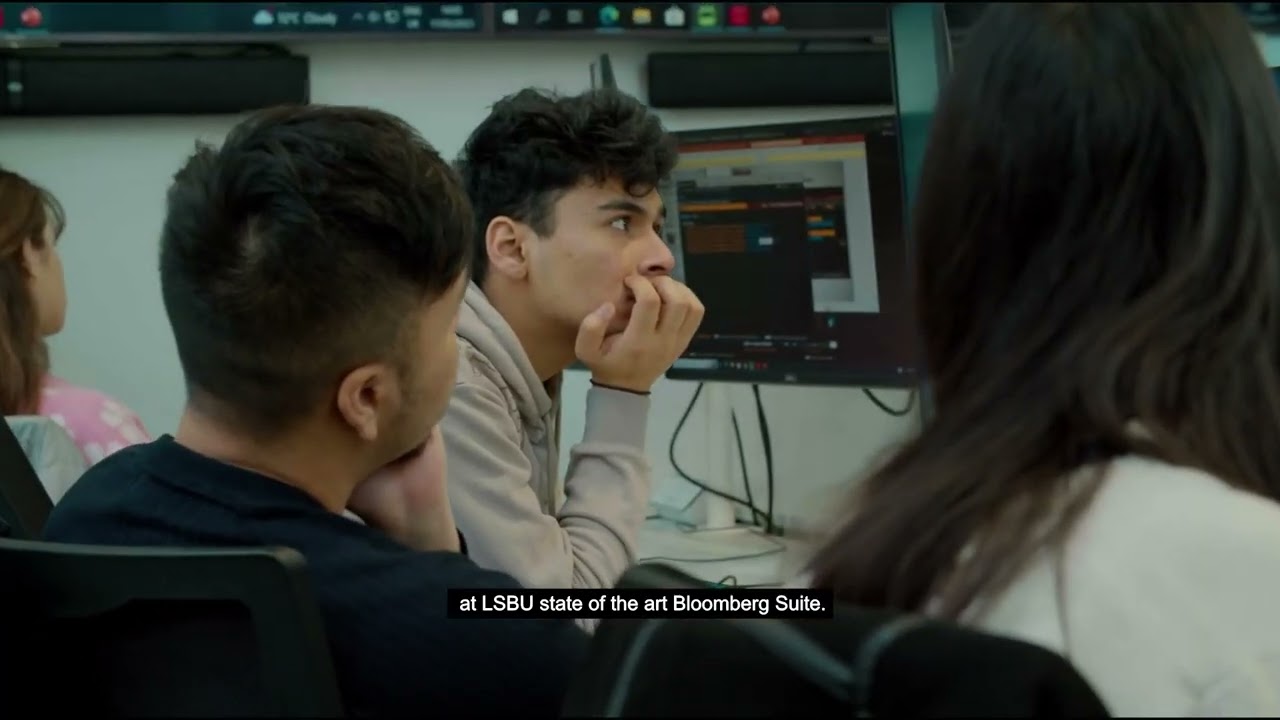
You’ll study the real-world impact of economic practice and theory, in facilities built to mirror the varied and exciting working environments you’ll find in your future career. You’ll manage markets in real time in our fully functional Bloomberg Suite, make data come to life using Stata technology and learn to really use Excel.

From questioning fundamental economic concepts by reviewing country or industry case studies to developing economic models to forecast what the future holds, you’ll be applying economics from the first day you set foot onto our campus. This is where you’ll find a high-quality, academically excellent education, in a friendly and supportive environment, right in the heart of central London.

You’ll learn from academics and practicing economists who are working at the forefront of our economic development, research and teaching. Through their guidance you’ll build a solid understanding of key economic principles, while also exploring more abstract concepts such as the psychology behind economics. Many of our academics are actively involved in the field, regularly writing and publishing papers and books exploring their work further, all of which ensures you get the most up-to-date and impactful economic education.

Our location will expose you to people, cultures and ideas from all over the world, helping you become a successful and socially aware economic professional. You’ll study a broad curriculum grounded in the fundamentals of economic practice, while also exploring how the environment and conservation, global health, immigration and competition in the big tech sector, effect the stability of financial markets. This will equip you with a toolkit that’s equal parts critical thinking, data analysis and strategic insight, making you an invaluable part of any company.

Past students have undertaken placements with NHS, PwC and the Metropolitan Police in their Economics Fraud Division. Our graduates have gone to secure positions with companies that include, Warner Brothers Discovery, BNP Paribas CIB, Hitachi Global and Venture Capital, in roles like Business Analyst, Venture Capital Analyst, Capital Markets Analysis and Management Consultant.

LSBU Bloomberg Suite

Start an exciting journey where you will explore economic ideas, schools of thought and historical events which have led the world economy to where it is today. Our curriculum is informed by the challenges and tasks professional Economists face in a variety of industries, helping you become an educated, passionate and competitive graduate who will be successful in any number of career paths.

Start your journey. Apply today.

Is this course right for me? 

If  you’re hardworking and love a challenge, then this course is for you. If you’re full of questions and want to know more about the world around you, then this course is for you. If you want a gold standard education in economics with a holistic focus, then this course is for you.

Above all though, if you’re hungry to create your own version of success then LSBU is right for you. Because the making of you doesn’t begin and end with just your degree, everything that’s brought you here today is part of your story; your experiences, the life you’ve lived, the skills you’ve gained and the goals you’re chasing.

Not only do we see this, but we value that in you. We’re not in the business of forcing you into moulds, instead we’re here to help you break them. If you’re ready to embark on a journey of hard work, fulfilment and self-discovery, then Economics at LSBU is definitely right for you.

“I chose to study Economics with Finance because I’ve always been interested in how economies operate and how financial systems influence economic outcomes. It’s a great combination for anyone looking to understand how financial markets, institutions and economic policies shape the world we live in.” Francesa, Economics BSc Hons Alumni

Course Accreditations

  • ACCA

    ACCA

  • CIMA

    CIMA

  • ILM

    ILM

Course Content

What will I learn?

This course has been designed to develop both your intellectual skills and your social skills, helping you build a solid foundation of economics knowledge while getting you ready to succeed in higher education and beyond. We’ll help you discover all the interesting ways economists utilise mathematics, while also getting to know you and your aspirations for work and life.


Modules in management and business strategy will show you how the talents of the economist suit you to responsible, decision-making jobs, while Second Year modules such as Economic Policy Analysis and the Digital Economy are notable examples of where theoretical and technical skill meets social awareness.

The Analytical Economist focuses on the skills you will need to understand and succeed in the job market when you graduate. With plenty of input from practitioners, you will work on a ‘live brief’ jointly designed with an industry professional, ensuring the skills and knowledge you will acquire are current and in demand.


Then there are the opportunities to understand modern finance and data analysis, in Microeconomic Strategy and Macroeconomic Policy to Finance Decision Making and Economic Research. Bottom line, there’s so much variety on this course, reflecting the broad nature of the professional applications of a degree in Economics.

This module introduces students to a range of economic and financial topics and shows how these can be applied to understand the world around us. The module develops student understanding of the external environment businesses face, and aspects of finance relevant to the business context. 100% coursework assessed.

It is important for Economics students to learn about the application of quantitative methods and techniques to analyse and solve problems that exist in business, economics and finance. For this purpose the module introduces and applies the powerful analytic method of calculus for finding optimal solutions to specific issues in economics and business. Coursework and exam assessed.

In this module students will be utilising business project frameworks, problem-solving skills and idea generation techniques that will support them through the key stages required to complete a small business project from concept to delivery. Throughout the stages of their project, and by incorporating a facilitated coaching process, students will be supported to develop key skills vital to successful leadership and management. 100% coursework assessed.

This module will continue to develop students’ understanding of the essential micro- and macroeconomic theories which are the bedrock to the economic concepts and methods studied in Finance and the Economy. The emphasis of the module is upon the theoretical frameworks underpinning the business applications of economics in facilitating the decisions of policy-makers, managers and entrepreneurs in a variety of situations as well as the implications of the open macroeconomy on the operations of modern firms. 100% coursework assessed.

This module introduces students to the basic concepts of management in organisations. It gives students an appreciation of the complexities of organisations that affect employee behaviour within them. It introduces them to human resource management strategies to manage people in organisations. The module incorporates key management, organisational behaviour and people management theories and practices. 100% coursework assessed.

This module aims to equip students with the knowledge of skills of basic strategic analysis. Students will be exposed to the use of simple strategic tools to evaluate the business and its wider environment. They will also be able to identify creative strategic solutions to simple organisational issues. The module further aims to develop students’ ability to make decisions between different strategic alternatives. 100% coursework assessed.

The aim of the module is to provide an intermediate level analysis of the principles governing the allocation of resources in market economies, and the operations of the micro-economy. The module develops the theoretical concepts introduced at level 4, by investigating in greater depth the decisions of individual consumers, and firms in order to explain why, and how, such choices are made. The course also introduces the student to welfare economics, and considers general equilibrium, economic efficiency, and social welfare questions and issues. Market failure and the policy responses to such failure are also explored. Coursework and exam assessed.

This module provides comprehensive insights into graduate employability and career development for economics students. It teaches students essential techniques of self-awareness building, career exploration, job search, succeeding in recruitment and selection processes and teamwork, enabling them to secure employment and thrive in the world of work. In addition, the module covers specific skills of particular relevance to economists, especially digital and communication skills that are valued and highly sought after by relevant employers. 100% coursework assessed.
This module introduces the student to the basics of econometrics. It starts with the standard OLS methodology and beginning with simple regression analysis, moves to multiple regression analysis. The problems associated with OLS are explained along with their consequences and potential alleviating measures. Indicator or dummy variables are also considered along with their applications. A heavy emphasis on addressing econometric problems with the use of statistical software will also be pursued. 100% coursework assessed..

This module embeds both the definition and importance of macroeconomic indicators, including what they mean and how they are calculated. Students will have a clear story of the history of economic though in the context of macroeconomics. This will involve understanding historic theory including Say’s Law, Keynesianism, Monetarism as well as modern economic thought within macroeconomics. Students will work with and manipulate macroeconomic data and gain an understanding of current economic conditions within the United Kingdom using government economic reports. Coursework and exam assessed.

This module is an introduction to the basic principles of contemporary finance and investment. It seeks to provide an elementary knowledge of the subject, simultaneously highlighting the essential links between accounting & finance concepts and practical financial management in a digital world; you will thereby be provided with a firm foundation in the theoretical as well as practical aspects of financial decision-making in a digitised marketplace.

This module will help students to learn how to use economics to understand and articulate reasoned views on some of the most pressing policy problems facing our societies: inequality, financial instability, the future of work, climate change, wealth creation and innovation. It addresses positive and normative dimensions as well as political-economy constraints. 100% coursework assessed.

This module offers an excursion into the digital economy and novel types of industries and businesses arising within. It introduces students to the key drivers, which are currently transforming various industries and includes examples of the UN SDG on Industry Innovation & Infrastructure. The module aims to equip students with an understanding of the changing digital environment and trends in digitalisation, which define current economic developments. It further aims to raise awareness of the regulatory challenges these recent trends impose. 100% coursework assessed.

Optional placement year in industry (if you choose not to do a placement year, you will take the modules listed below in your third year).

This module introduces the students to an understanding of fundamental models in microeconomics and introduces them to methods of formal microeconomic analysis. It differs from previous modules on microeconomics the students will have completed in that it treats the models in a more formal manner, and additionally introduces the student to the treatment of the models using various mathematical (and graphical) techniques including calculus. Coursework and exam assessed.

Students will learn ways to connect the behaviour of households, firms and governments and central banks to aggregate economic outcomes. The module will focus on linking policies on economic growth to innovation, market structure and firm dynamics; and more generally by taking institutions seriously into account when looking at growth, business cycles and unemployment and the interplay between them. Coursework and exam assessed.

This module is about managing the finance function in a business enterprise by making value-maximising financial decisions. Financial value is a function of cash, time and opportunity cost – all key factors that financial managers need to consider when allocating scarce resources to competing uses. Since value maximisation requires the optimum balance of return and risk, the management of risk will be an important theme of the module. You will thereby be provided with a firm foundation in the theoretical as well as practical aspects of financial decision-making.

The module aims to build on already existing knowledge of the fundamental theory and practice of finance, and provide you with the more advanced technical expertise required to apply these in the context of strategic financial decision making and risk management from the perspective of senior financial executives or consultants. It will also be useful for students seeking a firm grounding in advanced corporate and international finance as a basis for further study or research in the subject area. 

The Economic Research Methods module runs over two semesters aims to help students to develop an understanding of the research process in semester one and to undertake research in semester two leading to successful completion of their applied project. It covers ideas, techniques, and methods relevant to different stages of the research process, stressing the interdependence of each stage in conducting effective, coherent and rigorous research.

Teaching and Assessment

How will I learn?  

A better question might be how do you learn best? Is it in a group, through self-study at the library? The Economics team at LSBU use a mix of teaching styles to help you to succeed, with an overall approach of hands-on learning with industry-standard technology.

There are interactive lectures, small-group seminar discussions and exercises, well-designed games to help you to understand economics in a fun way, live briefs set by industry practitioners, group presentations for formative feedback, case studies (including self-developed cases), and sessions designed to build both your practical and theoretical understanding of the kind of economic principles that will make you valuable to employers.

Variety, engagement and entertainment are key to the way Economics is taught at LSBU, with learning often continuing beyond the lecture hall. Whether that’s through extracurricular activities such as joining our Economics Society, or through the kind of guest lectures and networking events that can only come from studying in Central London, there are plenty of chances to grow and develop both professionally and personally.

You can also expect a variety of assessment methods, including essays and reflections, timed workshop sessions, presentations, and a research project, for which you will have a personal supervisor. You’ll put skills to use working in our fully equipped Bloomberg Suite, monitoring markets and analysing financial data in real-time, while also getting hands-on experience with a range of other industry-standard software and tools.

“The thing I like most about my course was how it shifted the way that I think analytically, by presenting me with intriguing assessments and by making use of the interesting conversations I have had with lecturers about different topics related to my studies or even other fields.” -  Devid, Economics Alumni

Where will I learn?

Explore life at LSBU from anywhere - Take a virtual tour to explore our campus, discover key facilities and experience what student life is like.

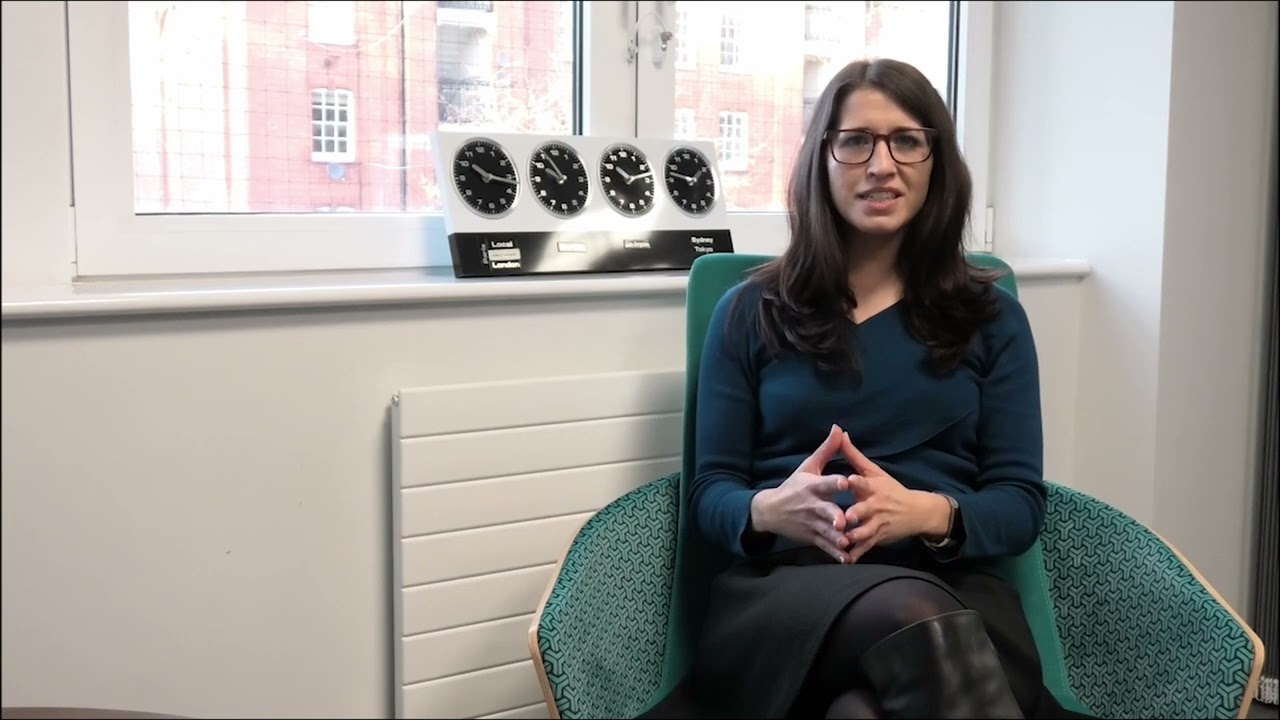
Meet your lecturer

Careers

What’s in it for me?  

This is your future. Your career. Your success. And we’re here for it.

Going to university might just be the biggest investment you ever make, but with us by your side you can turn a degree into a bright future, full of purpose, passion and career you can be proud of (which may be why our graduates earn the highest average salaries across London Modern universities).


With Economics at LSBU you get:

  • To study at a top Modern London university and top 10 UK university for Economics (Guardian League Table, 2025)
  • Support and guidance from day one – we've been Highly Commended for our student support (THE Awards, 24), with 100% of students feeling staff supported their learning well (NSS, 25)
  • Access to Stata and Excel and training in our Bloomberg Suite. Plus, the chance to boost your CV with Bloomberg Certification
  • Help, support and guidance in starting your own venture, we’re an IOEE Centre of Excellence, celebrated for creating and sustaining an enterprising and entrepreneurial culture.

LSBU CareerSmart is your ultimate gateway to career success. Our innovative programme is designed to ensure you graduate with more than just a degree, providing the support you need to stand out in a competitive job market. We've got all the tools you need, including:
  • AI Powered Career Sets - Get instant personalised feedback on your CV and cover letter by submitting it via our AI powered career tool.
  • Gamification Interviews - Get ready to pass those interviews with unlimited training access to our gamification interviews and psychometric tests!
  • Personalised Career Development Dashboard - Keep up with your skills progression with free access to practical assessments, LinkedIn learning, mentoring, and industry-standard facilities.
We understand that you’re in the driver’s seat of your career, which is why we’re committed to matching your passion and energy every step of the way.


Entry Requirements

    112 UCAS points

    Or equivalent level 3 qualifications, as well as Level 2 Maths- GCSE at grade 4/C or above.

    If you do not meet the entry criteria above we also review any previous skills, knowledge or experience you have gained outside of your education and are happy to talk through any extenuating circumstances you feel relevant.

    Visit UCAS for guidance on the tariff.

    Missing English and Maths qualifications?

    If you do not have the required English and Maths qualifications needed to satisfy the entry requirements for this programme, we have courses available at our partner College that you can take to upskill in these areas. Find out more at South Bank College.

Missing English and Maths qualifications?

If you do not have the required English and Maths qualifications needed to satisfy the entry requirements for this programme, we have courses available at our partner College that you can take to upskill in these areas. Find out more at South Bank College.

Choose your country

  • Afghanistan
  • Albania
  • Algeria
  • Angola
  • Argentina
  • Australia
  • Austria
  • Azerbaijan
  • Bahrain
  • Bangladesh
  • Barbados
  • Belgium
  • Botswana
  • Brazil
  • British Council Women in STEM Scholarships
  • Bulgaria
  • Cambodia
  • Cameroon
  • Canada
  • Chile
  • China
  • Colombia
  • Croatia
  • Cyprus
  • Czech Republic
  • Denmark
  • Dominican Republic
  • Egypt
  • Estonia
  • Ethiopia
  • Finland
  • France
  • Gambia
  • Georgia
  • Germany
  • Ghana
  • Greece
  • Hungary
  • India
  • Indonesia
  • Iran
  • Iraq
  • Ireland
  • Italy
  • Jamaica
  • Japan
  • Jordan
  • Kazakhstan
  • Kenya
  • Kuwait
  • Latvia
  • Lebanon
  • Libya
  • Lithuania
  • Luxembourg
  • Malaysia
  • Malta
  • Mauritius
  • Mexico
  • Mongolia
  • Morocco
  • Myanmar
  • Nepal
  • Netherlands
  • New Zealand
  • Nigeria
  • Norway
  • Oman
  • Pakistan
  • Poland
  • Portugal
  • Qatar
  • Romania
  • Russian Federation
  • Saudi Arabia
  • Senegal
  • Serbia
  • Sierra Leone
  • Singapore
  • Slovakia
  • Slovenia
  • Somalia
  • South Africa
  • South Korea
  • Spain
  • Sri Lanka
  • Sweden
  • Switzerland
  • Thailand
  • Trinidad and Tobago
  • Tunisia
  • Turkiye
  • Uganda
  • Ukraine
  • United Arab Emirates
  • United States of America
  • Uzbekistan
  • Venezuela
  • Vietnam
  • Zambia
  • Zimbabwe

Need further information?

Call us on 0800 923 8888 to discuss entry requirements.

More contact info

Apply

Course delivery modes and application methods

Mode Duration Start date Application code Application method
Full-time 3 years September L120 UCAS
Full-time (with placement) 4 years September L120 UCAS

How to apply

International Students

International applicants can apply directly to LSBU and should consult our international how to apply guide for further information on the application process and key dates.

Accommodation

Prepare to start

Applicant events
After you’ve received your offer we’ll send you emails about events we run to help you prepare for your course. You’ll also be invited to our Applicant Taster Day so keep your eyes peeled!


Enrolment
Before you start your course, we’ll send you information on what you’ll need to do before you arrive and during your first few days on campus. You can read about the process on our enrolment pages.

Fees

United Kingdom

£9790

Tuition fees for home students

International

£17880

Tuition fees for international students

Tuition fees are subject to annual inflationary increases. Find out more about tuition fees for Undergraduate or Postgraduate courses.

full-time

Full-time Year 1 - All Available Courses

BSc (Hons) Economics [Finance] (FT) - Year 1 FT Southwark SEPT Economics (Finance)
The fee shown is for entry 2026/27
UK fee: £9790 International fee: £17880
AOS/LSBU code: 5799 Session code: 1FS02
Total course fee for this location/stream:

* The full amount is subject to fee increases, the total shown below is based on current fees.

UK: £29370
International: £53640
BSc (Hons) Economics (with Placement) [Finance] (FT) - Year 1 FT Southwark SEPT Economics (Finance)
The fee shown is for entry 2026/27
UK fee: £9790 International fee: £17880
AOS/LSBU code: 5800 Session code: 1FS02
Total course fee for this location/stream:

* The full amount is subject to fee increases, the total shown below is based on current fees.

UK: £29370
International: £53640

Full-time Year 2 - All Available Courses

BSc (Hons) Economics [Finance] (FT) - Year 2 FT Southwark SEPT Economics (Finance)
The fee shown is for entry 2026/27
UK fee: £9790 International fee: £17880
AOS/LSBU code: 5799 Session code: 2FS02
Total course fee for this location/stream:

* The full amount is subject to fee increases, the total shown below is based on current fees.

UK: £29370
International: £53640
BSc (Hons) Economics (with Placement) [Finance] (FT) - Year 2 FT Southwark SEPT Economics (Finance)
The fee shown is for entry 2026/27
UK fee: £9790 International fee: £17880
AOS/LSBU code: 5800 Session code: 2FS02
Total course fee for this location/stream:

* The full amount is subject to fee increases, the total shown below is based on current fees.

UK: £29370
International: £53640

Full-time Year 3 - All Available Courses

BSc (Hons) Economics [Finance] (FT) - Year 3 FT Southwark SEPT Economics (Finance)
The fee shown is for entry 2026/27
UK fee: £9790 International fee: £17880
AOS/LSBU code: 5799 Session code: 3FS02
Total course fee for this location/stream:

* The full amount is subject to fee increases, the total shown below is based on current fees.

UK: £29370
International: £53640
BSc (Hons) Economics (with Placement) [Finance] (FT) - Year 3 Sandwich Southwark SEPT Economics (Finance)
The fee shown is for entry 2026/27
UK fee: £0 International fee: £0
AOS/LSBU code: 5800 Session code: 3FS02
Total course fee for this location/stream:

* The full amount is subject to fee increases, the total shown below is based on current fees.

UK: £29370
International: £53640

Full-time Year 4 - All Available Courses

BSc (Hons) Economics (with Placement) [Finance] (FT) - Year 4 FT Southwark SEPT Economics (Finance)
The fee shown is for entry 2026/27
UK fee: £9790 International fee: £17880
AOS/LSBU code: 5800 Session code: 4FS02
Total course fee for this location/stream:

* The full amount is subject to fee increases, the total shown below is based on current fees.

UK: £29370
International: £53640

For more information, including how and when to pay, see our fees and funding section for undergraduate students.

Please check your fee status and whether you are considered a Home, EU or International student for fee-paying purposes and for our regulatory returns, by checking at the the UK Council for International Student Affairs (UKCISA) find your fee status page.

Visit our Policies and procedures page for details on fees policies.

Possible fee changes

The University reserves the right to increase its fees in line with changes to legislation, regulation and any government guidance or decisions.

The fees for international students are reviewed annually and the University reserves the right to increase the tuition fees to reflect increased costs of delivery and to maintain an a high-quality student experience. This increase would be no more than Consumer Prices Index (CPI) increases plus 5%.

Scholarships

We offer several types of fee reduction through our scholarships and bursaries. Find the full list and other useful information on our scholarships page.

Contact information

International team enquiry

Discover Uni Key Information

Register your interest