Book an Open DayGet info and updates

icon_cup_red.svg

Top 5 in the UK for Student Satisfaction for Chemical Engineering (Complete University Guide by Subject, 2026).

icon_rocket_red.svg

Exciting career opportunities - Our students have secured placements and graduate jobs at Pfizer, GSK, Dow, Chevron, National Grid and Evora Global.

icon_people_red.svg

From AI machine learning boot camp to silent film processing, there is a range of extracurricular activities for Engineering students to get involved in.

Overview

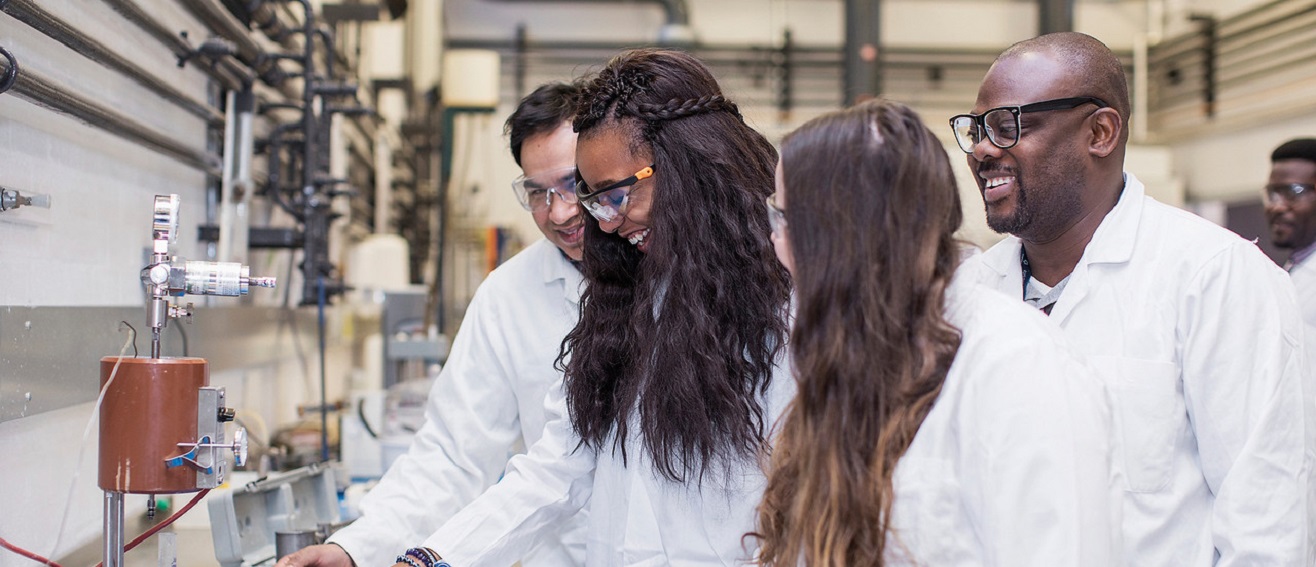
Choose our BEng (Hons) Chemical Engineering course if you are looking for a fascinating career working on the industrial processes that make the world work. Chemical Engineering focuses on developing safe and sustainable ways to turn raw materials into everyday products. We run a hands-on course, that includes computer simulation, laboratory practice, industrial days and visits, and a community that is diverse, friendly, and supportive. You also have the opportunity to work in industry on placement for a year. It is this environment that enables our graduates to be well-equipped to work in industries including energy, water, food, drink, chemicals and pharmaceuticals.

Accredited by the Institution of Chemical Engineers, the course offers progression to Chartered Engineer status.

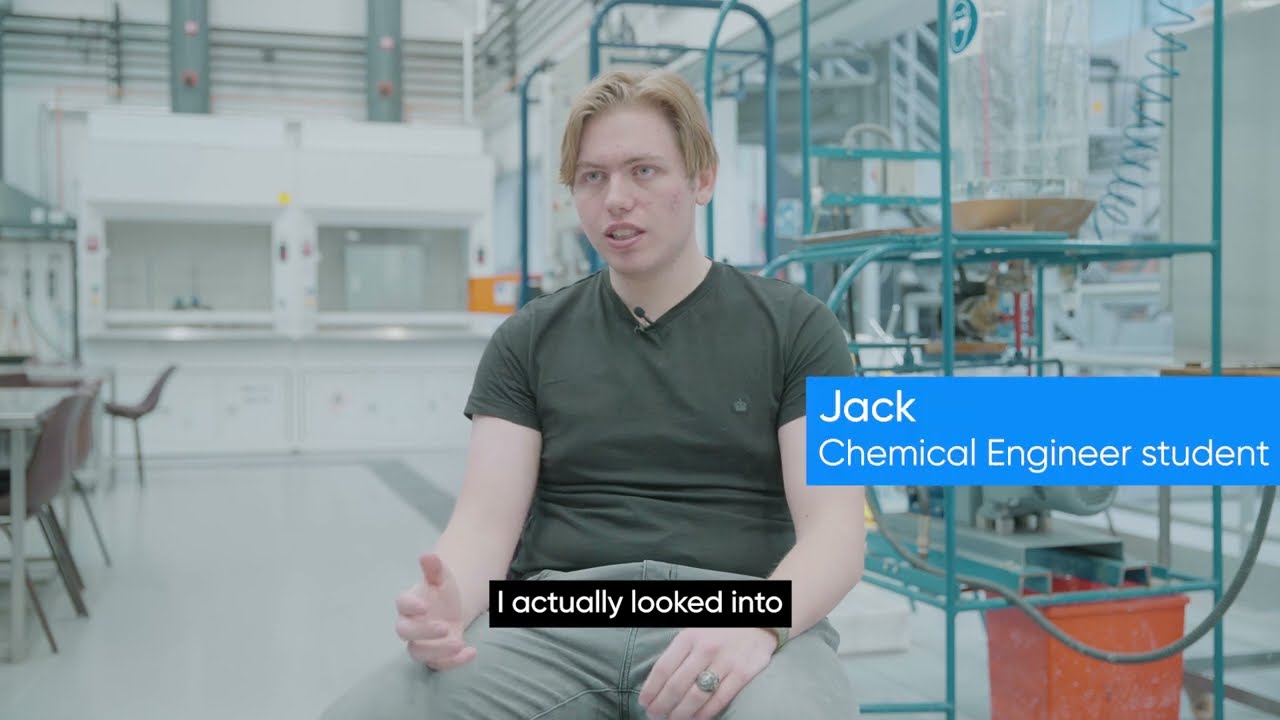
Meet Jack - Chemical Engineering student

Course Content

What will I learn? 

This bachelor’s level undergraduate course covers the theory of chemical engineering with a focus on application to research and industry, as well as introducing topics that are important for future energy, mixed with a focus on renewables and oil and gas. Along with in-class and online teaching, in the form of lectures and tutorials, we provide a broad, engaging, and supportive taught experience, including:

  • Laboratory practice
  • Computer simulation
  • Practical skills – presenting, report writing, teamwork and organisation
  • Wide-ranging support services
  • Talks and workshops from the industry
  • Site visits and field trips
  • The CEE Green Energy Society
  • Optional industrial placement

In the first year, you are introduced to basic engineering principles. The second year focuses on core unit operations such as thermodynamics, chemical reactions, separation processes, process design, simulation, and control.

After two years of study, you are encouraged to have a one-year industrial placement (sandwich course), with support on how to search provided by LSBU’s Careers Hub.

In the final year, the course trains you in specific areas of process control, safety, sustainability and environmental management, and advanced areas of compressible fluids, separation, and reactor design. The final year design project covers a wide range of aspects of industrial scale process design from raw material feedstocks to final marketable products, taking into account cost estimation, HAZOP, environmental impact assessment, sustainability analysis and process optimization.

The total credit value of the course is 360 credits, made up of 16 standard 20-credit modules and one final-year project module worth 40 credits. Each year you need to complete 120 credits.

Computational tools are central to modern engineering practice. This module introduces how engineering problems can be represented using mathematical models and explored through simulation. You will learn how simulations are built, tested and used to support engineering analysis and decision-making. Through hands-on computing workshops, you will develop confidence in modelling simple systems, interpreting results and communicating findings clearly. The skills gained are transferable across all engineering disciplines and form a foundation for later analytical and design work. Assessment method: 100% coursework. 

Design and Practice develops the essential academic, professional and creative skills needed for engineering study and future careers. You will explore design methodologies, creative problem-solving, teamwork and project management, alongside written communication and computer-aided design (CAD). The module introduces sustainability, professional standards and the role of engineers in industry and society. Personal development planning is embedded throughout, helping you build confidence, employability and a clear sense of direction within your chosen engineering discipline. Assessment method: 100% coursework. 

Engineering Mathematics provides the mathematical foundation required for all engineering degrees. Designed to support students from a wide range of backgrounds, the module develops key skills needed to solve engineering problems at an early stage. You will study core mathematical techniques and learn how they are applied in engineering contexts. The module also introduces computational tools, such as MATLAB, to support problem-solving. By the end, you will be better prepared to apply mathematics confidently throughout your studies. Assessment method: 100% coursework.

This module introduces the fundamental scientific principles that underpin engineering analysis and design. You will explore key concepts relating to forces, energy and physical systems, learning how idealised models are used to understand and solve engineering problems. Emphasis is placed on developing analytical thinking and problem-solving skills that apply across disciplines. The knowledge gained provides a strong foundation for later study in areas such as mechanical, thermal, structural and systems engineering. Assessment method: 100% coursework.

Materials Engineering introduces the fundamental principles governing the behaviour and selection of engineering materials. You will explore how the structure of metals, polymers, ceramics and composites influences their properties and performance. The module considers how materials are processed and chosen for real applications, balancing functionality, sustainability and cost. Learning is supported through lectures, laboratories and group activities, encouraging practical understanding and collaboration across engineering disciplines. Assessment method: 100% coursework.

Measurement is fundamental to all areas of engineering. This module introduces the principles behind how engineers obtain meaningful information from real systems and use it to support analysis, design and decision-making. You will explore core ideas relating to measurement, data quality and uncertainty, alongside an overview of instrumentation used in engineering practice. Practical activities develop confidence in experimental work, data handling and interpretation, building transferable skills relevant across all engineering disciplines. Assessment method: 100% coursework.

This module develops your knowledge of advanced engineering mathematics, and the skills which enable you to apply mathematical methods and tools proficiently in the analysis and solution of a variety of engineering problems. 

This module provides you with the fundamental principles of thermodynamics (heat, energy and power) and their role in chemical engineering processes and systems. 

This module equips you with an understanding of the scientific principles underlying separation processes such as distillation and absorption, and their fundamentals design procedures. 

In this module you will learn the principles of reaction kinetics and reactor design, including basic concepts such as rate laws, ideal reactors and reactor arrangements. The teaching is supported by laboratory experiment.

This module introduces students to the application of mass and energy balance principles in key chemical processes, alongside the study of unit operations and process flow diagrams. 

This module introduces the principles of process design, flowsheeting and flowsheet calculations, process simulation, as well as process economics and concepts such as capital and operating costs. It also introduces heat exchanger design and concept of pinch analysis.

Optional placement year

This module enhances and builds on your knowledge and ability to design a chemical plant with the opportunity to propose new and/or innovative processes. It improves your communication skills and self-esteem through weekly feedback sessions, and your ability to work in a team as well as individually. 

The module is aimed at developing your understanding of design on advanced separation and reaction processes and enhancing your ability to apply learned fundamental knowledge to process applications. 

This module provides knowledge of the major hazards for chemical engineering industry, both on-site, and to the surrounding and wider environment. You will gain the skills to apply a range of analysis and safety management techniques to enable safe operation of chemical processes. 

This module aims to provide students with the necessary knowledge and technical skills to address global issues regarding to improved sustainability such as clean energy and clean industrial practice. 

In this module you will learn about process control focused on dynamic modelling and control of first and second order processes. For the fluid flow aspect, you will learn about the flow of compressible fluids/gases for adiabatic and isentropic processes. 

* Modules are subject to review and change throughout the year.

Where will I learn?

Explore life at LSBU from anywhere - Take a virtual tour to explore our campus, discover key facilities and experience what student life is like.

Teaching and Assessment

How will I learn?

As the teaching team in the Division of Chemical and Energy Engineering, we are enthusiastic about our teaching and research. We are a multidisciplinary team with expertise in chemical engineering, energy engineering, and materials engineering, some with industrial experience.

All modules are taught through a combination of three or more of lectures, tutorials, computer workshop, laboratory practical, seminars and group work which deliver the intended knowledge and understanding, and intellectual/practical/transferrable skills. There are workshops which are run by external guest lecturers from relevant industries.

Most modules are assessed through both examination and individual/group coursework, with typical weightings of 70% examination and 30% coursework. There are a few modules which are based on 100% coursework throughout your studies mainly with focus on process or product design.

Your personal tutor is assigned during the first three weeks of starting the course. Your personal tutor will be your first point of contact should you have any questions about the course, academic regulations, and the university facilities to support your studies. You will have a couple of timetabled meetings with your personal tutor each semester during the first year to get to know them.

Careers

What’s in it for me?

Employability Service

At LSBU, we want to set you up for a successful career. During your studies – and for two years after you graduate – you’ll have access to our Employability Service, which includes:

  • An online board where you can see a wide range of placements: part-time, full-time or voluntary. You can also drop in to see our Job Shop advisers, who are always available to help you take the next step in your search.
  • Our Careers Gym offering group workshops on CVs, interview techniques and finding work experience, as well as regular presentations from employers across a range of sectors.

Our Student Enterprise team can also help you start your own business and develop valuable entrepreneurial skills.

Chemical engineering is a significant growth sector for the UK and across the world. The solutions to our current problems will be solved by creative and energetic engineers; this is your time to make a difference.

LSBU has an enviable reputation for graduate careers and entrepreneurship. Our graduates find opportunities across the world and make an impact wherever they go.

Recent graduates have secured placements and graduate positions at companies including:

  • Pfizer
  • GSK
  • Dow
  • Chevron
  • National Grid
  • Evora Global

Graduate positions include :

  • Graduate Electrical Project Engineer
  • Project Controls Officer
  • Junior Sustainability Consultant

The combination of Engineering and LSBU’s focus on high-quality teaching and skills development with a vocational drive is key to the success of our graduates. Study with us and doors will open as you embark on the journey that is your career.

This degree opens a wealth of sectors to you: chemical industries, food and drink, pharmaceuticals, energy and oil and gas industries. You could run projects designing and simulating chemical processes or be a research and development engineer working on new plants, systems and processes.

The students in our BEng course may wish to transfer to the corresponding MEng Chemical Engineering if they qualify or may also apply for any of the divisions MSc courses; Advanced Chemical Engineering, MSc Future Energy Engineering or MSc Process Safety.

In addition, there are several opportunities to apply to a PhD in Chemical Process and Energy Engineering in our Division.

The programme has been designed to give maximum opportunity to demonstrate the skills required for a full career using the techniques learned on the course.

This degree is accredited by the Institute of Chemical Engineers (IChemE) on behalf of the Engineering Council for the purposes of fully meeting the academic requirement for registration as a Chartered Engineer.

The Institution of Chemical Engineers (IChemE) is the global professional membership organisation for people with relevant experience in chemical engineering. Having this accreditation helps progression towards Chartered Engineer status, which is an internationally recognised qualification.

Accreditation is a mark of assurance that the degree meets the standards set by the Engineering Council in the UK Standard for Professional Engineering Competence (UK-SPEC).

An accredited degree will provide you with some or all of the underpinning knowledge, understanding and skills for eventual registration as an Incorporated (IEng) or Chartered Engineer (CEng).

Some employers recruit preferentially from accredited degrees, and an accredited degree is likely to be recognised by other countries that are signatories to international accords.

Institute of Chemical Engineers logo
IChemE is the global professional membership organisation for people with relevant experience in chemical engineering. Having this accreditation helps progression towards Chartered Engineer status, which is an internationally recognised qualification.

Placements

You are encouraged to take an industrial placement in your third year (Sandwich Course). During this placement you can start to put your newly acquired skills into practice. This is an opportunity to understand the way industry functions and to gain an appreciation of the priorities of the commercial environment.

Placement years are a great opportunity and many students get their first job offers through their training year or the experience gained helps them towards their first job offer elsewhere. Some students are able to spend the year working outside the UK in Europe, and sometimes further afield.

LSBU CareerSmart is your ultimate gateway to career success. Our innovative programme is designed to ensure you graduate with more than just a degree, providing the support you need to stand out in a competitive job market. We've got all the tools you need, including:

  • AI Powered Career Sets - Get instant personalised feedback on your CV and cover letter by submitting it via our AI powered career tool.
  • Gamification Interviews - Get ready to pass those interviews with unlimited training access to our gamification interviews and psychometric tests!
  • Personalised Career Development Dashboard - Keep up with your skills progression with free access to practical assessments, LinkedIn learning, mentoring, and industry-standard facilities.

We understand that you’re in the driver’s seat of your career, which is why we’re committed to matching your passion and energy every step of the way.

Find out more

Entry Level Requirements

  • 112 UCAS points, with subjects including Maths and Physical Sciences (Chemistry preferred). Visit UCAS for guidance on the tariff.
  • GCSE Maths and Physics grade C or above or equivalent (reformed GCSEs grade 4 or above).
  • If you do not meet the entry criteria above we also review any previous skills, knowledge or experience you have gained outside of your education and are happy to talk through any extenuating circumstances you feel relevant. You may also be interested in our Chemical Engineering with Foundation Year (BEng Hons) programme which has lower entry requirements.

Choose your country

  • Afghanistan
  • Albania
  • Algeria
  • Angola
  • Argentina
  • Australia
  • Austria
  • Azerbaijan
  • Bahrain
  • Bangladesh
  • Barbados
  • Belgium
  • Botswana
  • Brazil
  • British Council Women in STEM Scholarships
  • Bulgaria
  • Cambodia
  • Cameroon
  • Canada
  • Chile
  • China
  • Colombia
  • Croatia
  • Cyprus
  • Czech Republic
  • Denmark
  • Dominican Republic
  • Egypt
  • Estonia
  • Ethiopia
  • Finland
  • France
  • Gambia
  • Georgia
  • Germany
  • Ghana
  • Greece
  • Hungary
  • India
  • Indonesia
  • Iran
  • Iraq
  • Ireland
  • Italy
  • Jamaica
  • Japan
  • Jordan
  • Kazakhstan
  • Kenya
  • Kuwait
  • Latvia
  • Lebanon
  • Libya
  • Lithuania
  • Luxembourg
  • Malaysia
  • Malta
  • Mauritius
  • Mexico
  • Mongolia
  • Morocco
  • Myanmar
  • Nepal
  • Netherlands
  • New Zealand
  • Nigeria
  • Norway
  • Oman
  • Pakistan
  • Poland
  • Portugal
  • Qatar
  • Romania
  • Russian Federation
  • Saudi Arabia
  • Senegal
  • Serbia
  • Sierra Leone
  • Singapore
  • Slovakia
  • Slovenia
  • Somalia
  • South Africa
  • South Korea
  • Spain
  • Sri Lanka
  • Sweden
  • Switzerland
  • Thailand
  • Trinidad and Tobago
  • Tunisia
  • Turkiye
  • Uganda
  • Ukraine
  • United Arab Emirates
  • United States of America
  • Uzbekistan
  • Venezuela
  • Vietnam
  • Zambia
  • Zimbabwe

Need further information?

Call us on 0800 923 8888 to discuss entry requirements.

More contact info

Apply

Course delivery modes and application methods

Mode Duration Start date Application code Application method
Full-time 3 years September H805 UCAS
Full-time 4 years September H805 UCAS

International (non Home) applicants should follow our international how to apply guide.

Finance

You don't need to wait for a confirmed place on a course to start applying for student finance. Read how to pay your fees as an undergraduate student.

How to apply

International students

International applicants can apply directly to LSBU and should consult our international how to apply guide for further information on the application process and key dates.

Accommodation

Prepare to start

Applicant events
After you’ve received your offer we’ll send you emails about events we run to help you prepare for your course. You’ll also be invited to our Applicant Taster Day so keep your eyes peeled!
Enrolment
Before you start your course, we’ll send you information on what you’ll need to do before you arrive and during your first few days on campus. You can read about the process on our enrolment pages.

Fees

United Kingdom

£9790

Tuition fees for home students

International

£17400

Tuition fees for international students

Tuition fees are subject to annual inflationary increases. Find out more about tuition fees for Undergraduate or Postgraduate courses.

full-time

Full-time Year 1 - All Available Courses

BEng (Hons) Chemical Engineering (FT) - Year 1 FT Southwark SEPT
The fee shown is for entry 2026/27
UK fee: £9250 International fee: £15900
AOS/LSBU code: 5580 Session code: 1FS00
Total course fee for this location/stream:

* The full amount is subject to fee increases, the total shown below is based on current fees.

UK: £27750
International: £47700
Beng (Hons) Chemical Engineering (FT) - Year 1 FT Southwark SEPT
The fee shown is for entry 2026/27
UK fee: £9790 International fee: £17400
AOS/LSBU code: 6008 Session code: 1FS00
Total course fee for this location/stream:

* The full amount is subject to fee increases, the total shown below is based on current fees.

UK: £29370
International: £52200

Full-time Year 2 - All Available Courses

BEng (Hons) Chemical Engineering (FT) - Year 2 FT Southwark SEPT
The fee shown is for entry 2026/27
UK fee: £9250 International fee: £15900
AOS/LSBU code: 5580 Session code: 2FS00
Total course fee for this location/stream:

* The full amount is subject to fee increases, the total shown below is based on current fees.

UK: £27750
International: £47700
Beng (Hons) Chemical Engineering (FT) - Year 2 FT Southwark SEPT
The fee shown is for entry 2026/27
UK fee: £9790 International fee: £17400
AOS/LSBU code: 6008 Session code: 2FS00
Total course fee for this location/stream:

* The full amount is subject to fee increases, the total shown below is based on current fees.

UK: £29370
International: £52200

Full-time Year 3 - All Available Courses

BEng (Hons) Chemical Engineering (FT) - Year 3 Sandwich Southwark SEPT
The fee shown is for entry 2026/27
UK fee: £0 International fee: £0
AOS/LSBU code: 5580 Session code: 3FS00
Total course fee for this location/stream:

* The full amount is subject to fee increases, the total shown below is based on current fees.

UK: £27750
International: £47700
Beng (Hons) Chemical Engineering (FT) - Year 3 Sandwich Southwark SEPT
The fee shown is for entry 2026/27
UK fee: £0 International fee: £0
AOS/LSBU code: 6008 Session code: 3FS00
Total course fee for this location/stream:

* The full amount is subject to fee increases, the total shown below is based on current fees.

UK: £29370
International: £52200

Full-time Year 4 - All Available Courses

BEng (Hons) Chemical Engineering (FT) - Year 4 FT Southwark SEPT
The fee shown is for entry 2026/27
UK fee: £9250 International fee: £15900
AOS/LSBU code: 5580 Session code: 4FS00
Total course fee for this location/stream:

* The full amount is subject to fee increases, the total shown below is based on current fees.

UK: £27750
International: £47700
Beng (Hons) Chemical Engineering (FT) - Year 4 FT Southwark SEPT
The fee shown is for entry 2026/27
UK fee: £9790 International fee: £17400
AOS/LSBU code: 6008 Session code: 4FS00
Total course fee for this location/stream:

* The full amount is subject to fee increases, the total shown below is based on current fees.

UK: £29370
International: £52200

For more information, including how and when to pay, see our fees and funding section for undergraduate students.

Please check your fee status and whether you are considered a Home, EU or International student for fee-paying purposes and for our regulatory returns, by reading the UKCISA regulations.

See our Tuition Fees Regulations (PDF File 630 KB) and Refund Policy (PDF File 775 KB).

Possible fee changes

The University reserves the right to increase its fees in line with changes to legislation, regulation and any government guidance or decisions.

The fees for international students are reviewed annually and the University reserves the right to increase the tuition fees to reflect increased costs of delivery and to maintain an a high-quality student experience. This increase would be no more than Consumer Prices Index (CPI) increases plus 5%.

Scholarships

We offer several types of fee reduction through our scholarships and bursaries. Find the full list and other useful information on our scholarships page.

Are you an international student looking to kickstart your global career at LSBU? If so, our new LSBU Future Global Graduate Awards could help you benefit from the high-quality, career focused education that LSBU offers. Find out more about our Global Graduate Awards.

Contact information

International team enquiry

Discover Uni Key Information

Register your interest