Book an Open DayGet info and updates

icon_cup_white.svg

We're top 5 in the UK for Mechanical Engineering (Guardian League Tables by subject, 2026), and 1st in the UK for Student Satisfaction in Mechanical Engineering (Complete University Guide by subject, 2026)

icon_rocket_red.svg

Build an ethical engineering framework and learn to contribute towards a sustainable future in expansive workshops and labs

icon_people_red.svg

You can take an optional placement year to get experience in industry before you graduate and choose to upgrade your qualification to an MEng (if you get the grades)

Overview

Laying the groundwork for success in Mechanical Engineering

Not everyone takes the same route into university, and that’s ok. If you’re passionate about working in the tech sector but don’t quite meet the entry requirements for Mechanical Engineering BEng (Hons)/MEng degree, then this course is for you.

The Foundation Year is your opportunity to step into Higher Education while building the confidence, skills, and knowledge you need to succeed. In just one year, we’ll help you gain a solid foundation and get ready to take on our Mechanical Engineering degree.

We’ve designed the Foundation Year to give you a well-rounded start, with exciting new topics in technology, communicating ideas, and collaborative real-world projects – all building the strong foundations you’ll need to thrive in today’s fast-moving engineering industry.

Your next step: the degree

Mechanical Engineering at LSBU is all about turning top-class learning (we consistently score highly in university rankings) into practical skills you can use in the real world. With this degree programme, you will build a solid grounding in core principles and concepts, while also getting the space to test your own ideas, make things, break things and use data to innovate. This will position you to work in almost any sector where ethical problem solvers are needed: from energy and transportation to robotics and pharmaceuticals. If you’re the kind of person who can see the solutions others can’t, then this is the place for you.

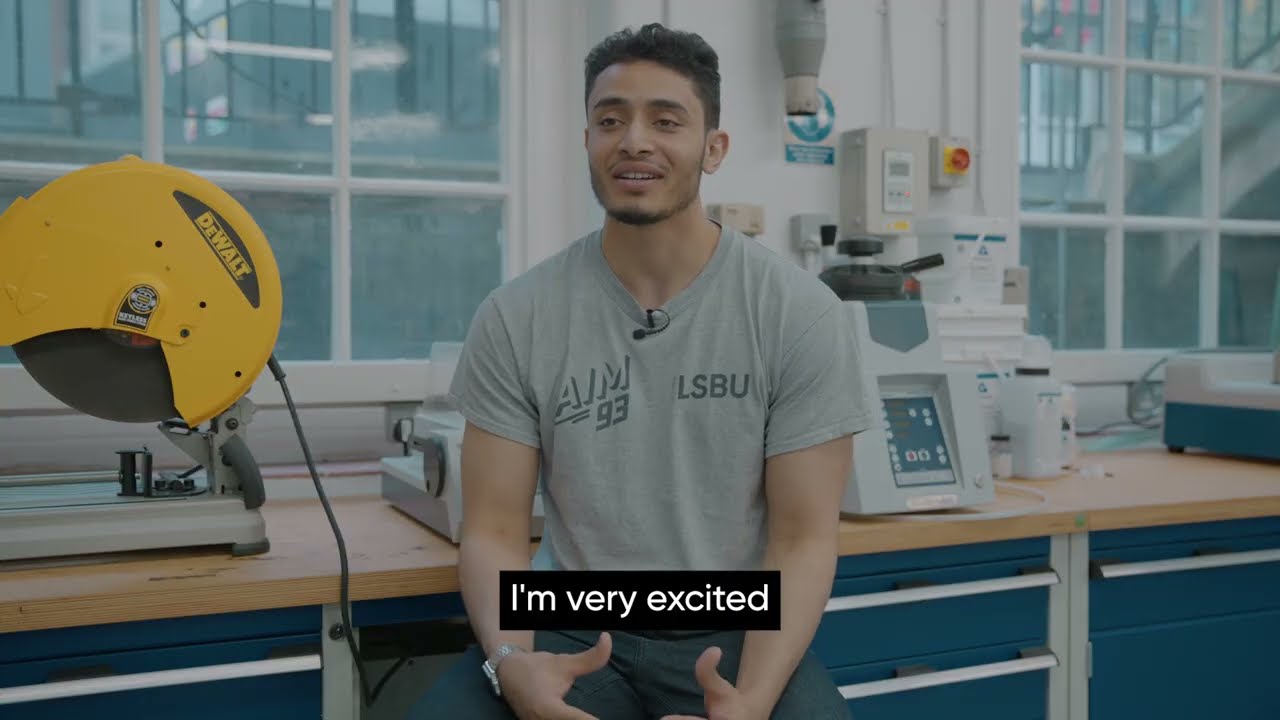
Meet Abdul - Mechanical Engineering student

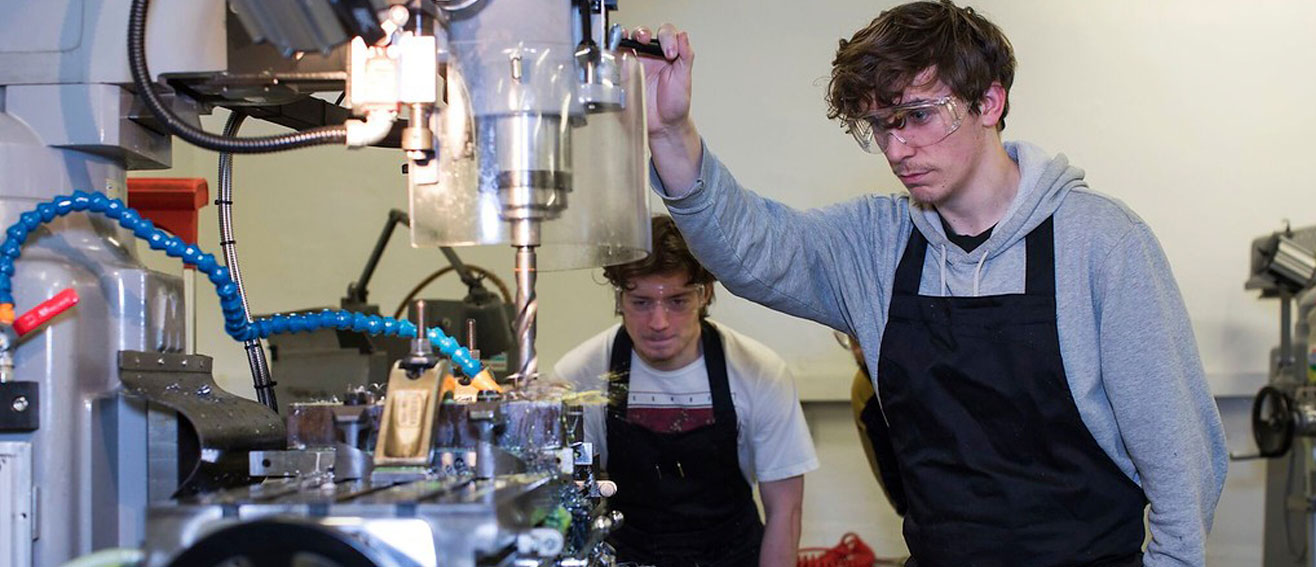
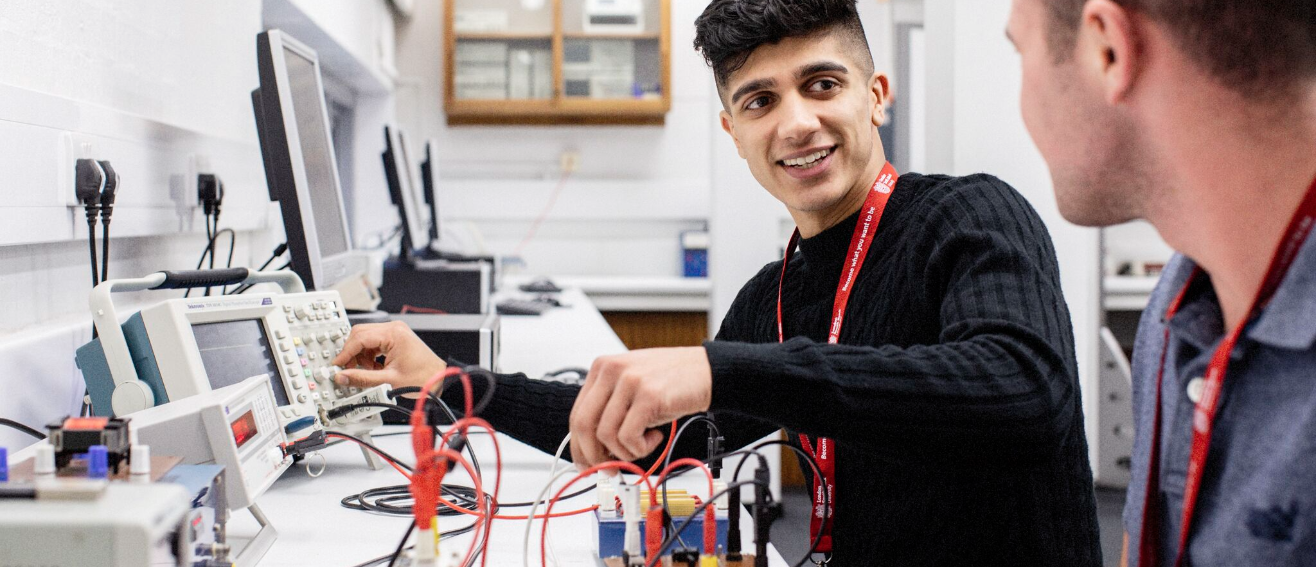
You’ll develop new techniques and tools with a highly practical course curriculum and learning to use state-of-the-art equipment such as our virtual engineering lab and 3-D printing software. From CNC machines and waterjet cutters to wind turbines, solar rigs and VR labs, our expansive workshops are packed with facilities that put you at the heart of real engineering. You’ll also get lots of experience on software used in industry, such as Adobe Creative Suite, ANSYS, Autodesk, Catalyst, Denford, MATLAB, and Simapro. These are available on campus, as well as remotely via AppsAnywhere.

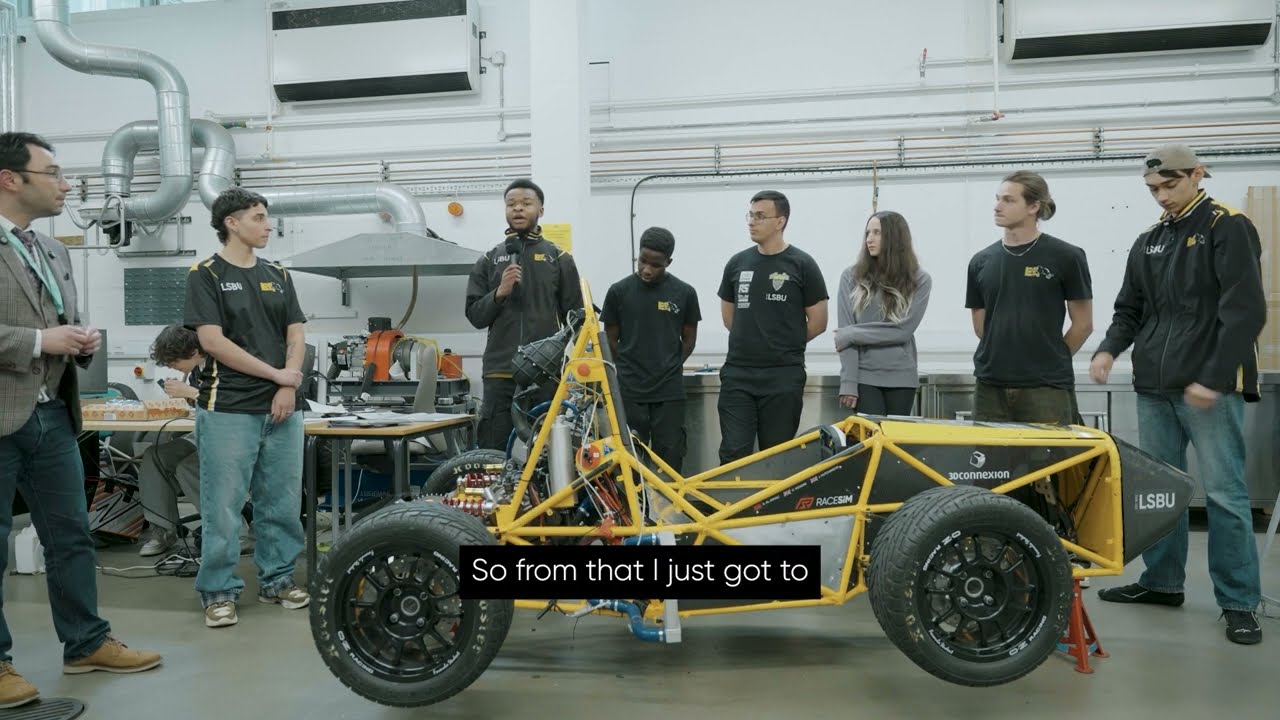
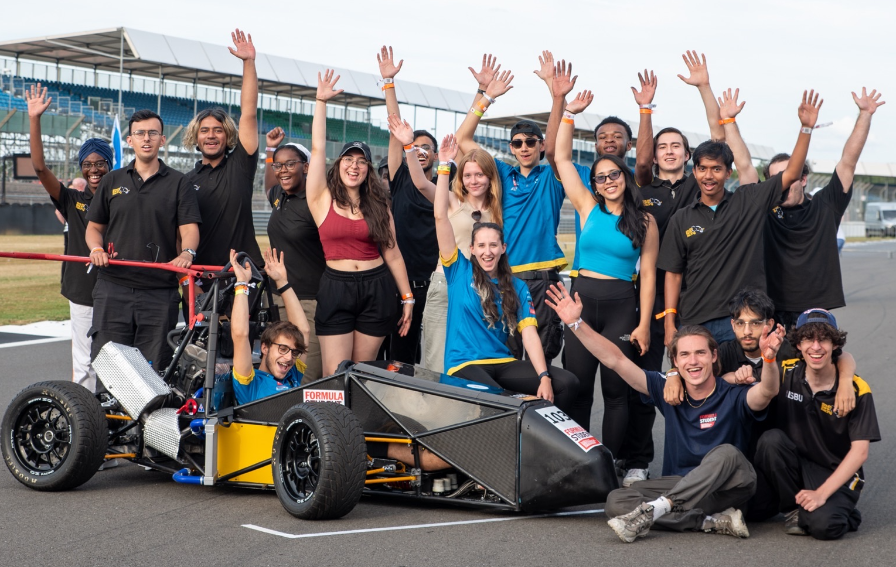
The real-world application of your skills starts on campus and will resonate out into the world around us through live project briefs, industry-lead competitions and site visits. You can also get involved in a range of extracurriculars, from our Formula Student team - who compete in the annual international competition - to Aim93, our human-powered vehicle team, featured in a documentary by a BAFTA-winning director.

Studying at LSBU has been nothing short of amazing! It's location, diversity and opportunities are what make it a perfect choice for an ambitious student like myself." - Mina Stojic, Mechanical Engineering BEng (Hons) graduate.

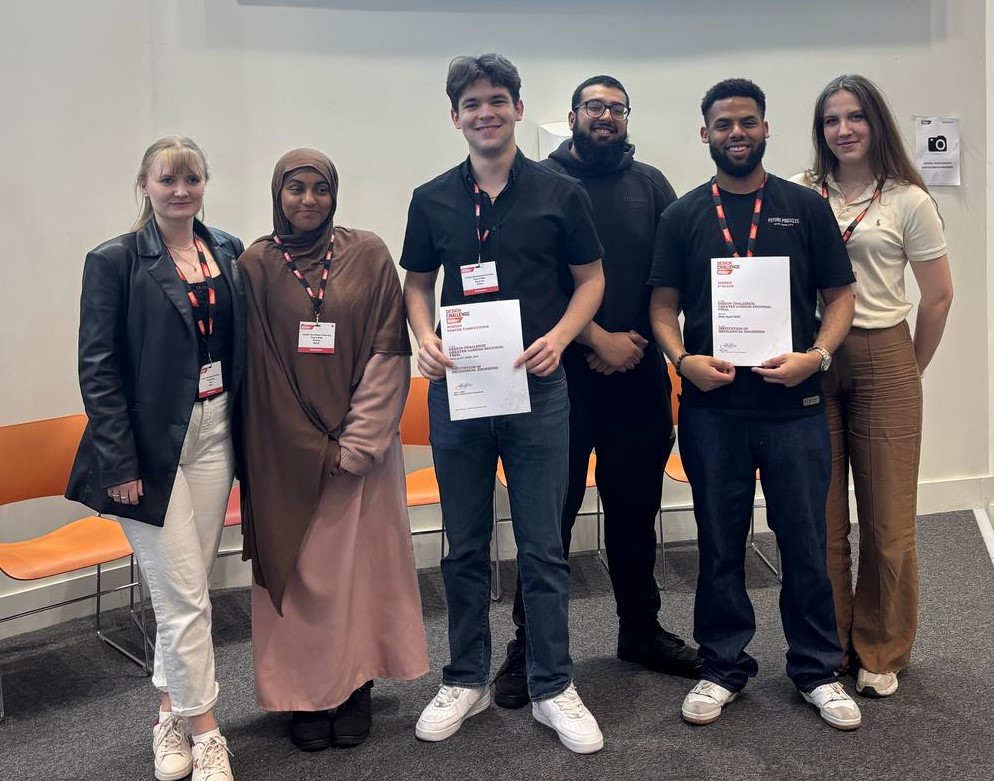
Our students have also entered and won competitions such as the The Mayor's Entrepreneur ProgrammeSouth Bank Ignite, and the Engineering for People (Engineers Without Borders) challenge. The latter took LSBU students to South Africa, working with a local community to create an innovative new design for traffic lights which were more robust and immune to sudden power shortages. Along the way, they’ve gained teamwork and communication skills, along with a lasting sense of camaraderie.Our Central London location puts you in the heart of the action, giving you access to professional development opportunities with companies across industries and sectors. Past students have benefited from site visits to the likes of the National Theatre and guest lectures from engineers working at Rolls Royce. Past students have used these connections and links to industry to secure graduate roles with the likes of Jaguar Landrover, Apple, Guy's and St Thomas' NHS Foundation Trust, The National Theatre, Rolls Royce and McLaren.

This is your chance to join a cohort of like-minded future engineers, all of whom are building the same ethical values, knowledge and skills needed to contribute towards a sustainable future. Join an environment that fosters innovation and entrepreneurship in the pursuit of solving 21st century challenges.

Is this course right for me?

If you love the data-side of problem solving as much as the creative thinking and innovation, then this is the course for you. If you like to work hands-on and learn by doing, then this course is for you. If you like challenging the status quo and doing things differently, then this course is for you.

Above all though, if you’re hungry to create your own version of success then LSBU is right for you. Because the making of you doesn’t begin and end with just your degree, everything that’s brought you here today is part of your story; your experiences, the life you’ve lived, the skills you’ve gained and the goals you’re chasing.

Not only do we see this, but we value that in you. We’re not in the business of forcing you into moulds, instead we’re here to help you break them. If you’re ready to embark on a journey of hard work, fulfilment and self-discovery, then Mechanical Engineering at LSBU is definitely right for you. 

Course Content

What will I learn?

The Foundation Year

You’ll study a shared Foundation Year across the College of Technology and Environment, with broad-based modules instead of subject-specific ones. This year will give you:

  • A well-rounded learning experience where you can explore ideas across different subject areas.
  • The chance to build on your previous qualifications (e.g. A-levels or International Foundation) and strengthen your academic skills.
  • Fresh, future-focused topics in sustainability, AI, and collaborative real-world projects.
  • Flexibility in your first year, with the option to move between courses in the College if your plans change.

The degree programme

Once you’ve built strong study skills on the foundation course, you’ll be ready to progress to the full degree programme.

On the Mechanical Engineering BEng (Hons) course, you will get a deeper understanding of the essential facts, concepts, theories and principles of mechanical engineering and the science and mathematics that underpin them. You will cover all the skills and mechanical engineering topics needed by top employers.

As well as exploring these fascinating topics and disciplines, you’ll learn how to apply your theoretical understanding and practical knowledge to the working world, building out your portfolio and improving your professionalism in the process. Some of our modules involve live industry projects, like a ventilation challenge set by the National Theatre, giving you a real taste of the working world. Throughout your studies, you’ll also build key skills such as teamwork, communication and problem-solving. Plus, our industry advisory board, made up of senior mechanical engineers, helps shape the course to ensure it meets current industry needs.Above all you will learn to build an ethical framework that puts sustainability at the forefront of every project. All your lecturers come from industry, with decades worth of practical and academic expertise behind them.

Whether you’re learning from Dr Hamed Rajabi in his Mechanical Intelligence Lab, or from Craig Porley, who helped British Motorsport racing driver Jake Hill win the British Touring Car award and has won The Engineer of the Year Award, you’ll be getting an expert and industry-focused education.

All modules are assessed by a mix of coursework and examinations and group learning and teamwork is assessed by group studies, reports and presentations.

This module introduces students to sustainability and environmental impact through a multidisciplinary lens, spanning computing, electronics, and the built environment. Working in teams, students investigate a real-world societal challenge, apply core scientific and technical principles, and produce a group video or presentation and individual one-page visual summary of their proposed solution. The module encourages collaboration, practical measurement, and sustainable thinking across disciplines. Assessment method: 100% coursework.

This module introduces design thinking. Students work through studio and workshop-based learning to explore spatial, cultural, and environmental ideas. Core skills include drawing, model making, and digital tools for visual communication. The module fosters conceptual creativity, critical analysis, and awareness of context, building a foundation for design-led study.
Assessment method: 100% coursework.

This module develops academic writing, research, and safe workshop practice alongside numeracy and communication. Students work independently and in teams, apply the scientific method, and use digital tools to complete practical and written tasks. The module also supports personal development planning and successful transition into higher education. Assessment method: 100% coursework.

Students develop hands-on skills in working with data drawn from real-world sources such as engineering sensors, web platforms, and building systems. Through spreadsheets, basic coding, and visualisation tools, students learn to analyse data, build simple models, and present evidence-based findings. The module fosters critical thinking and responsible use of data. Assessment method: 100% coursework.

This module builds essential skills in mathematics, statistics, and spatial reasoning to support engineering, computing, and design studies. Students work with trigonometry, coordinate systems, data visualisation, and CAD tools to solve structured problems. The module enhances analytical confidence and supports transition to Level 4 study. Assessment methods: Coursework 1 (50%), Coursework 2 (50%).

This module uses fast-paced “sprints” to immerses students in authentic engineering design problem-solving through intensive practical projects. Students will tackle real-world scenarios, fostering practical skills and theoretical understanding. Indicative content woven into these projects includes chemistry fundamentals, materials science (manufacturing, characterisation, corrosion/erosion), electric and magnetic circuits, basic mechatronics (combination of mechanical and electrical systems), computer interfaces and data acquisition/processing. Students will gain hands-on prototyping experience in workshops (woodwork/metalwork) and with additive manufacturing, bridging theoretical knowledge with practical application in an engaging, project-based learning environment. Assessment method: 100% coursework. 
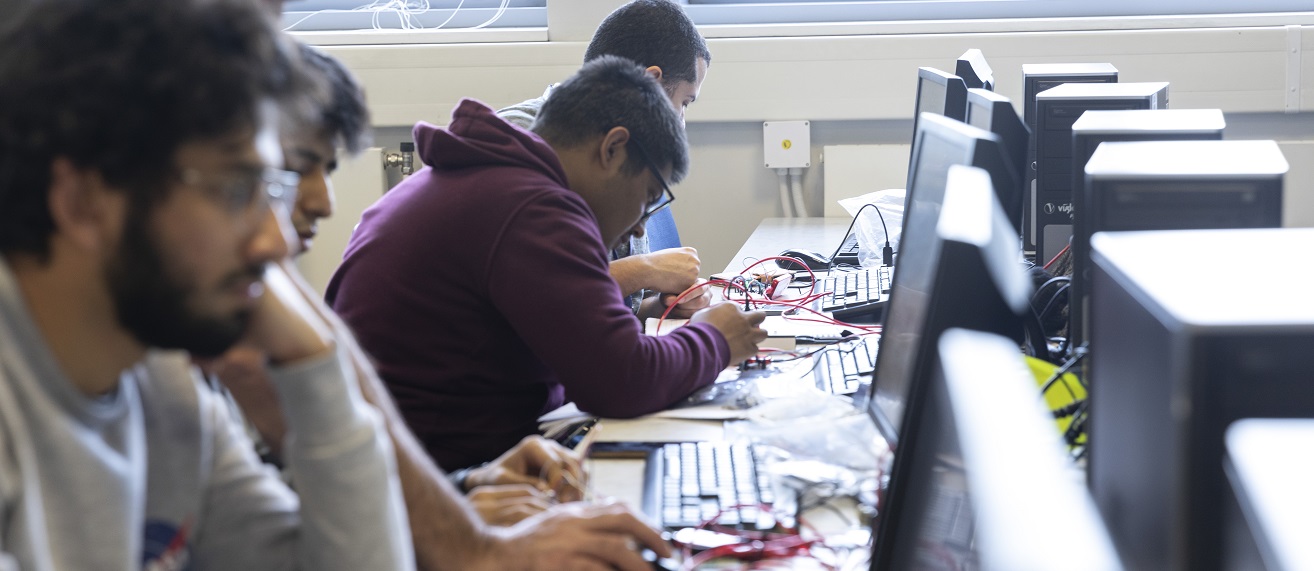
Computational tools are central to modern engineering practice. This module introduces how engineering problems can be represented using mathematical models and explored through simulation. You will learn how simulations are built, tested and used to support engineering analysis and decision-making. Through hands-on computing workshops, you will develop confidence in modelling simple systems, interpreting results and communicating findings clearly. The skills gained are transferable across all engineering disciplines and form a foundation for later analytical and design work. Assessment method: 100% coursework.
 Design and Practice develops the essential academic, professional and creative skills needed for engineering study and future careers. You will explore design methodologies, creative problem-solving, teamwork and project management, alongside written communication and computer-aided design (CAD). The module introduces sustainability, professional standards and the role of engineers in industry and society. Personal development planning is embedded throughout, helping you build confidence, employability and a clear sense of direction within your chosen engineering discipline. Assessment method: 100% coursework

Engineering Mathematics provides the mathematical foundation required for all engineering degrees. Designed to support students from a wide range of backgrounds, the module develops key skills needed to solve engineering problems at an early stage. You will study core mathematical techniques and learn how they are applied in engineering contexts. The module also introduces computational tools, such as MATLAB, to support problem-solving. By the end, you will be better prepared to apply mathematics confidently throughout your studies. Assessment method: 100% coursework.
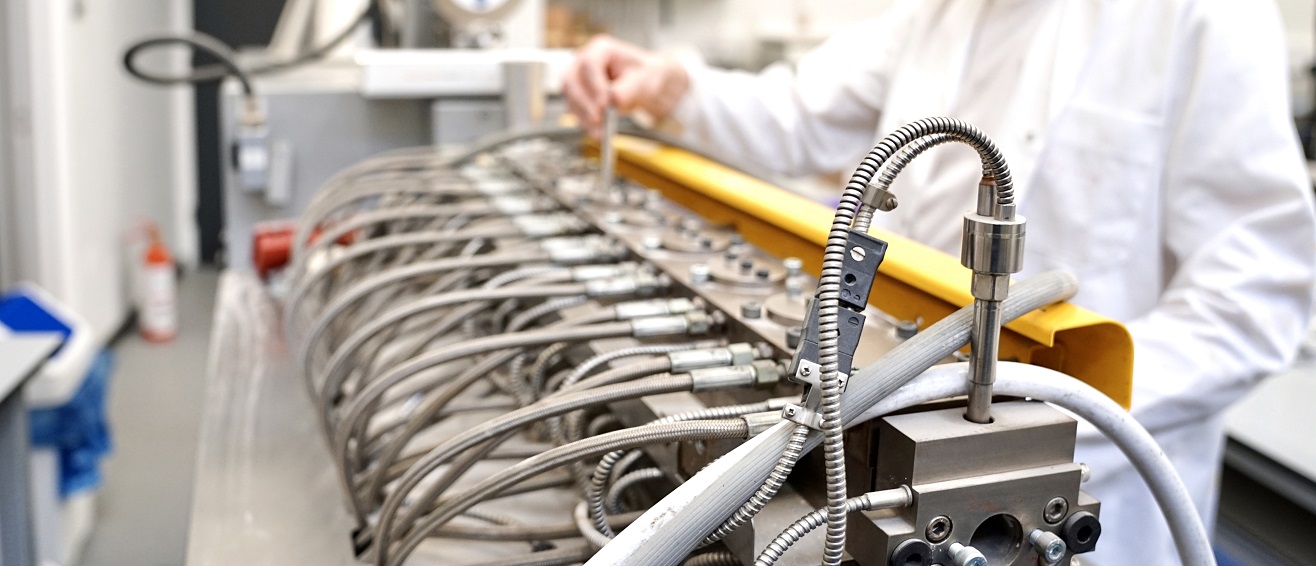
This module introduces the fundamental scientific principles that underpin engineering analysis and design. You will explore key concepts relating to forces, energy and physical systems, learning how idealised models are used to understand and solve engineering problems. Emphasis is placed on developing analytical thinking and problem-solving skills that apply across disciplines. The knowledge gained provides a strong foundation for later study in areas such as mechanical, thermal, structural and systems engineering. Assessment method: 100% coursework.
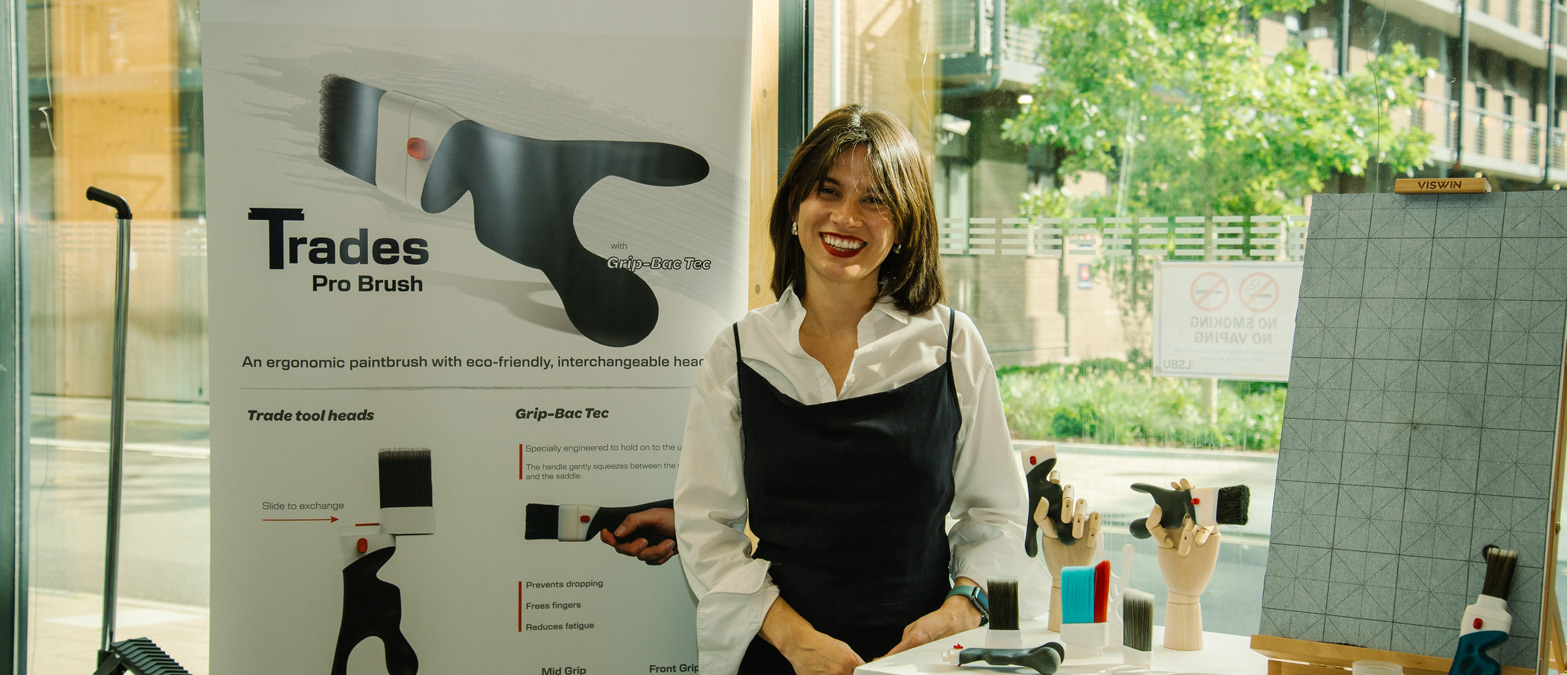
Materials Engineering introduces the fundamental principles governing the behaviour and selection of engineering materials. You will explore how the structure of metals, polymers, ceramics and composites influences their properties and performance. The module considers how materials are processed and chosen for real applications, balancing functionality, sustainability and cost. Learning is supported through lectures, laboratories and group activities, encouraging practical understanding and collaboration across engineering disciplines. Assessment method: 100% coursework. 

Measurement is fundamental to all areas of engineering. This module introduces the principles behind how engineers obtain meaningful information from real systems and use it to support analysis, design and decision-making. You will explore core ideas relating to measurement, data quality and uncertainty, alongside an overview of instrumentation used in engineering practice. Practical activities develop confidence in experimental work, data handling and interpretation, building transferable skills relevant across all engineering disciplines. Assessment method: 100% coursework.
This module covers undergraduate advanced engineering mathematics to enable you to consider and model a variety of relevant engineering problems (e.g. electrical, mechanical, petroleum, chemical, computer, civil). Assessment methods: 50% coursework, 50% exam. 

This module is intended to extend your understanding and ability of engineering design, enabling you to appropriately select and then apply established design theory alongside product development and prototyping techniques to effect comprehensive solutions for a wide range of open ended engineering problems. The module uses a project-based learning approach as a vehicle for developing your ability to design, make and test functional components and/or systems as part of a structured solution to a designated real world problem. The project will require you to make extensive use of the engineering workshops and associated facilities, and will Involve some supplementary use of commercial CAD/CAM and product development software tools. Assessment method: 100% coursework.
This module will provide new concepts in the deformation of materials under different loading conditions and extend the application of fundamental principles of solid mechanics to more advanced systems, building on knowledge gained through Engineering and mechanical Principles. The module will provide basic concepts and the principles of the finite element analysis (FEA) techniques and the application of FEA in structural and stress analysis. Assessment methods: 30% coursework, 70% exam. 

This module builds on the platform established at Level 4. The module covers dynamics and classical theory. You'll extend your treatment of dynamics from point masses rigid bodies, and cover a wider scope of applications of the principles of mechanics. You'll apply a variety of mathematical techniques to the study of dynamics and feedback problems. Additionally, you'll study various methods of classical control theory such as Bode, Nyquist and Root Locus. Assessment methods: 30% coursework, 70% exam.

This module provides a second study of heat transfer, fluid mechanics and thermodynamics, exploring more theory to allow industrial level analysis of processes. The scope includes an appreciation of fuels/combustion, power-producing cycles, internal/external fluid flows and further heat transfer. Assessment methods: 50% coursework, 50% exam. 

This module provides the fundamental theory and calculations behind essential elements of mechanical and mechatronics design e.g. mechanical drives, transmission systems, electrical actuation systems, sensors and microcontrollers. You'll learn from the laboratory experiments about the hardware components and subsystems used in the mechanical and mechatronics control in advanced engineering applications. Assessment methods: 30% coursework, 70% exam. 

Optional placement year

This module provides an advanced study on stress analysis, including elasticity theory, inelastic deformations, fracture of materials and their application to practical engineering problems. The module also introduces the core concepts of manufacturing systems and computer integrated manufacturing in the contemporary product realization process. You'll develop an understanding of the scope of materials/manufacturing technologies, the integrative role of materials selection in engineering and design and an appreciation of technological change, innovation and sustainable in manufacturing technologies. Assessment methods: 30% coursework, 70% exam.

This module will introduce you to advanced dynamical systems theory. This involves mathematical modelling of engineering systems using both Newtonian and Lagrangian approaches. The module will include investigative work into mechanical systems using computer software and laboratory experiments. Assessment methods: 30% coursework, 70% exam. 

In the rapidly changing world around us, it's imperative that you're able to think dynamically to create advantage in your life. This module encourages you to question what you see and experience around you and in your prospective engineering field with an aim to enhance your creativity to discover new and better ways of doing things. It aims to equip you with methods and processes to recognise opportunities and to plan on harnessing commercially viable benefits that may exist from exploiting those opportunities in a sustainable fashion. This might be a product or service (such as consultancy or contract management). The application of project management principles will help to define the critical path of a proposed business and how the many processes involved (planning, market research, market placement, finance, operations, human resources etc.) are interlinked throughout the initial planning exercise and how they can change over time. You'll be expected to reflect on what you can contribute towards a group. Assessment method: 100% coursework. 

This module provides a third study of heat transfer, fluid mechanics and thermodynamics, exploring in-depth internal combustion engines, fluid-mechanics governing equations, performance of various types of pumps and turbines, and application of heat transfer to extended surfaces and heat exchangers. Assessment methods: 30% coursework, 70% exam.

The Individual Major Project requires you to plan, execute, review and report upon a major piece of technical work directly related to your degree discipline. In this regard, this module provides you with the opportunity to develop a high degree of subject-specific expertise. This module differentiates from others on the course taken due to the high degree of autonomous study expected. This flexibility should be seen as an opportunity to explore new areas of interest and to acquire new and often unexpected skills. The work undertaken within the project will require you to develop your own methodology in advance of presenting solutions to the studied problem. It's therefore expected that project will include evidence and demonstration of detailed research of the subject matter, practical demonstration of understanding of the material, testing and evaluation of the practical elements, detailed reporting, discussion and conclusions of the entire project, and a high level of written presentation and grammar skills. Assessment method: 100% coursework. 
This module is designed to provide you with the experience of working in an asset team to solve a real world problem using industrial data for the development of a specific asset. You'll be grouped into teams of 3-4 members and you'll undertake a specific role in respect of the design calculations and analysis. You'll work full-time on this project under time constraint, using donated field data. The project results will be presented orally to an expert panel and the group will submit a report detailing their investigation and recommendations for development of the field. Assessment method: 100% coursework. 

This module provides training for the skills that are necessary for successful completion of Master's level studies in the near future and for professional development in the long-term. More specifically, the course teaches how to search and gather relevant technical information, how to extract the essence from a piece of technical literature, how to carry out a critical review of a research paper, how to write a feasibility report, how to give presentations and put your thoughts across effectively, and how to manage a project in terms of time and progress in a group project environment. These are designed to enhance the technical and analytical background that is necessary for the respective Master's stream. Assessment method: 100% coursework. 

This module will broaden your knowledge base. It will involve case studies and practical work that demonstrate how advanced analysis is employed in the engineering design process. The module will involve the application of finite element analysis (FEA) and CAD-CAM, with an integrated approach to engineering design. It will allow you to develop a critical awareness of current problems and solution strategies, whilst building your practical ability to apply the knowledge and understanding to real problems, exploring solutions through digital and physical prototypes. This module will enhance your employability by providing your with demonstrable evidence of practice-based analysis work in the field of engineering design. Assessment method: 100% coursework. 

This module provides you an opportunity to study applied thermodynamics and fluid mechanics, with emphasis on power-producing devices, energy systems and renewable energy. Experimental techniques for measurement of performance of power-producing devices and fluid mechanic systems will be covered in both theory and practice. Performance prediction of power-producing devices will use techniques ranging from simple models, through to consideration of various numerical simulation techniques. Analysis of energy systems will include appreciation of environmental impact, and you'll develop the ability to critically appraise alternative power-producing devices to meet current and future energy needs. Assessment methods: 30% coursework, 70% exam. 

This module will cover the basic concepts of solid mechanics from a mathematical modelling perspective. It will treat the mechanics of point masses, systems of point masses, rigid bodies and flexible bodies in a systematic manner. This approach will complement computational modelling techniques such as finite elements. The module will incorporate engineering design and appreciation of sustainability issues as common themes running through the module. You'll be required to have a good background in analytical techniques, for example linear algebra and differential equations. You'll use classical approaches to solid mechanics together with modern approaches and will deal with complex problems in mechanics both systematically and creatively. Assessment methods: 30% coursework, 70% exam.

* Modules are subject to review and change throughout the year.

Where will I learn?

Explore life at LSBU from anywhere - Take a virtual tour to explore our campus, discover key facilities and experience what student life is like.

Facilities

Our students learn in an environment that is highly in tune with leading technologies. They gain the knowledge and training needed to meet future demands for products and services in electrical, electronics, mechanical, telecommunications, product design, the internet and computer engineering fields.

Well-placed and considered investment means our students' access up-to-date and large-scale workshops, laboratories and design studios. Through hands-on engineering experience students learn how to test, measure, design and produce their own prototypes, bringing their ideas off the computer screen and into 3D full-size models.

Read more about our workshops, laboratories and industry-standard software.

Teaching and Assessment

How will I learn?

In your foundation year, you’ll be assessed entirely through coursework, giving you the chance to focus on developing your skills without the pressure of exams.

This approach sets the groundwork for your degree, where you’ll apply theory to practice at every stage. From group projects and real-life case studies to industry placements, everything is designed to help you gain confidence, build experience, and prepare for the world of work.

On the degree programme,  you'll learn through lectures, seminars, tutorials and practical work. Taking on both group and individual projects, we assess your work through a mixture of coursework and exams, with project and laboratory work counting towards your final award. We also teach you the life skills of effective communication, problem solving, project planning and team working that will set you apart and give you the best chance of getting the job you want after you graduate.

I've been taught by real engineers with long-term work experience in the industry. The university offers great career support which I have found priceless, especially CV writing. - Magdelena Strzeminska, Alumna, BEng Mechanical Engineering

Learning doesn’t begin and end in lecture halls and labs however, you’ll have the opportunity to take part in plenty of extracurriculars to help you test your ingenuity and creativity, as well as your communication and collaboration skills.

There’s the South Bank Racing team that’s seen past students building a real-life racing car at the Formula Student competition, and Aim93, which has the goal of breaking the land speed world record. Or Dr Hamed Rajab’s Mechanical Intelligence Lab, where students and academics alike look to the natural world for inspiration, studying biological and evolutionary traits found in nature to inform new ideas and solutions, while conducting world-leading research in the process.

See our student-built Formula Student race car, peek inside to see how designs are perfected, and hear how LSBU engineers land placements with leading Formula One teams.

Virtual Applicant Day Highlights | Mechanical Engineering at LSBU

You will also get the option of applying your skills to different work placements as well, building your professional network while also gaining invaluable industry experience. We can help bring industry to you as well, with guest speakers across industry including:

You will also get the option of applying your skills to different work placements as well, building your professional network while also gaining invaluable industry experience. We can help bring industry to you as well, with guest speakers across industry including:

  • Jack Haywood, Systems Engineer, Delta Cosworth. Topic: Development and implementation of hybrid powertrains in motorsport
  • Jahee Campbell-Brennan, Director of Wavey Dynamics Limited. Topic: Vehicle dynamics and aerodynamics, with particular focus on motorsport.
  • Henry Pang, Staff Systems Integration Engineer, Catesby Projects (a TotalSim company).Topic: Engineering and design in CFD, aerodynamics and 3D scanning.
  • Kieron Lillis, Head of Facilities, The National Theatre, and Steven Trujillo Vasquez, Project Engineer and Energy Manager, The National Theatre. Topic: Renewable technologies in cooling and heating.
  • Jasmine Pradissitto, Quantum Artist and Speaker on Creativity, ProEducation. Topic: Creativity within engineering problem-solving.
  • Tom Whitehead, Programme Activities Co-ordinator, Engineers Without  Borders UK. Topic: Sustainable development.

You'll approach all this all with your allocated personal tutor.

Careers

What’s in it for me?

This is your future. Your career. Your success. And we’re here for it.

Going to university might just be the biggest investment you ever make, but with us by your side you can turn a degree into a bright future, full of purpose, passion and career you can be proud of (which may be why our graduates earn the highest average salaries across London Modern universities).

With a BEng (Hons)/MEng Mechanical Engineering you’ll graduate with Chartered Engineering Status after a few years of industrial experience, thanks to our accreditation with the Institution of Mechanical Engineers.  This course follows IMechE’s professional guidelines, so you’ll graduate as a skilled, confident and motivated engineer. You’ll be recognised internationally for your expertise, and employers will know that, as an LSBU graduate, you’re committed to professional standards and lifelong learning.


With Mechanical Engineering at LSBU you also get:

  • Expert support and guidance – 91.5% of students rate the academic support on this course (National Student Survey, 2025)
  • Quality teaching that helps you build skills – we're first in the UK for Student Satisfaction in Mechanical Engineering (CUG, 2026)
  • To study at a top 5 UK uni for Mechanical Engineering (Guardian League Tables, 2026)
  • Plenty of extracurriculars to get involved in, from Robotics Society to the Formula Student

Use of our stand-out facilities, like our virtual engineering lab and 3D printing. You will have 24-hour access to industry-standard design software, equipped with modern laboratories.

LSBU CareerSmart is your ultimate gateway to career success. Our innovative programme is designed to ensure you graduate with more than just a degree, providing the support you need to stand out in a competitive job market. We've got all the tools you need, including:

  • AI Powered Career Sets - Get instant personalised feedback on your CV and cover letter by submitting it via our AI powered career tool.
  • Gamification Interviews - Get ready to pass those interviews with unlimited training access to our gamification interviews and psychometric tests!
  • Personalised Career Development Dashboard - Keep up with your skills progression with free access to practical assessments, LinkedIn learning, mentoring, and industry-standard facilities.

We understand that you’re in the driver’s seat of your career, which is why we’re committed to matching your passion and energy every step of the way.

Find out more

Entry Level Requirements

  • 64 UCAS points.  Visit UCAS for guidance on the tariff.
  • GCSE Maths grade C or above or equivalent (reformed GCSEs grade 4 or above).
  • If you do not meet the entry criteria above we also review any previous skills, knowledge or experience you have gained outside of your education and are happy to talk through any extenuating circumstances you feel relevant.

The CAH code for this course is CAH10-01-02.

Choose your country

  • Afghanistan
  • Albania
  • Algeria
  • Angola
  • Argentina
  • Australia
  • Austria
  • Azerbaijan
  • Bahrain
  • Bangladesh
  • Barbados
  • Belgium
  • Botswana
  • Brazil
  • British Council Women in STEM Scholarships
  • Bulgaria
  • Cambodia
  • Cameroon
  • Canada
  • Chile
  • China
  • Colombia
  • Croatia
  • Cyprus
  • Czech Republic
  • Denmark
  • Dominican Republic
  • Egypt
  • Estonia
  • Ethiopia
  • Finland
  • France
  • Gambia
  • Georgia
  • Germany
  • Ghana
  • Greece
  • Hungary
  • India
  • Indonesia
  • Iran
  • Iraq
  • Ireland
  • Italy
  • Jamaica
  • Japan
  • Jordan
  • Kazakhstan
  • Kenya
  • Kuwait
  • Latvia
  • Lebanon
  • Libya
  • Lithuania
  • Luxembourg
  • Malaysia
  • Malta
  • Mauritius
  • Mexico
  • Mongolia
  • Morocco
  • Myanmar
  • Nepal
  • Netherlands
  • New Zealand
  • Nigeria
  • Norway
  • Oman
  • Pakistan
  • Poland
  • Portugal
  • Qatar
  • Romania
  • Russian Federation
  • Saudi Arabia
  • Senegal
  • Serbia
  • Sierra Leone
  • Singapore
  • Slovakia
  • Slovenia
  • Somalia
  • South Africa
  • South Korea
  • Spain
  • Sri Lanka
  • Sweden
  • Switzerland
  • Thailand
  • Trinidad and Tobago
  • Tunisia
  • Turkiye
  • Uganda
  • Ukraine
  • United Arab Emirates
  • United States of America
  • Uzbekistan
  • Venezuela
  • Vietnam
  • Zambia
  • Zimbabwe

Need further information?

Call us on 0800 923 8888 to discuss entry requirements.

More contact info

Apply

Course delivery modes and application methods

Mode Duration Start date Application code Application method
Full-time 4 years September H30F UCAS
Full-time (Sandwich) 5 years September H30F UCAS

International (non Home) applicants should follow our international how to apply guide.

How to apply

International students

International applicants can apply directly to LSBU and should consult our international how to apply guide for further information on the application process and key dates.

Accommodation

Prepare to start

Applicant events
After you’ve received your offer we’ll send you emails about events we run to help you prepare for your course. You’ll also be invited to our Applicant Taster Day so keep your eyes peeled!
Enrolment
Before you start your course, we’ll send you information on what you’ll need to do before you arrive and during your first few days on campus. You can read about the process on our enrolment pages.

Mechanical engineers are deployed in a wide range of industrial sectors, such as, power, construction, manufacturing and health. It is this broad range of employment opportunities that make a degree in mechanical engineering so attractive to students. The types of projects that you may work on as a mechanical engineer are varied. Consequently, there is bound to be something new which captivates, motivates and inspires you, both in your studies and your future career.

As a graduate you'll have a number of practical key skills that will make you an attractive prospect to employers, such as, the ability to complete analytical investigative work, laboratory and workshop techniques and safe practice, and experience working independently or as part of a team.

Chartered engineer status

Chartered Engineers typically earn more than their colleagues, and our degree prepares you academically for registration. This course has been designed in accordance with IMechE's guidelines to ensure that our graduates are enthusiastic, articulate and motivated, as well as being recognised internationally as highly competent engineering graduates who are aware of their obligations and committed to lifelong learning – qualities that employers will immediately attribute to you upon seeing that you studied at LSBU.

Graduate success stories

Those who have sought immediate employment have gone onto roles within research and development, design, manufacture, testing and installation. Some of the companies employing graduates from this course are Rolls-Royce, KBR, EDF, amongst others.

The majority of our part-time students are working in industry while they study – and most have benefited from major career advances by the time they graduate.

What to expect from your career

With such a varied list of career prospects, you can be sure that life as a Mechanical Engineer will never be dull. The kinds of projects involved will depend on the sector you choose to work in. You could find yourself designing a mechanical heart to prolong human life or be asked to improve the production process on an oil refinery. It really is that diverse.

Mechanical Engineers work on projects from the initial brief through to the final manufacture and implementation. They generally work as part of a team with engineers from other disciplines. You'll be involved in the early planning of a project, testing and evaluating theories and working with others to solve complex problems, as well as ensuring that your solutions can be made again reliably, and will work efficiently in the environment it is destined to be operated in.

Fees

United Kingdom

£9535

Tuition fees for home students

International

£15500

Tuition fees for international students

Tuition fees are subject to annual inflationary increases. Find out more about tuition fees for Undergraduate or Postgraduate courses.

full-time

Full-time Year 1 - All Available Courses

BEng (Hons) Mechanical Engineering (with Foundation Year) (FT) - Year 1 FT Southwark SEPT
The fee shown is for entry 2026/27
UK fee: £9535 International fee: £15500
AOS/LSBU code: 5920 Session code: 1FS00
Total course fee for this location/stream:

* The full amount is subject to fee increases, the total shown below is based on current fees.

UK: £38140
International: £62000

Full-time Year 2 - All Available Courses

BEng (Hons) Mechanical Engineering (with Foundation Year) (FT) - Year 2 FT Southwark SEPT
The fee shown is for entry 2026/27
UK fee: £9535 International fee: £15500
AOS/LSBU code: 5920 Session code: 2FS00
Total course fee for this location/stream:

* The full amount is subject to fee increases, the total shown below is based on current fees.

UK: £38140
International: £62000

Full-time Year 3 - All Available Courses

BEng (Hons) Mechanical Engineering (with Foundation Year) (FT) - Year 3 FT Southwark SEPT
The fee shown is for entry 2026/27
UK fee: £9535 International fee: £15500
AOS/LSBU code: 5920 Session code: 3FS00
Total course fee for this location/stream:

* The full amount is subject to fee increases, the total shown below is based on current fees.

UK: £38140
International: £62000

Full-time Year 4 - All Available Courses

BEng (Hons) Mechanical Engineering (with Foundation Year) (FT) - Year 4 Sandwich Southwark SEPT
The fee shown is for entry 2026/27
UK fee: £0 International fee: £0
AOS/LSBU code: 5920 Session code: 4FS00
Total course fee for this location/stream:

* The full amount is subject to fee increases, the total shown below is based on current fees.

UK: £38140
International: £62000

Full-time Year 5 - All Available Courses

BEng (Hons) Mechanical Engineering (with Foundation Year) (FT) - Year 5 FT Southwark SEPT
The fee shown is for entry 2026/27
UK fee: £9535 International fee: £15500
AOS/LSBU code: 5920 Session code: 5FS00
Total course fee for this location/stream:

* The full amount is subject to fee increases, the total shown below is based on current fees.

UK: £38140
International: £62000

For more information, including how and when to pay, see our fees and funding section for undergraduate students.

Please check your fee status and whether you are considered a Home, EU or International student for fee-paying purposes and for our regulatory returns, by checking at the the UK Council for International Student Affairs (UKCISA) find your fee status page.

Visit our Policies and procedures page for details on fees policies.

Possible fee changes

The University reserves the right to increase its fees in line with changes to legislation, regulation and any government guidance or decisions.

The fees for international students are reviewed annually and the University reserves the right to increase the tuition fees to reflect increased costs of delivery and to maintain an a high-quality student experience. This increase would be no more than Consumer Prices Index (CPI) increases plus 5%.

Scholarships

We offer several types of fee reduction through our scholarships and bursaries. Find the full list and other useful information on our scholarships page.

Are you an international student looking to kickstart your global career at LSBU? If so, our new LSBU Future Global Graduate Awards could help you benefit from the high-quality, career focused education that LSBU offers. Find out more about our Global Graduate Awards.

Contact information

International team enquiry

Key Information Set Data

Register your interest