Book an Open DayGet info and updates

icon_cup_red.svg

Our professional accreditation - all our BSc Psychology courses, and our MSc Psychology conversion course are accredited by The British Psychological Society. You'll need this accreditation to be recognised by employers as a Psychologist in industry. Eligibility for Graduate Basis Membership with the British Psychological Society, helping you make professional connections

icon_rocket_red.svg

Graduates from this course are now working as trainees in the NHS, as trainee detectives in the police force and as a Wellbeing Coordinator at OMNIA Foundation.

icon_people_red.svg

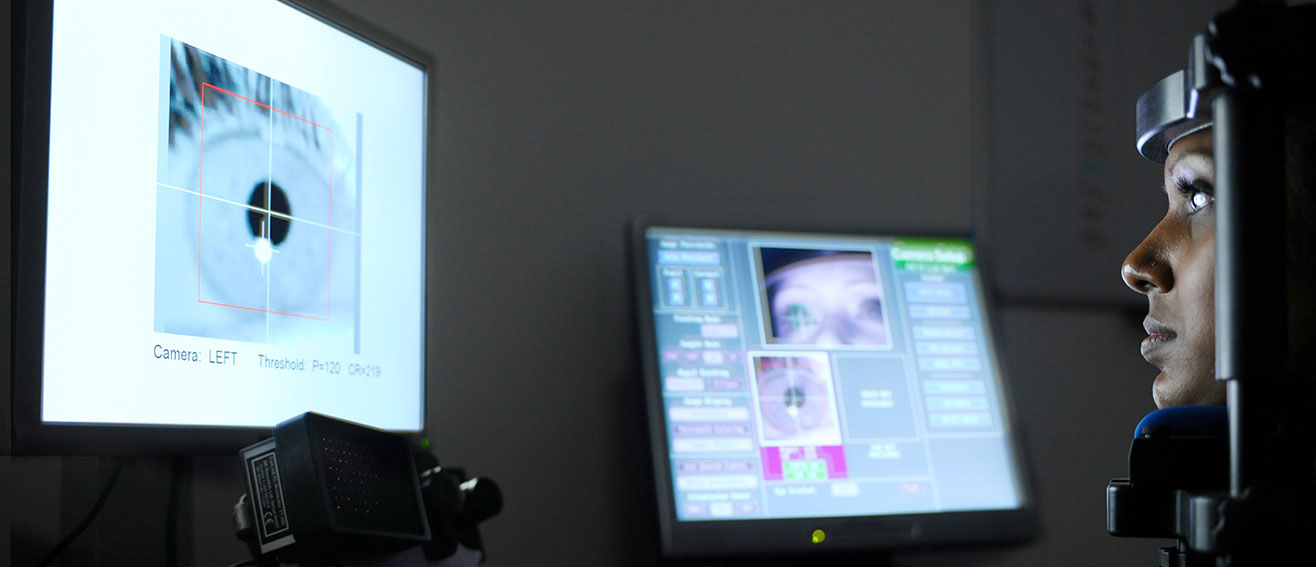
Our dedicated facilities – Our lab complex includes an eye-tracking facility and observation room. We’re ranked 1st among London moderns for Graduate Prospects (Complete University Guide 2022) .

Overview

Learn the secrets of the most complicated thing in the universe, the human brain.

Our minds are utterly fascinating and endlessly complex. Each one is unique, moulded by our genes, our society, upbringings and our experiences. This complexity is what makes the study of human psychology so fascinating and rewarding for people like you.

Psychology is crucial for solving the problems of the modern world. We work to understand what drives prejudice, why some children grow up to commit crime while other’s don’t, how to tackle addiction and depression, how to change societal behaviour to protect the climate, and how to heal communities after trauma. As Abraham Maslow warned, “The world will either be saved by the psychologists or it won't be saved at all.”

“I have encountered several specialised technologies whilst studying my course and had the privilege of using them, such as the electroencephalogram (EEG) and a hyper-realistic lab setting like the LSBU psychology bar and child development lab. ”Daniela May Senti Vigo, BSc Forensic Psychology student.

With Psychology at LSBU, you’ll be part of a community dedicated to improving lives and building a better future. You’ll work to centre and champion the lived experiences of others, learning to apply highly scientific theory and research skills with empathy and care. You’ll build a skillset that spans industries, making you an adept critical thinker, communicator and wellbeing advocate, as well as a someone ready to work in the psychology field.

Prepare yourself to tackle real-world challenges by undertaking practical experiments in our top, industry-facilities that includes eye-tracking software , early years development facilities, tools to measure brain activity, and even a pub simulator. You’ll learn to think and act like a scientist here, exploring the ins and outs of psychological research and application, and getting you ready for industry or post-graduate study, to get you where you want to go next.

Course Content

What will I learn?

Your time here will be spent harnessing your passion and successfully applying legitimate research methods and scientific theory to real-world scenarios and cases. You’ll conduct experiments, gather and analyse complex data, and use that to solve real, human problems in your community and beyond.

“At LSBU, I have learnt how to use scientific methodologies and how to use these in a lab-based setting. I have developed my critical thinking skills and improved my communication and interpersonal skills from working with other people in teams where we had to listen and cooperate with one another.” Daniela May Senti Vigo, BSc Forensic Psychology student.

This module provides students with an introduction to the study of Psychology as a science. It does this via the study of some of the key conceptual, methodological, and statistical issues that psychologists face when studying human behaviour. As well as issues surrounding experimental design and ethical principles in psychological research, the module also introduces the ways in which descriptive and inferential statistics can be used to analyse and make sense of experimental data. 

This module introduces students to the study of psychology, first by discussing its conceptual underpinnings and historical development and then topics related to living in the world as biological, learning and feeling beings. Block 1 focuses on the philosophical foundations of Psychology, its status as a science and current identity, while Block 2 covers learning from the environment and from others. Block 3 includes evolutionary theory and the relationship of the brain to behaviour and Block 4 covers emotions from biological, psychological and social perspectives. The module provides the knowledge-base necessary for advanced study at level 5 and also the development of skills relating to factual learning, i.e., accessing, organising, assimilating and revising information. 

The module introduces students to qualitative research methods. Several lectures and seminars are dedicated to developing understanding of qualitative methods and conducting a qualitative analysis. The remainder of the module considers additional quantitative research designs and statistical analyses using SPSS. The module is assessed by two practical reports: one focused on qualitative methods, and one focused on quantitative methods. 

This module provides students with the opportunity to explore how theories, approaches and evidence from psychology have been applied to the real world. Students will be presented with a number of topics that have been important for understanding how people behave in the ways they do in the real world. Such topic areas will include developmental, cognitive (thinking), social, and individual differences aspects of behaviour. In addition, the topic areas presented and explored in this module will inform students about a diverse range of psychology-related employment opportunities. Study in each of these will provide a framework for advanced study at level 5. In addition to knowledge, the module will provide the opportunity for students to develop skills relating to accessing, assimilating and communicating information, be introduced to a variety of assessment techniques that will be encountered on the course, and develop and be aware of the type of skills that are likely to enhance employability. 

This module introduces topics related to living in the world as a developing, thinking, social and individual being. Topics will include memory, perception, attention, cognitive development, interpersonal behaviour, group behaviour, intelligence, personality and aspects of atypical behaviour. Study in each of these will provide a framework for advanced study at level 5. In addition to knowledge, the module will provide the opportunity for students to develop skills relating to accessing, assimilating and communicating information as well as to be introduced to an assessment technique that will be encountered on the course. 

This module builds on the simple experimental designs covered in the first year (comparing two means) and moves on to single factor and multifactor experiments, their design and the relevant analyses. Students are also introduced to aspects of psychometric testing and test indices. Lectures provide the conceptual framework required for an understanding of research methodology and their supporting statistical tests. Lectures are supported by seminars which help students learn design analysis, data analysis using SPSS and the interpretation of the results of experiments taken from the psychology literature. The module also provides students with the opportunity to design, execute, analyse and report results from practical work. 

Students studying this module will explore three themes, considering them in their own right and also in the light of their development from infancy through to adulthood. Firstly, how we gather and process information from the world around us, covering perception and attention processes. Secondly, how we remember what we have experienced, covering the cognitive and biological machinery underlying short-term and long-term memory structures and how our socio-cultural milieu influences these processes. Thirdly, how we use this information to act in the world, highlighting the ways in which we learn from the information that we have gathered from our environment. 

This module provides students with the opportunity to explore the interdependence between feelings and human behaviour. The module is organised into three distinct themes, relationships, mood and sensations. Within each theme a range of topics will be explored drawing on theory and research from biological, developmental, evolutionary, cross-cultural, cognitive and social psychology. Individual differences will be a key perspective in this module. 

Students will be introduced to multivariate research designs in the first component of this module, and will conduct and report a piece of research using multiple regression. The second component develops students’ knowledge of thematic analysis, and allows them to carry out and report a study using this method. Students will then be allocated to specialist research methods streams. This component will give students an opportunity to gain a more in depth understanding of a specific complex research methodology and its practical application. 

This module provides students with the opportunity to explore a number of the major concepts, theories and methods encountered in understanding how and why we behave in the ways we do when in the presence of other humans. The focus of this module is to understand what psychologists have contributed to understanding our social behaviours according to the real, imagined or implied presence of other individuals. The module focuses on those approaches that have been used to examine a) whether we are social beings and why, b) what the ‘social’ brain looks like, c) how social behaviours develop across the lifespan, d) which mechanisms have been used to explain how we interact with the implied, real or imagined presence of others, e) how culture affects our social interactions, and f) how group membership affects our social behaviours.

This module provides students with the opportunity to explore and critically evaluate a number of the major concepts, theories and methods encountered in understanding how we communicate with others, solve problems and make decisions. This module will help students to understand the development of human communication, both cognitive and social. Students will learn what different psychologists think intelligence is, how it develops, and how it can be measured. The module will explore the internal and external influences on the development of reasoning and decision making. The module will explore whether innate mechanisms underlie these capacities or whether they develop over time. 

The module requires students to design and implement a substantial piece of independent psychological research related to clinical psychology and to produce an extensive report on the project. All students are supervised by a permanent member of academic staff. Students will also engage with reflection on their learning to date, and placement/work based learning. 

This module covers various aspects of forensic psychology relating to understanding criminal behaviour, investigative methods and trial processes. More specifically, the lectures will relate to psychological theories of crime, eyewitness testimonies, investigative interviewing and offender profiling, decision making in court and dealing with offenders. Students are expected to critically evaluate research findings and demonstrate an understanding of how these findings are/can be applied in practice as well as communicating them to practitioners and laypeople. 

Plus three options from the modules below:

Mental health is a highly contested area, with major disagreements amongst psychiatrists, psychologists and service users over the conceptualisation and treatment of mental health problems. This module will examine the theoretical differences between these perspectives, through examining the social, cultural, biological and psychological evidence for the causes and maintenance of mental distress. These factors will be looked at in general, and also in relation to specific forms of distress, such as psychosis, depression, eating disorders and anxiety. The value and efficacy of diagnostic versus formulation approaches for the treatment of mental health problems will also be explored. 

This module centres on the study of brain-behaviour relationships. The focus of the module is to outline a series of disorders and the study of how they impact cognitive functions. Specifically, the module provides students with an understanding of the neural underpinnings of several cognitive functions and how these can be disrupted in a series of disorders. Students are also introduced to methods used in neuropsychology and cognitive neuroscience and issues around recovery and rehabilitation. The module is delivered over 11 weeks, with each lecture followed by a seminar. 

This module focuses on the scientific study of how drugs affect brain function and how such research furthers our understanding of the biological mechanisms underlying behaviour. Topics covered in this module include recreational and abusive use of drugs, cognitive enhancing drugs, the cannabinoid system and the therapeutic potential of cannabis, nicotine and in-depth coverage of the drugs used to treat schizophrenia, anxiety and mood disorders. In these last three lectures, we will look at the use of animals in drug development in clinical psychopharmacology and discuss future avenues of research to develop more acceptable medications for mental health problems.

This module focuses on infancy, a period of rapid development, and examines the emergence of perceptual, cognitive, and early social skills during the first year of life. Emerging behaviours will also be related to brain development, to facilitate a more thorough investigation of what happens during development. Traditional and more recent methods used to assess both brain and behaviour in infants will also be considered. This module also offers the opportunity to consider dominant debates in developmental psychology, including the relative contributions of nature and nurture to development, and plasticity in the developing brain. The module focuses on both typical and atypical development, and also considers long term impacts of early experience. There is a focus on real world applications of the material covered in the module.

Morbidity and mortality have been shown to be influenced significantly by various socio-demographic factors like age, social class and education. Which factors create the link between these inputs and health-related outputs is less clear.  This module will explore theoretically based psychological processes and mechanisms (e.g. cognitive dispositions and beliefs, social support, etc) which have been shown to relate social inputs with health outcomes. In early sessions students will explore social inequalities in health. During later sessions a number of models used by health psychologists to study related decision making and behaviour will be explored. Throughout all sessions students will be exposed to applied implications and evidence derived from basic theoretical principles.

This module will begin by outlining key issues in the study of intergroup and intra group psychology and explore social identity approaches. The module then goes on to consider how groups interact with one another (inter-group processes) and also how group members function within the group (intra-group processes). The module combines basic and theory with real social applications. Seminars provide an opportunity to explore issues and research in more depth, and apply theory to real life situations. As well summative assessment via an essay and a set of short answer questions, students will also be required to make a short group presentation as formative assessment. 

This module introduces final year students to theories of addictive behaviour. Conceptual issues surrounding the utility of theories will be addressed, and the empirical evidence for or against each theory will be discussed. Students will have the opportunity to consider recent theories which attempt to synthesise extant models into a comprehensive account of addiction. Students will have the opportunity to apply, and critically evaluate, a number of theories in regards to their ability to explain alcoholism and/or tobacco smoking, both during seminars and in their coursework assignment. Finally, various treatment and preventative approaches, and the evidence for and against each will be examined. 

This module will begin by explaining test construction and validation in detail. The module then goes on to consider a wide variety of psychometric tests available and their appropriateness for use in occupational, clinical and research psychology. Ethical and legal issues surrounding psychometric test use will be covered. Students will gain practical experience of psychometric test use. 

This module is designed primarily for students intending to go on to counselling psychology and psychotherapy postgraduate courses following their degree. Each week includes theoretical and practical components where students are able to try out various approaches in role-plays and triad work. The theoretical component of the module introduces students to key theoretical approaches in counselling psychology and psychotherapy (focusing on humanist/existential and cognitive behavioural) as well as covering various types of therapy (one-to-one, brief therapy, narrative therapy, group based and family therapy). There is a critical emphasis throughout considering issues of power, ethics, difference, and research on therapeutic effectiveness and processes. 

Cognitive Science is the scientific study of thought. This module provides students with the opportunity to explore some of the key theoretical debates in contemporary cognitive science, adopting a multidisciplinary approach to understanding the nature of thought and challenging assumptions concerning what it is to be human. The module will address the nature of the human mind in the past, present, and future, frequently using comparative psychology to identify those abilities that make us uniquely human and which mark us out from non-human animals and synthetic organisms. 

This module extends the usual focus of developmental psychology on infancy and childhood to consider a range of factors in development over the lifespan. Issues relating to social, emotional, and cognitive development through childhood and into adolescence will be considered, as will the transition from adolescence into early adulthood. Factors surrounding relationships between children’s drawing and cognitive development will be addressed, together with moral development. The continued impact of developmental disorders (such as dyslexia) in adulthood will be considered, linking these to cognitive function in everyday life (such as educational and employment settings). Typical ageing and neurodegenerative disorders (such as Alzheimer’s disease and Parkinson’s disease) will be considered from both social and cognitive perspectives. 

The Psychology in the Workplace module will cover a range of different topics related to work (or industrial) psychology, cognitive ergonomics, and behaviour in organisational settings. In broad terms, the module will cover issues relating to organisations, individual workers, and inclusive practices It will address such topics as organisational change, the challenge of an ageing workforce, human-machine interaction, stress and work, human error and accident prevention, and designing workplaces and tools for workers with additional needs or in different cultures. 

This module will explore the psychology of theatre, music, and dance arts. Students will be introduced to a variety of topics including, actors’ approaches to the script and inhabiting character, actors’ mental health, equality and diversity in the arts, memory and acting, embodied cognition, music psychology from the audience and the performers’ perspectives, dance psychology (e.g. body / rhythm synchronisation) and drama and music as therapy. These topics will relate to key areas in Psychology, including occupational psychology (e.g. job motivations, security), clinical psychology (e.g. actors’ mental health, performance anxiety), cognitive psychology (e.g. script-work and memory), cognitive neuroscience (e.g. music expectations and emotions, rhythm and synchronisation) and issues of equality and diversity (e.g. “blind casting”, gender pay-gap, harassment. 

This module explores the sex-gender paradigm, sex-and-sexuality, family, and diverse relationships structures through psychological approaches. Engagement extends core Psychology learning-and teaching on knowledge and learning, feelings, emotions, behaviours, decision-making, identities, biology, human development, and lived experience. Students engage critically with historical and socio-cultural changes, contemporary debates, and applied contexts through a pedagogy of co-production that leverages diversity of student interests. Psychological, therapeutic, queer-theory and feminist  literature are surveyed through a mx of traditional lectures and 'flipped classroom' discussion and debate. 

In this module, we will explore how people make decisions and the factors that influence choices (what we decide) and choice process (how we come to that decision), mostly from a cognitive and neuroscientific perspective. We will discuss the ways in which our choices systematically deviate from rationality by exploring heuristics and biases that affect decisions and discuss the role of emotions. For example, we will discover what makes us more willing to take risks, more willing to cooperate, or more altruistic. In the second part of the module, we will explore some of the real-world applications of these findings, for example in clinical settings, policy development or marketing research.

This module aims to examine the application of psychological knowledge to the understanding of, and care for, individuals that have offended. This module begins by providing an insight into the role of a forensic psychologist, before focusing on reasons why an individual offends across various offence typologies (e.g., sexual offending, street gang membership, firesetting, and intimate partner violence). The role of risk assessment in planning interventions and release will be explored, with the impact of forensic care on service user’s wellbeing emphasised. Approaches to interventions/rehabilitation will be discussed, including imprisonment, risk- and strengths-focused frameworks and creative therapies. Finally, the importance of evidence-based practice in forensic care will be examined. Seminars provide an opportunity to discuss the different reasons why an individual offends and what intervention approaches would be most effective for different clients. 

* Modules are subject to review and change throughout the year.

Teaching and Assessment

How will I learn?

Assessment

We use a range of assessment methods, and train you in these methods as you advance through your studies. The methods used are:

  • Essays
  • Practical reports
  • Unseen exams
  • Multiple choice questions
  • Scenario-based reports
  • Case studies
  • Posters
  • Executive reports
  • Portfolios
  • Group work folders

Research

Our impressive research record (95% of our publications were rated as "internationally recognised" in REF 2021) means that teaching is informed by current, cutting-edge research, and because we have a focus on applied research, you can apply your learning to real world settings.

Support

We aim to support you throughout your studies in many ways. We provide one-to-one support via our academic tutoring system. Your academic tutor will help you understand coursework feedback, offer guidance as you plan your career, and advise you on work experience to ensure you get the most out of the course. Teaching is also supported through seminars, online learning environments and specialist advice sessions for topics such as statistics and research methods. In addition to the facilities provided by the university, the psychology laboratory has dedicated computing and experimental equipment.

Percentage of time spent in different learning activities
Time spent in lectures, seminars and practical studySelf-directed learning
Year 120%80%
Year 222%78%
Year 314%86%

Academic tutoring

As an Applied Sciences student, you will be allocated a named academic tutor during your first three weeks at LSBU. The role of your academic tutor is to be your primary contact for academic and professional development support.

Your academic tutor will support you to get the most of your time at LSBU, providing advice and signposting to other sources of support in the University.

Your academic tutor should be the first person at the university that you speak to if you are having any difficulties that are affecting your work. These could be academic, financial, health-related or another type of problem.

You will have appointments with your academic tutor a minimum of once per semester for 30 minutes throughout your course.  This is often supplemented with additional meetings arranged via email as and when students need support. In addition to this Learning Support hours for all teaching staff will be advertised and available for you to book additional time for support related to a specific teaching session.

Apply

Course delivery modes and application methods

Mode Duration Start date Application code Application method
Full-time 3 years  September 9R58 UCAS
Part-time 4.5 years September 4087 Direct to LSBU
Part-time 6 years September 5256 Direct to LSBU

International applicants can apply directly to LSBU and should consult our international how to apply guide for further information on the application process and key dates.

See our admissions policy (PDF File 1,043 KB) and complaints policy (PDF File 516 KB).

    Finance

    You don't need to wait for a confirmed place on a course to start applying for student finance. Read how to pay your fees as an undergraduate student.

How to apply

International students

International applicants can apply directly to LSBU and should consult our international how to apply guide for further information on the application process and key dates.

Accommodation

Prepare to start

Applicant events
After you’ve received your offer we’ll send you emails about events we run to help you prepare for your course. You’ll also be invited to our Applicant Taster Day so keep your eyes peeled!
Enrolment
Before you start your course, we’ll send you information on what you’ll need to do before you arrive and during your first few days on campus. You can read about the process on our enrolment pages.

Fees

United Kingdom

£9790

Tuition fees for home students

International

£17400

Tuition fees for international students

Tuition fees are subject to annual inflationary increases. Find out more about tuition fees for Undergraduate or Postgraduate courses.

full-time

Full-time Year 1 - All Available Courses

BSc (Hons) Psychology (Forensic Psychology) (FT) - Year 1 FT Southwark SEPT
The fee shown is for entry 2026/27
UK fee: £9790 International fee: £17400
AOS/LSBU code: 4286 Session code: 1FS00
Total course fee for this location/stream:

* The full amount is subject to fee increases, the total shown below is based on current fees.

UK: £29370
International: £52200

Full-time Year 2 - All Available Courses

BSc (Hons) Psychology (Forensic Psychology) (FT) - Year 2 FT Southwark SEPT
The fee shown is for entry 2026/27
UK fee: £9790 International fee: £17400
AOS/LSBU code: 4286 Session code: 2FS00
Total course fee for this location/stream:

* The full amount is subject to fee increases, the total shown below is based on current fees.

UK: £29370
International: £52200

Full-time Year 3 - All Available Courses

BSc (Hons) Psychology (Forensic Psychology) (FT) - Year 3 FT Southwark SEPT
The fee shown is for entry 2026/27
UK fee: £9790 International fee: £17400
AOS/LSBU code: 4286 Session code: 3FS00
Total course fee for this location/stream:

* The full amount is subject to fee increases, the total shown below is based on current fees.

UK: £29370
International: £52200

part-time

Part-time Year 1 - All Available Courses

BSc (Hons) Psychology (Forensic Psychology) (PT) - Year 1 PT Southwark SEPT
The fee shown is for entry 2026/27
UK fee: £4895 International fee: £8700
AOS/LSBU code: 5256 Session code: 1PS00
Total course fee for this location/stream:

* The full amount is subject to fee increases, the total shown below is based on current fees.

UK: £29370
International: £52200

Part-time Year 2 - All Available Courses

BSc (Hons) Psychology (Forensic Psychology) (PT) - Year 2 PT Southwark SEPT
The fee shown is for entry 2026/27
UK fee: £4895 International fee: £8700
AOS/LSBU code: 5256 Session code: 2PS00
Total course fee for this location/stream:

* The full amount is subject to fee increases, the total shown below is based on current fees.

UK: £29370
International: £52200

Part-time Year 3 - All Available Courses

BSc (Hons) Psychology (Forensic Psychology) (PT) - Year 3 PT Southwark SEPT
The fee shown is for entry 2026/27
UK fee: £4895 International fee: £8700
AOS/LSBU code: 5256 Session code: 3PS00
Total course fee for this location/stream:

* The full amount is subject to fee increases, the total shown below is based on current fees.

UK: £29370
International: £52200

Part-time Year 4 - All Available Courses

BSc (Hons) Psychology (Forensic Psychology) (PT) - Year 4 PT Southwark SEPT
The fee shown is for entry 2026/27
UK fee: £4895 International fee: £8700
AOS/LSBU code: 5256 Session code: 4PS00
Total course fee for this location/stream:

* The full amount is subject to fee increases, the total shown below is based on current fees.

UK: £29370
International: £52200

Part-time Year 5 - All Available Courses

BSc (Hons) Psychology (Forensic Psychology) (PT) - Year 5 PT Southwark SEPT
The fee shown is for entry 2026/27
UK fee: £4895 International fee: £8700
AOS/LSBU code: 5256 Session code: 5PS00
Total course fee for this location/stream:

* The full amount is subject to fee increases, the total shown below is based on current fees.

UK: £29370
International: £52200

Part-time Year 6 - All Available Courses

BSc (Hons) Psychology (Forensic Psychology) (PT) - Year 6 PT Southwark SEPT
The fee shown is for entry 2026/27
UK fee: £4895 International fee: £8700
AOS/LSBU code: 5256 Session code: 6PS00
Total course fee for this location/stream:

* The full amount is subject to fee increases, the total shown below is based on current fees.

UK: £29370
International: £52200

For more information, including how and when to pay, see our fees and funding section for undergraduate students.

Please check your fee status and whether you are considered a Home, EU or International student for fee-paying purposes and for our regulatory returns, by reading the UKCISA regulations.

See our Tuition Fees Regulations (PDF File 630 KB) and Refund Policy (PDF File 775 KB).

Possible fee changes

The University reserves the right to increase its fees in line with changes to legislation, regulation and any government guidance or decisions.

The fees for international students are reviewed annually and the University reserves the right to increase the tuition fees to reflect increased costs of delivery and to maintain an a high-quality student experience. This increase would be no more than Consumer Prices Index (CPI) increases plus 5%.

Scholarships

We offer several types of fee reduction through our scholarships and bursaries. Find the full list and other useful information on our scholarships page.

Are you an international student looking to kickstart your global career at LSBU? If so, our new LSBU Future Global Graduate Awards could help you benefit from the high-quality, career focused education that LSBU offers. Find out more about our Global Graduate Awards.

Contact information

International team enquiry

Register your interest