

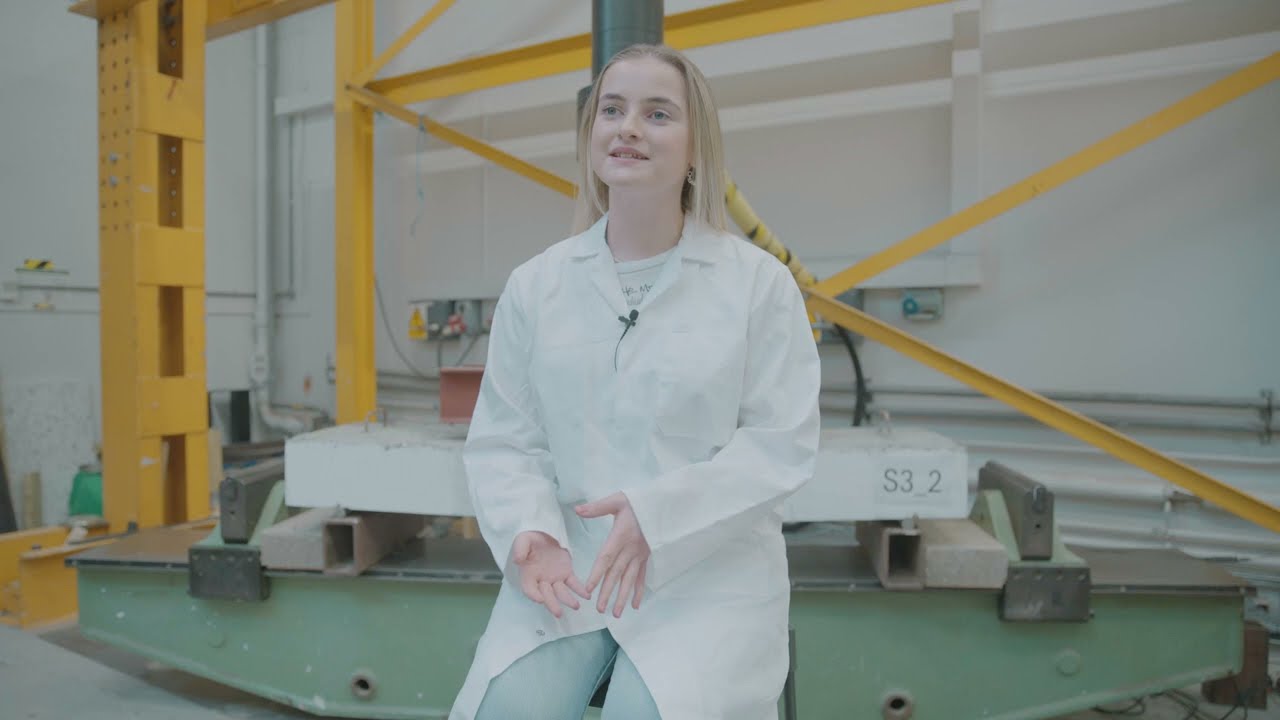




In the first semester of this module, students enhance their proficiency in the methods and approaches required to design structures to a professional engineering standard, with due consideration given to design requirements, practicality, sustainability, and economy. In the second semester, students develop a deeper understanding of structural behaviour and responses to static and dynamics loads via a range of classical calculation methods that are founded upon the fundamentals of structural mechanics; students are introduced to advanced finite element analysis via comparisons with these classical methods. Assessment methods: 30% coursework, 70% exam.
This module is designed to involve you in the process of engineering project development, from planning to detailed design, working with a project team. Assessment method: 100% coursework.
This module covers highways and junctions classification, principles of traffic flow, traffic analysis, transport modelling and planning, transport safety, and junction design and analysis. Also covered are the highway geometrical design and the highway structural design, including design traffic loading and materials in addition to related environmental and sustainability issues. Assessment methods: 40% coursework, 60% exam.
This module shows how the soil mechanics theories introduced in Soil Mechanics are applied to the solution of several geotechnical analysis and design problems in combination with the knowledge and skill developed in Structural modules. You will be able to analyse and design slops, walls, foundations, dams, and other geotechnical structures. Moreover, you will be able to analyse the distribution of stresses in the soil mass and the consolidation process in clayey soils. Assessment methods: 30% coursework, 70% exam.
This module takes the principles of environmental engineering and applies them to practical applications of analysis and design. You'll be introduced to the principles of water quality, and basic water and wastewater treatment processes, and you'll consider sustainability issues. You'll develop an understanding of the surface hydrology, and apply these principles to the calculation of precipitation and unit hydrograph. You'll also learn basics of groundwater flow, and the problem of contamination in groundwater, air pollution and noise pollution. This module will provide you with the professional development, attributes and other requirements needed for a position of responsibility that will be achieved during the "Initial Professional Development" at the workplace. Assessment methods: 30% coursework, 70% exam.
The Individual Research Project involves the individual investigation of a specific area of civil engineering or a closely related discipline. The project should be of a research and investigative nature. Assessment method: 100% coursework.