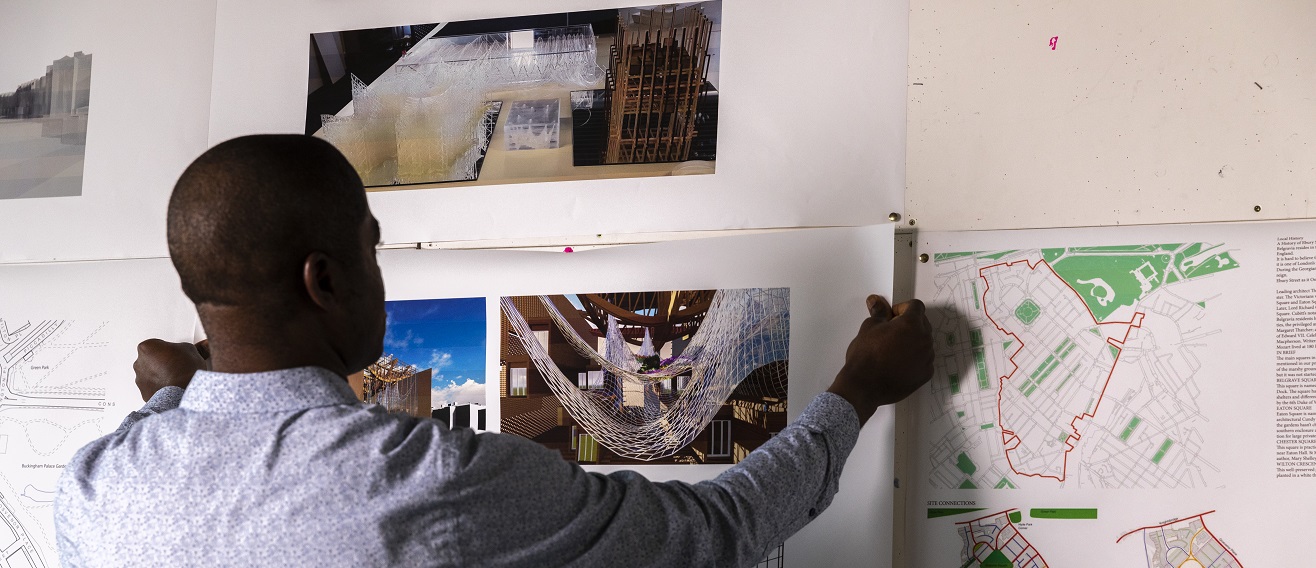



Apprentices develop advanced design capability, critical thinking, and technical proficiency through studio based learning, lectures, seminars, workshops and site visits.
ALL MARCH MODULES MUST BE PASSED BEFORE PROGRESSING TO THE PGCERT.
- Architectural design for small, medium and large scale projects
- History, theory and cultural context
- Technology, climate literacy, environmental design and sustainable systems
- Structural and constructional integration
- Urban design and planning
- Professional studies and procurement
- Research methods and written thesis development
- Advanced analogue and digital representation
- Critical, reflective and ethical practice
Apprentices join one of several design supervisors, each with a distinct thematic focus. Projects are defined and developed by the student through tutorials, interim reviews and final presentations to staff and invited critics, includes apprentice mentors.
- Design 401 (20 credits)
- History and theory: critical thinking (20 credits)
- Design 402: (40 credits)
- Professional practice and design economics (20 credits)
- Architecture and theory: dissertation
- Energy and resource efficiency in design (20 credits)
- Architecture and theory: dissertation (20 credits)
- Design 501 (40 credits)
- Design 502: (40 credits)
- Technology 5: (20 credits)