Book an open dayGet info and updates

icon_cup_red.svg

Ranked 3rd amongst London competitors for Graduate Prospects in Nursing (The Guardian University Guide 2026)

icon_rocket_red.svg

The opportunity to learn from expert speakers include service users, parents and charitable organisations, expert practitioners and other lead professionals in child health and children's nursing

icon_people_red.svg

Our graduates are working across the NHS including at Great Ormond Street Hospital for Children NHS Foundation Trust

Overview

Provide help, care, and compassion for those who need it most.

Children’s Nursing Pg Dip/MSc will give you the skills, confidence and professional experience needed to be an effective healthcare worker, helping you to apply the foundations of expert care in a paediatric setting.

“I love being on the wards, interacting with the children and the parents. You encounter so much, both the happy and sad. It is a life experience, independent of the clinical skills you acquire. I want to influence lives and help people grow in my community and you get a taste of that when you are on placement” Charlie Kennedy, Children’s Nursing student.

You will learn from experienced nursing professionals who will help you put theory into practice, splitting your time equally between learning on campus or in clinic settings. Through our professional connections and partnerships, there is the opportunity to train with community-focused initiatives, independent and voluntary organisations, or an NHS Trust, who will host you for clinical placement portion of your degree.

We are proud to partner with:

“The teaching at LSBU is always based on real-life applications of the theory. We have staff from a wide variety of children's nursing backgrounds that means modules are taught by people with expertise and special interests in that topic. This can help students make the links between theory and practice. “Dr Julia Harris – Registered Children’s Nurse and Senior lecturer.

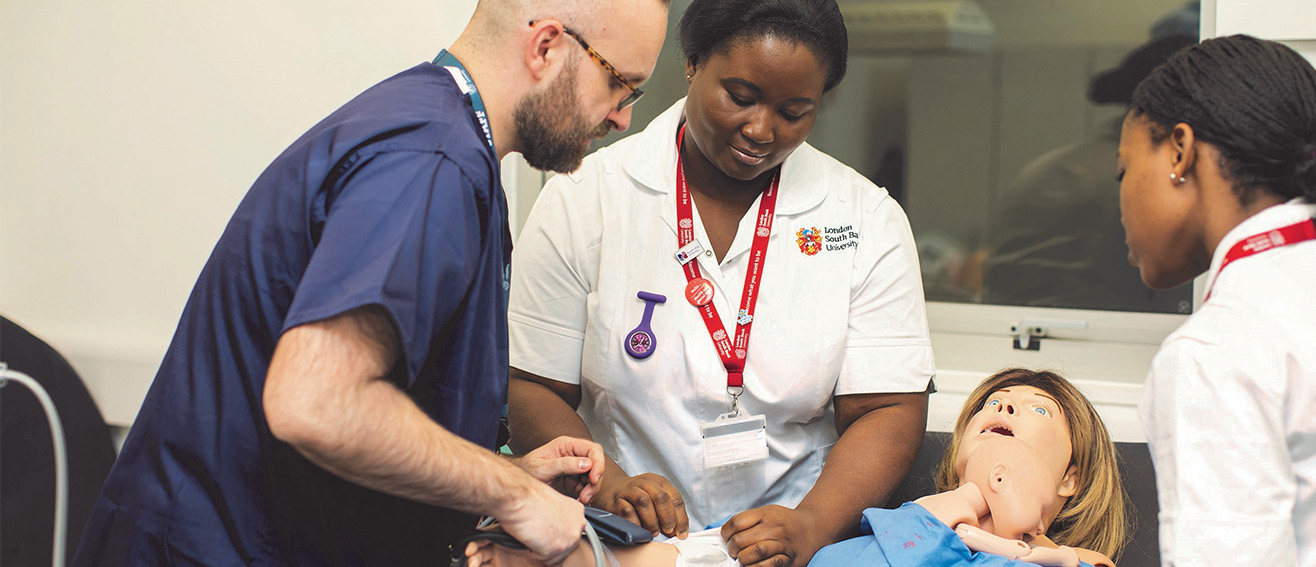
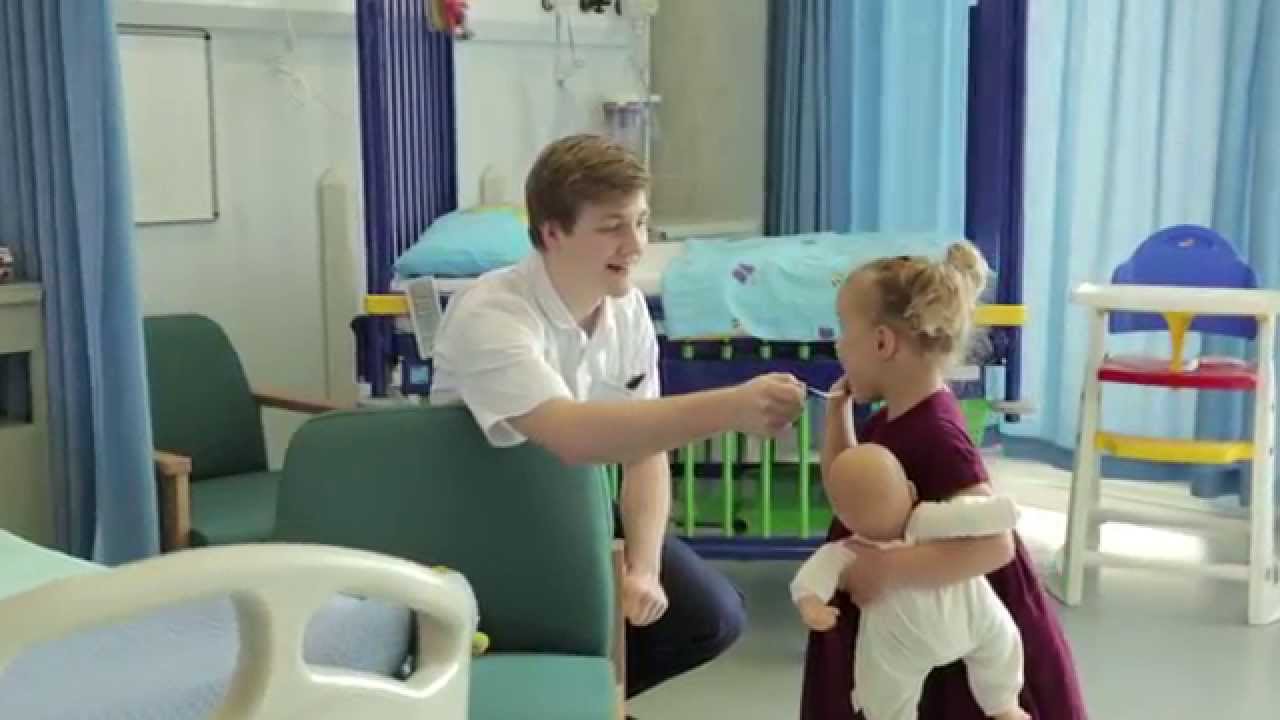
Your time will be split equally between real clinical placements and learning in brand new on-campus clinical wards and laboratories, fully equipped with the latest technology.To give you as much confidence as possible we design our teaching labs to mimic real hospital wards and care environments, helping you seamlessly apply nursing skills to genuine patients. Above all though you will learn to effectively listen to patients, not just the children themselves but their parents and families as well, helping you to provide care with empathy, compassion, and effectiveness.

“I would recommend the Children’s Nursing course at LSBU because its educators are people that really care about the fundamentals of nursing – they want everyone to succeed. The lecturers are also trying to innovate the syllabus; they are all leaders in their own fields and are pushing what inclusivity means in Higher education. The course itself links students to a host trust, so you will have unique training throughout the 3 years.” Sam Palmer, Children’s Nursing student.

Children's Nursing at London South Bank University

Is this course right for me?

If you are organised, enthusiastic, motivated and engaged, then this course is for you. If you are committed and caring and able to manage the complexity of nursing in the current environment, then this course is for you. If you are a good organiser, respond to unplanned changes quickly and remain motivated even when things become challenging, then this course is for you.

Are you caring, proactive and keen to learn? Do you enjoy practical, hands-on learning? If so, then this is the course for you.

Top-up to MSc

By completing a dissertation (an extended and independent piece of written research) following graduation as a registered nurse you'll be able to gain a masters. Students who successfully complete the PgDip RN course have up to four years to complete the dissertation module via part time study.

Course Content

What will I learn? 

This course gives you a hands-on approach to learning, preparing you for a career in a range of rewarding Children's Nursing roles across primary care, specialist, and intensive care children's units. You will develop your abilities as a student nurse to consider the wider aspects influencing children's health needs, preparing you for future leadership in an ever-changing health care system.

You will learn the foundations of patient communication and professional collaboration, a core skill in nursing, while also developing a strong understanding of life support skills and the fundamentals of effective patient care. Modules take one of three forms; skills modules, which prepare you for practice, research modules which promote critical thinking and the exploration of theory, and anatomy and physiology, which is the application of this theory in practical scenarios.

Here is a taster of some of the modules you will cover as a student nurse on this course:

  • Providing care in Children’s Nursing.
  • Assessing needs
  • Planning and providing care in Children’s Nursing
  • Applied Physiology
  • Research Methods in health and social care
  • Pharmacology and medicines management
  • Acute and complex care in Children’s Nursing
  • Dissertation

Some compulsory skills sessions may take place in the evening.

You will be taught separately from the three-year undergraduate students and will study the following:

This module will introduce students to the values, frameworks and skills that underpin children’s nursing. The module focuses on different methods and frameworks for engaging in holistic assessment underpinned by evidence-based practice. The module is mapped against the NMC (2018) Standards and prepares students to carry out fundamental nursing skills across the four fields of nursing utilising a combination of teaching methods including simulated practice.

This module fosters the knowledge development of human embryology, anatomy and physiology based on prior knowledge and experience. There is a specific emphasis on application to child health and children’s nursing. 

This module introduces public health concepts and contemporary public health issues, the principles of which can then be applied at an individual and population level and within a local, national and global context. This module of study is aligned to the NMC Standard Platform 2, Promoting health and preventing ill health (NMC 2018, Future nurse: Standards of proficiency for registered nurses). 

The purpose of this module is to consolidate and extend students' knowledge of research approaches and methods and enhance their ability to be critical users of research evidence. The module examines philosophical and theoretical perspectives underpinning health and social care research approaches including exploration of research design and key aspects of data gathering and interpretation of both qualitative and quantitative analyses. The module will develop practical skills for identifying, critical reviewing and synthesising research evidence relevant to professional practice. 

The module develops students’ ability to utilise clinical reasoning to respond to and manage unfamiliar and complex scenarios in children’s nursing, to evaluate care that is provided and to develop the skills of other members of the team. The module is mapped against the NMC (2018) standards and prepares students to carry out fundamental nursing skills across the four fields of nursing utilising a combination of teaching methods including simulated practice. 

This module aims to develop knowledge and understanding of pharmacology and medicines optimisation to ensure students are prescriber ready upon NMC registration. This module focuses on the nursing of children and young people, with an emphasis on the theoretical prescribing and practical application of administration. It will explore and discuss the general principles of pharmacodynamics and the complexities of pharmacokinetics. Commonly used medications will be explored in the context of a variety of care settings. This module will consider the role of the nurse in relation to the safe administration of medication in clinical practice, including competency with drug calculations. 

This module has been designed to integrate the application of theoretical and clinical knowledge, skills, attitudes and values required to underpin managing the acute and complex care of the child and young person and their families. The module will build upon a student’s knowledge and help develop a clinical reasoning approach to the complex care of the child and young person. The module aims to examine the assessment, observation, close monitoring and intervention required to manage the complex care of the child and young person. 

Manuscript Style Dissertation- Article for Journal Publication and Supporting Elements. 

* Modules are subject to review and change throughout the year.

Facilities

Children's Nursing skills laboratories

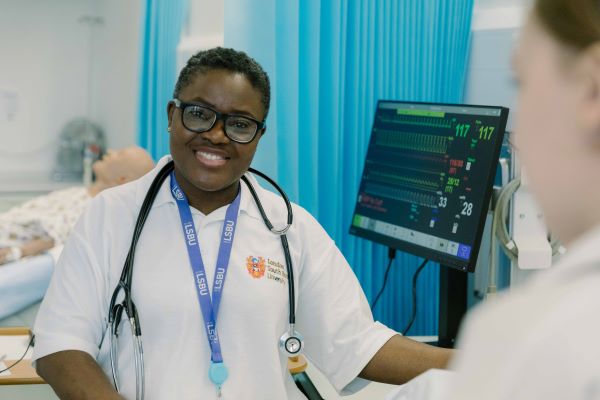
These skills labs are set up like nursing wards and are used by all student nurses throughout their on-campus study time at LSBU. They provide a safe space for you to learn about the manual handling of patients, basic life support skills, and skills specific to your nursing field.

SimMan

The skills laboratories have simulator mannequins; SimMan, SimBaby and SimMom. These life-size mannequins are computer controlled and can be programmed with various clinical conditions, allowing you to see the outcome of specific interventions in certain scenarios, which could result in the patient either recovering or deteriorating.

The mannequins simulate patients, are used to teach students how to recognise clinical signs, and to also associate those clinical signs with the actions they are taking to care for the patient. SimMan can be male or female with fully accurate anatomy and can breathe, blink, sweat, speak, and groan in pain as well as have a pulse. Read more about SimMan.

Teaching and Assessment 

How will I learn?

On this course you will learn through work-based placements and self-directed study, with the rest of your time being spent in seminars and lectures. This does not mean you will be alone on your journey however, as our expert teaching staff will be with you at every step, providing expert advice and encouragement along the way. We can cater to a range of learning types as well and are always happy to provide extra support to those who need it.

“The types of students that excel on this course are those who use the opportunities and support available, which includes the self-directed study, support teams like the library team, and seeking out further learning for themselves around the topics.” Jessica Haworth, Senior lecturer in children’s nursing.

Personal tutoring

As a Health and Social Care student, you will be allocated a named tutor during your first three weeks at LSBU.  The role of your tutor is to be your primary contact for academic and professional development support.

Your tutor will support you to get the most of your time at LSBU, providing advice and signposting to other sources of support in the University. They should be the first person at the university that you speak to if you are having any difficulties that are affecting your work. These could be academic, financial, health-related or another type of problem.

You will have appointments with your personal tutor at least 4 times a year and after every placement throughout your course. You can contact your tutor for additional support by email or phone.

Staff Bio

Freya began her children's nursing training at LSBU more than 20 years ago. She went on to work across a range of acute and emergency children’s nursing environments. As her passion for teaching and patient safety grew, she soon realised that supporting the development of nursing students was something she truly enjoyed. Freya later returned to LSBU to complete her MA in Education and her Nurse Teacher qualification, and eventually joined the team as a Senior Lecturer—keen to remain connected to the university that trained her and to help prepare the next generation of nurses. Freya McFadden, Course Leader PgDip/MSc Children's Nursing.

Careers

As our course is accredited and approved by the Nursing and Midwifery Council, you will be able to register as a professional and qualified Children’s Nurse with the council.

“The PGDip/MSc Nursing programme is designed for individuals who are prepared for independent study, can organise their time effectively and adapt confidently to change. It is well suited to those able to balance academic requirements with the realities of placement learning, maintaining motivation even when the workload becomes demanding. Ideal applicants are committed, resilient and ready to work hard to make a meaningful difference to the lives of others.” Jessica Jewell, Lecturer Children's Nursing.

Children's nursing as a career

Nursing encompasses autonomous and collaborative care of individuals of all ages, families, groups and communities, sick or well and in all settings. Nursing includes the promotion of health, prevention of illness, and the care of ill, disabled and dying people. Advocacy, promotion of a safe environment, research, participation in shaping health policy and in patient and health systems management, and education are also key nursing roles. (ICN, 2002)

Working hours and salary

Hours can be demanding for paediatric nurses. Long shifts, unsocial hours and possibly being called to work at the last minute are all common. A children's nurse starts on a salary around £24,000. However, with career progression and developed experience this can extend to well over £50,000. (Prospects)

Career progression

All graduates are offered the opportunity to apply for employment with the NHS Trusts and hospitals where they gained experience during training when posts are available. The course has an excellent record in graduate employment, including working overseas, and covering a range of qualified nurse positions.

Successful graduates of the PgDip can top-up to an MSc in one year and will be qualified to study a range of further specialist postgraduate pathways. With additional experience, advanced practice is available at masters level with the potential to progress to doctorate studies. Find out more about professional development opportunities through our online CPPD prospectus.

Children's nurses work in a child-centred and multi-professional team, which is reflected in the variety of people who contribute to the course. Expert speakers include service users, such as parents and charitable organisations, expert practitioners and other lead professionals in child health and children's nursing.


Nursing and Midwifery Council logo

The Nursing and Midwifery Council regulates nurses and midwives in England, Wales, Scotland, Northern Ireland and the Islands.

LSBU CareerSmart is your ultimate gateway to career success. Our innovative programme is designed to ensure you graduate with more than just a degree, providing the support you need to stand out in a competitive job market. We've got all the tools you need, including:

  • AI Powered Career Sets - Get instant personalised feedback on your CV and cover letter by submitting it via our AI powered career tool.
  • Gamification Interviews - Get ready to pass those interviews with unlimited training access to our gamification interviews and psychometric tests!
  • Personalised Career Development Dashboard - Keep up with your skills progression with free access to practical assessments, LinkedIn learning, mentoring, and industry-standard facilities.

We understand that you’re in the driver’s seat of your career, which is why we’re committed to matching your passion and energy every step of the way.

Find out more

Entry Level Requirements

Applicants will be considered on an individual basis but will normally require:

  • A Bachelor degree (hons) with a minimum 2:2 classification.
  • Please make sure you have the required GCSE qualifications (or equivalent Level 2 qualifications) before applying for this course.
  • Maths and English GCSEs/equivalent (at C or above) to meet the Nursing and Midwifery Council (NMC) selection criterion.
  • Please bring your photo ID and UCAS Personal ID number to your interview.

For international qualifications, it may be required to complete an ENIC. As this can take some weeks, it is advised that you consider applying for this early.

English Language

  • If your first language is not English you must have the following minimum International English Language Test Score (IELTS) results at the time of applying:​
  • 7.0 overall or equivalent​
  • 7.0 in the listening and reading sections
  • ​7.0 in the writing and speaking sections

Choose your country

  • Afghanistan
  • Albania
  • Algeria
  • Angola
  • Argentina
  • Australia
  • Austria
  • Azerbaijan
  • Bahrain
  • Bangladesh
  • Barbados
  • Belgium
  • Botswana
  • Brazil
  • British Council Women in STEM Scholarships
  • Bulgaria
  • Cambodia
  • Cameroon
  • Canada
  • Chile
  • China
  • Colombia
  • Croatia
  • Cyprus
  • Czech Republic
  • Denmark
  • Dominican Republic
  • Egypt
  • Estonia
  • Ethiopia
  • Finland
  • France
  • Gambia
  • Georgia
  • Germany
  • Ghana
  • Greece
  • Hungary
  • India
  • Indonesia
  • Iran
  • Iraq
  • Ireland
  • Italy
  • Jamaica
  • Japan
  • Jordan
  • Kazakhstan
  • Kenya
  • Kuwait
  • Latvia
  • Lebanon
  • Libya
  • Lithuania
  • Luxembourg
  • Malaysia
  • Malta
  • Mauritius
  • Mexico
  • Mongolia
  • Morocco
  • Myanmar
  • Nepal
  • Netherlands
  • New Zealand
  • Nigeria
  • Norway
  • Oman
  • Pakistan
  • Poland
  • Portugal
  • Qatar
  • Romania
  • Russian Federation
  • Saudi Arabia
  • Senegal
  • Serbia
  • Sierra Leone
  • Singapore
  • Slovakia
  • Slovenia
  • Somalia
  • South Africa
  • South Korea
  • Spain
  • Sri Lanka
  • Sweden
  • Switzerland
  • Thailand
  • Trinidad and Tobago
  • Tunisia
  • Turkiye
  • Uganda
  • Ukraine
  • United Arab Emirates
  • United States of America
  • Uzbekistan
  • Venezuela
  • Vietnam
  • Zambia
  • Zimbabwe

Additional Info

If you do not have the required English and Maths qualifications needed to satisfy the entry requirements for this programme, we have courses available at our partner College that you can take to upskill in these areas. Find out more at South Bank College.

Need further information?

Call us on 0800 923 8888 to discuss entry requirements.

More contact info

Apply

Course delivery modes and application methods

Mode Duration Start date Application code Application method
PgDip Full-time 2 years September B731 UCAS
Full-time 2 years September B753 UCAS

This course is not open to international students.

Although the PgDip is a postgraduate course, all students apply to the Universities and Colleges Admissions Service (UCAS). Full details of how to do this are supplied on our How to apply webpage for undergraduate students.

When making your UCAS application you will need to apply for your chosen field of nursing practice.

Five stages to your application

  1. Attend an Open Day
  2. Apply to us through UCAS
  3. Write your personal statement and use this as a tool to illustrate why you are right for the course
  4. Write your RPL claim
  5. Prepare for your interview
  6. ID check- photo ID and UCAS Personal ID number

Personal statements

Remember the personal statement is extremely important. This is essentially a selling tool on why you are right for the course. The personal statement is taken into consideration when shortlisting applicants for interview. Download our Personal Statement Guide  (PDF File 160 KB).

Recognition for Prior Learning (RPL)

All applicants are required to submit a Recognition of Prior Learning (RPL) claim. You may apply for RPL through certificated learning and/or by producing a portfolio that demonstrates how your experience meets the programme outcomes for the course you are applying to. If you are offered a place, you will receive detailed guidance on how to complete this.

In addition to providing qualifications and completing a successful interview, applicants must also demonstrate and provide evidence of the following as part of the RPL process:

  • Evidence of relevant people-based/care experience:
    A minimum of 262 hours within the last 18 months, verified and signed off by your manager in the RPL document.
  • Verification of professional values:
    Confirmation from a registered professional (e.g., a member of a recognised professional regulatory body).
    You may refer to the list of accepted occupations for countersignatories provided by the UK government.
  • Completion of the Life Sciences workbook:
    This includes demonstrating knowledge of normal human anatomy.

Please note that your offer will only become unconditional once all required documentation has been submitted, including your qualifications, completed RPL document, and Life Sciences workbook.

Interviews

If your application has been successfully shortlisted you will be invited, through UCAS Track, to attend an interview at a given time and date. You will be required to show Photographic Government ID (passport or driving licence) and your UCAS Personal ID number at your interview.

Read our interview page for important information about this stage and to help you prepare.

Preliminary fee assessment

At your interview we start the process of checking your eligibility for NHS funding.

In order for us to ascertain your eligibility for NHS funding, download the Preliminary Fee Assessment Form (PDF File 155 KB), complete and bring it with you to the interview. Also, ensure you bring along your evidence as noted in the letter which will enable us to assess your residency status.

Results

These will be made available through UCAS Track usually within two weeks.

Postgraduate Application Service

Book your time with one of our specialist Postgraduate Advisors. Over a one on one Advice Session they'll advise you on postgraduate degrees at LSBU that match your interests and experience.

How to Apply

International students

International applicants can apply directly to LSBU and should consult our international how to apply guide for further information on the application process and key dates.

Accommodation

Students should apply for accommodation at London South Bank University (LSBU) as soon as possible, once we have made an offer of a place on one of our academic courses. Read more about applying for accommodation at LSBU.

Prepare to start

We help our students prepare for university even before the semester starts. To find out when you should apply for your LSBU accommodation or student finance read the How to apply tab for this course.

Prepare to start

Disclosure Barring Service (DBS)

All pre-registration students need to be DBS cleared before going on placement. You’ll need to have an enhanced DBS check even if you have had one before and will not be able to go on placement until this is complete.

The DBS process is not difficult but can take some time so it's best to get started as soon as you receive your email. You will receive the email during Summer before the start of the programme commencement.

DBS update service

If you're part of the DBS update service, your subscription is up to date and you already have a DBS certificate, please bring in your original green DBS certificate for the document check. To take advantage of the update service, your certificate needs to be classified as 'Enhanced' and workforce must be listed as 'Adult and Child'. If you have any queries, please email us at hscdbsoh@lsbu.ac.uk.

How to complete  your DBS

Our DBS supplier, Verifile, will send you an email with all the details you need to complete your DBS.

Verifile will give you instructions to log into their system and complete your personal details and information. To complete the process, you'll need your passport or driving licence and 5-year address history including dates when you moved in/out.

You can use your application number to track the progress of your DBS.

When you've finished, your Disclosure Statement will be mailed to the most recent address in your submission, so please make sure it's correct. We don't automatically receive a copy of this Statement, which is why we need you to bring it in as part of the next step.

Frequently asked questions

Only Social Work applicants need to pay for their DBS. It costs £46 and can be purchased on our online store.

Please include any and all major and minor, spent and unspent convictions, cautions, warning and reprimands, even if they relate to juvenile offences or seem trivial or unimportant. Some minor offences will not prevent you from going on placement or being offered a place on your course, but still need to be reviewed so it’s best to be honest and include everything. Also, the more information you include about any offences can help reduce the time it takes to assess them. 

Yes, you do. You need to have an up-to-date DBS. Once you have received the email from our DBS supplier make sure you start the process straight away. All details of how to do this will be outlined in the email. If you don’t complete your DBS in the timeframe given, we may withdraw your offer even if term has already started. So it’s important that you get started as soon as you receive the email. 

Government legislation requires all Higher Education Institutions who offer courses where students may come into unsupervised contact with children or vulnerable adults to have this check. These checks also help us to ensure duty of care to our students, and create a safer environment for patients seen by our students. 

As part of the University’s admissions process, declarations of any offence may be referred to a virtual panel made up of senior managers from partner NHS Trusts and/or other sectors within Health and Social Care. Any DBS that is considered by the panel will be anonymised. The panel members then deliberate and make a recommendation whether the application be rejected, accepted or request further information or documents. 

If you have declared an offence, we might ask for more information from you in writing which will help the panel make a decision. Once your declaration has been referred to the panel it can take up to 28 working days to be processed. 

You need to put your current address on your DBS application because this is where your Statement will be mailed. If you’ve moved house between submitting and receiving your DBS, make sure you have mail forwarding set up so that you’ll receive your statement. If you’ve moved recently, make sure you have proof of your new address (such as a new bank statement) to bring for your document checks. 

If you’ve lost your statement you will need to pay £46 to purchase a new one. 

Yes. If your application has been rejected due to your DSB declaration/discloser, you will be sent a letter to confirm this. There will be instructions in the letter about how you can appeal and which supporting information you need to provide. Once a decision has been made you will receive a letter from the School Executive Team. 

Document Check

Once you have completed the online part of the DBS process, you will need to produce three accepted documents from this list (PDF File 248 KB) to be verified.

Southwark: Southwark Student Help Desk in the K2 building Monday – Friday between 9am-11am or 1pm-4pm 

If you’re not able to come to campus, you can get your documents checked and certified at the Post Office for a fee of £10.50. To do this, make photocopies of your three accepted ID documents and take your DBS form, copies and originals of your documents to the Post Office. The Post Office will stamp the form and photocopies and given them back to you. Email your post office receipt, stamped form and stamped documents to hscdbsoh@lsbu.ac.uk

Occupational Health (OH)

An exciting part of many of our Health and Social Care courses is the opportunity to learn off-campus and work with patients, clients and/or service users. Before you start, we need to make sure that you have the correct levels of immunisations.

Questionnaire

Once you have enrolled, students will be asked to complete an occupational health check, the first part is completing an online questionnaire sent from our occupational health provider.

GP appointment

The second part of your occupational health check is to get any inoculations that you may need from your GP. When attending your GP appointment, please take printed copies of these two documents with you.

Vaccination Screening Advisory Letter (PDF File 126 KB)
GP Vaccination and Screening History (PDF File 117 KB)

Occupational Health appointment

After these steps are complete you will receive an email from OHWorks Ltd inviting you to attend an appointment on-campus with an Occupational Health Nurse. These appointments take place during the week and sometimes when your classes have already started.

The OH team have prepared this guide (PDF File 588 KB) which outlines what to expect at each stage. If you have queries or concerns about your Occupational Health clearance or inoculations please contact the Occupational Health team.

Frequently asked questions

Yes - government legislation advises that everyone must be double vaccinated to work in a health care setting with effect from 1 April 2022.

Contact the OH team at lsbu@ohworks.co.uk who will be able to advise you. 

Please contact the OH team to reschedule at least 48 hours in advance. Remember that you won’t be able to go on placement until you’re cleared. 

Yes. Tell the OH Nurse about all conditions including specific learning difficulties even if you’ve declared these in the past. This will allow us to make reasonable adjustments whilst you’re on placement. 

The information you share with the OH Nurse will be treated with confidence, meaning that it won’t be automatically shared with the DDS team. The DDS team can help you to receive support for your lectures, assignments and exams so it’s worth to register with them and provide evidence of your condition if you need this support.

Numeracy practice

Before starting your course, you may want to check or practice your numeracy skills. The National Numeracy Challenge is a free online tool that helps you learn, revise and quiz your essential numeracy skills. You’ll also be able to get a certificate to show your efforts.

Enrolment and Welcome Week

Before you start your course we’ll send you information on what you’ll need to do before you arrive and during your first few days on campus. You can read about the process on our new students pages.

Uniforms

Most placements and some practical sessions in our skills laboratories will require you to wear a uniform and name badge. You will be measured for uniforms specific to your course as part of your Welcome Week activities after enrolment. In the meantime, we have prepared answers to frequently asked questions that you might find useful.

Students are not allowed to wear false nails, false eyelashes, jewellery or nail polish, as part of the trust uniform policies. All uniforms require students to be bare below the elbow for infection control purposes.

Frequently asked questions

Yes, LSBU will supply you with uniforms for your placement with the exception of Social Work and Health and Social Care BSc students who are not required to wear uniforms for their placements. 

Nursing and midwifery students will receive two pairs of trousers, three tunics and a name badge. Polo shirts will be issued instead of tunics for students studying mental health nursing, physiotherapy, chiropractic and sport rehabilitation. ODP students will receive one set of scrubs top and trousers. 

The items are to last for the duration of your programme of study.

A measuring and distribution service will be available by the uniform provider at Southwark campus. As garments are fitted for work purposes they need to allow for flexibility of movement so it’s best to have the uniform provider measure you up. 

You can request a longer tunic for religious or medical reasons. To do this, you should advise the uniform supplier at the measuring session. These tunics are 2 inches longer and sleeves finish just above the elbows. Due to infection control, full length sleeves are not permitted. 

Name badges are professional and need to include your formal names. 

You can order a replacement name badge direct with the uniform provider. Badges need to be worn at all times when you are at placement. 

You are welcome to purchase additional items at Work in Style. You will need to log in using your student ID and then follow the step-by-step instruction. Please note that dresses are not available. 

You should try on your uniforms the day you receive them so that the staff at the measuring service can help arrange any size exchanges. If you choose not to try on your uniforms and require different sizes at a later date you will need to purchase these through the uniform provider’s online portal at your own cost. 

They are yours to keep – you do not need to return the garments. 

Practice placements

Most health and social care courses’ practice placements will operate outside normal working hours e.g. evenings, nights, weekends and bank holidays.

Holidays

Your holiday periods will not follow the normal University timetable because of placements. You’ll receive more details once you start your course.

Fees

United Kingdom

£9790

Tuition fees for home students

International

£18900

Tuition fees for international students

Tuition fees are subject to annual inflationary increases. Find out more about tuition fees for Undergraduate or Postgraduate courses.

full-time

Full-time Year 1 - All Available Courses

PGDip Children's Nursing (FT) - Year 1 FT Southwark SEPT
The fee shown is for entry 2026/27
UK fee: £9790 International fee: £18900
AOS/LSBU code: 5445 Session code: 1FS00
Total course fee for this location/stream:

* The full amount is subject to fee increases, the total shown below is based on current fees.

UK: £19580
International: £37800

Full-time Year 2 - All Available Courses

PGDip Children's Nursing (FT) - Year 2 FT Southwark SEPT
The fee shown is for entry 2026/27
UK fee: £9790 International fee: £18900
AOS/LSBU code: 5445 Session code: 2FS00
Total course fee for this location/stream:

* The full amount is subject to fee increases, the total shown below is based on current fees.

UK: £19580
International: £37800

Since August 2018 new postgraduate pre-registration nursing, midwifery and allied health professional students have been able to access loans from the Student Loans Company. Accessing loans provides at least 25% more up-front living cost support whilst you study. You will also have access to the Learning Support Fund, which is administered by the NHS Business Services Authority, for support while attending clinical placements.

Registered Nurses are NOT eligible for the NHS Bursary - https://www.gov.uk/nhs-bursaries/eligibility
You will not get an NHS bursary if you’re a first level nurse or midwife and you’re registering for a second field in nursing or midwifery.

Background to these changes can be found on Gov.uk.

Council of Deans have prepared a briefing paper and Student Finance have outlined who qualifies. The Funding Clinic provides further information on what support is available.

NHS Bursary will produce guidelines and information once the information has received parliamentary approval.

The international fee for this course shows as "£0" because this course is not open to international students.

A student can change to writing up status for the purpose of a lower fee when the examination arrangements have been submitted and approved. Examination arrangements are submitted 3 months prior to submission of the thesis for examination. A student only has one year of writing up at the reduced fee that covers submission, viva, and minor corrections. The writing up fee 25/26 is £1,246

Contact information

UK Course Enquiries

International team enquiry

Discover Uni Key Information

Register your interest