

Overview
The foundation of your future
There’s more than one way into a building surveying career. If you don’t meet the entry requirements for a degree course, but have the experience, maturity and determination to work in the sector, then this course is for you.
This foundation year isn’t a freestanding degree - but it’s the perfect preparation for one. Think of it as the first year in a four-year period of studying that will lead to a Building Surveying undergraduate degree programme at LSBU (upon successful completion of the foundation year).

Why study Building Surveying at LSBU?
- university
- History: we’ve been educating building professionals for over 100 years – and have strong industry connections. Our students have secured graduate roles at companies including Atkins, GD Surveyors and Haringey Council.
- fast-forward
- Graduate surveyor level is an excellent foundation for then progressing to chartered status through RICS-approved APC training.
- paper-plane
- Flexible study: study full-time or part-time one day a week.
| ModeFull-time | Duration4 years (or 5 years with placement) | Start dateSeptember | Application codeK26F | Application method Direct to LSBU |
Watch our video to see how you can make yourself at home studying at LSBU.
Location
London South Bank University student union is located at 103 Borough Rd, London SE1 0AA.
If you are visiting our Southwark Campus, you may wish to use our downloadable campus map (PNG File 466 KB). For information on accessibility, see our DisabledGo access guides. See our location page for more details.
Entry Level Requirements
Need further information? Call us on 0800 923 8888 to discuss entry requirements.
- 64 UCAS points. Visit UCAS for guidance on the tariff.
Choose your country
Select country here:
Missing English and Maths qualifications?
If you do not have the required English and Maths qualifications needed to satisfy the entry requirements for this programme, we have courses available at our partner College that you can take to upskill in these areas. Find out more at South Bank College.
Advanced entry
If you have already completed some studies at another university, we may be able to consider you for advanced entry. Please see our advanced entry page for more information.
United Kingdom
£9790
Tuition fees for home students
International
£17400
Tuition fees for international students
Tuition fees are subject to annual inflationary increases. Find out more about tuition fees for Undergraduate or Postgraduate courses.
For more information, including how and when to pay, see our fees and funding section for undergraduate students.
Please check your fee status and whether you are considered a Home, EU or International student for fee-paying purposes and for our regulatory returns, by reading the UKCISA regulations.
See our Tuition Fees Regulations (PDF File 630 KB) and Refund Policy (PDF File 775 KB).
Possible fee changes
The University reserves the right to increase its fees in line with changes to legislation, regulation and any government guidance or decisions.
The fees for international students are reviewed annually and the University reserves the right to increase the tuition fees to reflect increased costs of delivery and to maintain an a high-quality student experience. This increase would be no more than Consumer Prices Index (CPI) increases plus 5%.
Scholarships
We offer several types of fee reduction through our scholarships and bursaries. Find the full list and other useful information on our scholarships page.
Are you an international student looking to kickstart your global career at LSBU? If so, our new LSBU Future Global Graduate Awards could help you benefit from the high-quality, career focused education that LSBU offers. Find out more about our Global Graduate Awards.
International students
The course is not currently open to international students.
International applicants can apply directly to LSBU and should consult our international how to apply guide for further information on the application process and key dates.
Course delivery modes and application methods
| Mode Full-time | Duration 4 years (or 5 years with placement) | Start date September | Application code K26F | Application method Direct to LSBU |
Accommodation
Once we have made you an offer, you can apply for accommodation. You can rent from LSBU and you’ll deal directly with the university, not third party providers. That means we can guarantee you options to suit all budgets, with clear tenancy agreements and all-inclusive rents that include insurance for your personal belongings, internet access in each bedroom and on-site laundry facilities.
Or, if you’d rather rent privately, we can give you a list of landlords – just ask our Accommodation Service.
Read more about applying for accommodation at LSBU.
Finance
You don't need to wait for a confirmed place on a course to start applying for student finance. Read how to pay your fees as an undergraduate student.
Prepare to start
Applicant events
After you’ve received your offer we’ll send you emails about events we run to help you prepare for your course.
Enrolment
Before you start your course we’ll send you information on what you’ll need to do before you arrive and during your first few days on campus. You can read about the process on our Enrolment pages.
With a broad construction curriculum, this course will help to develop the skills and expertise to feel confident working within the building surveying industry. We’ll cover: construction technology; project management; law; economics; asset management; management and practice skills; and inspection, repair and maintenance. You can choose to take an optional year in industry in your third year.
Foundation Year
- Technology and Environment
This module introduces students to sustainability and environmental impact through a multidisciplinary lens, spanning computing, electronics, and the built environment. Working in teams, students investigate a real-world societal challenge, apply core scientific and technical principles, and produce a group video or presentation and an individual one-page visual summary of their proposed solution. The module encourages collaboration, practical measurement, and sustainable thinking across disciplines. Assessment method: 100% coursework - Communicating Ideas
This module introduces design thinking. Students work through studio and workshop-based learning to explore spatial, cultural, and environmental ideas. Core skills include drawing, model making, and digital tools for visual communication. The module fosters conceptual creativity, critical analysis, and awareness of context, building a foundation for design-led study. Assessment method: 100% coursework - Numeracy and Laboratory Practice
This module develops academic writing, research, and safe workshop practice alongside numeracy and communication. Students work independently and in teams, apply the scientific method, and use digital tools to complete practical and written tasks. The module also supports personal development planning and successful transition into higher education. Assessment method: 100% coursework - Data in Action: Modelling and Analysis
Students develop hands-on skills in working with data drawn from real-world sources such as engineering sensors, web platforms, and building systems. Through spreadsheets, basic coding, and visualisation tools, students learn to analyse data, build simple models, and present evidence-based findings. The module fosters critical thinking and responsible use of data. Assessment method: 100% coursework - Project Management
Students explore the principles of project management and how to organise, plan, and lead projects in construction, engineering, and technology. They learn to apply tools such as Gantt charts and risk registers and work collaboratively on project-based tasks. The module supports development of professional behaviours and decision-making skills. Assessment method: 100% coursework - Project-based Learning
This module uses fast-paced “sprints” to immerses students in authentic engineering design problem-solving through intensive practical projects. Students will tackle real-world scenarios, fostering practical skills and theoretical understanding. Indicative content woven into these projects includes chemistry fundamentals, materials science (manufacturing, characterisation, corrosion/erosion), electric and magnetic circuits, basic mechatronics (combination of mechanical and electrical systems), computer interfaces and data acquisition/processing. Students will gain hands-on prototyping experience in workshops (woodwork/metalwork) and with additive manufacturing, bridging theoretical knowledge with practical application in an engaging, project-based learning environment. Assessment method: 100% coursework
Year 1
- Building services and environmental science
This module focuses on building services and the environmental performance, and develops an understanding of how buildings perform in the areas of acoustics, heat and moisture transfer, lighting, ventilation and air conditioning design. The underlying principles of each topic will be covered, together with more advanced applications, enabling you to demonstrate an understanding of building performance to other professionals within the industry. Assessment methods: 50% coursework, 50% exam. - Building survey and inspection
This module focuses on the principles and application of surveying in the construction industry using both traditional and modern surveying technology, including the establishment of horizontal/vertical control and basic setting out techniques and processes. Assessment method: 100% coursework. - Construction technology and materials
This unit will introduce you to the study of building materials and how buildings are pieced together (i.e. building technology). Assessment methods: 50% coursework, 50% exam. - Construction technology and structures
This module will introduce you to the study of building technology associated with larger, more complex buildings, as well as to the fundamentals of structural analysis. Assessment methods: 50% coursework, 50% exam. - Legal and economic context
The legal content of this module will introduce the sources and basic rules of UK law, including common law and statute law, as it affects construction and property professionals. It will provide an introduction to construction contract law, and tort and restitution law as they affect professionals. It will explain the differences between common law and equity and criminal law, and their relevance to construction and property professionals. It will establish the legal and ethical framework of Health and Safety regulation. The economics content of the module will introduce you to micro and macro economics, and will examine the theoretical and empirical framework of economics, including price formation, the theory of the firm, degrees of competition, Government economic objectives, monetary policy, behavioural economics, contract theory, inflation and unemployment. Assessment method: 100% coursework. - Construction practice
This module aims to provide you with the knowledge of the interrelationships between industry, professional bodies and education, and an understanding of key professional and research requirements. It will provide you with a roadmap for your professional career, and will enable you to prepare for employment in the construction discipline. Assessment method: 100% coursework.
Year 2
- Construction contract law
This module examines the various types of construction contracts, including families of standard construction contracts, and the common law and legislation and administrative procedures which govern them. It provides a working knowledge and understanding of construction contract legal problems, and related applicable law, such as non-contractual liabilities. It examines when a dispute arises in legal terms, and how dispute resolution methods may be employed to resolve problems and disputes. Assessment method: 100% coursework. - Estate and property asset management
This module will give you a practical insight into managing property. The roles and responsibilities of both landlords and tenants will be considered in property management, as well as financial calculations informing property management decisions. Assessment methods: 50% coursework, 50% exam. - Planning and development controls
This module examines the structure and role of development controls within the development process. Planning policy and building regulations are looked at in order to understand how planning and building controls influence the success of a development, as well as its compliance with development policy. Assessment method: 100% coursework. - Property inspection, repair and maintenance
This module focuses on the range of techniques used by building surveying professionals in the undertaking of different types of surveys on commercial and large residential properties. It also focuses on the development of planned maintenance programmes and reviews financial controls and planned roll-out programmes of work, facility and asset management, building and fire safety legislation, post occupancy legislation incl. the Party Wall etc Act. Assessment method: 100% coursework. - Theory of architecture, design and conservation
This module is an in-depth review of key aspects of architecture theory, modern design and conservation through the study of selected British case studies. Assessment method: 100% coursework. - Sustainable construction and the environment
This module looks at the increasing important role of energy and environmental factors that are increasingly impacting on buildings, their use, and their occupants. Assessment methods: 50% coursework, 50% exam.
Year 3
- Optional placement year
Year 4
- Research paper
This module provides you with the opportunity to undertake an independent piece of research, investigating in depth a subject in which you have a particular interest and of your own selection. You'll have to submit a dissertation of between 6,000 and 10,000 words. Assessment method: 100% coursework. - Project management
In recent years the specialism of construction project management has been developed by construction professionals working within construction companies, construction consultancies and the public sector. This specialism is required to achieve effective and efficient management of the whole construction process from inception to completion. This module seeks to support this response by introducing the theory underlying project management and applying this to practical issues and problems in the construction industry. Assessment methods: 100% coursework. - Management of the firm
This module looks at the role of the entrepreneur and how to set up a business, forms of ownership, the management and marketing of a business, in addition to understanding the financial accounts and risk management. Assessment method: 100% coursework. - Contract administration
This module provides the knowledge necessary for the execution of the contractual duties of architects, building surveyors, property and construction managers in contracting and development companies, consultancy practice, public service and private corporations. It's designed to build on and apply knowledge obtained from a study of construction law. The module is an introduction to the period of professional training necessary to qualify as a professional and covers key areas of practice. Assessment methods: 50% coursework, 50% exam. - European construction and property
This module takes an international perspective on the built environment by focussing on current developments in Europe in the property and construction economic sectors. The module offers a field trip to a major European city, which includes company visits and professional presentations and provides the basis for the summative assessment. Assessment method: 100% coursework. - Property law and valuation
This module focuses on introducing you to the various principles of law and valuation that are relevant to surveyors working in the construction and property industries. Assessment method: 100% coursework.
Careers
Employability Service
At LSBU, we want to set you up for a successful career. During your studies – and for two years after you graduate – you’ll have access to our Employability Service, which includes:
- An online board where you can see a wide range of placements: part-time, full-time or voluntary. You can also drop in to see our Job Shop advisers, who are always available to help you take the next step in your search.
- Our Careers Gym offering group workshops on CVs, interview techniques and finding work experience, as well as regular presentations from employers across a range of sectors.
Our Student Enterprise team can also help you start your own business and develop valuable entrepreneurial skills.
For those who love construction and enjoy variety in their work, surveying is an interesting and stimulating career choice. Surveyors advise clients about the design and construction of new buildings and maintenance and repair of existing buildings.
Take a look at some potential careers, including building surveyor or quantity surveying, in our Prospects section.
Many of our graduates enter the industry as trainees with quantity surveying/construction firms and organisations in UK and abroad. Recent graduates have gone onto jobs at companies including:
- Atkins
- GD Surveyors
- Prepper
- Haringey Council
Positions include:
- Building Surveyor
- Graduate Building Surveyor
Continuing to postgraduate studies and APC training
This course prepares you for a career in building surveying, allowing you to enter postgraduate studies and the profession at graduate surveyor level. From there you can progress to chartered status through RICS-approved Assessment of Professional Competence (APC) training.
This course is accredited by RICS.

The Royal Institution of Chartered Surveyors (RICS) is the world's leading professional body for setting standards in the surveying industry. They have accredited our degrees and diplomas for almost 50 years.
Expertise and history
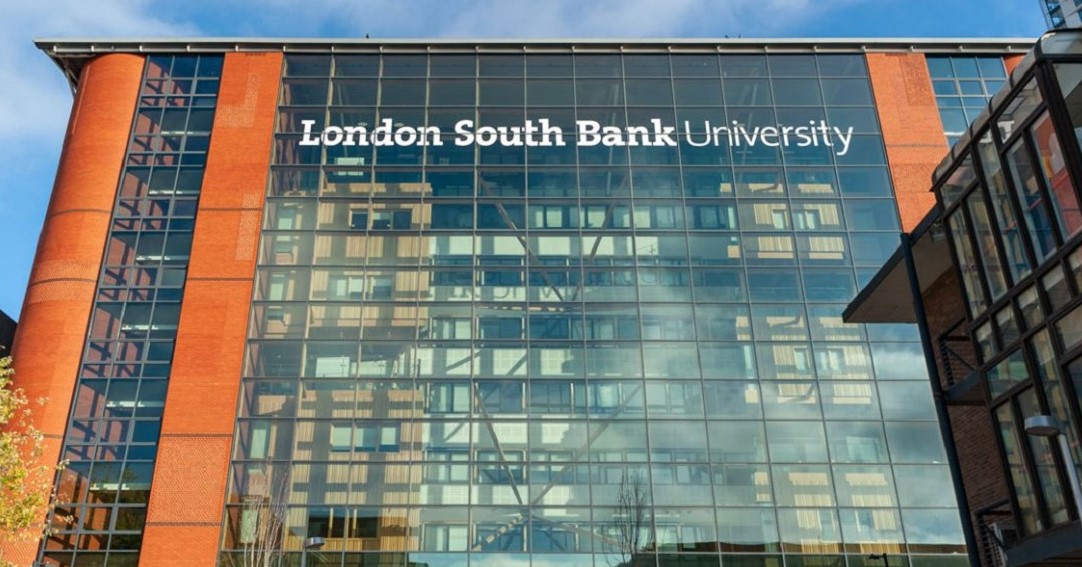
London South Bank University has a long history of educating professionals for the building-related industries. With roots in the London Council School of Building (1904) and the Brixton School of Building (1940), we have been offering training in this sector for over 100 years. You’ll benefit directly from our longstanding ties to the industry.
Our current students and alumni hold key positions in their organisation, often as senior managers and business owners.
Teaching and Assessment
Your lecturers are leading practitioners in their fields, so everything we do is industry relevant. Inspiring guest speakers from renowned arts organisations and theatre companies will give you further industry insight and build your professional connections.
| Lectures, seminars and workshops | Self-directed study | |
|---|---|---|
| Year 1 | 34% | 66% |
| Year 2 | 24% | 76% |
| Year 3 | 20% | 80% |
Personal Tutoring
As a Built Environment and Architecture student, you will be allocated a named tutor during your first three weeks at LSBU. The role of your tutor is to be your primary contact for academic and professional development support.
Your tutor will support you to get the most of your time at LSBU, providing advice and signposting to other sources of support in the University.
Your tutor should be the first person at the university that you speak to if you are having any difficulties that are affecting your work. These could be academic, financial, health-related or another type of problem.
You will have appointments with your personal tutor at least once a year for approximately 30 minutes throughout your course. You can contact your tutor for additional support by email or phone.
Register your interest
Gecko content requires marketing cookies
This content is provided by a third party. To view it, please enable marketing cookies. This may involve the processing of personal data.