

Zubia's Iqbal Malik's PDP Story: MSc Mental Health & Clinical Psychology
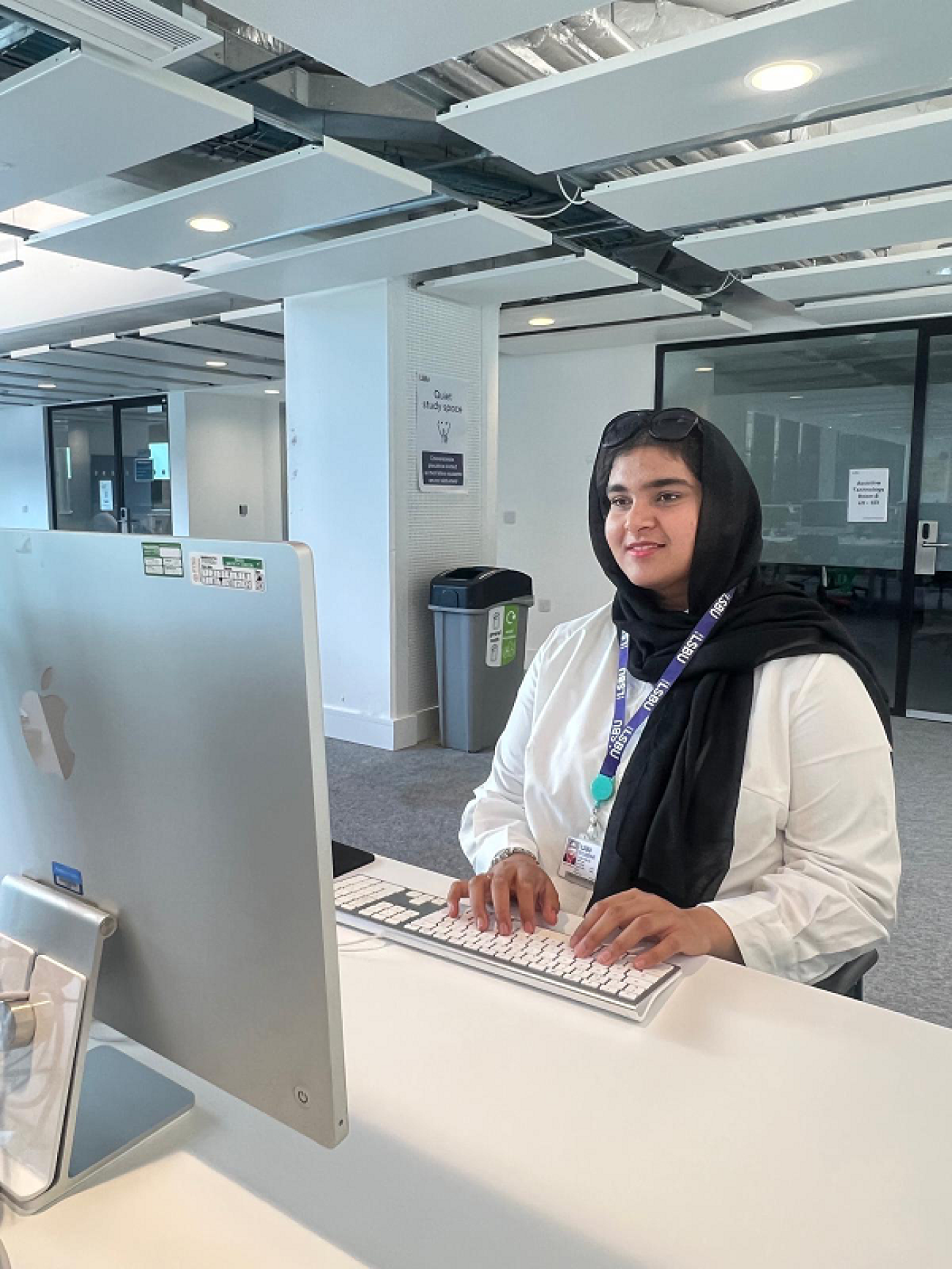
We chatted with Zubia Iqbal Malik, an MSc Mental Health & Clinical Psychology student. She told us all about her experiences with her Personal Development Plan (PDP) and how it has changed her experience at LSBU, and beyond, for the better.
Before completing your PDP, what challenges were you facing as a student?
Before completing my PDP, I was trying to manage a lot of different responsibilities at once. As an international student, moving to the UK meant adjusting to a completely new education system, adapting to independent living, and building a support network from scratch. Academically, I had to get used to a style of learning that placed much more emphasis on critical thinking, independent research and reflective writing than I had experienced before.
Alongside my studies, I was completing my NHS placement, preparing for assignments, planning my dissertation, attending university events as a Student Ambassador, and thinking about future career opportunities. At times it felt difficult to balance everything, and I often focused on the next deadline rather than stepping back to think about my longer-term goals. Completing my PDP encouraged me to reflect on where I wanted to go professionally and how I could make the most of my time at LSBU rather than simply trying to get through each week.
Did your PDP change the way you approached your studies or future career? If so, how?
Yes, it definitely changed my perspective. Before completing my PDP, I tended to think about university one assignment at a time. The process encouraged me to look beyond my immediate coursework and think about the bigger picture: what kind of psychologist I want to become and what experiences I need to get there.
Instead of only focusing on achieving good grades, I started thinking more intentionally about gaining practical experience, building professional skills and developing confidence in clinical settings. It also helped me recognise that personal development happens gradually through small, consistent steps. Whether it was improving my academic writing, taking on additional responsibilities during my NHS placement or becoming more involved as a Student Ambassador, I became more aware that every experience was contributing to my future career.
Can you describe a specific example where the PDP helped improve your confidence, organisation or decision-making?
One of the biggest examples was managing my dissertation alongside my NHS placement. At first, it felt overwhelming because both required a significant amount of time and commitment. Through my PDP, I broke the dissertation into smaller goals, such as completing my ethics application, conducting the literature review, preparing my survey and setting realistic deadlines for data collection and analysis.
Having a structured plan helped me feel much more in control and reduced the stress that came from trying to manage everything at once. It also improved my confidence because I could clearly see my progress instead of feeling like I was constantly falling behind. That experience taught me the importance of planning and prioritising tasks, skills that I know will also be valuable in my future career as a psychologist.
What impact has the PDP had on your academic experience or outcomes?
The PDP has made me much more reflective about my learning. Instead of only thinking about grades, I now think about the skills I am developing and how they relate to my future profession. It has encouraged me to regularly evaluate my strengths, identify areas where I need to improve, and actively seek opportunities to develop them.
I also became much more organised in managing my workload. Planning has helped reduce last-minute pressure and allowed me to produce work that better reflects my abilities. More importantly, I feel much more confident in myself than I did when I first arrived in the UK. Looking back, I can see how much I have grown both academically and personally during my time at LSBU.
What would you say to another student about the value of completing their PDP?
I would encourage every student to take it seriously because it is much more than just another university requirement. It allows you to pause and reflect on your journey, recognise your progress and think about where you want to go next. Sometimes we become so focused on deadlines that we forget how much we are actually learning.
For me, completing my PDP helped me realise that university is not only about qualifying but also about developing as a professional and as a person. Even if your career plans change, the skills you develop through reflection, planning and self-awareness will always be valuable.
What's the one key thing that's helped your personal development at LSBU?
Without question, it has been my NHS placement. Learning psychological theories in lectures is important, but seeing those theories applied in real clinical settings has been an entirely different experience. Observing psychologists work with service users, attending multidisciplinary meetings and learning how assessments are carried out gave me a much deeper understanding of mental health practice.
The placement also challenged me to become more confident professionally. Over time, I became involved in scoring psychometric assessments, supporting group sessions and understanding how different professionals work together to provide care. Those experiences have strengthened both my communication skills and my confidence. They also confirmed that pursuing a career in clinical psychology is the right path for me.