

Yameen Munir - Computer Science and AI student
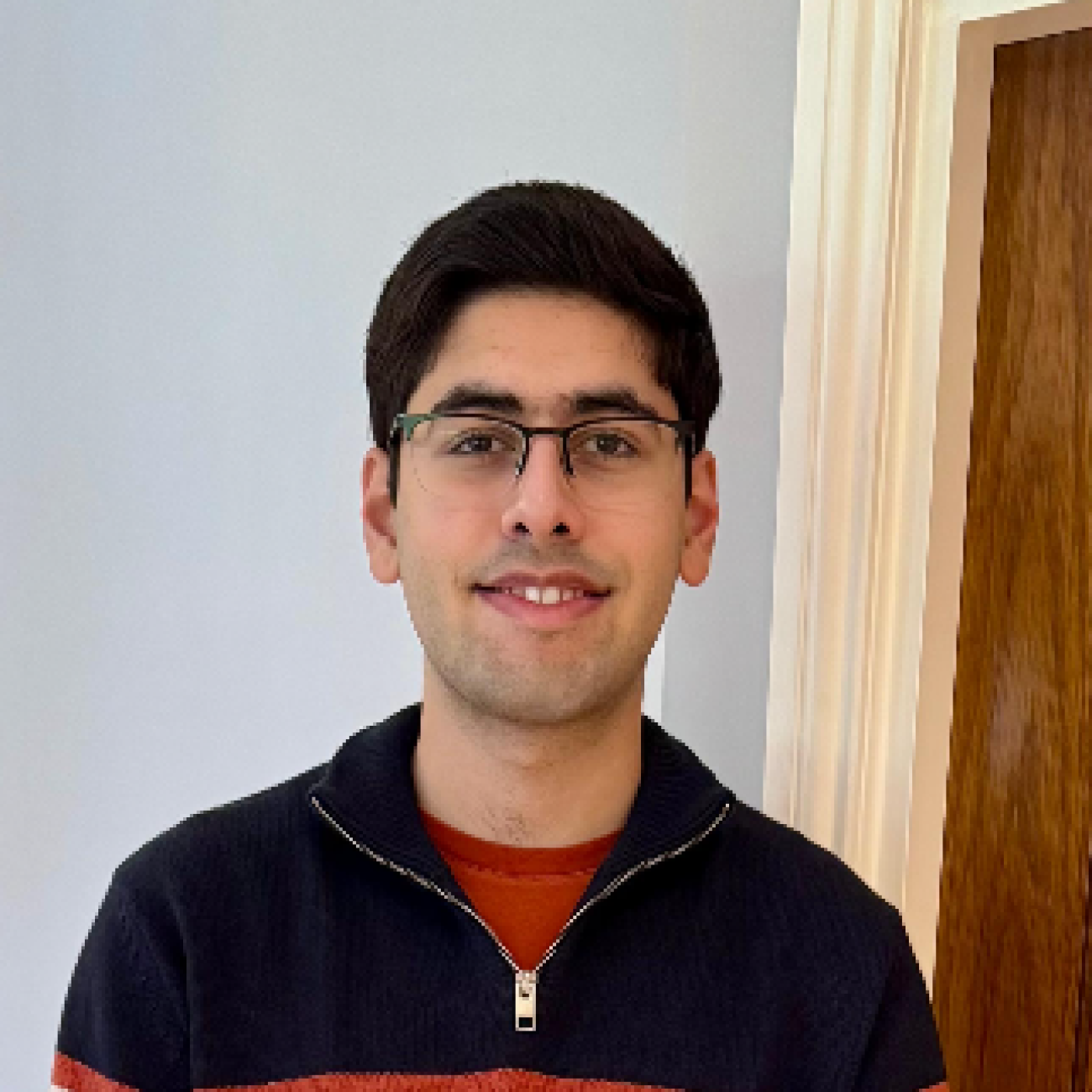
When choosing a university, Computer Science BSc (Hons) student Yameen Munir wanted more than theory - he wanted real-world experience, industry connections and the chance to push boundaries in AI and data science. At LSBU, he found exactly that. From contributing to cutting-edge research and attending prestigious national programmes, to championing inclusivity and supporting fellow students, his journey shows what’s possible when talent meets opportunity.
1. What made you choose to study Computer Science at LSBU, and how has your experience compared to your expectations?
Honestly, I chose LSBU because it felt like a university that was serious about producing graduates who could actually do the work — not just understand it theoretically. The emphasis on practical, applied learning really appealed to me. I had already been developing an interest in AI and data through self-study and my work at YOUSHIKO, and I wanted a degree that would take that further in a structured and rigorous way.
As for how it compared to my expectations — it exceeded them. I did not expect to be contributing to active faculty research as a Student Researcher. I did not expect to be selected for the Microsoft Embrace Mentorship Programme or to attend the UK Government Quantum Summer School. I did not expect to win an award. What I found at LSBU was a community that genuinely invested in students who showed up and put in the work, and that has made all the difference.
The lecturers in particular have been outstanding. Having multiple members of staff write detailed, personal testimonials about your progress is not something I took for granted — it speaks to the quality of the relationships you can build here when you engage fully.
I chose LSBU because it felt like a university that was serious about producing graduates who could actually do the work.
2. You’ve achieved a lot during your time at LSBU, including receiving the Student Inclusivity Award. What does that recognition mean to you, and how have you contributed to the student community?
Receiving the Student Inclusivity Award on 3rd February 2026 genuinely moved me. Not because of what it says about me, but because of what it represents — the university noticing and valuing something beyond grades and technical output. Inclusivity is not a side project for me; it is just how I try to exist in every space I am part of.
Throughout my three years, I have tried to be the person who makes sure nobody feels left behind. In group projects, I took on leadership roles not to be in charge, but to make sure tasks were distributed fairly, that quieter team members had space to contribute, and that we crossed the finish line together. Multiple teammates have written about this in their testimonials, and that means more to me than the award itself.
As a CSI Ambassador, I developed and delivered coding workshops that reached over 100 students — many of whom were just starting to find their feet in computer science. I wanted those sessions to feel accessible and encouraging, not intimidating. And as part of the SouthHack Welfare Committee, I help create environments at hackathons where people from all backgrounds feel genuinely welcome to participate in tech.
I think inclusivity in tech starts with the people already in the room deciding to hold the door open. That is what I have tried to do.
3. You’ve also completed additional programmes like the AI and Machine Learning Bootcamp and the UK Government Quantum Summer School. How have these opportunities complemented your degree and supported your career development?
My degree gave me the foundations and the rigour — but I was always hungry to go further and faster than the curriculum alone could take me. The additional programmes I pursued were my way of filling in the gaps and accelerating my development in areas I cared about most.
The AI and Machine Learning Bootcamp, which I completed between January and July 2024, gave me intensive, hands-on exposure to machine learning techniques that I could immediately apply to my coursework and personal projects. It deepened my confidence with Python, model evaluation, and the full ML workflow in a way that complemented my academic studies perfectly.
The UK Government Quantum Summer School was a completely different and genuinely extraordinary experience. Quantum computing is one of the most exciting and consequential emerging fields in technology — it has the potential to transform everything from drug discovery to cryptography to climate modelling — and being selected to attend a government-backed programme exploring it was something I did not take lightly. The school brought together students and researchers from across the UK to explore the principles and applications of quantum technology, from superposition and entanglement through to quantum algorithms and real-world use cases. It was intellectually the most stretching thing I have done during my degree — sitting at the intersection of physics, mathematics, and computer science in a way that pushed me well beyond my comfort zone. I came away with a much deeper appreciation of where computing is headed and a burning curiosity to keep learning in this space. I also made connections with remarkable people — fellow students and researchers who are genuinely shaping the future of this field — and that network has stayed with me.
The Microsoft Embrace Mentorship Programme was invaluable for my professional development — being mentored by people working at the forefront of AI and cybersecurity at Microsoft gave me a perspective on the industry that no textbook can provide. And programmes like the British Airways Data Science Job Simulation and the IEUK internship through Bright Network helped me understand what real employers are actually looking for and how to present myself effectively.
Taken together, these experiences have made me a more rounded, confident, and industry-ready graduate. They have also helped me build a network that extends well beyond LSBU, which I think is increasingly important in a competitive job market.
LSBU has prepared me in ways I did not fully appreciate until I started applying my skills in the real world
4. How has your time at LSBU helped prepare you for your future career in AI and data science? Are there any specific experiences, projects or opportunities that have been particularly important?
LSBU has prepared me in ways I did not fully appreciate until I started applying my skills in the real world and realised how much further ahead I was than I expected to be.
The single most important experience has been my dissertation. Spending an extended period of time on a self-directed, large-scale research project — defining the problem, sourcing the data, building the pipeline, selecting and evaluating models, and communicating the findings — has given me a level of confidence and independence that I think will serve me throughout my career. My supervisor, Aarbaz Alam, described me as demonstrating “a clear readiness to work at an advanced level in Artificial Intelligence,” and I genuinely feel that.
My Student Researcher role was also particularly significant. Working directly alongside faculty on active research into multimodal AI — contributing to something that goes beyond a coursework brief — was a different level of engagement entirely. It showed me what serious research looks like and confirmed that this is a world I want to be part of.
And then there are the softer things — the confidence that comes from standing in front of 100 students and delivering a workshop, the resilience you build from navigating a challenging group project and still delivering something you are proud of, and the professional relationships with lecturers who have invested genuinely in your development. All of that matters enormously.
Industry needs - curiosity, problem-solving and resilience - are not things that come from a particular postcode or background.
5. You’ve spoken about coming from a community-rooted background in East London. What would you say to students from similar backgrounds who may not see themselves represented in tech?
I would say: you belong here. Completely and without qualification.
I grew up in Romford and Collier Row, and when I looked at the faces and stories typically associated with AI and technology — the startups, the conferences, the success stories — I did not always see people who looked like me or came from where I came from. That gap is real, and it has a real effect on whether young people from similar backgrounds even consider tech as a path for them.
But here is what I have learned: the skills that this industry needs — curiosity, problem-solving, resilience, the ability to connect with people from different walks of life — these are not things that come from a particular postcode or background. They are things that many people from working-class, community-rooted backgrounds have in abundance, often because life has demanded it of them.
What I would tell those students is this: do not wait until you feel ready or until you see someone who looks like you doing it first. Start building. Take the free courses online. Apply for the programmes — the bootcamps, the insight days, the ambassador roles. Put your hand up in class even when you are not sure of the answer. Build the website. Start the project. The industry needs your perspective, and it needs it now — not in some future version of itself, but right now.
And if you are at LSBU, or thinking about coming here — this is a university that will back you if you back yourself. That has been my experience, and I hope it can be yours too.