

Turning placement experience into research: How Adura is contributing to the future of industry-integrated learning

We spoke with Accounting and Finance student Adura about her year-long placement with the Metropolitan Police and how the experience inspired her to become involved in LSBU’s Assuring Quality in Industry-Integrated Learning research project. In this interview, she shares how she’s using her own experiences to help shape better opportunities for future students.
Could you tell us a little about yourself, what you’re studying at LSBU and what first attracted you to your course?
My name is Adura and I am a student at London South Bank University, studying Accounting and Finance. Since I can remember, I have loved maths and basically anything to do with numbers, so I always knew whatever I would choose to do at university would have numbers involved. What initially attracted me to my course was the opportunity to develop my knowledge and understanding while gaining skills that I could take into the workplace. I also liked that it would give me the opportunity to explore different career paths and understand how the knowledge I gain academically can be applied in real-world situations.
What experiences have you had of applying your learning in a real-world or industry setting?
One of my most valuable experiences was completing a year-long placement with the Metropolitan Police. This gave me the opportunity to experience a professional working environment and see how the knowledge and skills developed through my studies could be applied outside the university setting.
Working within an organisation such as the Metropolitan Police gave me a better understanding of the realities of the professional world, including the importance of communication, teamwork, confidentiality, attention to detail and professionalism.
It also allowed me to develop my understanding of how organisations operate and how important it is to apply knowledge practically rather than just academically. Overall, it was a really valuable experience because it gave me exposure to the workplace and helped me better understand the expectations and responsibilities that come with working in a professional environment.
What have you gained from these experiences, both personally and professionally? Have they helped you develop new skills, build confidence or shape your career ambitions?
Personally, I think one of the biggest things has been the confidence I’ve developed from working in a professional environment and interacting with different people.
Professionally, I’ve strengthened skills such as communication, teamwork, adaptability and attention to detail. I’ve also developed a better understanding of workplace expectations and the importance of taking responsibility for my work.
In terms of my career ambitions, the experience has encouraged me to explore different opportunities. I’m currently interested in graduate roles across accounting, finance and intelligence. Although these are different areas, I think they all involve skills such as analytical thinking, problem-solving and working with information to support decisions.
My placement, alongside my academic studies, has helped me recognise the transferable skills I have and the different directions I could take my career.
You’re involved in the Assuring Quality in Industry-Integrated Learning project. What does the project involve, and what inspired you to get involved as a student researcher?
The Assuring Quality in Industry-Integrated Learning project focuses on understanding how universities/higher education providers can ensure that industry-integrated learning opportunities provide students with meaningful, valuable and high-quality experiences.
What initially interested me in getting involved was the opportunity to contribute to something that directly relates to students’ experiences. Having completed a year-long placement myself, I understand how valuable opportunities to gain practical experience can be and how much they can contribute to personal and professional development. I was particularly interested in being able to approach the project from a student’s perspective. Students are the ones experiencing these opportunities first-hand, so I think it’s important that our views and experiences are represented when considering how these programmes can be improved.
I also saw it as an opportunity to gain experience in research, develop new skills and contribute to a project that could have a positive impact on future students.
How does being involved in this research allow you to contribute to the future of work-integrated learning and the experiences of other students?
Being involved allows me to contribute to conversations about how universities can make industry-integrated learning more effective, accessible and beneficial for future students.
I think it’s important that these opportunities aren’t simply about students completing a placement or gaining work experience, but about ensuring they actually learn something meaningful from the experience. As a student researcher, I have the opportunity to bring a student perspective to the research and help highlight what makes these experiences valuable, as well as areas where improvements could be made.
Ultimately, I’d like to think that the work we’re contributing to could help universities create better opportunities for future students, ensuring they leave university with not only an academic qualification but also the practical skills, confidence and experience needed to enter the workplace.
Why do you think it’s important for universities to work closely with employers, and what makes a good industry-integrated learning experience from a student’s perspective?
I think the relationship between universities and employers is extremely important because education should prepare students for more than just academic assessments. It should also prepare them for the realities of the working world. Working closely with employers allows universities to understand what skills, knowledge and qualities are expected within different industries. This means that learning can be more relevant to the workplace and students can develop skills that employers are actually looking for. From a student’s perspective, I think a good industry-integrated learning experience should provide meaningful responsibilities, opportunities to learn, appropriate support and exposure to the realities of the industry.
I also think students should feel that they’re contributing rather than simply observing. Having the opportunity to take on responsibilities, ask questions, receive feedback and learn from experienced professionals makes a significant difference.
Most importantly, students should be able to reflect on their experiences and understand how they can apply what they’ve learned to their future careers.
What would you say to someone considering university who wants to gain practical experience and prepare for their future career alongside their degree?
My advice would be to make the most of the opportunities available to you and not limit your university experience to what happens inside the classroom. Your degree is important, but gaining practical experience alongside your studies can make a huge difference. Placements, internships, volunteering, industry projects and research opportunities can help you develop skills that you might not necessarily gain through academic learning alone. I’d also encourage students not to be afraid of stepping outside their comfort zone. Some opportunities might feel intimidating at first, but they can end up being some of the most valuable experiences you have.
My own placement with the Metropolitan Police showed me just how important it is to put yourself out there, gain experience and be open to learning.
Ultimately, university is an opportunity to develop academically, professionally and personally. Make the most of it, ask questions, build connections and take advantage of opportunities that will help prepare you for life after graduation.
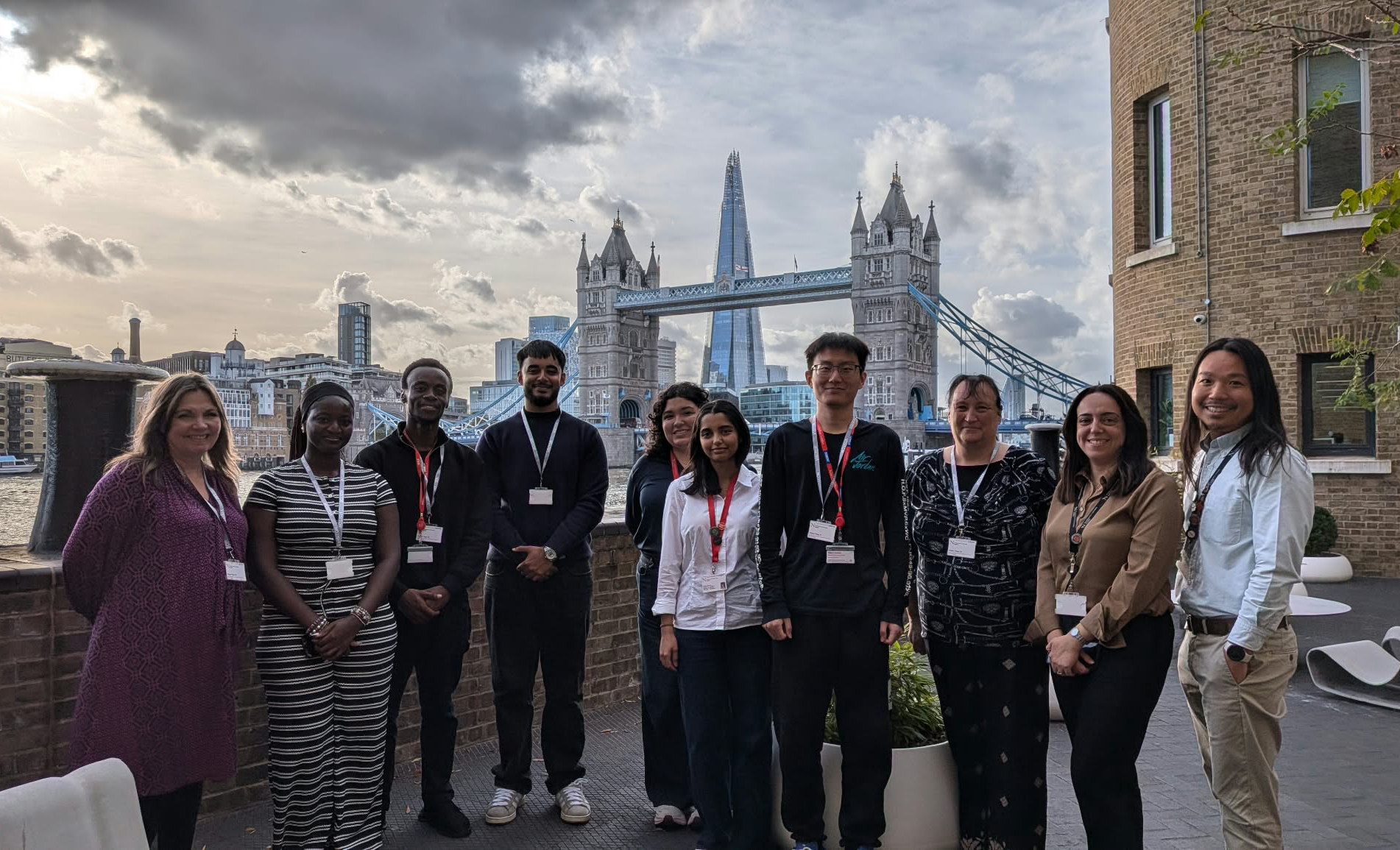
The Assuring Quality in Industry-Integrated Learning Research Group on their way to a training session at the National Education Union (NEU).