

Leading a Game Jam Project: Samuel’s journey in game development
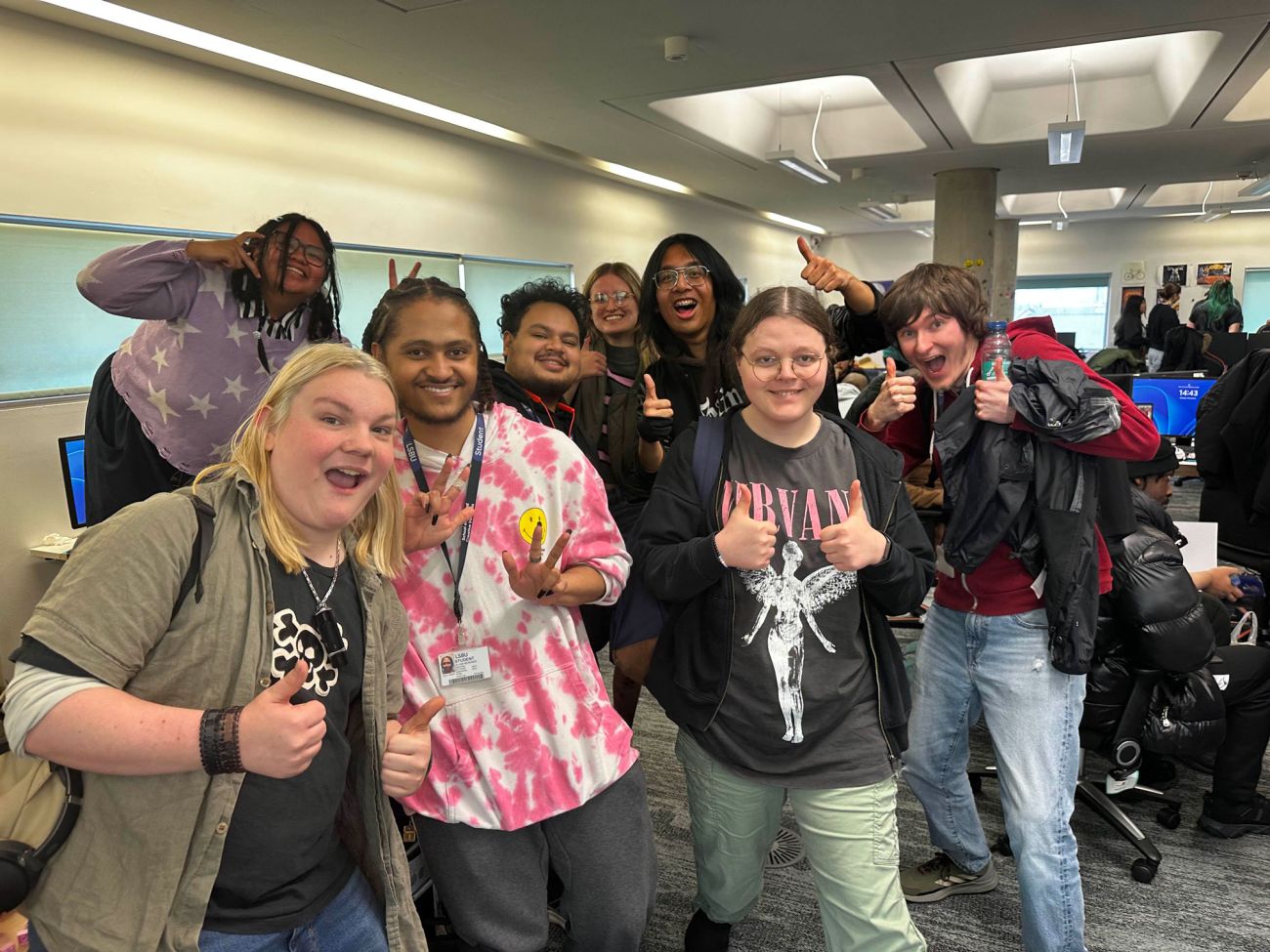
For Samuel, a fast‑paced game jam became a chance to put theory into practice. Taking on the dual role of producer and programmer, he helped guide his team from concept to completion, delivering The Little Glorp, a casual puzzle game. The experience challenged him to lead confidently, solve complex technical problems, and collaborate effectively—just like in a real games studio.
What was your role during the Game Jam, and what did you create as part of your team?
For the game jam, my team and I worked together to create The Little Glorp, a casual, cosy puzzle game about delivering a letter while collecting friends in space. I took on the roles of producer, team lead, and programmer. As producer, I helped manage the project’s creative direction and overall production, while as a coder I implemented key gameplay features including the user interface, friend collection system, obstacles, and objective systems.
What was the most challenging aspect of the Game Jam, and how did you overcome it?
The most challenging part of the game was implementing the friend chain mechanic, where the player could collect friends and have them follow the player in a chain. There was a physics issue where friends would glitch out and merge into each other, like some amalgamation (which wasn't very cute).
Game jams mirror the pressure of the games industry and help you build confidence working with new people and new ideas.
What new skills - technical or soft - did you develop or strengthen during the experience?
The skill I'm always learning at game jams is teamwork skills. Being able to collaborate with others also strengthens relationships. I was also able to strengthen my coding skills, such as creating 2D rigid-body ragdolls, and creating quick systems which improve my coding speed.
Solving the friend chain physics issue taught me how to troubleshoot calmly and not panic when something breaks during development.
How did working under pressure influence your approach to teamwork and decision-making?
As a producer, I took the approach of leading the decision-making of the game to be entirely based on what resources and skills each team member possessed. This made it a lot easier for the team as members were able to produce game assets based on their own skill set, compared to spending lots of time experimenting with new and risky approaches that could've compromised the project or production flow.
How do you think this experience will support your future career in the games industry or beyond?
Collaborating with new people will be quite common; it's good to work on new projects with new people and finish with closer relationships. It also gives me a chance to experiment with creating smaller games, games that could have the potential of becoming larger-scale and commercial projects!
It's also important to recognise that pressure in the games industry is quite common. Participating in these jams and learning to coordinate and implement features calmly under pressure, especially while not falling under pressure, is an especially important skill to have.