

How one student used AI to explore the future of jobs
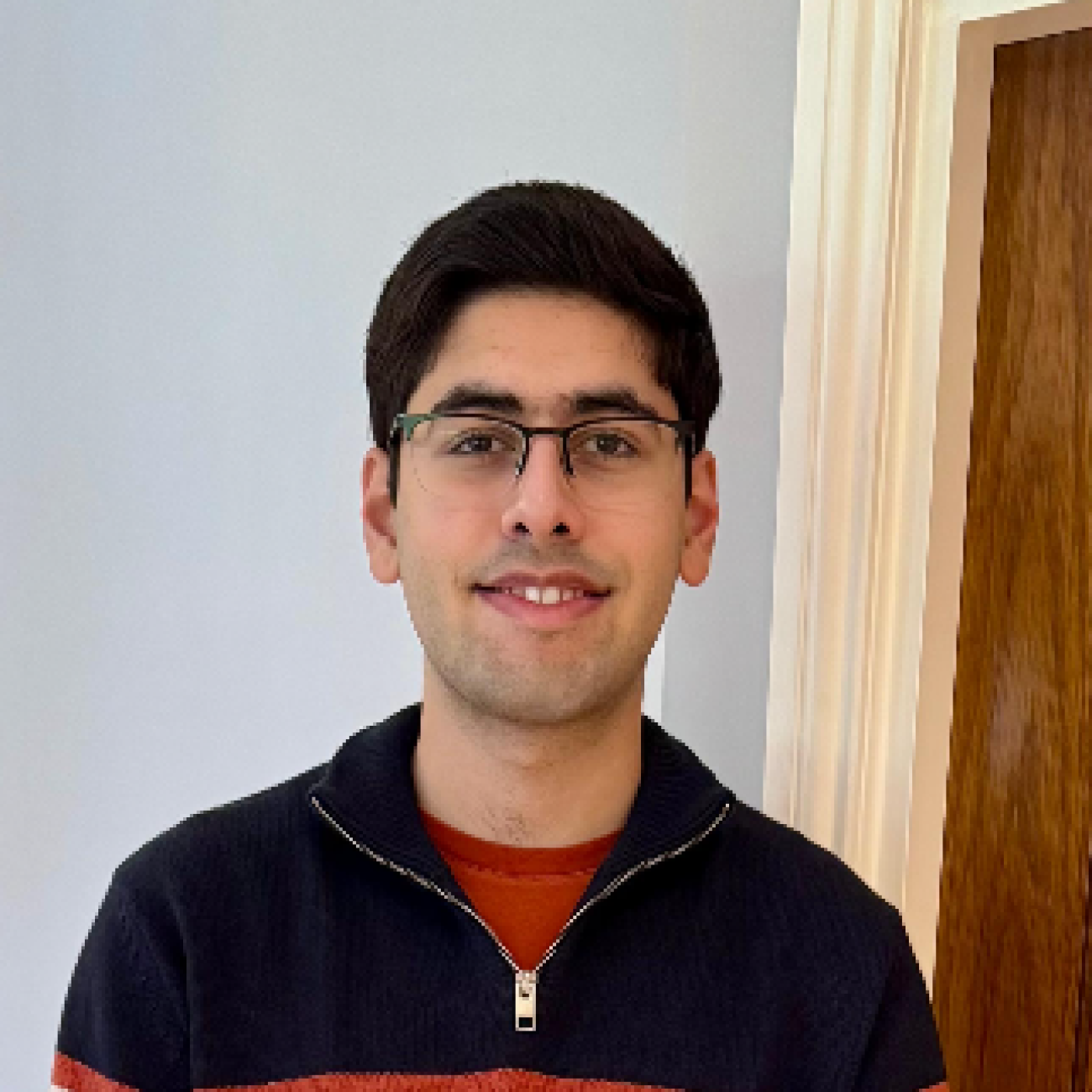
What if your dissertation could do more than earn you a degree - what if it could give you a genuine head start in your career? At LSBU, Computer Science BSc (Hons) student Yameen Munir used his final-year project to investigate how artificial intelligence is reshaping the global job market.
Analysing 43,000 job postings across four countries, he combined data science and machine learning to generate insights that are directly relevant to employers, while building the skills and experience to stand out in a competitive tech industry.
Can you tell us more about your dissertation and the real-world problem it aimed to solve?
My dissertation is called AI and the Future of Work: Mapping Job Market Shifts Through Data Science and Machine Learning, and the problem it tackles is one that affects every single person entering the workforce right now - how is artificial intelligence actually changing the job market, and which roles, industries, and countries are most affected?
There is a huge amount of opinion and speculation about AI and jobs, but very little data-driven evidence at scale. I wanted to cut through that noise. I collected and analysed approximately 43,000 real-world job postings from four countries - the United States, the United Kingdom, India, and China - and built a full data science pipeline to find patterns: which skills are growing in demand, which roles are shrinking, and how the picture differs across regions and industries.
The goal was not just an academic exercise. I genuinely believe that if students, universities, and employers better understand where the job market is heading, they can make smarter decisions - about what to study, what skills to develop, and how to stay relevant. That felt like something worth researching properly.
The fact that I built an end-to-end pipeline mirrors exactly how a real data science project would be delivered in a professional setting.
What tools, technologies or methods did you use, and how do these reflect what’s currently used in industry?
I used a range of tools and techniques that are directly aligned with what data science and AI teams use in industry today. For machine learning, I used XGBoost for classification tasks - one of the most widely used algorithms in professional data science. For forecasting job market trends over time, I used Facebook Prophet, which was developed by Meta and is used extensively in industry for time-series analysis. I also applied K-Means clustering to segment job roles and industries, and NLP with TF-IDF vectorisation to extract meaningful insights from the text of job descriptions themselves.
On the infrastructure side, I used Supabase as the backend database layer and Power BI to build the interactive dashboards - Power BI is one of the most in-demand business intelligence tools in the UK right now. The fact that I built an end-to-end pipeline - from raw data ingestion all the way through to a polished dashboard - mirrors exactly how a real data science project would be delivered in a professional setting. It is not just model-building in a notebook; it is the full workflow.
There is a significant different between understanding a concept in a lecture and delivering something that works. My course gave me repeated opportunities to bridge that gap.
How has working on real-world projects during your course helped you feel prepared for a career in tech?
Massively. There is a significant difference between understanding a concept in a lecture and actually having to deliver something that works — on a deadline, under pressure, with all the messy realities that come with real data and real requirements. My course gave me repeated opportunities to bridge that gap.
Whether it was leading a team as Scrum Master to build a full-stack web application, conducting live penetration testing in a virtualised cybersecurity lab, or building a machine learning pipeline for a simulated industrial client — these were not toy exercises. They required me to make real technical decisions, handle failure, iterate, and deliver. I came out of each one not just with a grade, but with genuine confidence that I know how to approach complex problems professionally.
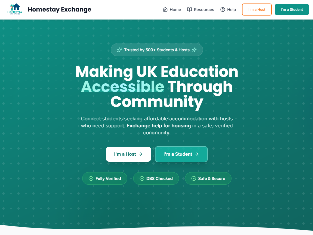
Real-world impact in action 👆
Yameen, one of our Computer Science students, developed a full-stack web app connecting students with host families. It's designed with accessibility at its core, including voice guidance and WCAG compliance.
I also think the breadth of what I covered — AI, cybersecurity, data engineering, software engineering, database design — means I understand how different parts of a tech organisation fit together. That broader perspective is something I think a lot of new graduates lack, and it is something I am genuinely grateful for.
Everything I learned at LSBU has had direct, practical application outside of university.
Have you been able to apply what you’ve learned at LSBU in any professional or freelance work? If so, how?
Absolutely — and this is probably one of the things I am most proud of. Everything I have learned at LSBU has had direct, practical application outside of university.
The most visible example is my freelance web development work. I recently designed and built a full 9-page website for Gup Shup – Chit Chat Chai, a local Indo-Pakistani restaurant in Romford. That project drew on my software engineering skills, my understanding of accessibility and responsive design, my knowledge of APIs and third-party integrations (including Toast POS, Just Eat, Uber Eats, and Deliveroo), and my ability to manage a client relationship professionally from brief through to delivery. The owner described the result as “consistently better than expected,” which meant a great deal to me.
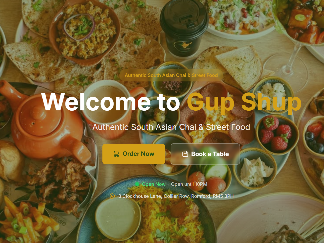 Another freelance project by Yameen 👆: a full-stack website for an Indo-Pakistani restaurant in Romford - complete with Toast POS integration, table reservations, live opening status, and local SEO optimisation using schema markup.
At YOUSHIKO LTD, my family’s e-commerce business, I have used Python, Pandas, and Scikit-learn to build predictive analytics models for forecasting product demand, and I create Power BI dashboards that directly inform the business’s strategy. These are skills I learned at LSBU and am applying in a live commercial context every week.
Even the data skills from my dissertation have influenced how I think about the business — asking the right questions of data, building reproducible pipelines, and communicating findings clearly to non-technical stakeholders. That is directly transferable.
My degree pushed me into genuinely unfamiliar territory repeatedly - that kind of adaptability is exactly what fast-moving tech environments demand.
What skills have you developed during your degree that you think will give you an advantage when starting your career?
Four things stand out for me.
First, the ability to work end-to-end. A lot of people can build a model, or build a front end, or write a database query. What I have developed is the ability to connect all of those things into a coherent, deliverable solution. That full-stack, full-pipeline thinking is rare and genuinely valued by employers.
Second, adaptability under pressure. My degree pushed me into genuinely unfamiliar territory repeatedly — cybersecurity one semester, machine learning the next, then software engineering, then data analytics. Each time I had to get up to speed quickly, deliver to a high standard, and move on. That kind of adaptability is exactly what fast-moving tech environments demand.
Third, the capacity to learn quickly — and I think this might actually be the most important skill of all right now. The technology landscape is changing faster than at any point in history. Tools that did not exist two years ago are now industry standard. AI in particular is not a future trend — it is the present, and it is accelerating. Generative AI, large language models, AI-powered development tools, automated data pipelines — these are reshaping every sector, every job, and every workflow. The graduates who will thrive are not necessarily those who know the most today, but those who can pick up whatever comes next with speed and confidence. That is a muscle I have been building throughout my entire degree. Whether it was teaching myself new frameworks for a freelance project, exploring quantum computing at the government summer school, or staying current with the latest developments in AI — I have cultivated a genuine love of learning that I believe will keep me relevant not just at the start of my career, but throughout it.
Fourth, communication. I can explain technical concepts clearly to non-technical people — clients, business stakeholders, community members. Whether it is presenting a Power BI dashboard to guide a business decision or explaining a website to a restaurant owner, that skill is just as important as the technical ability itself. I have developed it through my CSI Ambassador workshops, my freelance work, and my university projects, and I think it will serve me well throughout my career.