

How a Computer Science BSc student is redefining cyber learning at LSBU

Written by Trushi, a Computer Science BSc (Hons) student and founder of LSBU’s ZeroDay Cyber Security Society, this interview dives into how a spark of curiosity about ethical hacking turned into a full-blown student society shaping real cybersecurity experiences at university.
From hands-on workshops to industry connections, Trushi’s journey shows what can happen when students are given the space to build, lead, and experiment. It’s also a glimpse into studying at London South Bank University, where ideas don’t just stay in the classroom - they become projects, communities, and opportunities that prepare you for the real world.
What inspired you to launch the ZeroDay Cyber Security Society?
My journey into cybersecurity began at a young age when I was first introduced to ethical hacking at around 14. This sparked my curiosity about how systems can be tested and secured, and although I didn’t pursue it deeply at the time, the interest stayed with me.
As I progressed in Computer Science and began exploring Artificial Intelligence, my curiosity evolved into a deeper interest in how emerging technologies are secured and used responsibly. I became increasingly focused on not just what AI can do, but how we ensure it is ethical, safe, and resilient.
This combination of early exposure and evolving passion inspired me to co-found the ZeroDay Cyber Security Society. As Founding Vice President, I aimed to create a space where students could explore cybersecurity in a practical, hands-on way while connecting it to modern technologies like AI.
LSBU supported us not just administratively, but by actively empowering student leadership and innovation.
What was involved in setting up the society, and how did LSBU support you through that process?
Setting up ZeroDay involved defining our vision, forming a committee, planning activities, and completing the formal approval process to establish the society.
One of the most defining moments in this journey was our conversation with Dr Safia Barikzai, who said: “Go for it, I’m behind you, I’ll be your backbone.” That level of belief and encouragement gave us the confidence to take the first step and turn our idea into reality.
We also received consistent support from Ian Mackie, who was always approachable and solution-focused, especially when we faced resource or logistical challenges. Instead of limitations, he encouraged us to explore how the university could support our ideas.
In addition, guidance from George Bamfo helped us shape the society in a way that aligns with real-world cybersecurity practice.
Overall, LSBU supported us not just administratively, but by actively empowering student leadership and innovation.
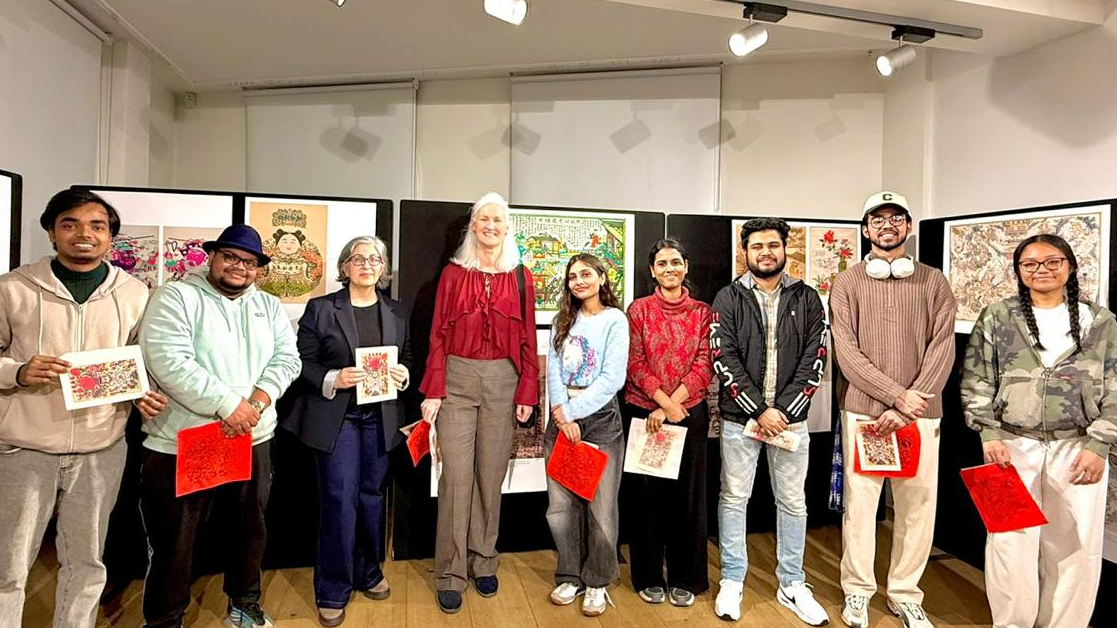
ZeroDay in action: Some of the members of the student team
What kind of activities or initiatives have you introduced through ZeroDay, and how do they reflect real-world cybersecurity practice?
Through ZeroDay, we follow a simple approach: Learn, Engage, Apply, ensuring cybersecurity is practical and industry-relevant.
We run hands-on workshops and collaborative sessions where students solve real-world inspired scenarios together. This reflects how cybersecurity works in practice,fast-paced, collaborative, and problem-solving focused.
We also actively connect students with industry professionals and hackathon organisers, giving them exposure to real-world cybersecurity environments and helping them understand how technology is built and secured in industry settings.
We actively connect students with industry professionals and hackathon organisers, giving them exposure to real-world cybersecurity environments.
What skills have you personally developed from launching and running the society?
Running ZeroDay has helped me develop strong leadership, communication, and project management skills.
As Vice President, I coordinate with the President to plan and execute events, manage timelines, and ensure tasks are delivered effectively. This has strengthened my ability to handle multiple responsibilities and deliver structured outcomes under pressure.
I also manage external communication with companies and industry professionals, which has improved my confidence in professional outreach, stakeholder management, and building partnerships.
Overall, this experience has significantly improved my organisational skills, leadership ability, and confidence in applying Computer Science in real-world contexts.
What opportunities has ZeroDay given you to support your career goals?
I have actively engaged in industry-related opportunities and competitions.
Through ZeroDay, I have interacted with companies and professionals, helping bridge the gap between students and the cybersecurity industry.
I also participated in the AI London 2026 hackathon hosted by Encode Club, where my team built Fello, an AI-agent-powered productivity and well-being platform designed for neurodivergent and disabled users. This experience strengthened my technical, collaborative, and problem-solving skills.
During the event, I had the opportunity to engage with professionals from companies such as AWS, OpenAI, Meta, Anthropic, Canva, and Vercel, gaining valuable insight into real-world industry practices.
Additionally, I am a Hub Scholar at Encode Club, which continues to connect me with a wider ecosystem of builders and industry opportunities.
LSBU is a place where ideas are genuinely supported and encouraged to grow into real opportunities.
How has this experience influenced your career ambitions or confidence in entering cybersecurity?
This experience has significantly strengthened my confidence and clarity in pursuing a career in cybersecurity and technology.
It has helped me understand how theoretical knowledge applies to real-world systems and reinforced the importance of security, ethics, and collaboration in modern technology.
It has also deepened my interest in the intersection of AI and cybersecurity, and I now feel more confident in my ability to contribute meaningfully to the field.
What would you say to prospective LSBU students about the opportunities available to them?
I would tell prospective students that LSBU is a place where ideas are genuinely supported and encouraged to grow into real opportunities.
From my experience, the university empowers students to take initiative and lead. Through societies like ZeroDay, students are given the space, trust, and support to build projects, organise events, and connect with industry.
LSBU also provides opportunities beyond the classroom, helping students engage with real-world challenges and develop both personally and professionally.
Overall, it is an environment where motivated students can truly learn, lead, and make an impact.