

Caroline Rukshini Jeevachandran: PhD in Food Science
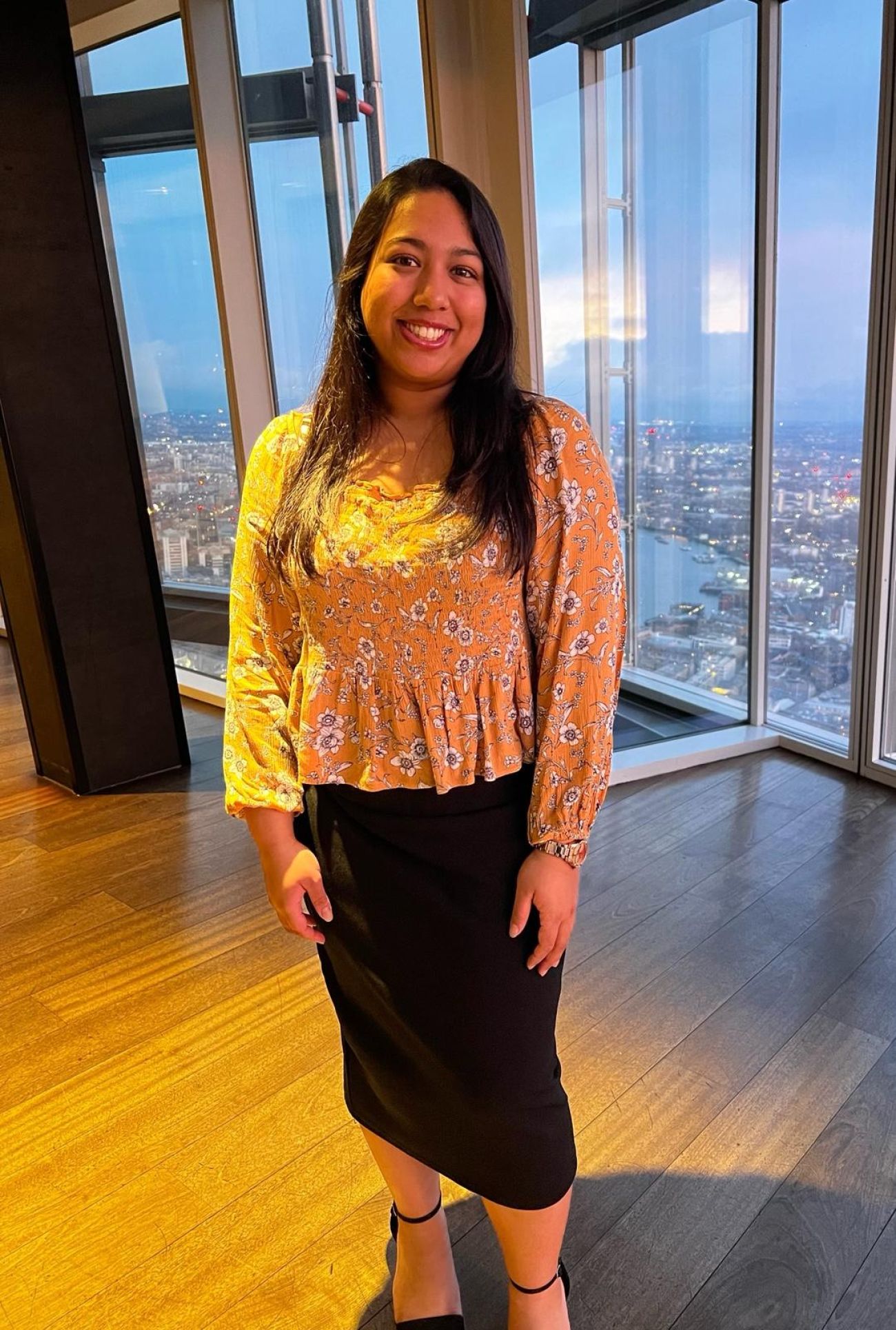
After taking a gap year to discover her true calling, Caroline Rukshini Jeevachandran from London realised her fascination with the science behind food and baking. In 2017, she enrolled at LSBU's National Bakery School, the oldest bakery school in the world, to study BSc Baking Science, Technology and Management. Five years after completing her undergraduate degree, Caroline will be graduating in October 2026 with a PhD in Food Science, having transformed from a curious student inspired by her mum's cooking into a research expert ready to shape the future of food innovation.
Where are you from, and which course did you choose to study?
I am from London, and after finishing my A levels, I took a gap year to figure out what I actually wanted to do. Somewhere in that year, I realised how much I was drawn to the science behind food and the creativity that comes with it. That discovery is what brought me to LSBU in 2017 to study BSc Baking Science, Technology and Management. It was a decision that opened up a completely new world for me and set me on the path toward pursuing a PhD in Food Science.
Why did you choose LSBU? Is the location of LSBU important to you and why?
LSBU caught my attention because it offered something I could not find anywhere else - the National Bakery School. It is not just well known, it is the oldest bakery school in the world, and the only place in London offering a full baking science degree rather than a short course. This ticked so many boxes as I wanted professional training and a qualification that carried weight in the industry. Location was honestly a huge part of why I chose LSBU, and being in London meant being close to opportunities. Being in London opened a lot of doors as you are surrounded by the food industry, opportunities, and research innovation.
Are you graduating this year?
I completed my undergraduate degree in 2022, and now I will be graduating again in October 2026 with a PhD in Food Science. Thinking about that date makes me appreciate how much I have grown since first beginning my studies.
What was your inspiration or reason to study this subject?
I have always loved food and baking, and a lot of that comes from watching my mum in the kitchen when I was younger. That curiosity grew into a real passion, and I reached a point where I wanted to push myself beyond treating food as a simple interest. I was drawn to the scientific and technical challenges behind baking and product development. I liked understanding food on a molecular level and seeing how small adjustments could change the final outcome.
I also enjoyed researching alternative ingredients, especially for different dietary needs, and learning how to troubleshoot issues that came up in the development process. What intrigued me even more was the responsibility that comes with creating food for the public. Developing products that meet consumer expectations is one thing, but developing them to comply with strict legislation, safety standards and industry regulations brings a whole new challenge.
Tell me about how the course lecturers have supported you.
When I think about my journey, the staff are a big part of why I have come this far. They challenged, supported, and helped me discover interests I did not even know I had. My two PhD supervisors, in particular, are unbelievably talented at what they do. Their depth of knowledge and the way they approach research have pushed me to think differently.
The Head of the Bakery School also played a big role. Not only did they teach me, but encouraged me through each challenge and helped me realise what I am capable of. I will be eternally grateful to all of them for the support and direction that shaped who I am today.
What kind of new technologies and equipment have you learned about in your course?
The facilities sealed the decision for me. The labs at LSBU offer equipment you simply do not find everywhere. As baking and food science students, we use machines like water activity meters, moisture meters, C-Cell imaging systems and texture analysers, which give us a deeper understanding of the science behind ingredients, shelf life, and product development.
The National Bakery School also has a strong relationship with the Worshipful Company of Bakers, which adds another layer of history and industry connection to the experience and opens the door to strong industry relationships.
What skills have you learned or developed at LSBU?
Throughout my time at LSBU, I have developed a strong foundation in research, laboratory work, and machine training, which has really strengthened my technical understanding of the field. On top of that, being a Student Ambassador opened up a different set of skills. Through outreach, admissions work, and content, it has taught me how to react quickly, stay organised and communicate confidently with people across all age groups.
Where do you see yourself in the future, and what are your goals?
In the future, I see myself working in a technical or R&D role within the food science industry, ideally a role that allows me to contribute to the entire product journey from concept to launch. Alongside this, one of my goals is to give back by supporting younger people entering this career path. Encouraging the next generation to explore careers in food science feels just as important to me as my own growth.
What advice would you give to people thinking about studying at LSBU?
My advice would be to come in with an open mind and be ready to take every opportunity LSBU offers you. Do not be afraid to ask questions and try new things! Make the most of the facilities, the lecturers, and the opportunities outside your classes. Finally, say yes to things that feel slightly out of your comfort zone. It is those moments that end up building your confidence without you even noticing.