Energy, Materials and Environment Research Centre
The Energy, Materials and Environment Research Centre is the focal point for cross-university research interests that are multidisciplinary with a background in the policy governing, societal impacts of, synthesis, optimisation and application of materials and engineering systems for long time use tailored towards key challenges, such as sustainability and defence and security.
Our key research aim is to develop whole energy systems to mitigate climate change. We undertake interdisciplinary research focused on the complete systems, focusing multiscale concepts from materials engineering, policy and governance, storage and demand, across electricity and heat to deliver change in the interplay between energy, economy and society.
We focus on:
- Heating and cooling. Using creative and novel approaches, we have made significant impact in reducing the energy demands for London Boroughs to individual buildings. This covers a whole energy systems approach and is being used to deliver significant improvements in reducing energy demand.
- Materials modelling and synthesis. Here our approach is to develop new approaches to produce common materials more sustainably or develop next generation functional materials for energy storage or energy transformation. We develop life cycle assessments, investigate the impact of use and ageing on materials and discover solutions to enhance operational lifetime.
- The impact of scale. We incorporate the understanding of scale when determining policy or strategy. Our interests cover local, to national and international scales determining local energy policy and decentralised energy options.
- Policy, oversight and international trends are important when considering any national change. We focus on the global policies to deliver low carbon transitions, government policy regarding reduction targets, international climate policy, systems regulation, and evaluate how to add value to local communities through local/national and international trends.
Work with us
Please contact Professor Steve Dunn (dunns4@lsbu.ac.uk) if you would like to know more or have an initial conversation about what solutions we can provide to current problems.
| Events | News | Featured Publications |
|---|---|---|
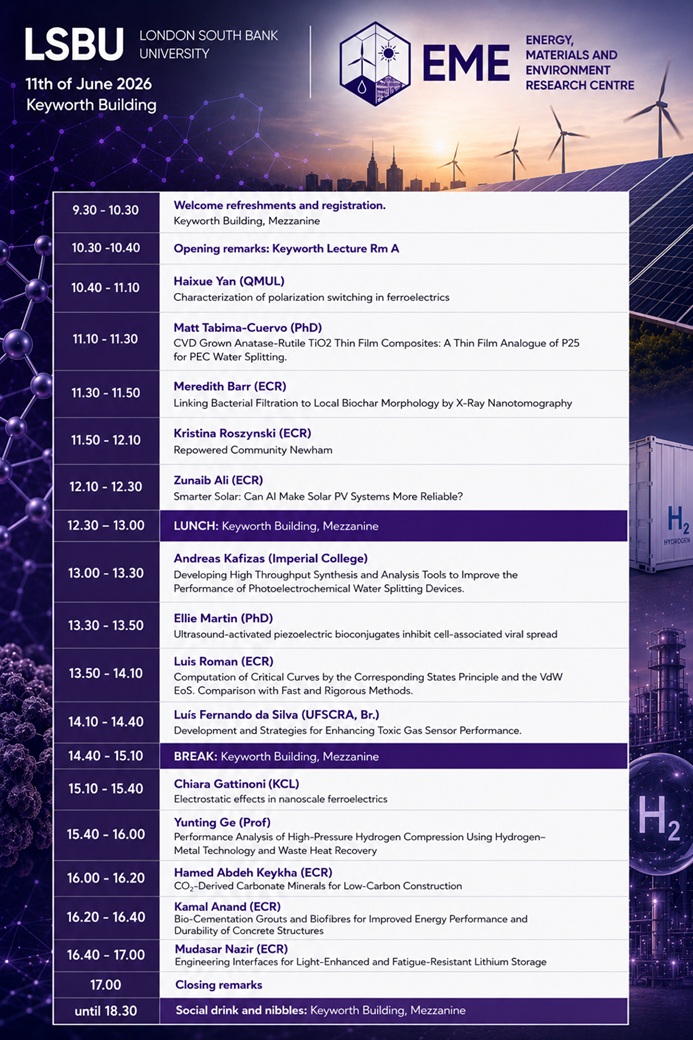
EME Conference, Schedule now available
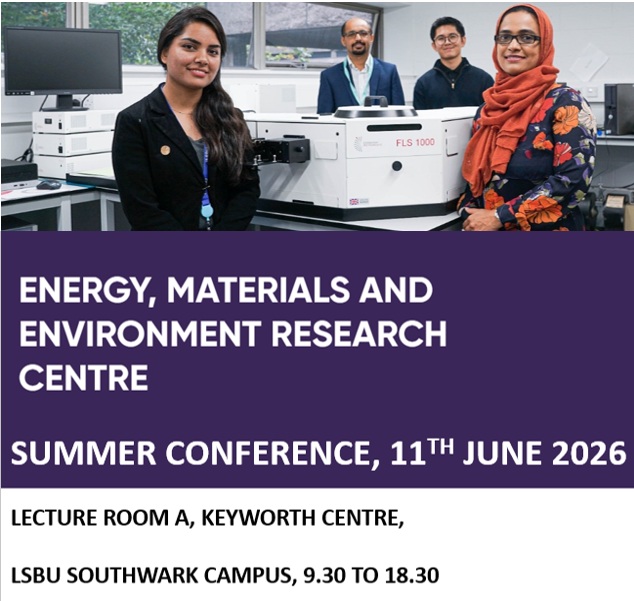
2nd EME Conference, 11th June 2026 ~ register here The second EME conference will take place in LSBU's Keyworth Centre on the 11th of June this year. We have an international line up of speakers as well as speakers from within LSBU's EME research centre. Registration is free so please come along and listen to a variety of interesting topics across the broad portfolio of energy, materials and environment.
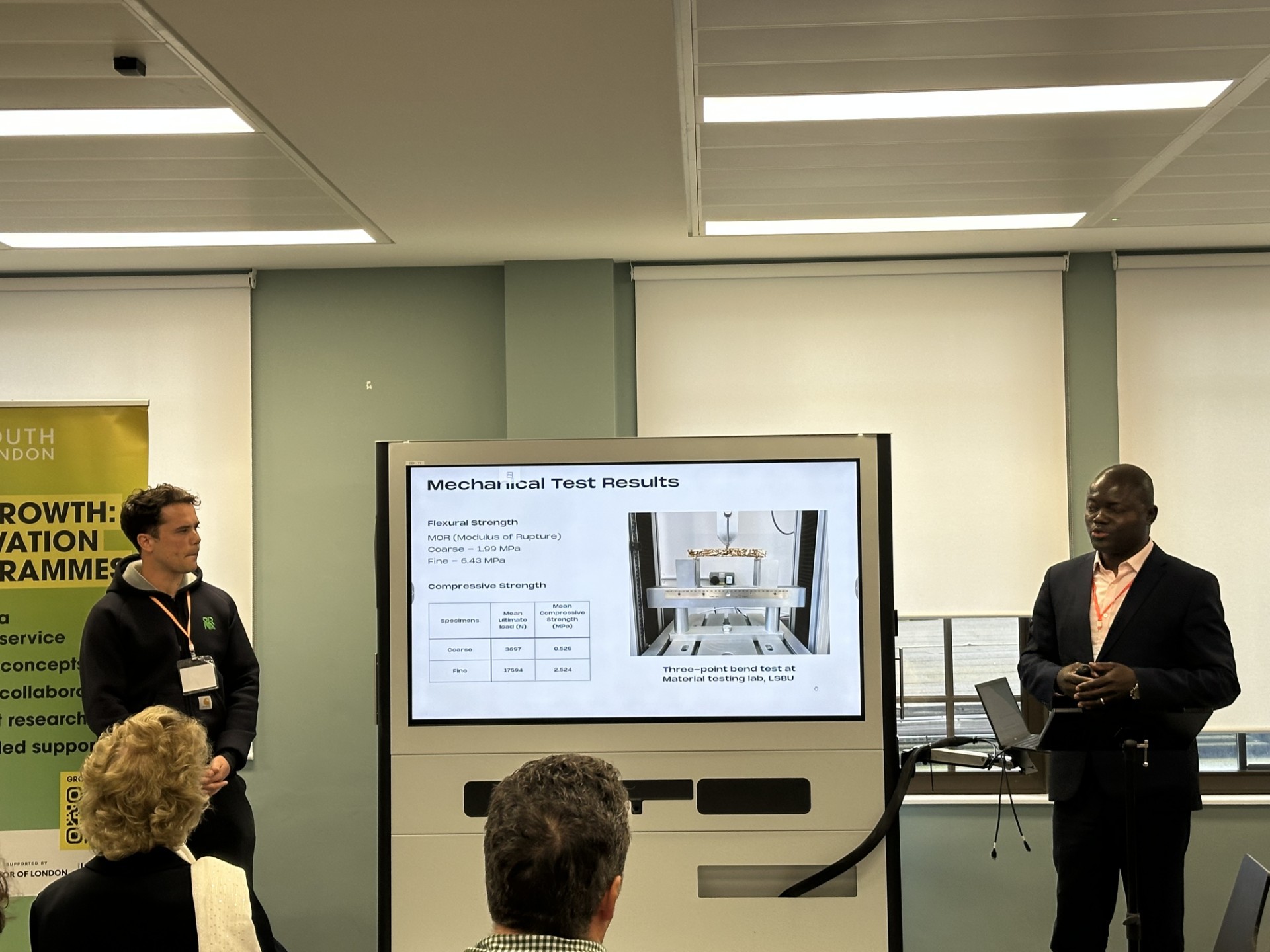
March 2026 ORNA Group, founded by Hugo Knox, has been working with LSBU on a circular economy project. This project transforms discarded Christmas trees into low‑carbon bio‑composite panels for construction. At the LSBU Materials Lab, researchers led by Dr Olubisi Ige carry out material characterisation and mechanical testing, assessing fibre quality, binder performance, and structural behaviour. Initially, samples were assessed for bending and compression performance, showing clear improvements with finer particle grading. The material demonstrated flexural and compressive strengths within the range of light bio‑based panels. All results are benchmarked against regulatory standards, ensuring the material’s real‑world feasibility. These early findings confirm both the technical feasibility and the sustainability value of converting seasonal waste biomass into low‑carbon building products, supporting further development and optimisation. The ongoing research will generate evidence of material behaviour, including fibre/binder interaction mechanisms, panel stability under heat and pressure, moisture resistance, and structural performance. These activities fall squarely within the scope requirement for material science, ensuring the material meets required structural and fire standards. This is mitigated by the Academic Partnership with LSBU, which will perform rigorous testing (load-bearing, acoustic, fire) and optimise the binder formula.
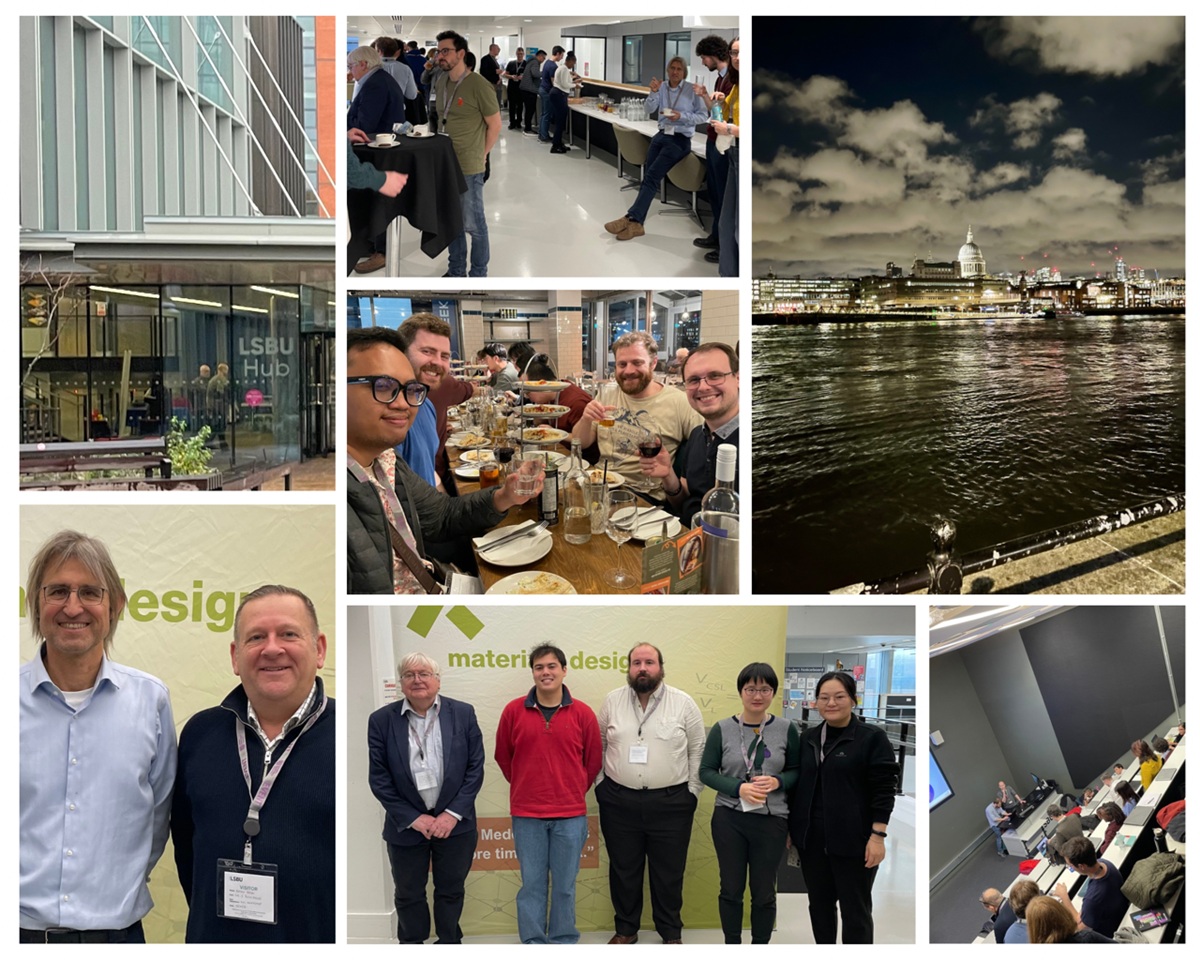
January 2026 MCC-VASP workshop at LSBU Dr John Buckeridge organised and ran the 2nd VASP-MCC Workshop in LSBU from 19th – 21st January 2026. The workshop aimed at bringing together novices, experienced users, developers and experts to discuss the application of the widely used VASP software for first-principles materials modelling. The workshop included contributions from the VASP team, in particular the main developer Prof. Georg Kresse (in the top 5 most cited physicists of all time), a hands-on session run by the industrial partners Materials Design and a keynote address from Prof. Sir Richard Catlow FRS. MADD Group member Dr Suela Kellici kindly gave an invited talk. The workshop was attended by over 55 delegates and included a lively social event at the Real Greek, Bankside on the evening of the 20th of January.
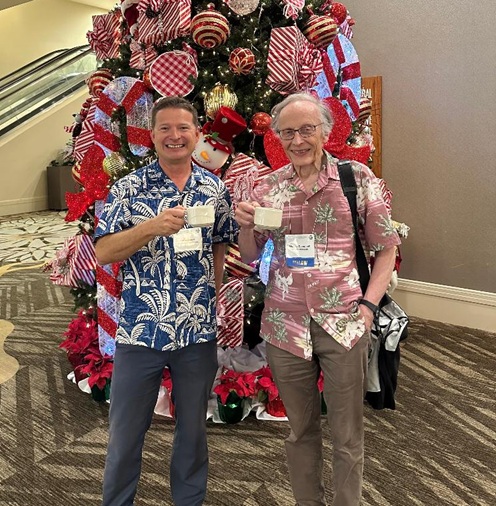
December 2025 Acoustics Meeting in Honolulu Professor Stephen Dance attended and presented at the 6th joint Acoustical Society of America and Acoustical Society of Japan meeting in Honolulu, 1-5 December 2025. At the meeting he presented his work on the refurbishment of the Choral Rehearsal Room at the Royal Opera House. The feedback from the Opera singers improved after the adjustment to the refurbishment using more absorptive material in critical positions in the space, thus proving room acoustic simulations can work!
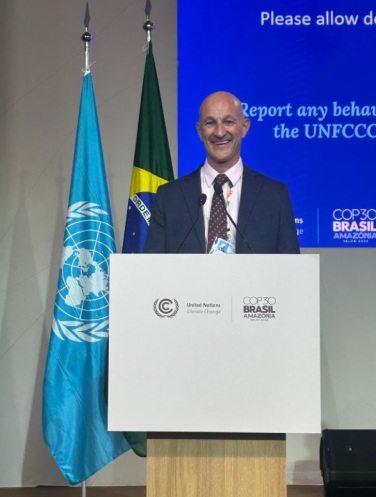
November 2025 The International Institute of Refrigeration (IIR) was honoured to share our official statement delivered by Graeme Maidment FInstR, President of IIR Commission E2: Heat Pumps and Energy Recovery at #COP30 in Bélem, Brazil. Graeme Maidment FInstR delivered the official IIR statement in which he not only highlighted the critical nature of refrigeration and heat pump technologies for food security, healthcare, human well-being, and economic resilience, but he also outlined our readiness to help establish national inter-institutional platforms to improve global coordination.
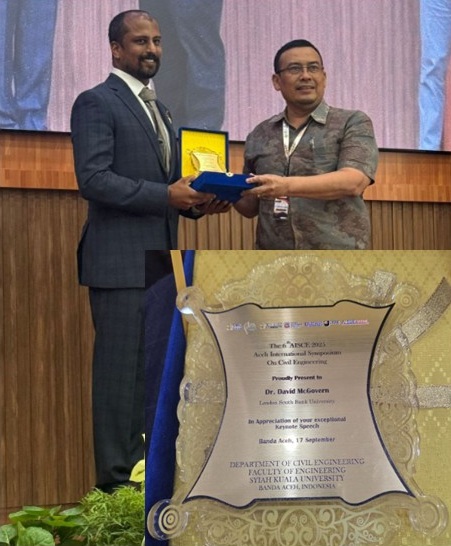
September 2025 Dr David McGovern gives his invited keynote on the history of the innovation of the pneumatic tsunami generator at the 6th Aceh Symposium on Civil Engineering AISCE2025. His work has enabled him to engage with the passionate and thoughtful community of natural hazard and engineering researchers, in a location that knows all to well the devastating effects of tsunami.
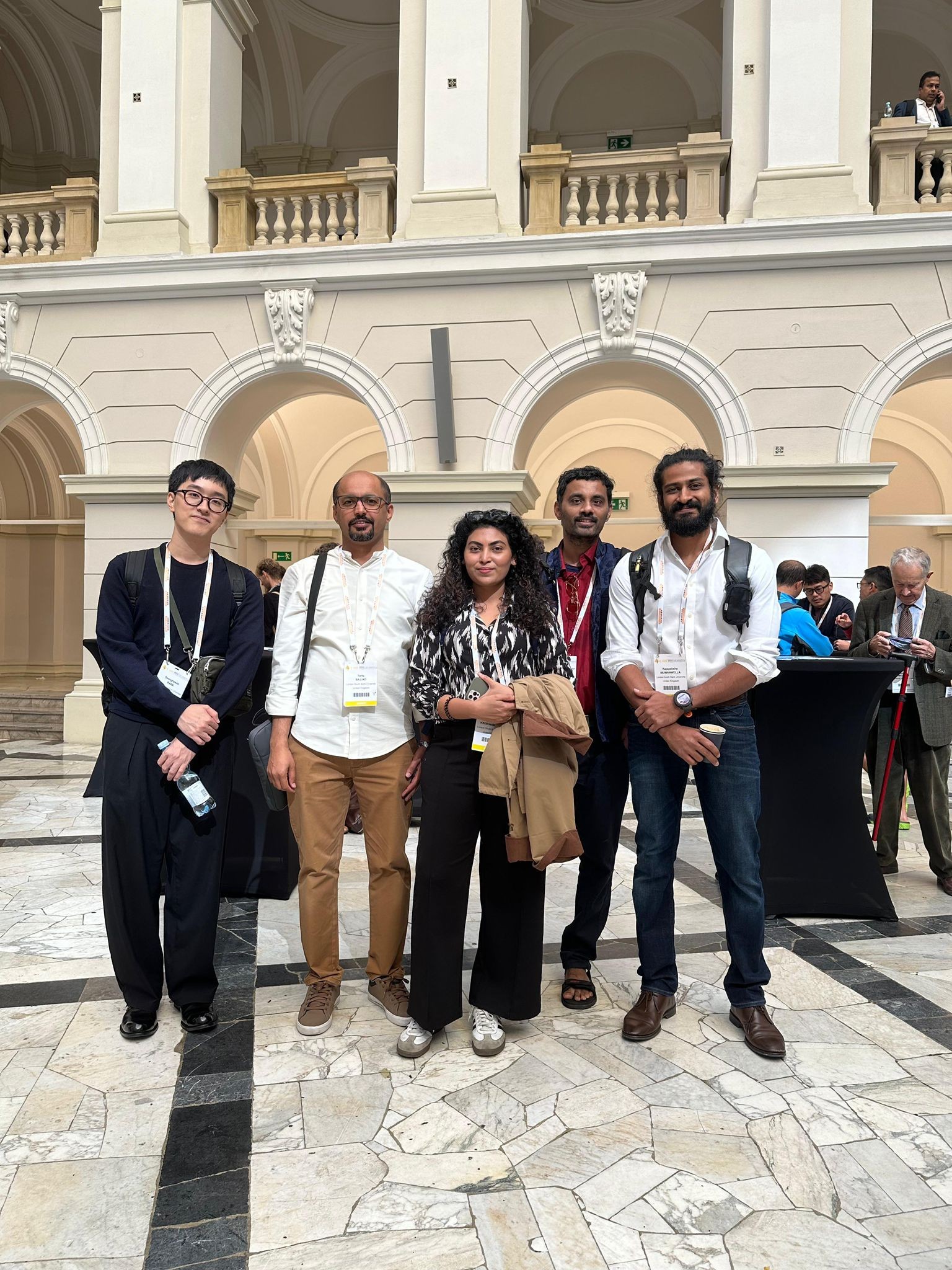
July 2025 EME URC staff and students set to make an impact at EMRS (Fall) 2025 4 PhD students have been given the opportunity to deliver talks at prestigious European Materials Research Society (Fall) meeting in Warsaw this September. Abi, Shane, Srikanth and Himal will deliver talks on a variety of aspects of materials development for environmental end-user applications. This is a significant achievement as talks at MRS are hard to come by! Dr Sajjad has been invited to talk at EMRS. A sign of the global impact and interest in his work and the outputs from research associated with the EME URC. Well done all... updates to follow! June 2025 Invited Presentation at Euronoise 2025 on Value for Money and Acoustics On the 24th June at the Forum Acusticum / Euronoise 2025 conference in Malaga Professor Stephen Dance gave an invited paper. The paper entitled, "A possible universal single number criteria for classrooms" was presented in the Room Acoustics sessions to a full audience where Steve demonstrated that the value of your research is key, see President Trump and the National Institute of Health, and Prime Minister Starmer and NHS England as Tax Payer funds 90% of research and likes value for money. So, he demonstrated value for money from our Classroom Acoustics research projects. June 2025 Energy Materials and Environment University Research Centre inaugural conference packs a powerful punch! To celebrate the first year of the LSBU University Research Centre’s (URC) initiative the Energy Materials and Environment (EME) URC held it’s first conference on the 17th of June. The event was attended by over 70 delegates from as far a field as Chile. Aimed to show case the large variety of research activities across the URC, with a focus on our Early Career Researchers and Master’s Course Representatives research talent, a range of talks from tsunami research to materials modelling solar cells were given. Invited speakers from Surrey University, Queen Mary University London, and UCL added to the day and gave everyone the opportunity to develop collaborations and external research initiatives. Particular highlights were the broad range of talks delivered over the day. A need to learn lessons of the past to deliver energy transition gave fabulous insights into the challenges of today. The latest generation of tsunami physical models demonstrated the enormous impact of water and how post event analysis is not the complete story. Materials processing and modelling covered a range of topics with one core focus to develop novel systems addressing our sustainability challenges. Lunch and evening receptions allowed for lively discussions around the needs for an electrified energy and sustainable energy network and a means to work together to deliver that.
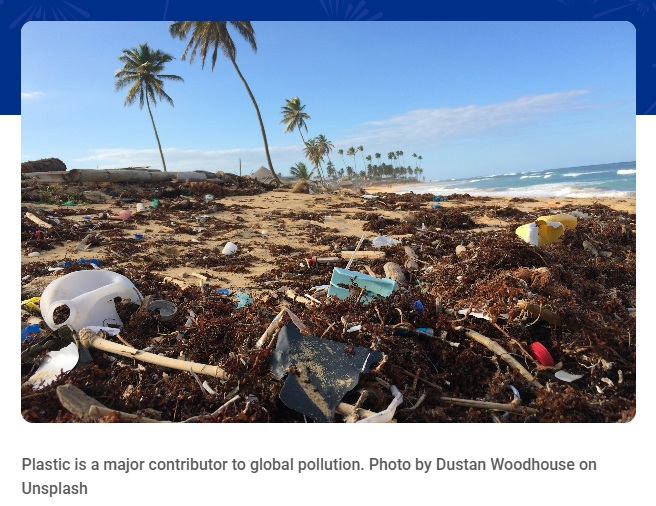
The first Energy, Materials and Environment mini-conference is being held by the EME research centre hosted by the LSBU School of Engineering and Design on June 17th on LSBU's Elephant and Castle's campus. Details can be found here: https://www.emeconference.co.uk/ Registration is here: https://www.eventbrite.co.uk/e/energy-materials-and-environment-1st-annual-conference-tickets-1263767144549?aff=oddtdtcreator We have some really inspiring speakers from outside LSBU Ana Belen Jorge Sobrido, Hamideh Khanbareh, Hui Luo and colleagues Suela Kellici, Sanjayan Sathasivam, Dr M.Tariq Sajjad, Aaron Gillich and David McGovern covering a range of topics from policy to materials science. Registration is free. 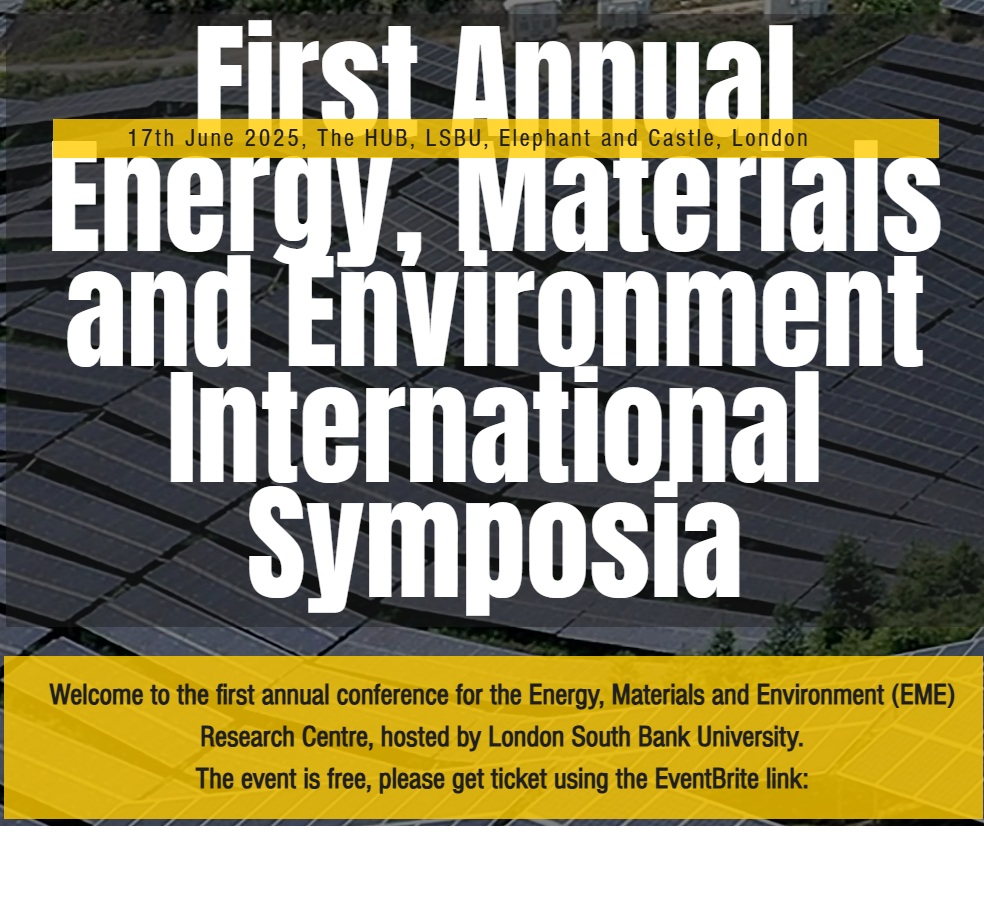 | May 2026 Dr Suela Kellici's work on polymer recycling makes its mark on the STFC news stream. Work led by LSBU, as Peter Hurrel describes 'Researchers have shown that ionic liquids can be tailored to chemically recycle polypropylene, one of the world’s most widely used plastics and a significant contributor to global plastic waste. The process can recover around 99% of the polypropylene from difficult waste materials.'
First announced in February an ambitious collaboration between London South Bank University (LSBU) and the Wates Group will focus on improving housing quality, driving low carbon innovation and developing the next generation of green skills talent. The multi-year agreement brings together LSBU Group’s expertise in green skills and technologies – a key area of the Government’s industrial Strategy – academic excellence, specialist research centres and applied research and development capabilities, with Wates’ leadership across construction, retrofit and sustainable technologies.
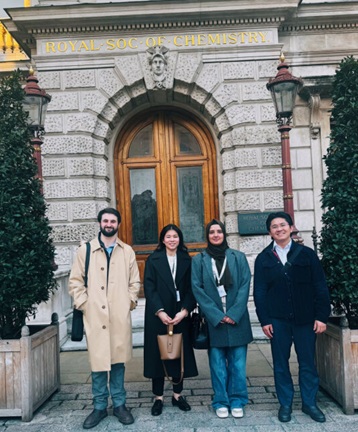
March 2926 On 17th March, MADD group researchers attended the Royal Society of Chemistry Catalysis Science and Technology Symposium, where they presented posters from their EPSRC project (UKRI647) and engaged with researchers across the field. The event provided a valuable opportunity to share their work, gain feedback, and discuss ideas with others working on related challenges. Networking sessions also led to a number of interesting conversations and potential collaborations.
February 2026 Advancing AI for materials discovery: PhD researcher secures international research funding Final-year PhD researcher Aritra Roy, supervised by Dr John Buckeridge at London South Bank University SLIMES lab, has been awarded collaboration funding through the AIchemy Collaborative Travel Fund to advance AI-driven materials discovery research at one of Europe's leading computational chemistry laboratories. He will spend four weeks at Prof. Berend Smit's Laboratory of Molecular Simulation at EPFL, Switzerland, learning cutting-edge automated validation frameworks and exploring cross-domain applications of AI in materials science. His research focuses on developing multi-agent AI systems that extract composition-property relationships from scientific literature along with high-throughput quantum mechanical calculations to accelerate the discovery of new functional materials. The collaboration represents an important step in bridging AI-driven data extraction with automated materials generation and validation across different application domains.
February 2026 Research Grant won from the Royce Institute for the Application of Acoustic Metadiffusers On the 3rd February the Henry Royce Institute announced the winners of the Metamaterials Industrial Collaboration Programme. The application by Federico Rossi and Professor Stephen Dance was accepted based on BAAMM or, "Biobased Acoustic Additive Manufactured Material". The work will be with our long standing partners Symbio-Tex and NHS Guys and St Thomas's Foundation Trust. The real work to design a metadiffuser to improve the acoustics in sound booths will be undertaken by research associate Ruben Vazquez-Amos.
January 2026 Poster Prize at TYC-LJC Materials Modelling Conference.
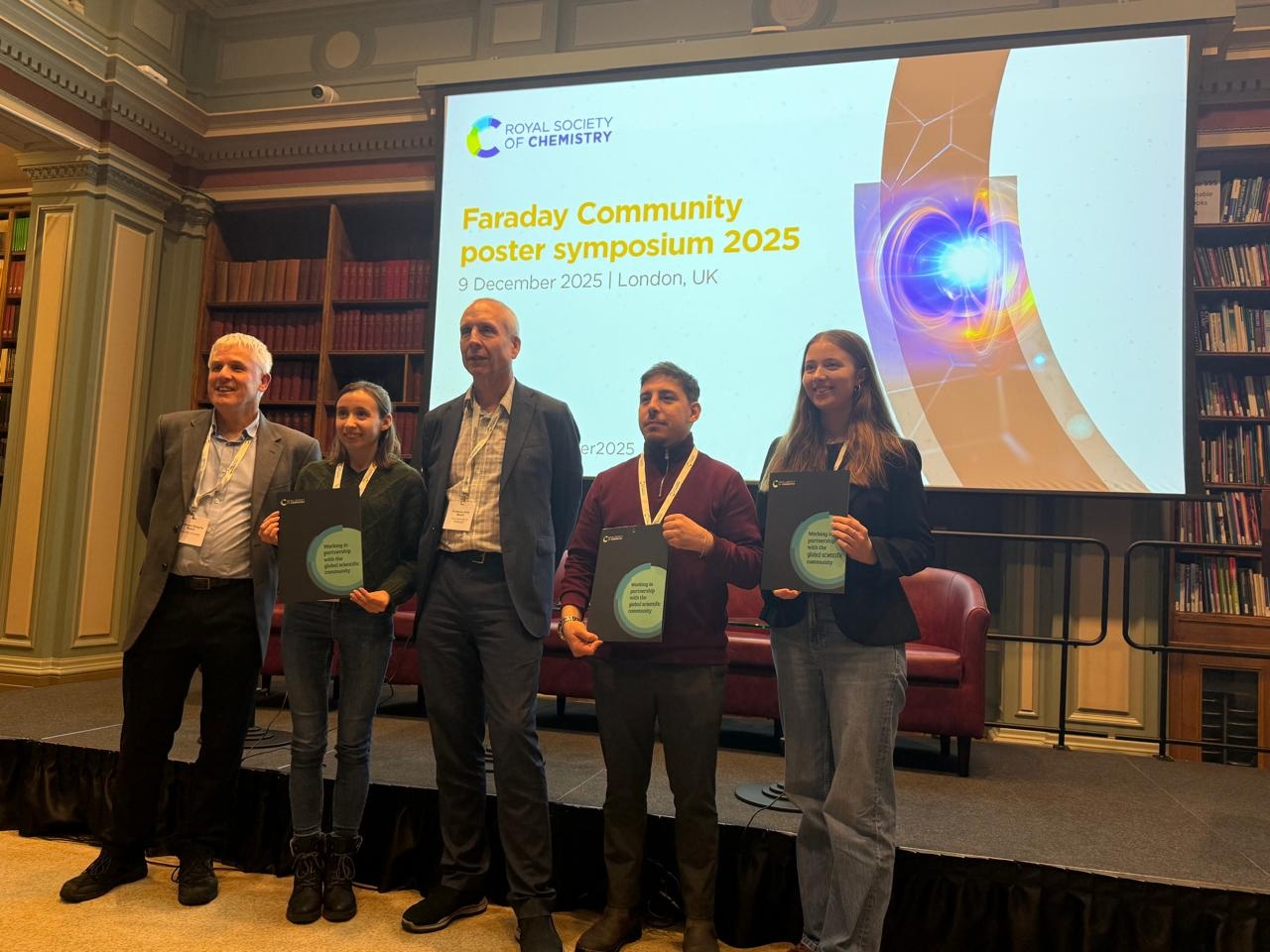
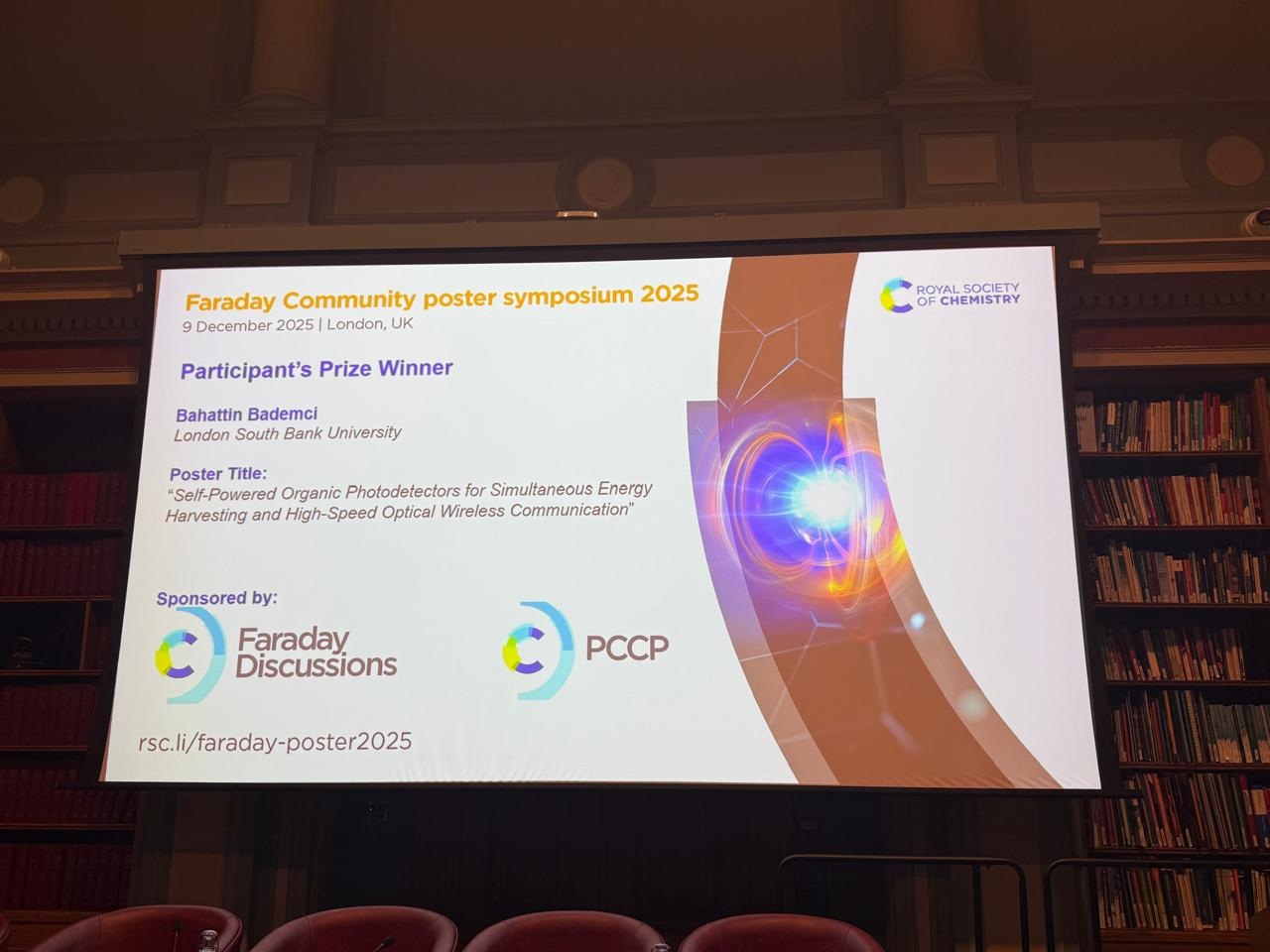
December 2025 A PhD researcher, Bahattin Bademci, from the MADD group, has won the Best Poster Prize at the 2025 Faraday Community Poster Symposium. He is working under the supervision of Dr Tariq Sajjad, focusing on developing rapid, self-powered organic photodetectors capable of harvesting energy while transmitting data, a technology that could help ease radio-frequency congestion by advancing light-based wireless communication (LiFi).
EME affiliated colleagues had a wonderful evening at the LSBU research and innovation awards.
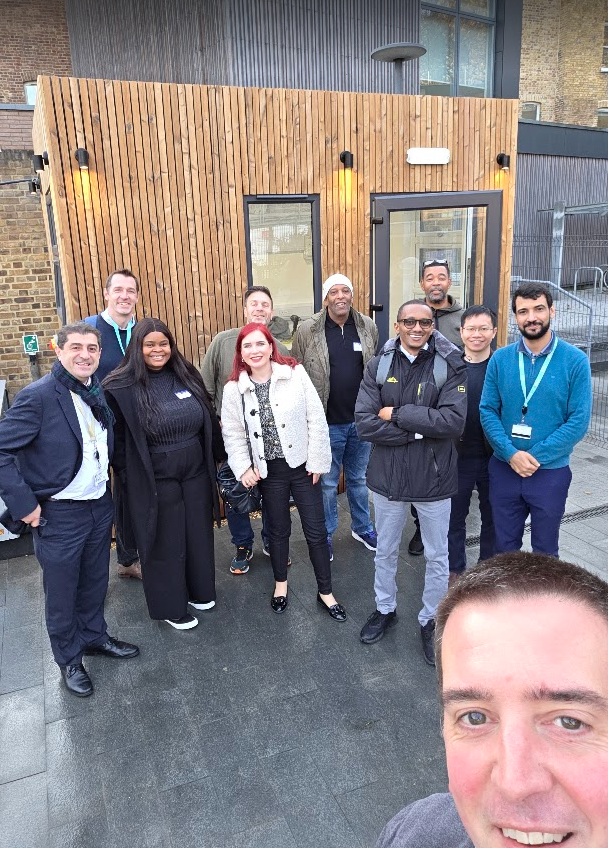
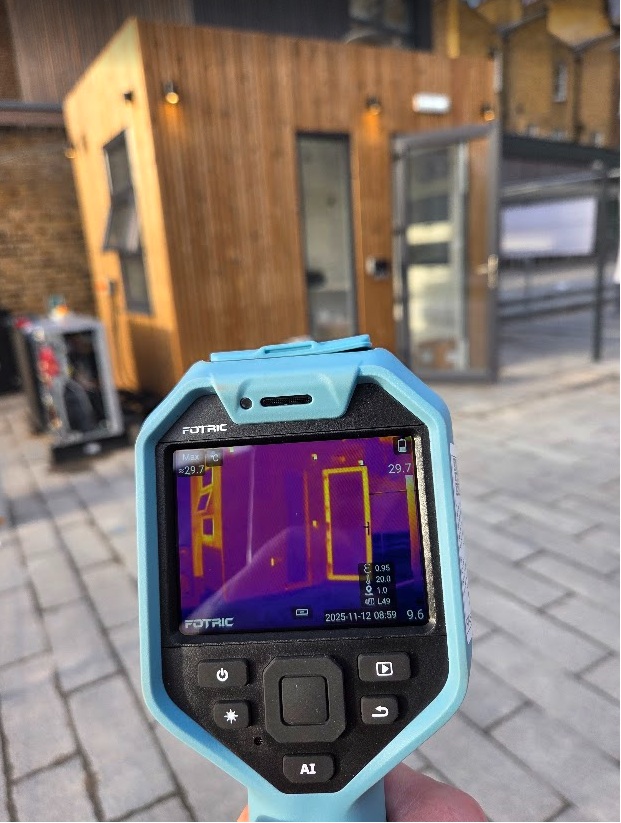
November 2025 Staff in the research centre are developing collaborative uses for a new LSBU laboratory, The Infinite Shed. The Shed is a GLA-funded project, designed to act as a makerspace and test bed for retrofit and green technologies. The space will be used for teaching across the College of Technology and Environment - for architects, for surveyors, for engineers and for designers. It's also an opportunity for our local community to get an understanding of how buildings heat, cool and breathe. And it gives us opportunities to test new technologies, as part of research and entrepreneurship projects. The Shed is fitted with two heat pumps, electric heating and mechanical heat recovery, as well as a range of sensors. Movable solar panels feed battery storage, and thermal cameras allow us to investigate where heat is lost. We're working with external partners to develop electric vehicle charging and a green roof. If you'd like to use the Shed, or if you'd like to learn more, please get in touch by emailing: ben.lishman@lsbu.ac.uk
November 2025 Dr David McGovern makes a splash on the BBC's Crowd Science talking about tsunamis.. listen here .
September 2025 EME Staff and students make an impact at EMRS, Warsaw With one invited and 4 contributed talks at the premier league international conference EME staff and students are making an impact in Warsaw.
September 2025 Dr Elmira Khaksar Najafi joins on a MSCA Fellowship As a geotechnical engineer, my research interests are multidisciplinary, encompassing a range of topics including alkali-activated cements, CO2 capturing, sustainable cement, sustainable soil stabilization, and recycling. My goal is to integrate environmental engineering concepts into geotechnical applications, focusing on the development of sustainable materials and methods for soil stabilization and construction. Currently, I am working as a research fellow on SUMMITS, an UKRI-funded MSCA-PF project (EP/Z002095/1). The project aims at valorising mine waste and waste wood ash through two types of promising novel and transformative low-carbon cements, i.e., alkali-activated cements and bio-cements. These cements, produced at ambient conditions without additional energy input, will enable the neutralisation and valorisation of large quantities of mine waste in a circular economy.
August 2025 From lotus leaves to lasers: Saurav selected for prestigious British Council tour EME affiliated Professor Saurav Goel has won a prestigious place on a British Council initiative to raise the profile of British higher education in India. Saurav, one of only a handful of academics selected from universities across the UK to represent the British Council, will share his expertise in manufacturing with young people in schools and colleges across East India this November, as part of the GREAT Talks series. His talk, entitled ‘From lotus leaves to lasers: how we’re reimagining engineering through the lens of nature’, explores how taking inspiration from nature to solve human problems in engineering in a sustainable way is reshaping how we discover and communicate research and teaching.
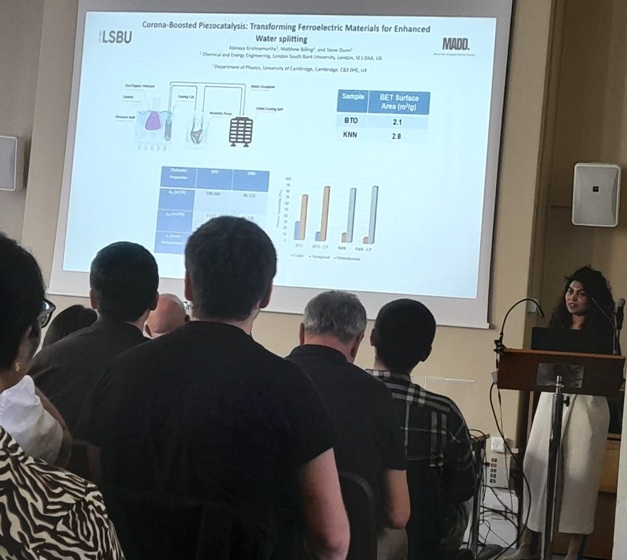
July 2025 AI Noise Sensors installed across the Southwark Campus PhD candidate Ekim Bakirci has installed his prototype AI enabled wireless Class 1 environmental sound monitoring system across the London South Bank University campus. This will enable automated sound event classification of the City Soundscape as well as noise monitoring the environment. Ekim is in his second year of studies and needs to train the system to monitor air, road and rail traffic. Let's hope he stays busy and the sun keeps shining! Success at Ferroelectric UK and Ireland Members of the MADD research group presented at the Ferroelectrics UK and Ireland conference. Lots of really interested discussions have led to 2 new collaborations with a view to EPSRC proposals and some very exciting work on the growing area of importance for producing sustainable energy: piezocatalysis.
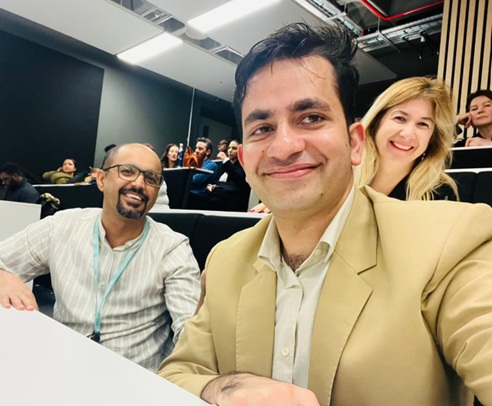
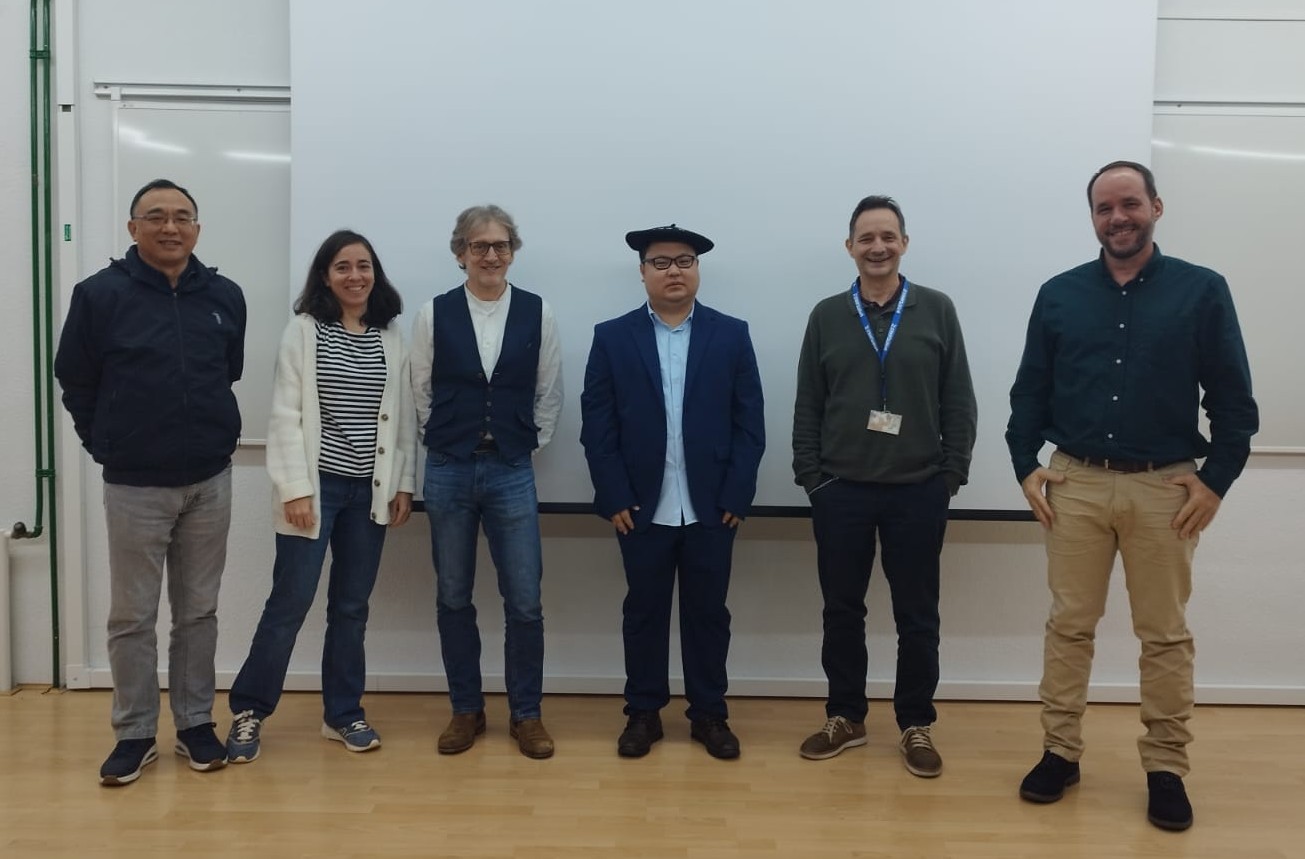
We are thrilled to finally announce that Drs Sajjad and Kellici from the School and Engineering and Design who are associated with the EME have been awarded an EPSRC grant to support our work on developing advanced materials for seawater electrolysis to produce green hydrogen. Over the next two years, we will work with Professor ASIF ALI TAHIR from the University of Exeter and Professor Robert Weatherup from the University of Oxford on this exciting project. Total Project amount: £ 258,782  14th February ~ Prof Dunn visits BCMaterials, Bilbao, for PhD viva Professor Dunn visited long time collaborator Prof Qi Zhang for a tour of the facilities and to complete a PhD viva for Kaiyuan Chen who studied nano-polar-domains for relaxor materials at high temperatures with applications in energy storage and capacitors. A fascinating trip with a very happy Kaiyuan (centre in the image below) who passed his viva. | March 2026: Paper published in Sustainable Chemistry and Pharmacy In the past 20 years, biocementation processes have emerged as effective techniques used for ground improvement, crack healing and restoration of building materials or heritage stones. To-date most researchers have studied biocements based on calcite precipitation using the urea-hydrolysis metabolic pathway. This pathway produces undesirable ammonia by-products that need to be treated or removed, limiting the large-scale and sustainable applicability of microbially-induced carbonate precipitation (MICP) or enzymatically induced carbonate precipitation (EICP). Moreover, carbonate precipitation has poor durability in acidic environments. Different biocementation mechanisms and biocements other than calcite are known but have been very little researched. This comprehensive review focuses on phosphate biomineralisation as a novel, ammonia-free, and potentially more sustainable alternative bio-cementation technique. It discusses microbially and enzymatically induced phosphate precipitation (MIPP and EIPP respectively), with particular focus on ground improvement (soil stabilisation and remediation) and construction material applications. The environmental advantages of phosphate biocement, such as lower pH sensitivity, absence of harmful by-products, and potential compatibility with green chemistry principles and the UN Sustainable Development Goals are critically examined to assess their viability as sustainable materials in civil and geoenvironmental engineering.
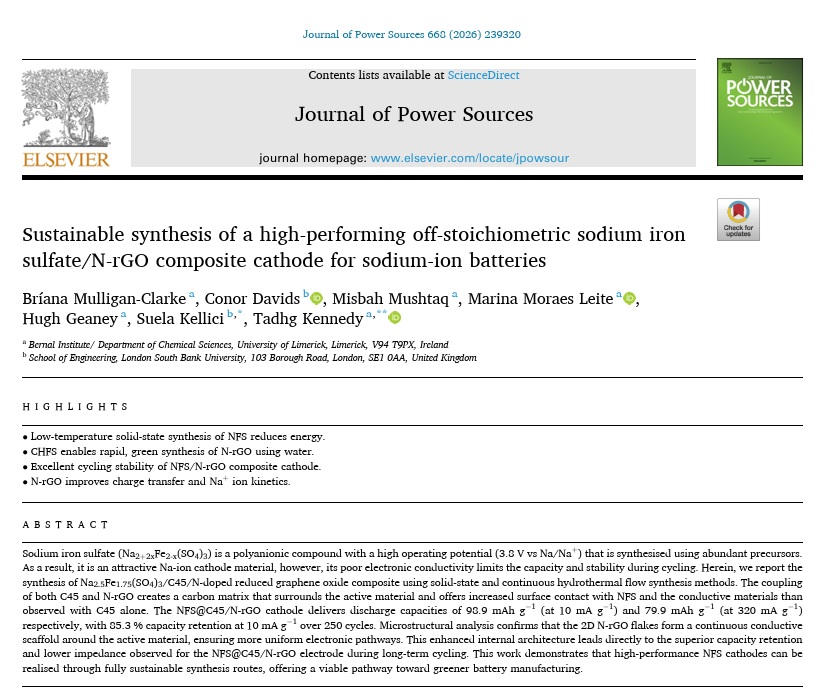
March 2026: Paper published in Journal of Power Sources Sodium iron sulfate (Na2+2xFe2-x(SO4)3) is a polyanionic compound with a high operating potential (3.8 V vs Na/Na+) that is synthesised using abundant precursors. As a result, it is an attractive Na-ion cathode material, however, its poor electronic conductivity limits the capacity and stability during cycling. Herein, we report the synthesis of Na2.5Fe1.75(SO4)3/C45/N-doped reduced graphene oxide composite using solid-state and continuous hydrothermal flow synthesis methods. The coupling of both C45 and N-rGO creates a carbon matrix that surrounds the active material and offers increased surface contact with NFS and the conductive materials than observed with C45 alone. The NFS@C45/N-rGO cathode delivers discharge capacities of 98.9 mAh g−1 (at 10 mA g−1) and 79.9 mAh g−1 (at 320 mA g−1) respectively, with 85.3 % capacity retention at 10 mA g−1 over 250 cycles. Microstructural analysis confirms that the 2D N-rGO flakes form a continuous conductive scaffold around the active material, ensuring more uniform electronic pathways. This enhanced internal architecture leads directly to the superior capacity retention and lower impedance observed for the NFS@C45/N-rGO electrode during long-term cycling. This work demonstrates that high-performance NFS cathodes can be realised through fully sustainable synthesis routes, offering a viable pathway toward greener battery manufacturing.
February 2026 : Paper Published in Advanced Energy and Sustainability Research This paper employs a range of carefully controlled experiments to develop a detailed understanding of the role of the structure, crystallinity, and chemical composition of polytetrafluoroethylene (PTFE) in driving catalytic reactions during sonication. The new findings demonstrate the significantly enhanced production of hydrogen, hydrogen peroxide, carbon monoxide, and nitrate from water, CO2, and nitrogen in the presence of PTFE during the application of ultrasound. The critical role of PTFE in the degradation of Rhodamine B and para-nitrophenol, which are important examples of synthetic dyes and nitroaromatic compounds, respectively is demonstrated. By understanding the mechanism and optimization of the catalytic conditions, the system achieves the highest hydrogen production yield reported to date among tribocatalytic, contact-electrocatalytic, and piezocatalytic systems, where fine-scale PTFE particles formed during ultrasound contribute to the enhanced activity. Importantly, the impact of PTFE's physical and chemical properties, including hydrophobicity, crystallinity, and atomic composition, on its catalytic performance is investigated. The underlying mechanism of sono-contact-electrocatalysis is outlined by examining reactive species generated under various gas environments. These findings provide new insights into the broad applicability of PTFE in redox reactions and highlight key factors influencing its catalytic behavior in aqueous systems for environmental remediation and energy conversion.
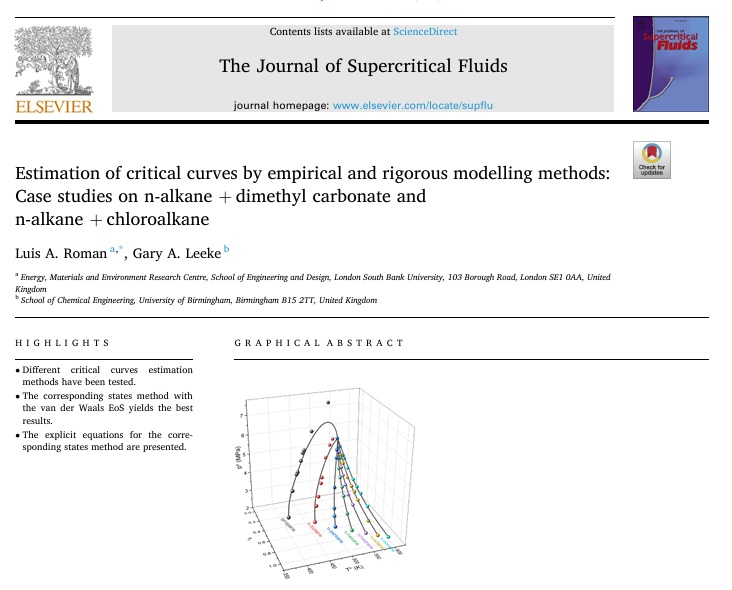
January 2026 - Paper published in The Journal of Supercritical Fluids The determination of critical curves is important for the design of chemical processes. The accuracy of fast and rigorous methods for estimating the vapour-liquid critical curves of n-alkane + dimethyl carbonate, and n-alkane +chloroalkane binary systems is tested. The n-alkanes range from propane to n-decane, whereas the chlor oalkanes are dichloromethane, 1,1-dichloroethane and 1,2-dichloroethane. The fast estimation methods evalu ated are: the conformal solution theory (CM); the method of He et al. (2017); and the method of Tang et al. (2024). The rigorous methods studied are: the corresponding states principle (CSP) with the one-fluid van der Waals equation of state (vdW EoS); and the Heidemann-Khalil-Michelsen (HKM) method with the Peng-Robinson EoS. Despite the simplicity of the EoS, CSP provides the best correlations, resulting in overall average absolute relative errors (AARE) for temperature and pressure of AARET c =0.36% and AAREp c =1.68%, respectively. CM is the only recommended fast method due to its scientific soundness and accuracy (AARET andAAREp c c =0.55% =5.10%).
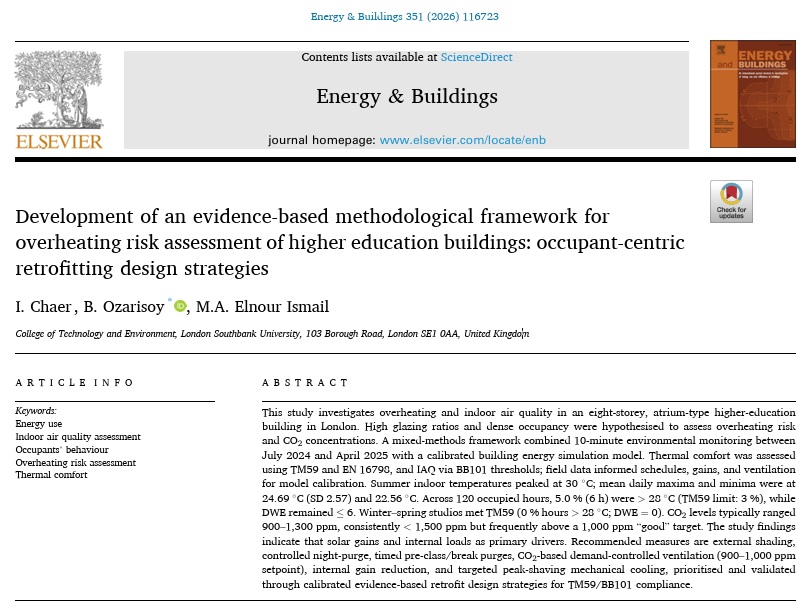
January 2026 - Paper published in Energy and Buildings This study investigates overheating and indoor air quality in an eight-storey, atrium-type higher-education building in London. High glazing ratios and dense occupancy were hypothesised to assess overheating risk and CO2 concentrations. A mixed-methods framework combined 10-minute environmental monitoring between July 2024 and April 2025 with a calibrated building energy simulation model. Thermal comfort was assessed using TM59 and EN 16798, and IAQ via BB101 thresholds; field data informed schedules, gains, and ventilation for model calibration. Summer indoor temperatures peaked at 30 °C; mean daily maxima and minima were at 24.69 °C (SD 2.57) and 22.56 °C. Across 120 occupied hours, 5.0 % (6 h) were > 28 °C (TM59 limit: 3 %), while DWE remained ≤ 6. Winter–spring studios met TM59 (0 % hours > 28 °C; DWE = 0). CO2 levels typically ranged 900–1,300 ppm, consistently < 1,500 ppm but frequently above a 1,000 ppm “good” target. The study findings indicate that solar gains and internal loads as primary drivers. Recommended measures are external shading, controlled night-purge, timed pre-class/break purges, CO2-based demand-controlled ventilation (900–1,000 ppm setpoint), internal gain reduction, and targeted peak-shaving mechanical cooling, prioritised and validated through calibrated evidence-based retrofit design strategies for TM59/BB101 compliance.
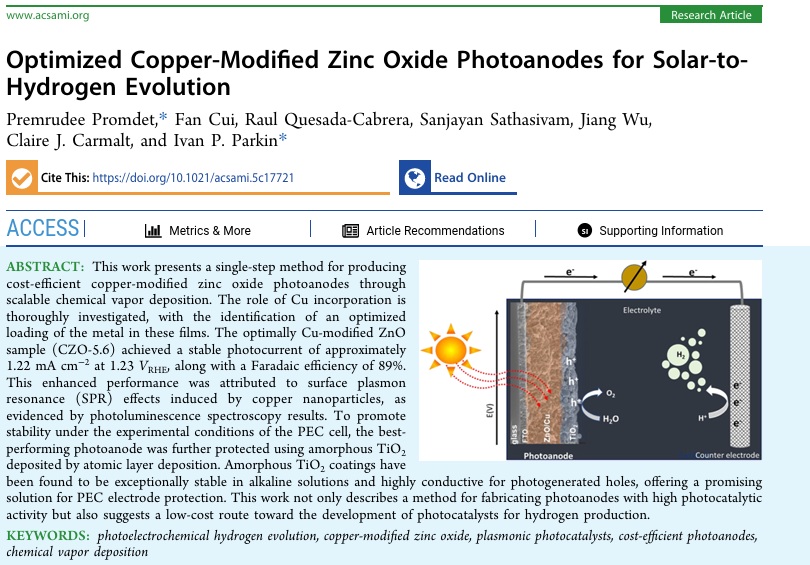
January 2026 - Paper published in ACS Applied Materials & Interfaces This work presents a single-step method for producing cost-efficient copper-modified zinc oxide photoanodes through scalable chemical vapor deposition. The role of Cu incorporation is thoroughly investigated, with the identification of an optimized loading of the metal in these films. The optimally Cu-modified ZnO sample (CZO-5.6) achieved a stable photocurrent of approximately 1.22 mA cm–2 at 1.23 VRHE, along with a Faradaic efficiency of 89%. This enhanced performance was attributed to surface plasmon resonance (SPR) effects induced by copper nanoparticles, as evidenced by photoluminescence spectroscopy results. To promote stability under the experimental conditions of the PEC cell, the best-performing photoanode was further protected using amorphous TiO2 deposited by atomic layer deposition. Amorphous TiO2 coatings have been found to be exceptionally stable in alkaline solutions and highly conductive for photogenerated holes, offering a promising solution for PEC electrode protection. This work not only describes a method for fabricating photoanodes with high photocatalytic activity but also suggests a low-cost route toward the development of photocatalysts for hydrogen production.
January 2026 - Paper published in Journal of Power Sources Sodium iron sulfate (Na2+2xFe2-x(SO4)3) is a polyanionic compound with a high operating potential (3.8 V vs Na/Na+) that is synthesised using abundant precursors. As a result, it is an attractive Na-ion cathode material, however, its poor electronic conductivity limits the capacity and stability during cycling. Herein, we report the synthesis of Na2.5Fe1.75(SO4)3/C45/N-doped reduced graphene oxide composite using solid-state and continuous hydrothermal flow synthesis methods. The coupling of both C45 and N-rGO creates a carbon matrix that surrounds the active material and offers increased surface contact with NFS and the conductive materials than observed with C45 alone. The NFS@C45/N-rGO cathode delivers discharge capacities of 98.9 mAh g 1 (at 10 mA g 1) and 79.9 mAh g 1 (at 320 mA g 1) respectively, with 85.3 % capacity retention at 10 mA g 1 over 250 cycles. Microstructural analysis confirms that the 2D N-rGO flakes form a continuous conductive scaffold around the active material, ensuring more uniform electronic pathways. This enhanced internal architecture leads directly to the superior capacity retention and lower impedance observed for the NFS@C45/N-rGO electrode during long-term cycling. This work demonstrates that high-performance NFS cathodes can be realised through fully sustainable synthesis routes, offering a viable pathway toward greener battery manufacturing.
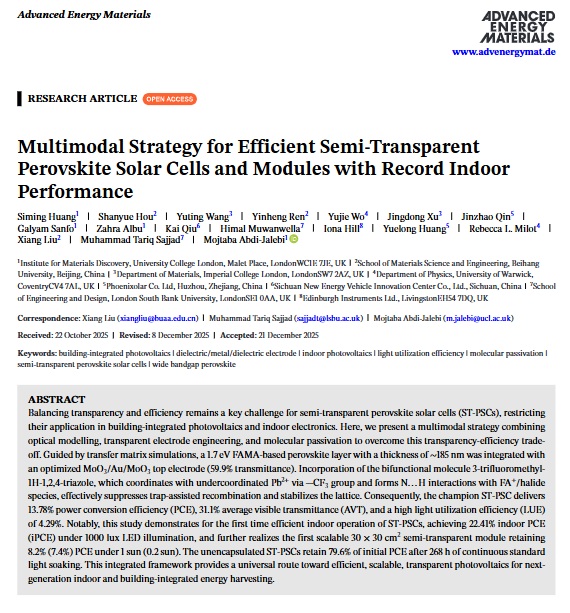
December 2025 - Paper published in Advanced Energy Materials Balancing transparency and efficiency remains a key challenge for semi-transparent perovskite solar cells (ST-PSCs), restricting their application in building-integrated photovoltaics and indoor electronics. Here, we present a multimodal strategy combining optical modelling, transparent electrode engineering, and molecular passivation to overcome this transparency-efficiency trade-off. Guided by transfer matrix simulations, a 1.7 eV FAMA-based perovskite layer with a thickness of ∼185 nm was integrated with an optimized MoO3 /Au/MoO3 top electrode (59.9% transmittance). Incorporation of the bifunctional molecule 3-trifluoromethyl-1H-1,2,4-triazole, which coordinates with undercoordinated Pb2+ via ─CF 3 group and forms N. . . H interactions with FA+/halide species, effectively suppresses trap-assisted recombination and stabilizes the lattice. Consequently, the champion ST-PSC delivers13.78% power conversion efficiency (PCE), 31.1% average visible transmittance (AVT), and a high light utilization efficiency (LUE)of 4.29%. Notably, this study demonstrates for the first time efficient indoor operation of ST-PSCs, achieving 22.41% indoor PCE(iPCE) under 1000 lux LED illumination, and further realizes the first scalable 30 × 30 cm 2 semi-transparent module retaining8.2% (7.4%) PCE under 1 sun (0.2 sun). The unencapsulated ST-PSCs retain 79.6% of initial PCE after 268 h of continuous standard light soaking.
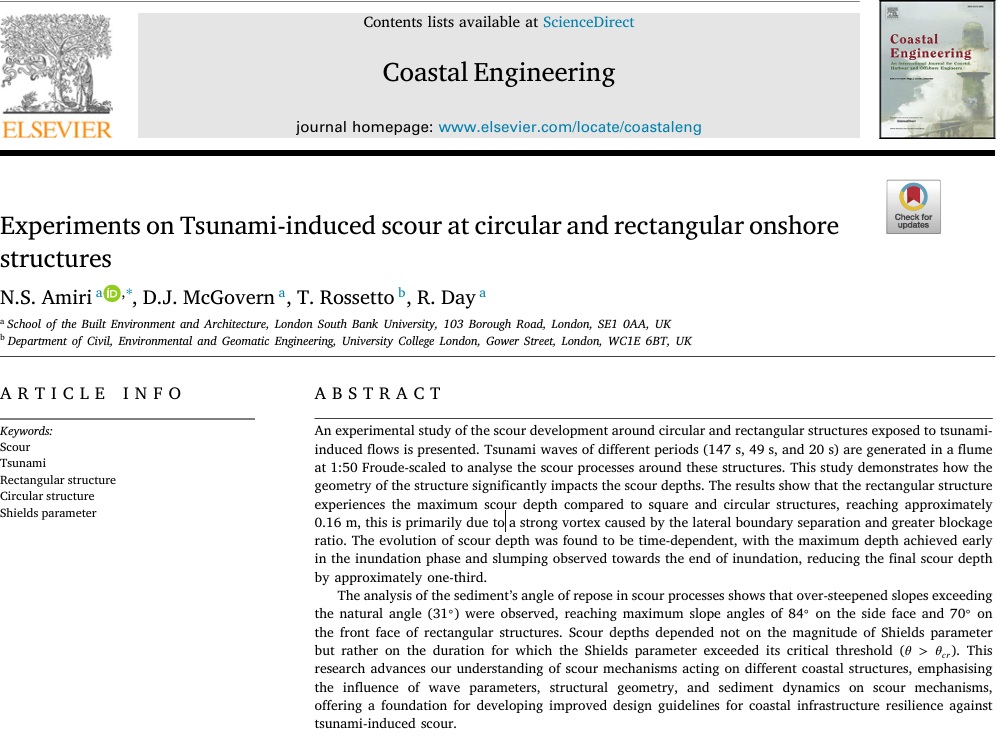
December 2025 - Paper published in Coastal Engineering An experimental study of the scour development around circular and rectangular structures exposed to tsunami-induced flows is presented. Tsunami waves of different periods (147 s, 49 s, and 20 s) are generated in a flume at 1:50 Froude-scaled to analyse the scour processes around these structures. This study demonstrates how the geometry of the structure significantly impacts the scour depths. The results show that the rectangular structure experiences the maximum scour depth compared to square and circular structures, reaching approximately 0.16 m, this is primarily due to a strong vortex caused by the lateral boundary separation and greater blockage ratio. The evolution of scour depth was found to be time-dependent, with the maximum depth achieved early in the inundation phase and slumping observed towards the end of inundation, reducing the final scour depth by approximately one-third.
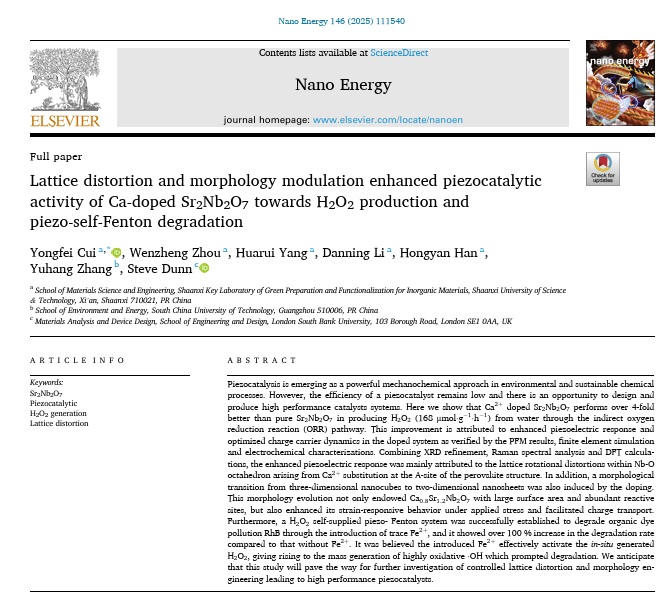
November - Paper published in Nano Energy Piezocatalysis is emerging as a powerful mechanochemical approach in environmental and sustainable chemical processes. However, the efficiency of a piezocatalyst remains low and there is an opportunity to design and produce high performance catalysts systems. Here we show that Ca2+ doped Sr2Nb2O7 performs over 4-fold better than pure Sr2Nb2O7 in producing H2O2 (168 μmol·g−1·h−1) from water through the indirect oxygen reduction reaction (ORR) pathway. This improvement is attributed to enhanced piezoelectric response and optimized charge carrier dynamics in the doped system as verified by the PFM results, finite element simulation and electrochemical characterizations. Combining XRD refinement, Raman spectral analysis and DFT calculations, the enhanced piezoelectric response was mainly attributed to the lattice rotational distortions within Nb-O octahedron arising from Ca2+ substitution at the A-site of the perovskite structure. In addition, a morphological transition from three-dimensional nanocubes to two-dimensional nanosheets was also induced by the doping. This morphology evolution not only endowed Ca0.8Sr1.2Nb2O7 with large surface area and abundant reactive sites, but also enhanced its strain-responsive behavior under applied stress and facilitated charge transport. Furthermore, a H2O2 self-supplied piezo- Fenton system was successfully established to degrade organic dye pollution RhB through the introduction of trace Fe2+, and it showed over 100 % increase in the degradation rate compared to that without Fe2+.
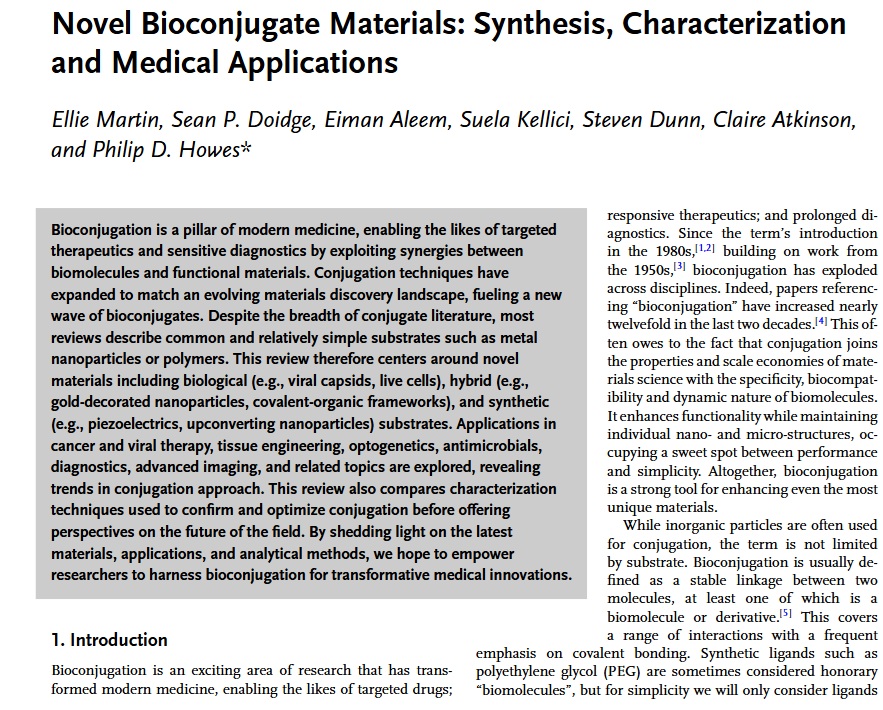
November - Paper Published in Advanced Healthcare Materials Bioconjugation is a pillar of modern medicine, enabling the likes of targeted therapeutics and sensitive diagnostics by exploiting synergies between biomolecules and functional materials. Conjugation techniques have expanded to match an evolving materials discovery landscape, fueling a new wave of bioconjugates. Despite the breadth of conjugate literature, most reviews describe common and relatively simple substrates such as metal nanoparticles or polymers. This review therefore centers around novel materials including biological (e.g., viral capsids, live cells), hybrid (e.g., gold‐decorated nanoparticles, covalent‐organic frameworks), and synthetic (e.g., piezoelectrics, upconverting nanoparticles) substrates. Applications in cancer and viral therapy, tissue engineering, optogenetics, antimicrobials, diagnostics, advanced imaging, and related topics are explored, revealing trends in conjugation approach.
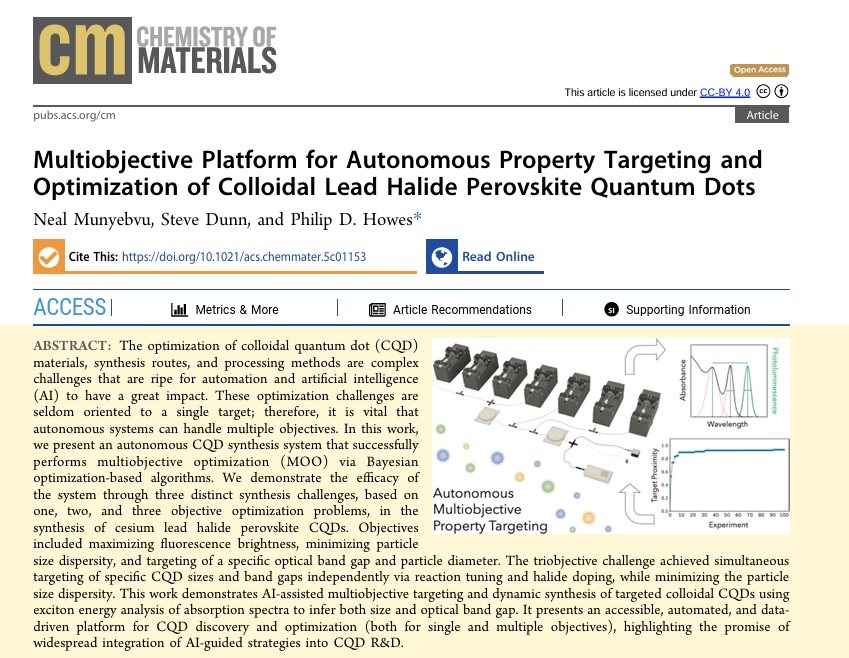
August - Paper published in Chemistry of Materials The optimization of colloidal quantum dot (CQD) materials, synthesis routes, and processing methods are complex challenges that are ripe for automation and artificial intelligence (AI) to have a great impact. These optimization challenges are seldom oriented to a single target; therefore, it is vital that autonomous systems can handle multiple objectives. In this work, we present an autonomous CQD synthesis system that successfully performs multiobjective optimization (MOO) via Bayesian optimization-based algorithms. We demonstrate the efficacy of the system through three distinct synthesis challenges, based on one, two, and three objective optimization problems, in the synthesis of cesium lead halide perovskite CQDs. Objectives included maximizing fluorescence brightness, minimizing particle size dispersity, and targeting of a specific optical band gap and particle diameter.
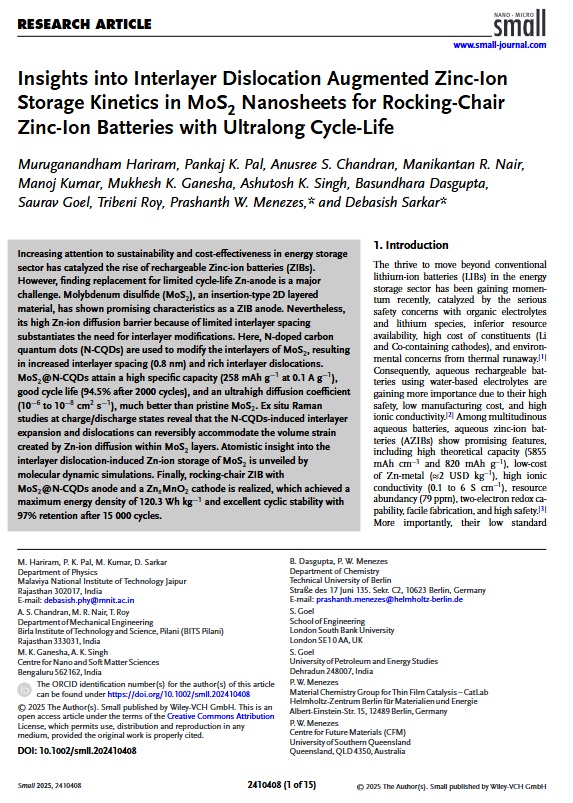
June ~ Paper published in Advanced Functional Materials Improved metal ion battery performance, capacity and resistance to performance fade based on tungsten oxide. Paradigm shifting research from a team in EME and MADD. Full press release available here.  2025: Paper published in Diamond and Related Materials Unlocking the Mystery of Lonsdaleite: A Breakthrough in Materials Science For decades, the scientific community has debated the existence of lonsdaleite, a hexagonal carbon polymorph predicted to be harder than diamond. First proposed in 1967, its true nature remained controversial, with conflicting studies dismissing it as a defective form of diamond. In a groundbreaking study, the Digitalised Manufacturing Research Group at LSBU led by Prof Saurav Goel, in collaboration with Sandia National Laboratories (USA) and the University of Cambridge, have developed a revolutionary computational framework to resolve this long-standing dispute. Combining density functional theory (DFT) and molecular dynamics simulations, the team established clear distinctions between pristine diamond, defective diamond, and lonsdaleite—settling the debate with a cutting-edge Materials 4.0 approach. This pioneering work, now published in Diamond and Related Materials, provides a universal methodology for validating the existence of disputed materials. 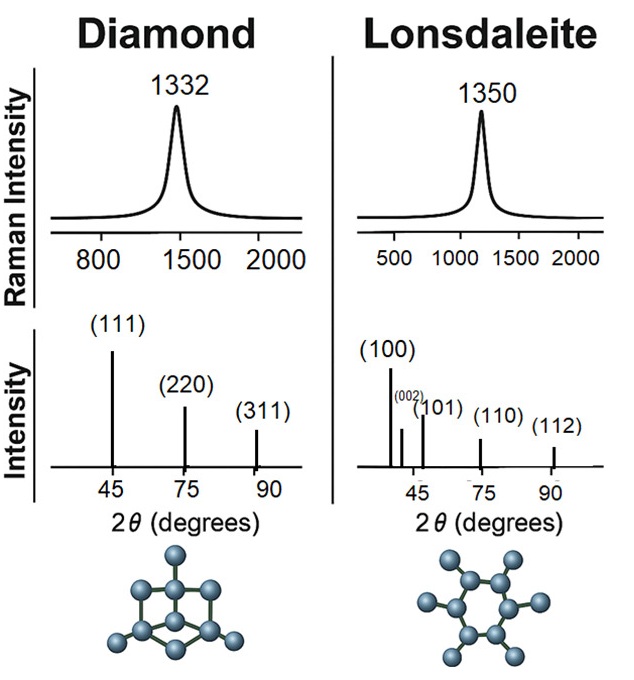 January - Paper published in Small Increasing attention to sustainability and cost-effectiveness in energy storage sector has catalyzed the rise of rechargeable Zinc-ion batteries (ZIBs). However, finding replacement for limited cycle-life Zn-anode is a major challenge. Molybdenum disulfide (MoS2), an insertion-type 2D layered material, has shown promising characteristics as a ZIB anode. Nevertheless, its high Zn-ion diffusion barrier because of limited interlayer spacing substantiates the need for interlayer modifications. Here, N-doped carbon quantum dots (N-CQDs) are used to modify the interlayers of MoS2, resulting in increased interlayer spacing (0.8 nm) and rich interlayer dislocations. MoS2@N-CQDs attain a high specific capacity (258 mAh g−1 at 0.1 A g−1), good cycle life (94.5% after 2000 cycles), and an ultrahigh diffusion coefficient (10−6 to 10−8 cm2 s−1), much better than pristine MoS2. Ex situ Raman studies at charge/discharge states reveal that the N-CQDs-induced interlayer expansion and dislocations can reversibly accommodate the volume strain created by Zn-ion diffusion within MoS2 layers. Atomistic insight into the interlayer dislocation-induced Zn-ion storage of MoS2 is unveiled by molecular dynamic simulations. Finally, rocking-chair ZIB with MoS2@N-CQDs anode and a ZnxMnO2 cathode is realized, which achieved a maximum energy density of 120.3 Wh kg−1 and excellent cyclic stability with 97% retention after 15 000 cycles. January 2025 - Paper published in International Journal of Disaster Risk Reduction Natural hazards pose significant challenges to affected communities worldwide, yet there remains a lack of comprehensive studies comparing recovery efforts across different countries and cultures. This study addresses the gap by investigating the impact of three devastating tsunami events on four distinct locations: Banda Aceh (Sumatra, Indonesia) and Southern Thailand, both affected by the 2004 Indian Ocean Tsunami, the 20th anniversary of which provided the initial motivation for the study; the Tohoku region of Japan, affected by the 2011 Great East Japan Earthquake and Tsunami; and Palu Bay (Sulawesi, Indonesia) affected by the Palu-Central Sulawesi Earthquake and consequent triple disaster. Data for this research was gathered from recovery missions led by the UK Earthquake Engineering Field Investigation Team (EEFIT), working in collaboration with local partners (Tsunami and Disaster Mitigation Research Centre, Tadulako University, Mahidol University and the Asian Institute of Technology). Additional material was provided by the International Research Institute of Disaster Science (IRIDeS) at Tohoku University. This paper evaluates recovery in terms of spatial planning, the development of design codes, evacuation planning, and the reconstruction development of coastal and port structures. A companion paper considers post-disaster recovery of buildings and other structures in Indonesia. Key findings include a variety of responses to planning enforcement in exclusion zones, a reliance on US tsunami codes for building code development rather than the comprehensive Japanese codes, diverse behavioural responses to the use of vertical evacuation structures, and some similarities in the use of multi-layered protection from tsunamis, inspired by Japanese approaches. The investigation provides insights into recovery and reconstruction efforts for: (i) the affected regions where agencies can compare and contrast their approaches with others, (ii) agencies and communities in similarly-affected locations in other parts of the world, and (iii) those at risk of future tsunami inundation. |



 May 2026

 December 2025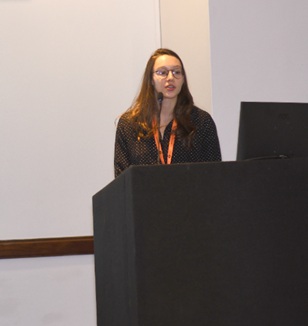




Work with us
Please contact Professor Steve Dunn (dunns4@lsbu.ac.uk) if you would like to know more or have an initial conversation about what solutions we can provide to current problems.
Steering Committee:
Professor Steve Dunn (Director)
I have a research background in the processing of functional ceramics and hybrid systems and am the current Director of the Energy, Materials and Environment URC, while also being Professor of Materials Engineering. My first degree was in Chemistry from Edinburgh which was followed by a PhD in Materials Science at Cambridge in 2001.
Since then, I have published over 125 publications, a high proportion in high-impact journals such as Advanced Materials and Energy and Environmental Science, supervised 21 PhD students and over 200 3rd year project and MSc students.
My research interests include developing fundamental understanding of carrier lifetime enhancement in functional metal oxide systems. We are currently working on processing of low Currie temperature ferroelectric materials, modifying the surface of ferroelectric materials with oxygen and hydrogen evolution catalysts as well as novel ways to form carbonaceous nanostructured islands.
Dr Ali Tighnavard Balasbaneh
My main research interests are Circular Economy; Construction Management, Sustainability, Life Cycle Assessment, Life Cycle Cost, Social Life Cycle Assessment, Circular Economy, Prefabricated Structural Systems, Offsite Manufacturing, Modular Construction, Engineering Wood, Nearly Zero Energy Buildings, Smart Buildings, and Low Energy Ventilation, Sustainability of Product Technologies.
Professor Issa Chaer
I am a Chartered Engineer with a BEng (Hons) degree in Mechanical Engineering, a PhD in enhanced heat transfer and over 25 years combined academic, research and industrial experience.
I am a great believer of research informed teaching and have published over 100 research articles, 4 books/book-chapters and developed over 10 academic and CPD courses.
I am currently a Professor and Director of Research and Enterprise for the School of the Built Environment and Architecture.
My research interests include heat transfer, thermal energy systems/networks, alternative and renewable technologies and energy management.
Professor Judith Evans
I work on food refrigeration operations throughout the food cold chain from harvest/slaughter to the consumer. During my career, I have worked on a number of topics including frozen storage of meat, consumer handling of food and studies to improve the performance of domestic and commercial refrigerators, energy labelling, instrumentation performance, decontamination of food, cook-chill systems, novel refrigeration systems, optimising refrigeration systems and improving performance and temperature control in chilled and frozen storage rooms.
Professor Yunting Ge
I am the Professor of Building Services Engineering in the School of The Built Environment and Architecture. I am also the Director of the Centre for Civil and Building Services Engineering (CCiBSE). Previously, I worked periodically as a lecturer, senior lecturer, reader and professor at Brunel University London and the University of South Wales. I gained my BSc, MSc and PhD degrees from Xi’an Jiaotong University (BSc, MSc) and Tsinghua University (PhD) in the field of Thermofluids, Energy, Hydrogen and Built Environment.
Professor Saurav Goel
My expertise is in precision processing of “difficult to cut materials”. This include their shaping and finishing by both subtractive and additive methods. I use a myriad of techniques to achieve this and it includes micromachining, surface coatings, texturing, surface metrology, mechanical characterisation and modelling activities. By doing so, I aim to create high-quality reciprocal “digital twins” of all these micro/nano scale processes. I am also researching and developing hybrid and sequential manufacturing techniques (laser/ultrasonics). Most recently, I am collaborating with NHS at Milton Keynes hospital to address a global challenge about bacterial infection of medical implants
Dr Suela Kellici
I am an Associate Professor in Materials Engineering and the Head for London Centre for Energy Engineering. I originally studied at the Queen Mary University in London where I completed a degree in Chemistry and a PhD in Materials Chemistry. Prior to joining LSBU I worked as a Researcher at University College London. I am Fellow of the Royal Society of Chemistry and Higher Education Academy
Dr Ben Lishman
My research interests focus on ice, mostly in the Arctic. For several decades, the volume of Arctic sea ice has decreased, and soon there may be only seasonal ice which freezes in the winter and then melts away in the summer. My research ask how we can understand this geophysical development by understanding the basic engineering and mechanics of sea ice.
Dr David McGovern
I am a physical modeler in the fields of Coastal and Ocean Engineering, sediment transport and fluid mechanics, with particular focus on Tsunami and coastal natural hazards.
I have a BSc Environmental Science (2006) and PhD Geography (2011, Scour at offshore Wind Turbines) from Lancaster University.
I spent 2012-2014 as PDRF at the National University of Singapore researching the kinematics of sea ice in waves & impact dynamics with offshore structures.
Coastal Hazards research group.
Centre Members:
Professor Deborah Andrews
As a Professor of Design for Sustainability and Circularity, my research focuses on sustainable design and manufacture, the Circular Economy, Life Cycle Sustainability Assessment, user-centred design and behaviour. I regularly collaborate with industry including the data centre, commercial refrigeration and solar shading sectors. I am a member of the UK Government Digital Sustainability Alliance and research output on shading has also been referenced by government Climate Change Committee.
Dr Haydar Aygu
I am an Associate Professor in Acoustics and Building Services, and the Course Director for MSc Environmental and Architectural Acoustics, Diploma in Acoustics and Noise Control, and The Acoustics Apprenticeship. I obtained my PhD degree in Acoustics and Vibration from the University of Hull in 2006. I have a MSc in Advanced Materials, Processes and Manufacturing from the University of Hull in 2002 and a BSc in Mechanical Engineering.
I am an expert in acoustic materials, physical acoustics, environmental noise, building acoustics, noise and vibration control, ventilation and air conditioning, and biomedical acoustics. I worked as a researcher in acoustics at the University of Hull. I have successfully completed several funded research projects both there and at Katholieke Universiteit Leuven.
Dr Meredith Barr
I am a lecturer in the Division of Chemical & Energy Engineering. I joined LSBU in 2023, having previously worked at Imperial College London. I received my PhD in Chemical Engineering from Queen Mary University of London, and my first degree in Chemical-Biological Engineering from Massachusetts Institute of Technology.
I am passionate about sustainable materials because I believe that human and environmental health are not mutually exclusive. To survive as a species, we need to manufacture vital materials without causing irreparable damage to our environment. My research focuses on converting waste biomass to sustainable materials using a technique I call 'waste-negative parallel manufacturing': the co-production of diverse materials from complimentary fractions of biomass, with an emphasis on using more waste than is produced. Cradle-to-grave waste negativity necessitates (1) valorising waste feedstocks, (2) avoiding process waste by recycling reagents and utilising by-products, and (3) ensuring circularity of products.
Dr John Buckeridge
I am a Senior Lecturer at the School of Engineering in LSBU. I am computational materials physicist interested in modelling the properties of semiconductors and other functional materials. I am fascinated by the interaction of charge carriers with defects in crystalline systems, and aim to understand this interaction at a fundamental level. My work focuses on materials used in energy applications and high power microelectronics.
I am from Cork, Ireland, which is where I studied physics (at University College Cork). After obtaining my PhD, in 2011 I moved to the Chemistry Department in UCL. I moved to LSBU in 2019.
My research focuses on developing and applying computational techniques to understand how defects influence the electronic, optical, dynamic and transport properties of semiconductors. My key interest is to understand these effects at a detailed, fundamental level. Doing so provides insights in materials science which help guide the design of devices for solid-state lighting, microelectronics, sensing and energy applications such as photovoltaics, fuel cells and thermoelectrics.
Professor Stephen Dance
I am a leading authority on environmental and architectural acoustics. I have written more than 100 scientific papers on architectural acoustics, environmental noise, speech intelligibility, electro-acoustics, sound absorbing materials, metamaterials, urban wind turbines, mathematical modelling, computer simulation, classroom acoustics, and noise exposure. I have taught at the Institute of Sound and Vibration, and at the Royal Academy of Music. I sit on boards and committees for professional bodies, government ministries, and international bodies. I am currently the acoustic advisor to the Royal Opera House.
Professor Aaron Gillich
I am a Professor of Building Decarbonisation and Director of the BSRIA LSBU Net Zero Building Centre. The Centre is a joint venture between BSRIA and LSBU with the aim of accelerating decarbonisation in the built environment.
My research interests centre on the UK energy trilemma of delivering a low cost, low carbon, secure energy system. I am particularly interested in the field of low carbon heat and the intersection of technical and policy challenges in meeting the UK’s 2050 carbon targets.
My research background considered domestic retrofit programs and policy implementation. From February 2017-18 I worked with the Department of Business, Energy, and Industrial Strategy (BEIS) on secondment to the Energy Transformation Directorate. My role was supporting and developing technical research to inform policy design.
Professor Graeme Maidment
I lead LSBU's research in heating and cooling in the School of Engineering. A fantastic team to work with!
I have worked in the energy sector for 40 years, lead the heating and cooling research team and have over many years actively contributed to the development of the academic discipline. My initial strategy was to focus on reducing carbon emissions associated with refrigeration and air conditioning. This has been successful and has delivered sustained funding over many years. In total, I have secured over 40+ research projects with a combined value of >£15M. Funding has included 8 EPSRC awards and including programme grant ‘LoTNET’, the £5M ‘CryoHub’ award and the recently awarded £4M ‘GreenSCIES’ project.
Dr Bertug Ozarisoy
My expertise focuses on understanding the theory between architecture and energy policy design in conjunction with exploring the impact of passive cooling systems on domestic energy use and households’ thermal comfort. I had an intensive 10 years of experience in teaching, research, and architectural practice. I was initially involved in the BSc (Hons) in Construction Management programme at the University of East London (UEL) between September 2016–2018. I developed teaching skills to demonstrate significant intellectual input to the students’ technical drawings and monitor their learning adaptability and integration to the ‘Construction Technology and Materials module. I am an author of over 45 journals, book chapters and conference papers relevant to the building engineering field and assisted with research projects in the Sustainable Development of the Built Environment (SDBE) and Sustainable Development Goals (SDGs) in Europe and the UK.
I joined LSBU in 2024 as a Lecturer in Project Management based in LSBU Business School. I obtained my first degree in Electronics Engineering at IUKL, followed by an MSc in Engineering Management at the University of York. After graduating with a Distinction, I pursued a PhD in Planning and Environmental Management at the University of Manchester with research focusing on renewable energy planning.
Dr Harry Mohd Radzuan
I joined LSBU in 2024 as a Lecturer in Project Management based in LSBU Business School. I obtained my first degree in Electronics Engineering at IUKL, followed by an MSc in Engineering Management at the University of York. After graduating with a Distinction, I pursued a PhD in Planning and Environmental Management at the University of Manchester with research focusing on renewable energy planning.
I am a Senior Fellow of the Higher Education Academy (SFHEA), Associate Member of the Royal Town Planning Institute (RTPI), Member of the Regional Studies Association (RSA) and Member of the Board of Engineers Malaysia (BEM).
Professor Chika Udeaja
My research interests and expertise focus on several interrelated themes central to construction management, such as the application of digital technologies in urban simulation, negotiation, and collaboration to facilitate procurement decision-making in the supply chain, knowledge management in improving the procurement and performance of construction projects and modern construction management techniques and sustainable development. I have a broad background in conducting multi-disciplinary research involving many research teams in urban/building simulation and project management. My research-driven career within higher education spans more than 18 years. I have contributed to four books and more than 100 international journals and conference publications. I have also supervised over seven PhD students and examined over 25 candidates.
Dr Luis Roman
My diverse experience in industry and academia has helped me develop a wide range of interests. I am particularly passionate about addressing some of the most pressing global challenges, such as plastic waste pollution and global warming. As a result, my main research interests include green and sustainable chemistry and engineering, chemical recycling, renewable energy, lithium-ion batteries, and applied thermodynamics.
Dr Sanjay Sathasivam
My primary research focuses on designing, synthesising, and testing functional thin films, with a particular emphasis on optoelectronic materials like transparent electrodes, electrocatalysts, and photoelectrocatalysts. The development of these materials is both fascinating and crucial, as they play a pivotal role in renewable energy technologies such as solar and fuel cells, which are essential for achieving national and international commitments towards net-zero emissions.
I use insights from physics, chemistry and engineering to design thin films providing improved performance, processability and/or making use of more environmentally benign constituents for implementation in devices.
I completed my MSci in Chemistry in 2008 and my PhD in 2012 - both in the Department of Chemistry at University College London. After my PhD I worked in industry for four years as a scientific consultant working projects ranging from water purification to photovoltaics before returning to UCL as a research fellow. Through my research, I have published ~100 research papers in peer reviewed journals and have one granted US patent. Due to the application focused nature of my research, I work closely with industrial partners in the UK, Europe and the US.
A full list of my publications can be found on Google Scholar.
Dr Tariq Sajjad
I am an Associate Professor of Energy Engineering and Materials Devices in the School of Engineering. Before joining LSBU in 2019, I worked at the Organic Semiconductor Centre, University of St Andrews, UK. I received my MSc in Electrical and Electronic Engineering and PhD in Photonics from the Advanced Technology Institute, University of Surrey, UK.
Significant partners and funders include Big South London, The Borough of Southwark, The Greater London Authority, Social Prosperity Fund, The Social Prosperity Fund, The Royal Society, Innovate UK, EPSRC and The Leverhulme Trust.
Recognising the significance of the centre's cutting-edge, field-leading research programmes, we have been the partner of choice with substantive and effective relationships, including the Boroughs of Islington, Southwark, Croydon and Sutton, and industry such as NSG-Pilkington, Airbus, P&G and E-ON. Our research has been funded by UKRI, EPSRC, UKERC, InnovateUK, European Commission and industrial partners. The global reach of the centre is shown by collaborative grants between partners in 14 countries. Our teams have worked with national (including Johnson Matthey, Imperial, Bath, QMUL, St Andrews, UCL) and international (including Centi, Fraunhofer, ETH Zurich, Max Planck Institute, VITO) partners to deliver multimillion projects (totalling £34m).
In the last five years, the centre members have published over 400 papers with collaborators from 41 countries including India, USA, Switzerland and Singapore with fellowships such as MSCA and Royal Society. A key pillar to the unit’s objectives is exploitation and commercialisation of our research excellence into enterprise activities. To this end we have supported the granting of patents and enabled spin-out activities. One such example is PEG a University spin out that aims to capture vibration to power next-generation internet of things devices funded by Innovate UK. Centre members collaborating across LSBU are is currently involved in multiple Social Prosperity Fund programmes supporting London’s SMEs from a range of sectors, including low carbon and energy. So far, we have supported over 1,000 SME in greater London. This supports our ambition to engage with and develop relationships across academia, business, and society, with our strategic aim of ‘real world impact’.
EME LSBU Current Project Portfolio (exceeds £1.95m)
Feb 2026 - £130,000 won from the Royce Institute for the Application of Acoustic Metadiffusers |
|---|
On the 3rd February the Henry Royce Institute announced the winners of the Metamaterials Industrial Collaboration Programme. The application by Federico Rossi and Professor Stephen Dance was accepted based on BAAMM or, "Biobased Acoustic Additive Manufactured Material". The work will be with our long standing partners Symbio-Tex and NHS Guys and St Thomas's Foundation Trust. The real work to design a metadiffuser to improve the acoustics in sound booths will be undertaken by research associate Ruben Vazquez-Amos. |
|
Feb 2026 - £7,500 won to Advance AI for materials discovery: PhD researcher secures international research funding |
|---|
Final-year PhD researcher Aritra Roy, supervised by Dr John Buckeridge at London South Bank University SLIMES lab, has been awarded collaboration funding through the AIchemy Collaborative Travel Fund to advance AI-driven materials discovery research at one of Europe's leading computational chemistry laboratories. He will spend four weeks at Prof. Berend Smit's Laboratory of Molecular Simulation at EPFL, Switzerland, learning cutting-edge automated validation frameworks and exploring cross-domain applications of AI in materials science. His research focuses on developing multi-agent AI systems that extract composition-property relationships from scientific literature along with high-throughput quantum mechanical calculations to accelerate the discovery of new functional materials. The collaboration represents an important step in bridging AI-driven data extraction with automated materials generation and validation across different application domains. |
|
January 2026
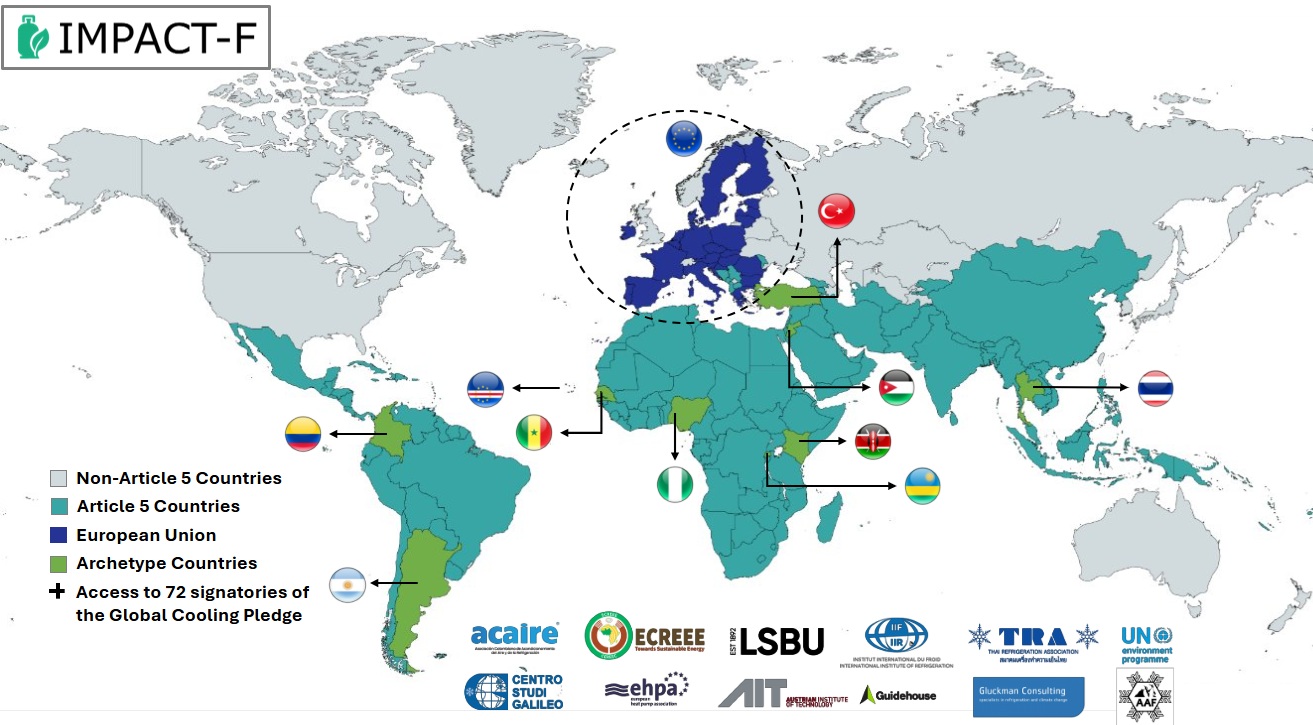
| Feb 2026 - £2.3m of EU funding announced for IMPACT-F |
|---|
The IMPACT-F project stands for Integrated Mitigation Platform for Assessing Climate Targets for F-Gases. It aims to develop an integrated web platform for visualising and projecting F-Gas use globally, by region and at country level and its implications to the environment and decarbonisation efforts, therefore promoting coordinated action between F-Gas phase-down targets and other relevant policies. Using the successful HFC Outlook Model as a foundation, IMPACT-F will replicate their proven methodology to develop a new platform that is fully flexible for users and enables the comparison on how different policy pathways interact, considering both F-Gas and decarbonisation targets globally. The IMPACT-F platform will be supported by extensive data collection and incorporate new scenarios covering relevant trends that are likely to drive demand for F-Gases in different regions of the world. To ensure usability, dedicated training programmes will be developed and delivered globally, using existing well-established networks as platforms for outreach and dissemination. The total project funding is 2,674 420 EUR from the EU Horizon programme and LSBU is the project lead. The consortium includes 14 partners in Europe, Asia, South America and Africa, including the UNEP (as a non-funded partner). |
 |
| Feb 2026 - £4,000 of Royce Internship funding announced |
|---|
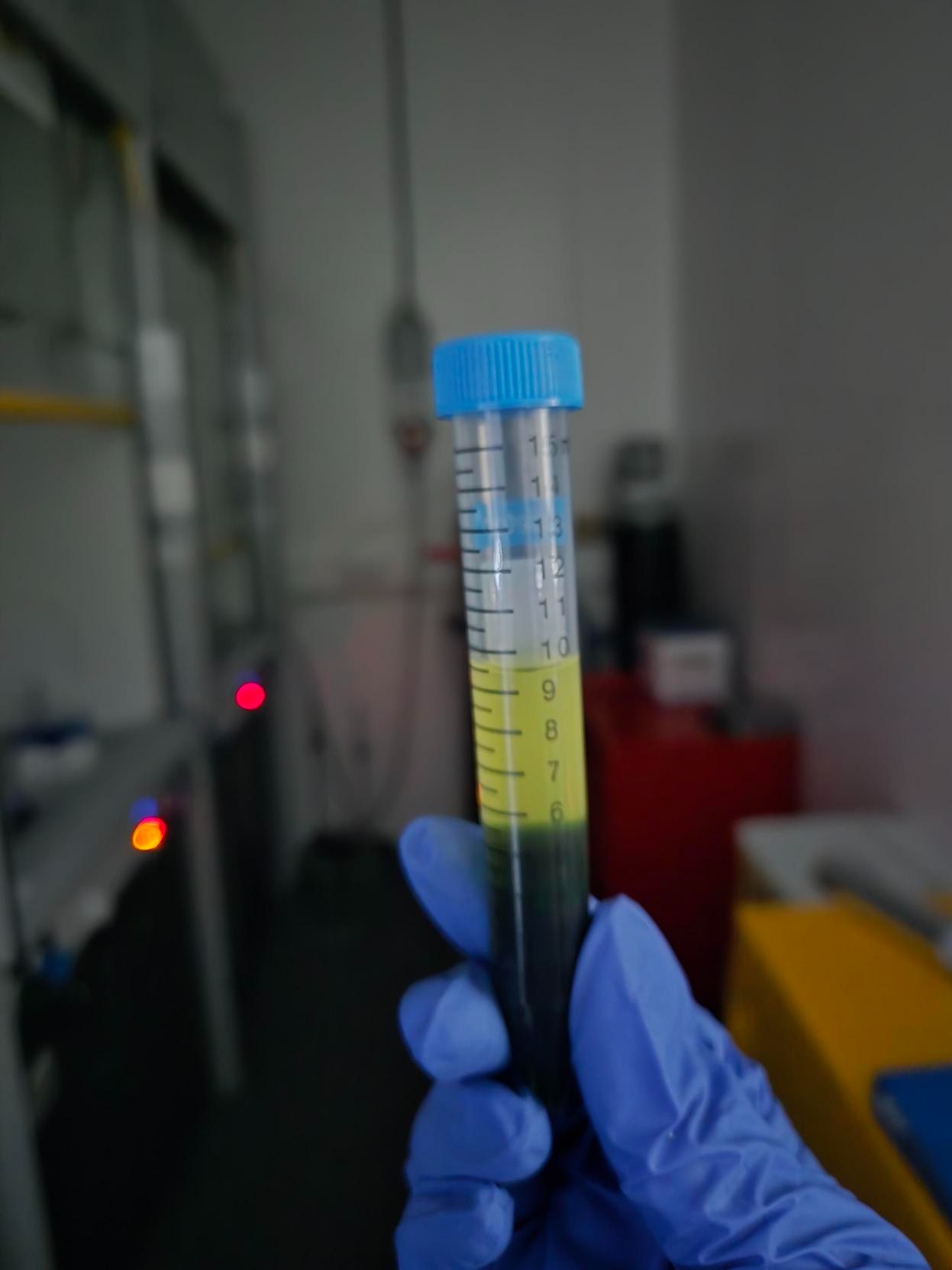
Persistent organic contaminants (POCs) are difficult to break down organic molecules. This project investigates piezocatalysis, where mechanical stimulation deforms piezoelectric materials generating transient surface charges. These charges promote reactive species at the catalyst/water interface, enabling oxidative degradation of stubborn organics without high temperatures or aggressive chemical dosing. Based in the Dunn Laboratory at LSBU, the intern will develop reproducible piezocatalytic testing protocols using the lab’s UV–Vis, GC, XRD, and SEM to quantify contaminant removal and link catalyst structure/morphology to performance. The outcome will be a ranked comparison of candidate piezocatalysts with practical guidance on reusability and robustness for water-treatment contexts. Project funding is £4,000 |
 |
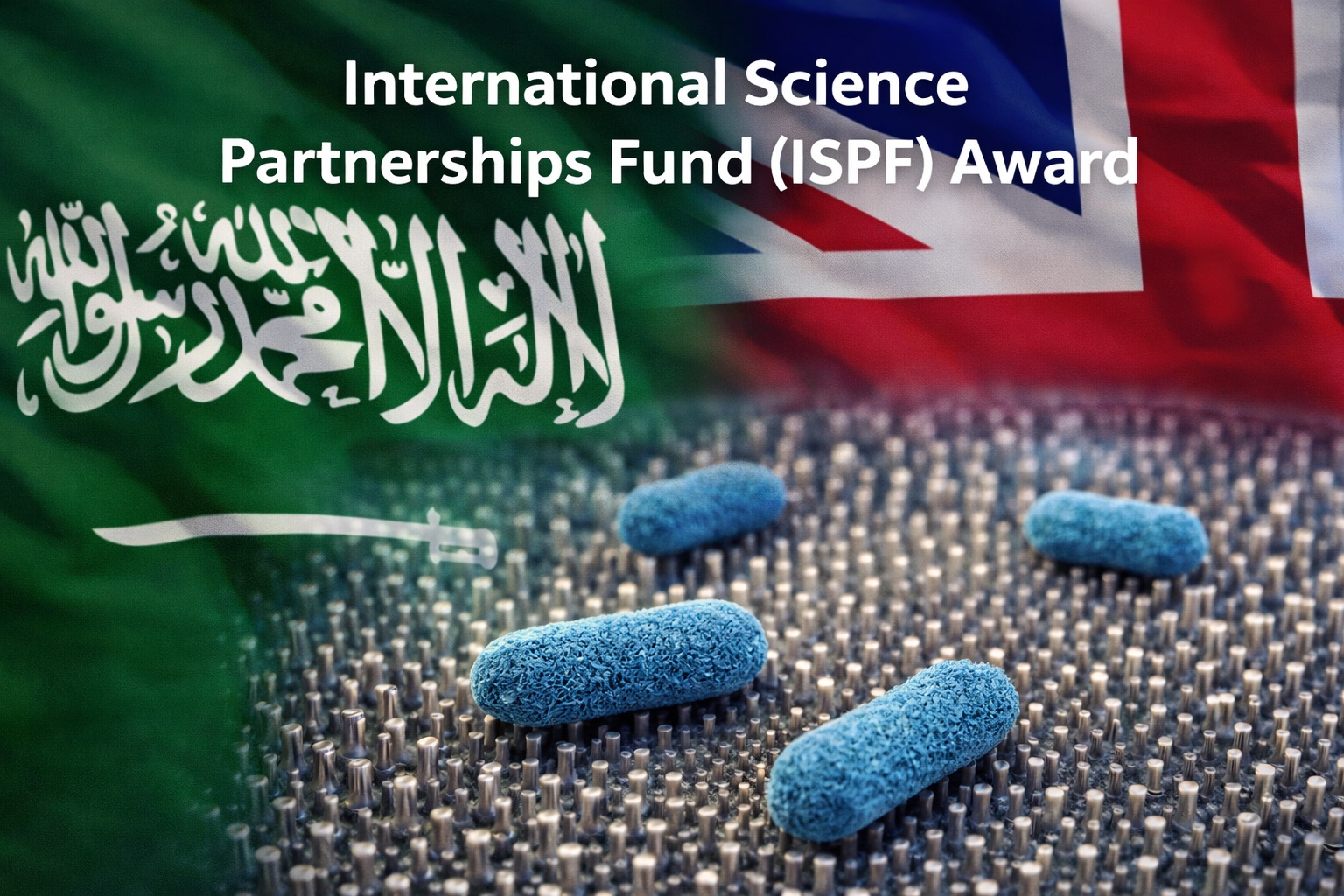
| Jan 2026 - £100,000 of British Council’s International Science Partnerships Fund (ISPF) announced |
|---|
UK-KSA Field Study on Climate-Resilient Antimicrobial Surfaces: Advancing Inclusive Education and Research This project, funded by the British Council’s International Science Partnerships Fund (ISPF), is a UK–Saudi Arabia collaboration focused on developing climate-resilient antimicrobial surfaces. Led by researchers from London South Bank University and King Abdulaziz University, the project addresses the global challenge of antimicrobial resistance by designing nature-inspired surface structures that physically inhibit bacterial growth without chemicals. The work combines advanced manufacturing, surface metrology, and biological testing, with real-world trials in healthcare, food production, and public environments in Saudi Arabia. A key outcome is capacity building, with training for at least 100 high calibre Saudi students and early-career researchers in cutting-edge engineering and materials science. Total Funding: £ 100,000 |
 |
| Jan 2026 - £200,000 of British Council STEM Funding announced |
|---|
Our team has been selected to host five scholars under the British Council Women in STEM Scholarship programme, supporting talented women from Egypt to pursue postgraduate study and research in STEM. Delivered in partnership with the British Council, the programme aims to address gender imbalance in science and engineering by enabling women to access high-quality education, research training and professional development opportunities in the UK. Led by Dr Suela Kellici, scholars will engage in research within the Materials Analysis and Device Design (MADD) Research Group, working alongside Dr Tariq Sajjad, Prof Steve Dunn, Dr Sanjay Sathasivam, Dr John Buckeridge, and Prof Sandra Dudley (from the REACT Innovation Centre). Research spans energy and healthcare, from materials for energy conversion, storage and sustainability to functional devices and computational materials modelling, addressing key global challenges The scholarship provides full financial support, including tuition fees, a living stipend, travel, visa and health-related costs, enabling scholars to focus fully on their academic and research development. Applications are now open, with scholars expected to commence their studies and research activities in the upcoming academic year. (https://www.lsbu.ac.uk/international/your-country/africa/egypt/bc-women-in-stem-scholarship) Total Funding: £ 200,000 |
 |
| Jan 2026 - £198,000 of Funding announced |
|---|
Dr Tariq Sajjad has recently secured two competitive research grants, strengthening international collaboration and advancing sustainable energy technologies. The first award is a Photonics and Quantum Accelerator Early Impact Grant (£48,450), funded by the Photonics Place-based IAA and EPSRC under grant EP/Y024109/1, in partnership with Edinburgh Instruments Ltd. The project will develop an automated operando microscopy platform for real-time, in-situ monitoring of battery components during operation. The funding will support a six-month postdoctoral position, consumables, and research travel to Edinburgh and Oxford. The second award is a Strategic Research Partnership Grant from United Arab Emirates University, valued at £150,000. This project focuses on the development of metal–organic framework (MOF)–based catalysts for green hydrogen production. The grant will fund a PhD studentship, consumables, small equipment, and research travel between LSBU and the UAE Total Funding: £198,000 |
  |
| Jan 2026 - £37,000 of Collaborative Funding announced |
|---|
Dr Meredith Barr has recently been awarded two competitive grants supporting a connected programme of research on low-energy, ionic-liquid-based processing of microalgal biomass for the recovery of high-value bioproducts in collaboration with the London-based SME FutureAlgae. The first award is a £12,000 Business Interaction Voucher from the Supergen Bioenergy Hub for the project Optimising Ionic Liquid-Based Extraction of Carotenoids from Microalgal Biomass. This project focuses on developing a wet-biomass extraction route that avoids the energy-intensive drying steps used in conventional processing. Using tunable ionic liquids, the work targets efficient cell permeabilisation and selective solubilisation of pigment mixtures under mild conditions, alongside the development of methods to separate the most valuable fractions from co-extracted species. The project combines statistical process optimisation with detailed analytical characterisation and early testing of solvent recovery and reuse. The second award is a £25,000 Innovate UK Resource Efficiency for Resilience and Sustainability Feasibility Study: Low-Energy Extraction for Sustainable Carotenoid Production from Microalgae. This project extends the same core science toward integrated, low-energy process design, with a particular focus on multi-product recovery rather than single-compound extraction. As a result of the Supergen award, LSBU is being fast-tracked to join the Supergen Bioenergy Hub as an institutional member, giving PhD students, post-docs, and fellows working on biomass and bioenergy across LSBU access to the Hub’s SHARE network, including specialist workshops and travel funding. Total Funding: £ 37,000 |
 |
| March 2025 - EPSRC Funding announced |
|---|
We are thrilled to finally announce that Drs Sajjad and Kellici from the School and Engineering and Design who are associated with the EME have been awarded an EPSRC grant to support our work on developing advanced materials for seawater electrolysis to produce green hydrogen. Over the next two years, we will work with Professor ASIF ALI TAHIR from the University of Exeter and Professor Robert Weatherup from the University of Oxford on this exciting project. Total Project amount: £ 323,478 |
| |
| December 2024 - KTP Funding announced |
|---|
Led by Zunaib Ali with Steve Dunn as Co-I a KTP with PB Design to develop a Smart Power Hub for optimised energy flows and grid support has been awarded. The project will embed expertise supporting the development of a first-of-its-kind Smart Power Hub enabling multiple sources (grid, battery storage, EV, solar, and wind) to be intelligently controlled and managed for optimized energy flows and grid support. It would allow the company to develop in-house capabilities essential for expansions into NetZero energy-market Total Project amount: £ 309,724 |
  |
| 16th December 2024 ~ funded project Department for Science, Innovation and Technology’s International Science Partnerships Fund |
|---|
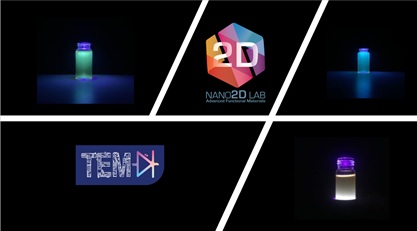
Tariq Sajjad and Suela Kellici have secured an international research collaboration grant to tackle food shortages via innovative materials and technologies. Tiny quantum dots, big impact: boosting photosynthesis to grow more food sustainably. Climate change, land degradation, and rapid population growth are placing unprecedented pressure on global agriculture. This project explores a nanomaterials-based strategy to enhance plant productivity by optimising solar energy utilisation in photosynthesis. We are developing carbon quantum dots (CQDs) low-cost, non-toxic, and highly efficient photoluminescent materials capable of converting underutilised or harmful wavelengths (UV and NIR) into photosynthetically active radiation. These CQDs will be investigated as nano-optical antennas for practical deployment through soil drenching, seed coating, foliar spraying, or incorporation into polymer films for greenhouse glazing and polytunnels. By leveraging LSBU’s expertise in nanomaterials synthesis and optical engineering in partnership with Istanbul Technical University (Turkey), this project bridges cutting-edge materials science with agricultural applications. By enhancing photosynthetic efficiency by up to 50% and potentially increasing crop yields by 20–50%, this research aims to deliver sustainable, scalable solutions to global food security challenges. Our team, alongside ITU (Turkey), will develop cutting-edge nanofertilizer and nano-optical antennas. This funding, has been awarded through the Department for Science, Innovation and Technology’s International Science Partnerships Fund, supporting international research partnerships. Total Funding £100,000 |
 iq
iq 6th December - EPSRC Awards Two-Year Bridging Funding for CCP-QC: John Buckeridge to Co-Chair and Lead Electronic Structure Project |
|---|
 |
We have been awarded two years EPSRC bridging funding to continue our work for the collaborative computational project in quantum computing (CCP-QC). John Buckeridge will co-chair the CCP and lead the electronic structure project with Computational Science Centre for Research Communities (CoSeC) support from Science and Technology Council ( STFC). |
Consultancy Services
Our engineering labs offer cutting-edge equipment and multidisciplinary expertise to support your business's innovation and development needs. Partner with us to enhance your capabilities and achieve impactful results.
Click to access LSBU’s engineering analytical facilities for advanced material and device characterisation.
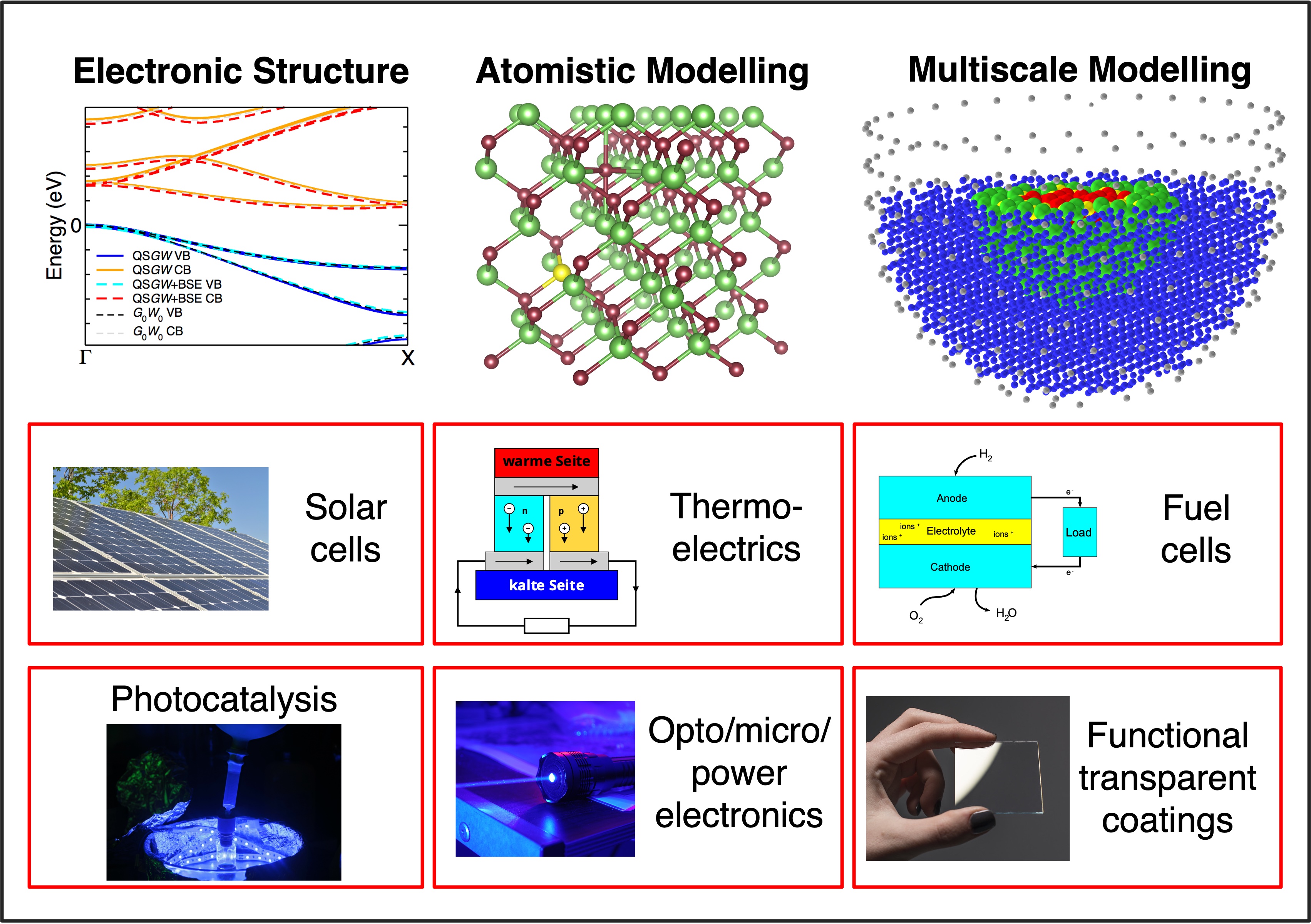
Computational Material Design for Energy
Employing a target-orientated approach, we rationally design and manufacture materials aiming to deliver world class materials engineering.
to We use in-house supercomputers, and have access to national high performance computing resources. We are also active in developing sustainable computational techniques.
Materials Synthesis
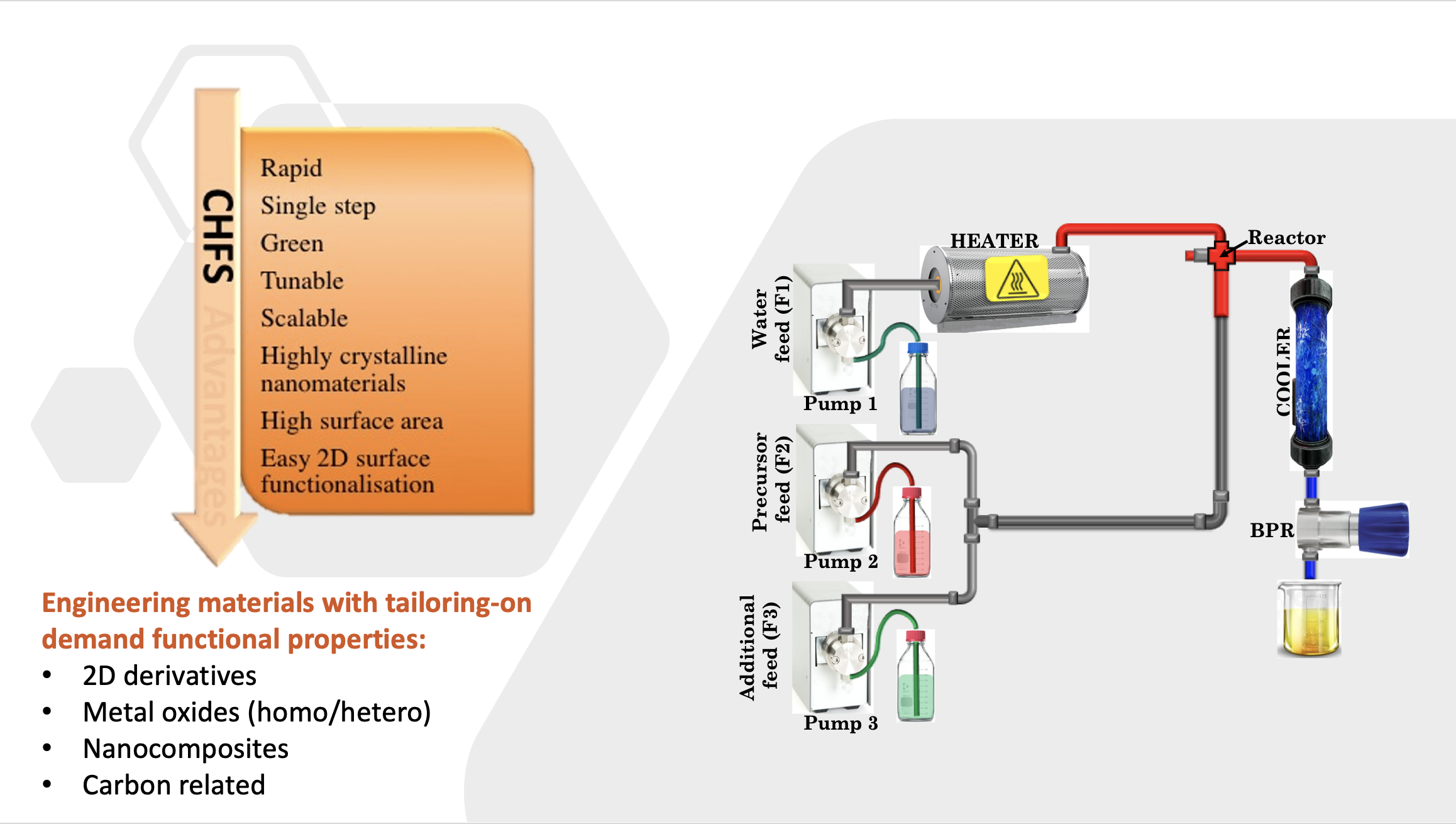
We have established expertise in a variety of materials synthesis techniques from optimised conventional routes to green continuous synthetic processes, e.g., continuous hydrothermal flow synthesis, processes that enable a step change in cost, materials performance and durability.
Our materials portfolio includes an array of functional metal oxides (homo/hetero), metals, quantum dots (e.g. graphene, biomass derived carbon quantum dots) and 2D (e.g. graphene, MXene) hybrid structures.
Materials Characterisation
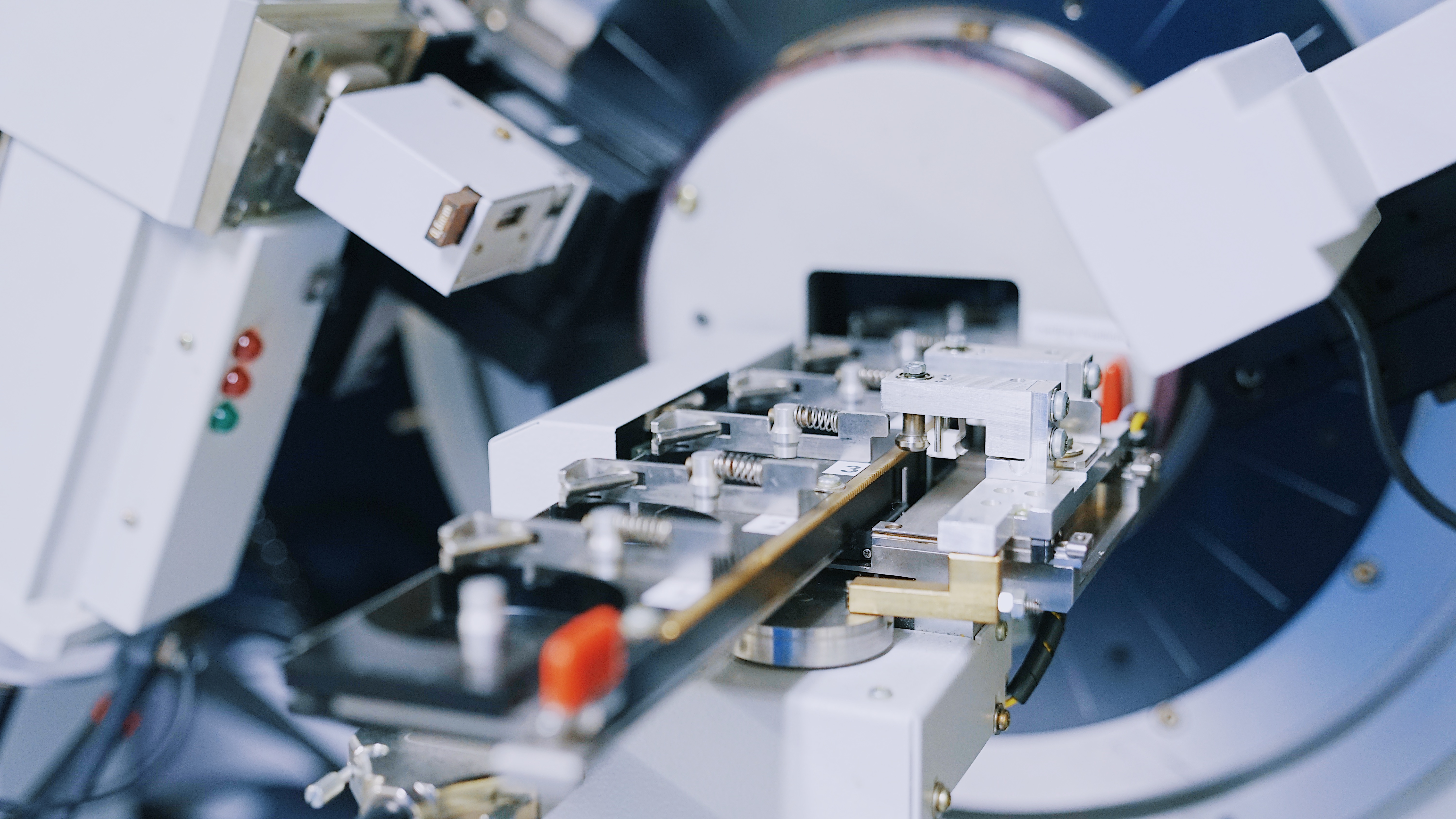
Structure and Morphology
XRD, SEM, FTIR, BET surface area, Profilometer, AFM
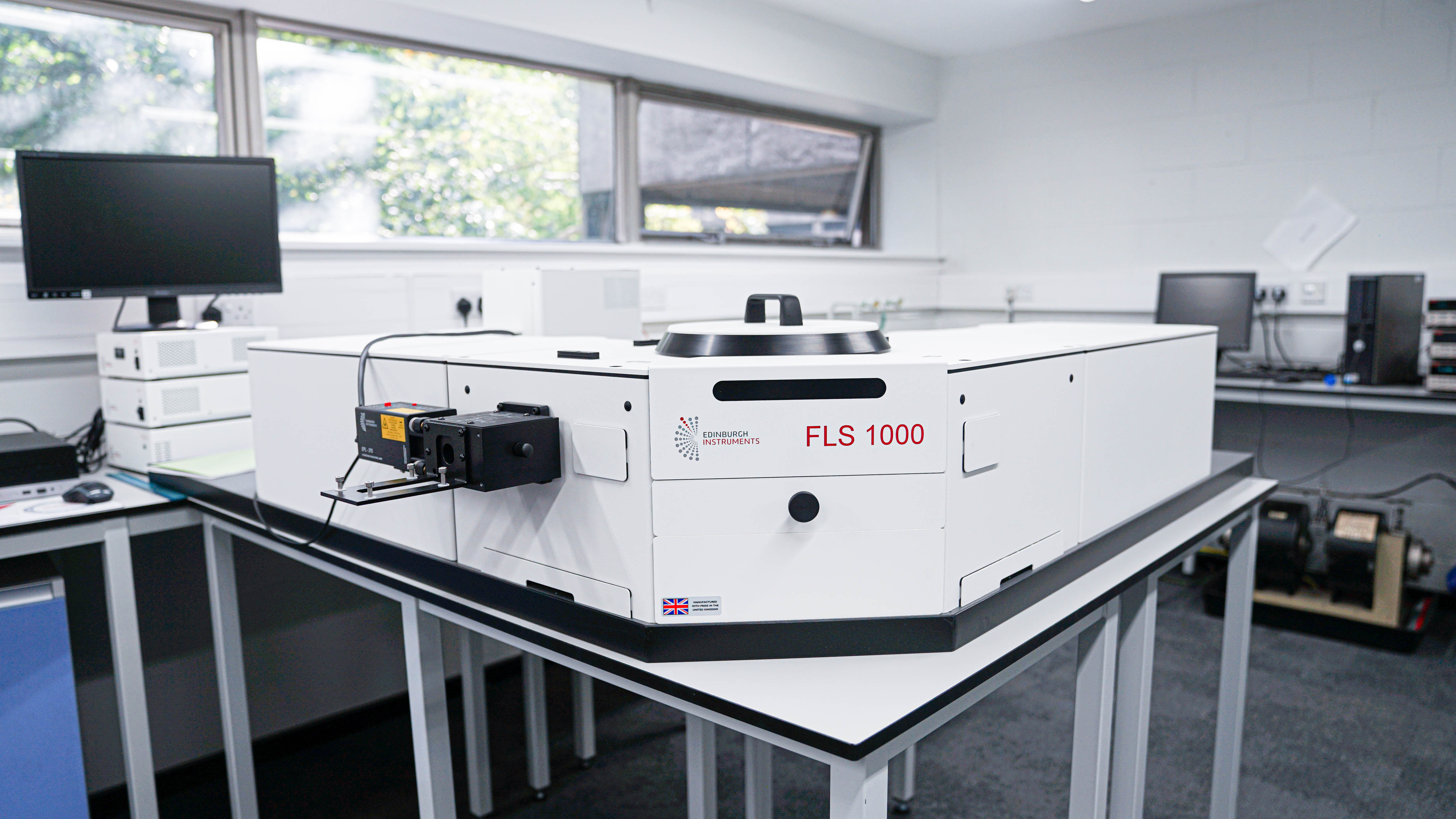
Optical
PL (Steady state and time-resolved photoluminescence spectroscopy), UV-vis, Ellipsometer
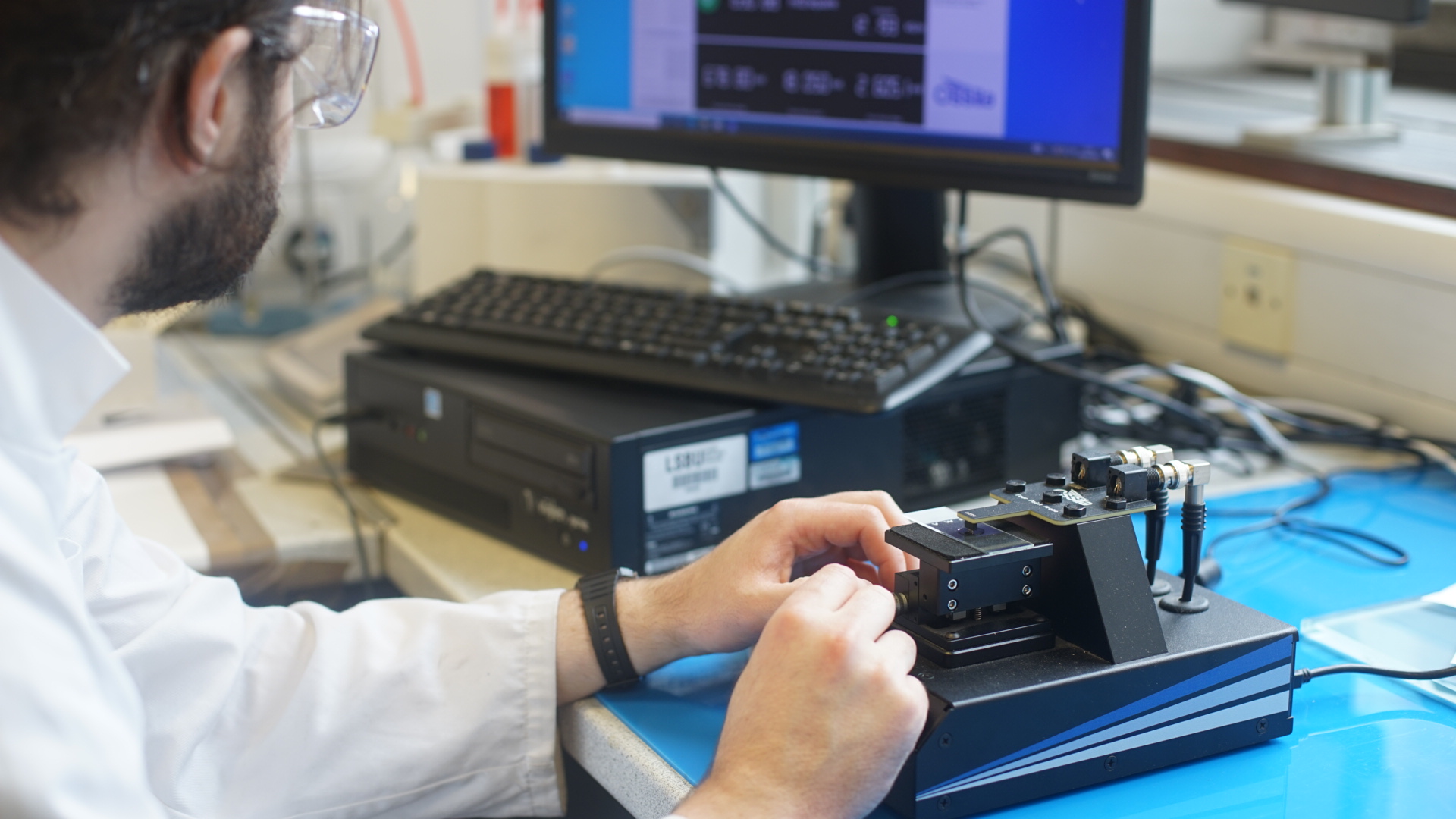
Electrical
Four point probe, Quantum Hall measurements
Device Fabrication and Performance Testing
Clean Room
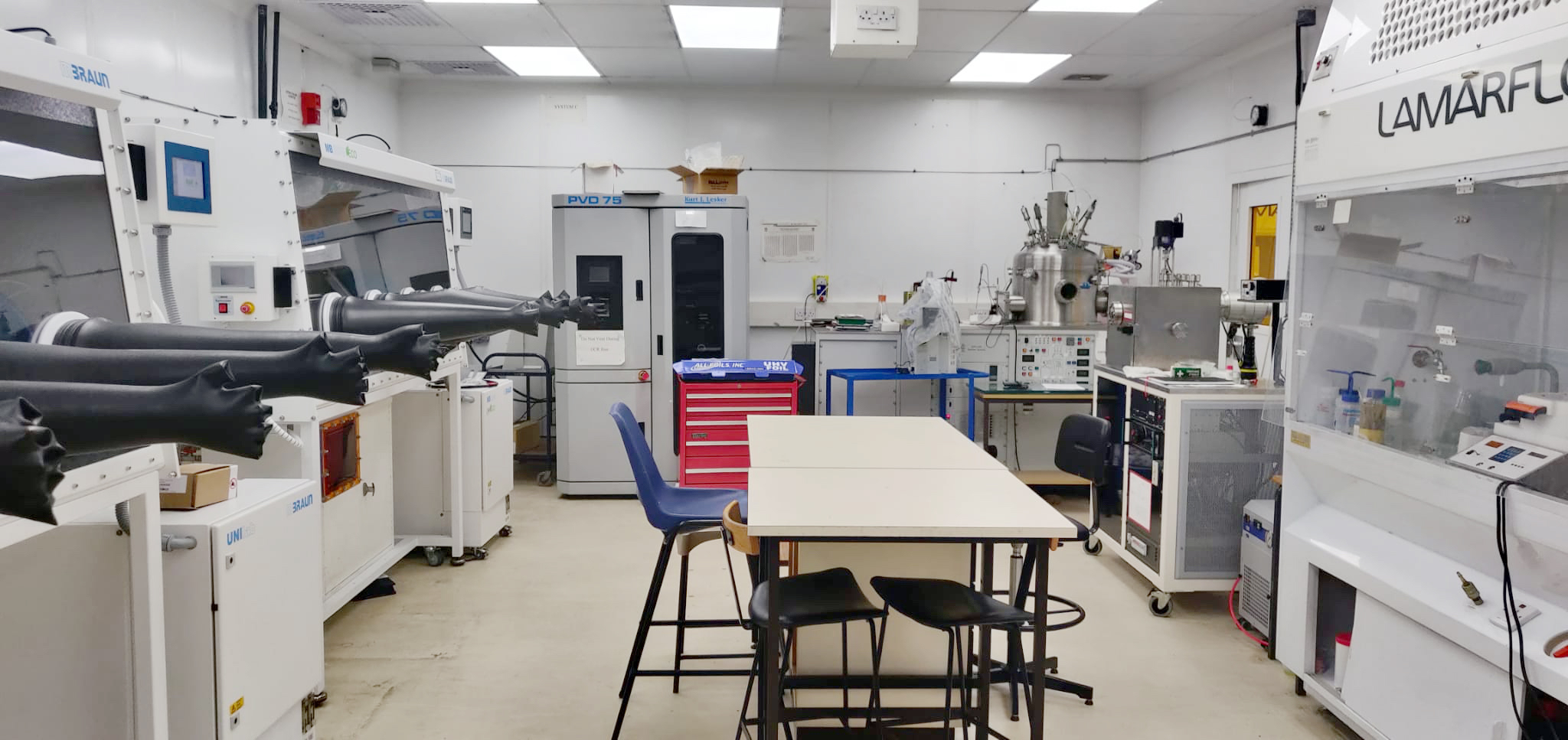
Our clean room is equipped with multiple state of art glove boxes, allocated to the research on photovoltaics, perovskite solar cells and energy storage (battery/supercapacitor)
PV Solar Cells
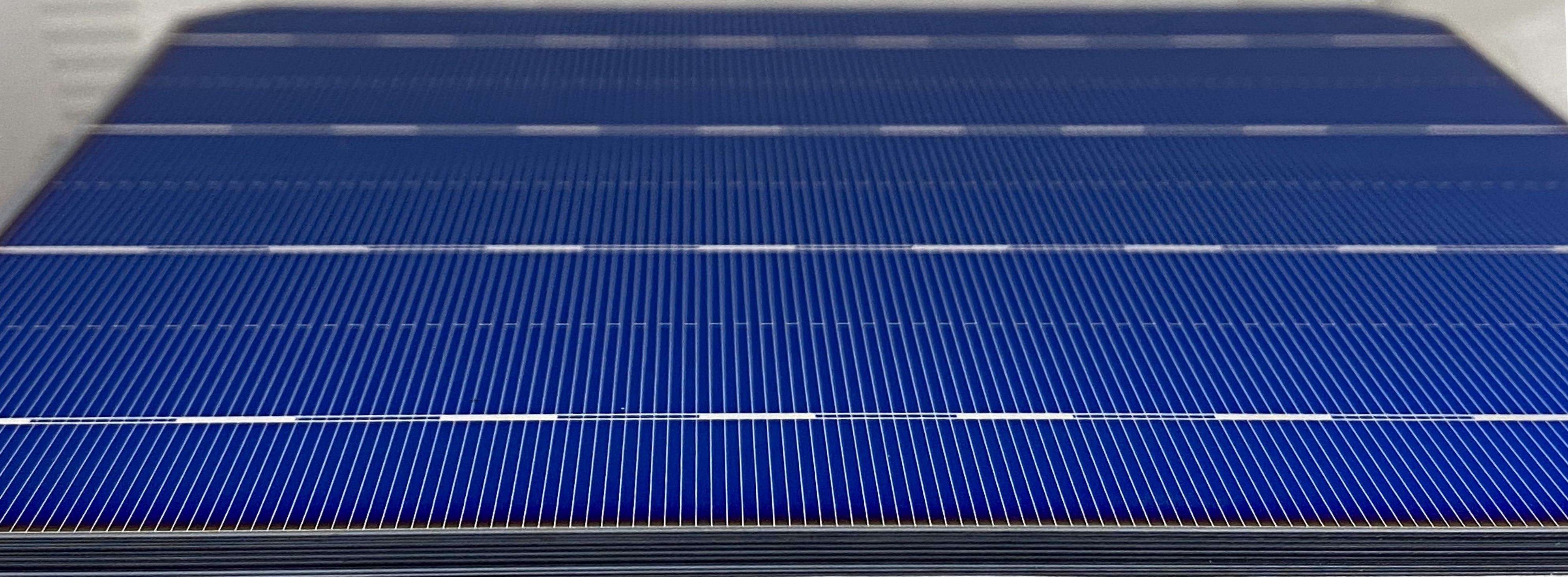
Photovoltaics solar cells
LEDs
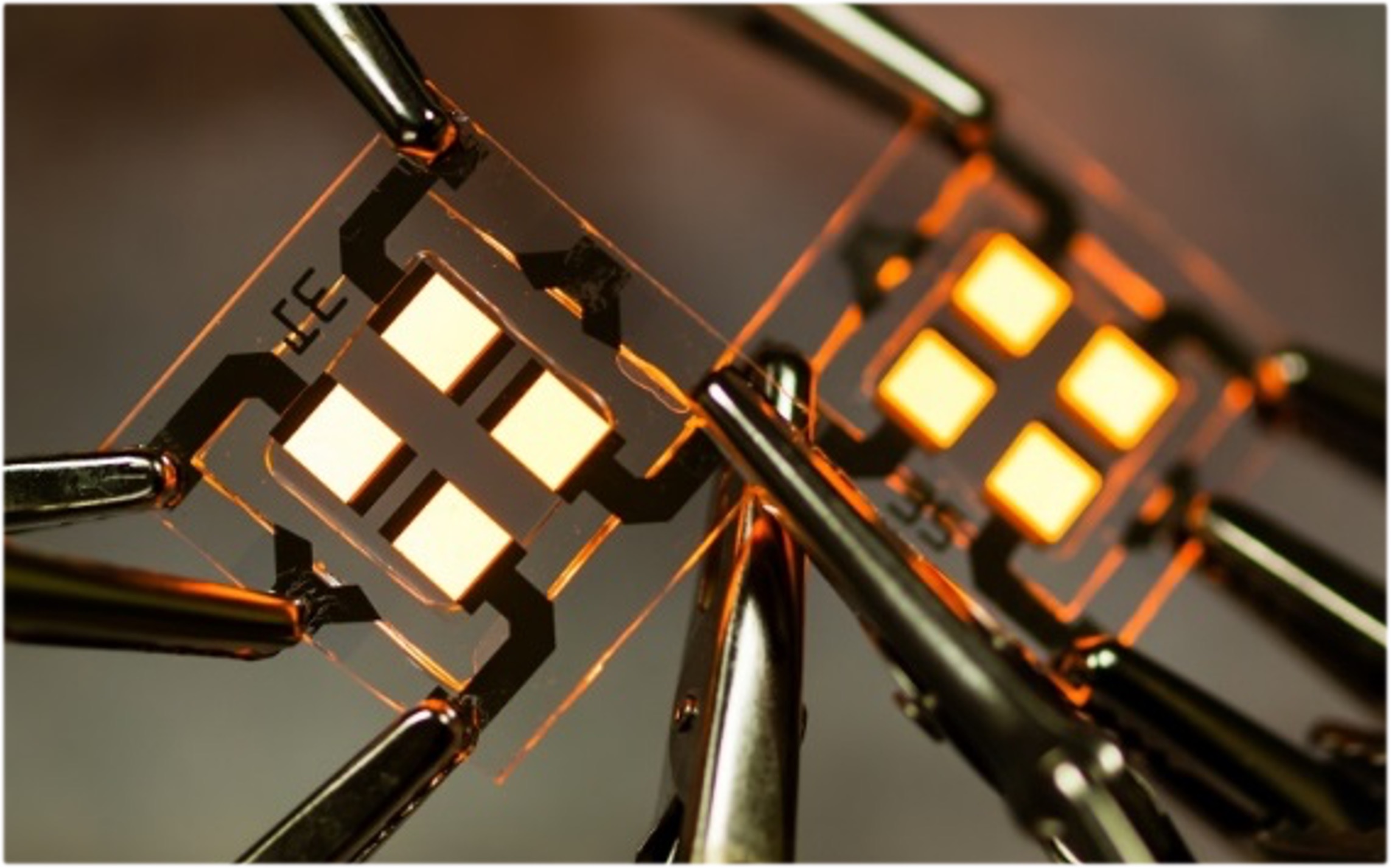
The MADD has facilities to characterise the performance of light-emitting devices (LEDs) and other electronic devices.
Solar Fuel Testing
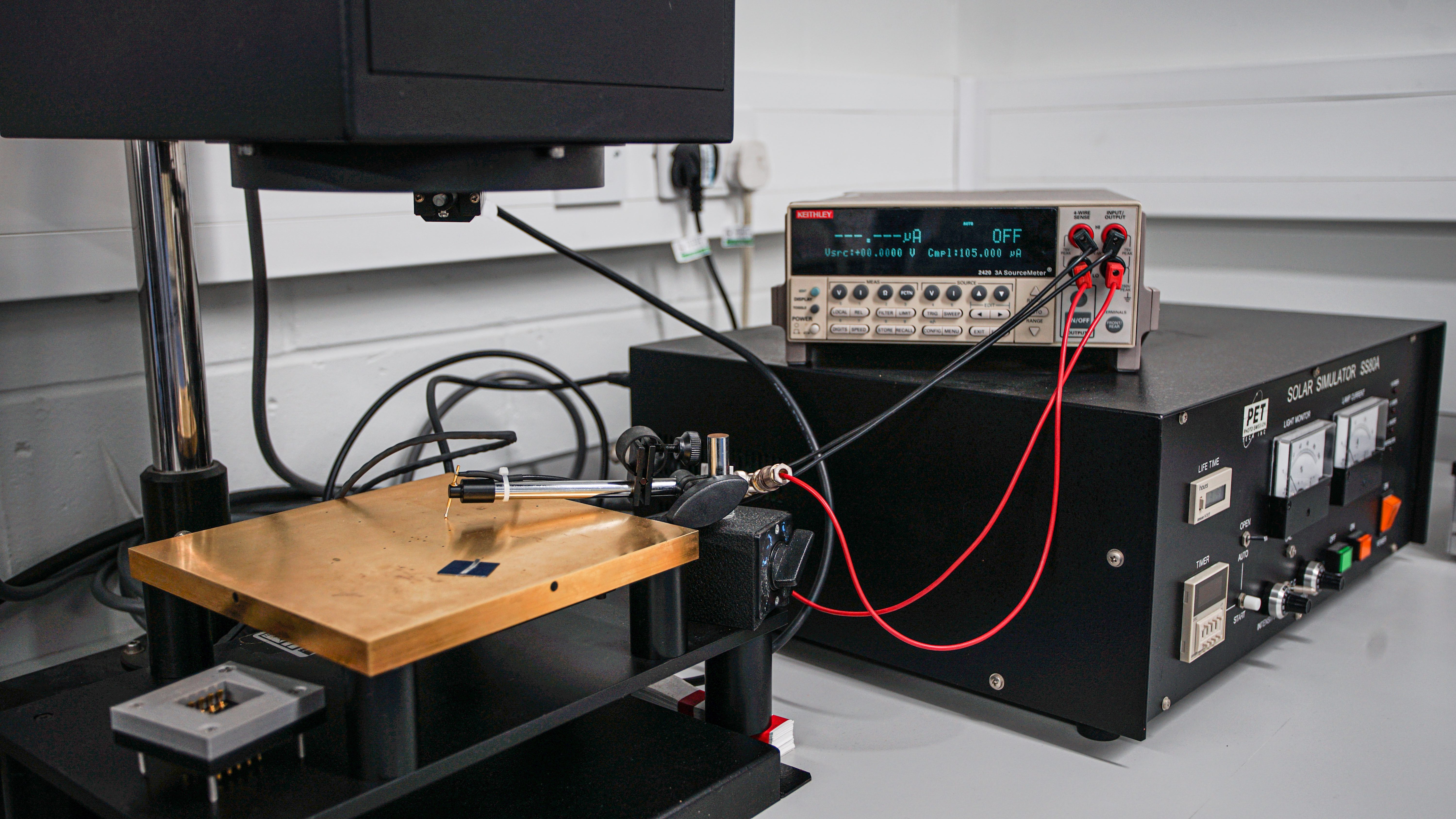
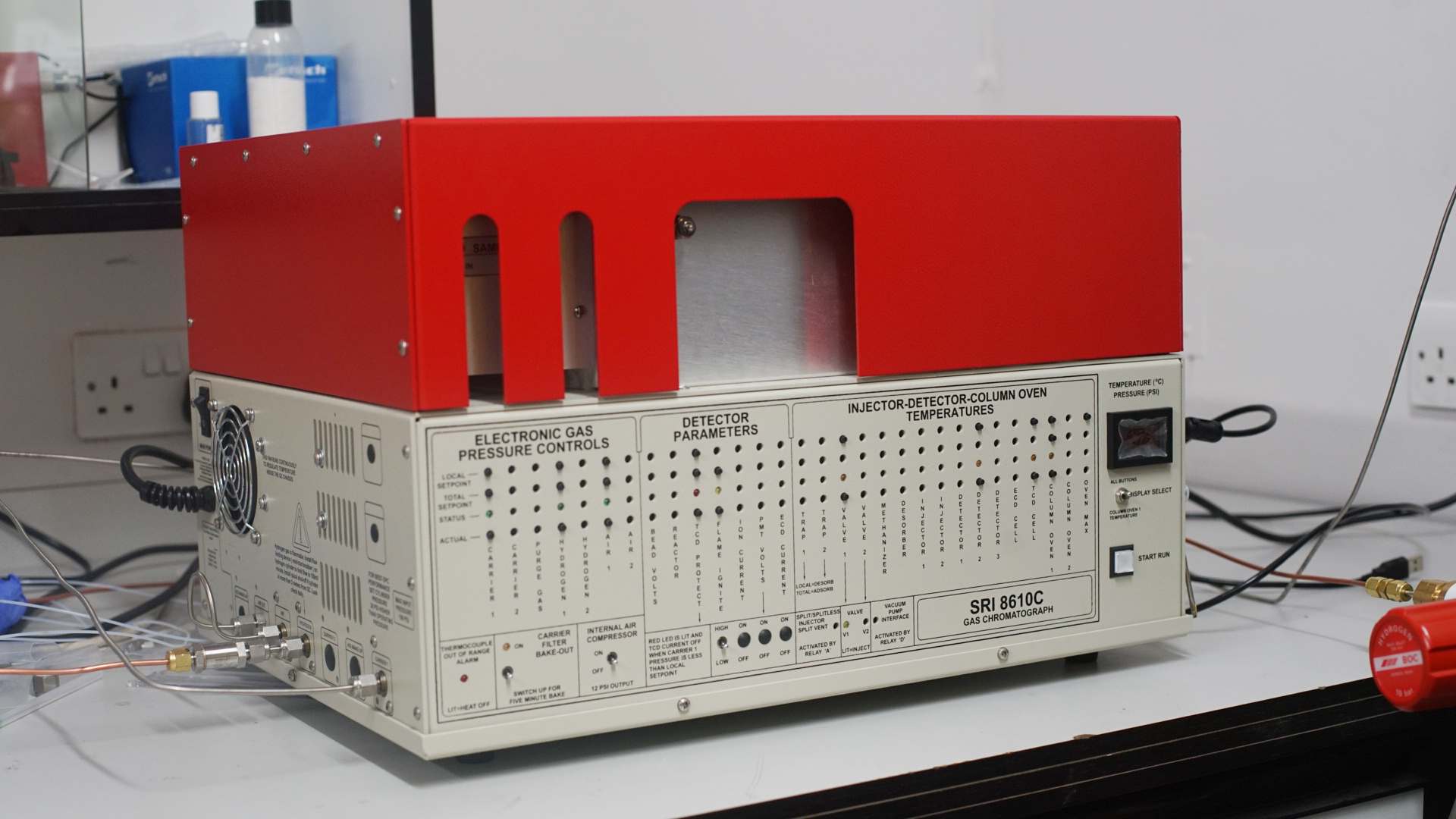
Solar Simulators