

Building Future Communities Research Centre
Nothing About Us Without Us

LSBU has maintained its top ten position, ranking sixth in the world for reducing inequalities in the Times Higher Education Impact Rankings 2025. As a contributing factor, the Building Future Communities (BFC) Research Centre is a creative umbrella designed to add value to various inclusive participatory research projects prioritizing this agenda through stakeholder engagement and collaboration.
Our ethos is inclusive, and we work collectively, focusing an intersectional lens on social justice concerns and research for transformation and real-world impact. We engage with funded research, enterprise activity, consultancy and researcher development with organisations including charities, organisations, community groups and local authorities.
Based on the principle ‘nothing about us without us,’ BFC builds on the creative participatory work of the former Social Justice and Global Responsibility Research Centre. We're committed in to particular to encouraging researchers who do not have easy access to research support, including for example young, disabled, minoritised, digitally/linguistically excluded people, and colleagues who work in further education or professional services roles.
LSBU Researchers (in alphabetical order)
Below is a dynamic list of LSBU researchers working on relevant projects. We also partner with external collaborators and work with a growing community of early career researchers and postgraduate research students. The list will be updated regularly.
Bisi Adelaja
Research Interests: Teaching quality and enhancement in HE
Dr Musharrat Ahmed-Landeryou
Research Interests: Decolonising the curriculum and anti-racist higher education with a particular focus on occupational therapy
Gisele Almeida
Research Interests: The People's Academy
Alison Alvarez Nee
Research Interests: Widening participation in higher education. Class and education.
Professor Caitríona Beaumont
Research Interests: History of female activism; female networks and women’s social movements in Ireland and Britain across the nineteenth and twentieth century.
Katie Betteridge
Research Interests: Dementia care.
Dr Nicole Brown
Research interests: Representations of experiences, the generation of knowledge, and research methods and approaches to explore these ideas.
Gwen Bryan
Research interests: Communication with means other than speech
Malachy Buck
Research interests: Interface between the environment and spatial planning; planning for coastal change; land value capture and financing public infrastructure.
Dr Jessie Bustillos
Research interests: Youth identities and post-school transitions; intersections of inequalities in education.
Professor Eddie Chaplin
Research interests: People with intellectual disability, autism and ADHD in the Criminal Justice System; mental health training and peer mentoring via coproduction with people with intellectual disability and autism.
Phoebe Cleary
Research interests: Disabled Student Commitment.
Danny Clegg (LSBU Visiting Fellow)
Research interests: inclusive curriculum & assessments, widening access and participation, technology and innovation, empowering new researchers, radical inclusion, decolonising practices in higher education, accessibility, UDL, Autism, ADHD, Neurodivergence, Artificial Intelligence in education, reducing inequalities, modernising reflective practice.
Dr Charlotte Clements
Research Interests: Informal education, inclusive education, history and policy of welfare and education, professional identities of youth workers.
Dr Clara Eroukhmanoff
Research interests: Gender and foreign policy; feminist foreign policy; the politics of the war on terrorism.
Catherine Evans
Research interests: Law in a social and community activism context focussing on the Windrush scandal; transitional justice; and the Colombian peace accord.
Anam Farooq
Research interests: The People’s Academy; citizen research.
Sarah Fletcher
Research interests: Reducing the environmental impact of homes; social and cultural attitudes towards homes; net zero transition; knowledge exchange.
Tim Fransen
Research interests: Creative and responsible AI; image-based AI and computer vision; open education, web and open-source technologies; and learning technologies, particularly in relation to design practice, teaching, and interdisciplinary research communities.
Dr Cameron Giles
Research interests: Law in a social and historic context; law and digital technology, often focusing on offences connected to sex and sexuality.
Samantha Grant
Research interests: Mental health and criminal justice.
Lyn Hamblin
Research interests: Student experience; widening participation.
Dr Elisavet Hasa
Research interests: Design for wellbeing and inclusion; spatial justice; feminist ethics of care; mutual aid and community support infrastructures; architecture’s role in community resilience; participatory design and community engagement; the climate emergency; urban transformation; adaptability crises; social movements and the politics of institutionalisation.
Luke Howson
Research interests: Disabled Student Commitment.
Dr Nayyar Hussain
Research interests: Racially minoritised young adults affected by processes of state-led gentrification; stigma, inequality and community disruption; finding ways to flourish and succeed in the face of socio-economic pressures.
Samuel Johnson-Schlee
Research interests: Thriving homes and habitats.
Dr Charalampia Karagianni
Research interests: Teacher education, inclusive education in the further education and skills sector, intercultural education, gender studies.
Pallavi Kaul
Research interests: Trans and non-binary lived experiences; gender euphoria and the body in trans and NB adults; enabling more holistic care, including mental health care, for trans people.
Professor Alex Kendall
Research interests: Learning identities and lived experiences of learning (in and out of formal settings), practitioner education (UK and internationally), cultures of sanctuary, creative, participatory and arts-based methodologies and pedagogies.
Dr Catherine Kimber
Research interests: Tobacco, nicotine and vaping research; smoking cessation intervention; public health communication around the relative risk of vaping; pharmacokinetic studies on nicotine vapes.
Joanna Krupa
Research interests: Inclusive education; neurodiversity; parent-school partnerships.
Dr Karla Lopez
Research Interests: Student outcomes, experiences and student voice related to widening participation and intersections with gender, race, identities, and migration; ethical practices; international student mobility.
Justyn Mackay
Research interests: Education of pupils with complex needs.
Sophie Mackay
Research interests: Forest schools.
David Mahon
Research interests: Foundation for People with Learning Disabilities
Professor Nicola Martin
Research interests: Inclusive education and critical disability studies.
Gabbie Matei
Research interests: Work with Knowledge Exchange Partnerships.
Katherine Miller
Research interests: Policing and protest.
Dr Kevin Milburn
Research interests: Urban development; music culture and participation.
Peter Nimmo
Research interests: How organisations create social value.
Andy Owusu
Research interests: Black student mental health; minoritised students and researchers.
Pippa Palmer
Research interests: Systems change; sector building; programme design; knowledge exchange; participatory research and co-creation; housing; retrofit; net zero transitions; institutional challenges; boarding school survivors.
Dr Ioana Petkova
Research interests: Social housing; community gardens; sustainable urban development.
Dr Preethi Premkumar
Research interests: Family relationships; mental health; social exclusion; virtual-reality psychosocial intervention; disability and race; career progress of minoritised researchers.
Dr Alex Prior
Research interests: Political engagement and democratic participation; Parliaments and political institutions; and Narratives, storytelling, and deliberation.
Dr Harry Radzuan
Research interests: Energy generation and utilisation; energy poverty; transportation; sustainability; climate change adaptation and mitigation; net zero transition, and SMEs' involvement in achieving SDGs.
Nate Rae
Research interests: Community engagement and support among young (15-24) trans and gender nonconforming people; looking at counterspaces (non-school, home or workplace settings where young people can foster resilience and coping strategies) and their role in sense of community and mental wellbeing.
Dr Federica Rossi
Research interests: Criminalisation of activism and dissent; imprisonment and penal policies; politically motivated crimes; state harm and violence.
Annie Ruddlesden
Research interests: Equity in higher education
Dr Martha Shaw
Research interests: Religion and worldviews in education; and education for intercultural citizenship.
Alice Speller
Research interests: Disabled students; inclusive practice and UDL; disability inclusion in HE and FE.
Sharron Sturgess
Research interests: Disability, autism/neurodiversity, educational inclusion, wellbeing and belonging for students in HE, access to space and place by HE students, emancipatory and participatory research.
Dr Rory Summerley
Research interests: Accessibility for interactive technology and entertainment.
Charlotte Taylor-Page
Research interests: Interrogating/ exploring the use and effects of lived experience-based education in clinical psychology training, particularly experience of psychological distress and/or mental health service use.
Jonathan Thompson
Research interests: Disabled Student Commitment.
Dr Allan Tyler
Research interests: LGBTQ+ mental health, LGBTQ+ youth and safeguarding, mental health, sex work, homelessness, nicotine harm reduction, e-cigarettes, smoking cessation.
Mira Kokoe Wille
Black students' experiences at post-1992 universities; antiblackness, socioeconomic class and classism; transition to and within HE; neoliberalism.
Helen O. Young
Research interests: Disabled student support.
Research Strands
BFC colleagues are social scientists accustomed to working on interdisciplinary projects. Our research links to five main strands, to enable the development of communities of practice around common interests. Postgraduate research students are among the strand leads.
Creative and Embodied Research Strand (lead: Nicole Brown) The research strand aims to cultivate a vibrant, inclusive, and interdisciplinary community where creative and embodied research practices can flourish. We envision a scholarly home that nurtures curiosity, collaboration, and care for the purpose of social transformation and justice. We foster a dynamic community of belonging and practice by offering a supportive environment for researchers to explore creative and embodied methodologies through providing opportunities to share practices and insights across disciplines; encouraging collaboration and co-creation in research and knowledge-making; seeking joint funding opportunities; and building sustainable relationships that strengthen both scholarly and community engagement. We will bring our vision to life through a series of connected activities that foster exchange, collaboration, and creativity, through termly drop-in meetings to connect, share ideas, and explore emerging research interests, which include the practice and pedagogy of creative and embodied research methods, as well as regular online seminars as opportunities for dialogue and learning across disciplines and geographies. We will also contribute to conferences and events to embed creative and embodied methodologies within the wider research culture of the centre, and host a flagship annual event to showcase innovative practice, celebrate collaboration, and strengthen our growing community of practice. |
Critical Autism and Disability Studies (CADS) (lead: Joanna Krupa) CADS provides opportunities for networking and researcher development through informal monthly virtual get-togethers, and via various conferences, seminars etc. The forum is open to anyone who shares a common interest in intersectional and social model thinking around autism, neurodiversity and disability. Please contact Jo Krupa on krupaj2@lsbu.ac.uk if you would like to join the forum. CADS relies on winning external funding in order to engage in research and operates on the very firm principle that autistic, neurodivergent and disabled researchers must be at the heart of our research projects as properly employed, paid and supported researchers. This principle also applies to any consultancy or professional development delivered by CADS. Our research is participatory, inclusive, creative and mainly qualitative. CADS aspires to emancipatory research but cannot claim that this ambition has been fully realised to date. |
Disabled Student Commitment/Universal Design for Learning (lead: Alice Speller) The main emphasis of our work this year is around The Disabled Student Commitment. LSBU was the first university to publish their Disabled Student Commitment Action Plan and LSBU’s Professor Deborah Johnston is a sector-wide champion of this initiative. We are working on a range of research projects relevant to this agenda and in collaboration with organisations such as the National Association of Disability Practitioners. Researchers from Professional Services and of course students are active participants in these projects alongside academics. We are proud to announce the publication of Universal Design for Learning: A Critical Approach, which brings together our ideas about inclusive higher education for all students. |
Lived Citizenship Strand (co-leads: Martha Shaw and Caitríona Beaumont) The idea of Lived Citizenship has emerged as a key concept in citizenship studies over the last two decades. Lived Citizenship can be defined as ‘generative approach to recognise the embodied, relational and lived experiences of being a citizen in everyday life’ (Kallio, Wood & Hakli, 2020, p. 1). The notion of lived experience in this context can be understood as ‘a representation of understanding of human experiences, choices, and options and the way those factors influence perceptions of knowledge’ (Boylorn, 2008, p. 490). The Lived Citizenship strand seeks to bring together colleagues across disciplines at LSBU and beyond who are interested in applying the concept of Lived Citizenship to their work in innovative and inter-disciplinary ways. The possibilities for extending understandings around everyday experiences of citizenship in the fields of education, criminal justice, law, health care, disability studies, civic engagement and political activism is timely and exciting. The strand’s approach draws on the work of scholars such as Raymond Willams and EP Thompson who in the 1950s identified personal experience as the foundation for political activism, and of Joan Scott who observed that experience is always contested and therefore always political (Beaumont, Colpus & Davidson, 2025, p. 12). As a result, the Lived Citizenship strand intends to interrogate further how harnessing the potential of lived experience to shape Lived Citizenship can prove transformative in building stronger community engagement and activism. The strand adopts a participatory, creative and intersectional framework to underpin its work, building on the work of Katrina Navickas to highlight the links ‘between personal experience and social relationships with class identities shaped by lived experience intersected by other forces and groupings, including race, gender, faith and nation’ (Navickas, 2018, p. 95). We are also interested in forms of action and activism, used by individuals and groups, who undertake work/actions in relation to community engagement/civic identities and illuminate diverse ways of how ‘to do’ citizenship that that connects personal experiences to policy and politics. The Lived Citizenship strand will enable exciting new connections with colleagues in health and social care at LSBU who lead on collaborative work with The People’s Academy (PA) and The Foundation for People with Learning Disabilities (FPLD). |
Marginalised Research Group (lead: Andy Owusu) The Marginalised Research Group is a collaborative initiative which aims to unite researchers whose work focuses on underrepresented communities and those not actively included in research, including ethnic and gender minorities, trans-related research, service users, and individuals with lived experience in research. We aim to map ongoing research, facilitate networking and collaboration, and disseminate findings that improve the experience of marginalised students and researchers in higher education and promote inclusion and justice. Our current plan is to achieve this through a combination of virtual networking events, research mapping activities, and a thematic report summarising key findings and recommendations. We are interested in creative methodologies which enable real participation and citizen engagement. Please get in touch if the work of this strand is of interest. |
Thriving Homes: (co-leads: Pippa Palmer and Sam Johnson-Schlee) Thriving Homes & Habitats is an interdisciplinary research strand that explores the vital relationship between home, health, social justice, and the environment. We bring together academics, policymakers, community groups, NGOs and practitioners to create a collaborative, research community focused on improving housing and living environments as key determinants of individual wellbeing and public health. Our work addresses the complex realities of where and how people live — from housing quality and affordability to climate resilience, fuel poverty, security of tenure, and the right to a safe, habitable home. We investigate the wide-ranging impacts of non-decent homes, cold and damp, insecure rental arrangements, temporary accommodation and homelessness. We explore the impact of institutionalisation as a proxy for home and the effects of those in medical settings, residential care and boarding school. At the heart of this research is a commitment to the environmental, legal, and technical, and how these interface with complex relational and interpersonal structures that enable people not only to live, but to thrive. Our work spans retrofit and decarbonisation, shared ownership models, just transitions in energy, and the challenges of building inclusive, resilient, and just domestic environments, and the external habitats beyond the threshold of the home - city farms, community gardens, forest schools, and green spaces and their role as vital extensions of healthy, thriving living environments. This broader view allows us to explore connections between domestic settings and the natural and social ecosystems that surround them. Thriving Homes & Habitats offers a platform for interdisciplinary collaboration across fields such as architecture, public health, disability studies, planning, and environmental transitions. Through research, knowledge exchange, events, and external partnerships, we aim to inform policy, influence practice, and ultimately contribute to building homes, systems and places where every member of a community can thrive. |
We work closely with LSBU’s Doctoral Academy and actively support researcher development.
The centre is currently working on projects around access to healthcare, community, culture, social care, education, and employment. We seek to engage in creative ways to enable real participation, particularly of the seldom heard voices of citizens who may experience marginalisation. We prioritise inclusive researcher development, peer support, and seek to build informal, inclusive, and supportive networks which meet regularly to share ideas and progress research and enterprise projects which fit with BFC’s ethos.
All the initiatives BFC is involved with include stakeholder researchers who are properly paid and properly supported in their research roles. We are building on our research and enterprise activity around themes of social justice, social transformation, and inclusive practice. Alongside this, in collaboration with LSBU’s Doctoral College, we are building a programme of inclusive researcher development activities prioritising creative approaches to co-production and co-creation. A conference focussing on this agenda is currently under development.
Recent research grants and enterprise awards
| Research | Funder |
|---|---|
Premkumar, P., Robinson, Y., Brown, N., Martin, N. and Grant, R. (2024). How the COVID pandemic affected the career progress of disabled researchers who are minoritized by race, gender and caring responsibilities. Project report for the EDI Caucus (EDICa) Flexible Fund. | UKRI / British Academy |
| Brown, N., Martin, N. & Premkumar, P. (2024). "Not as simple as right or wrong": A themed report on social care and support for disabled people in the UK. Report for the Disability Unit, Equality Hub, Cabinet’s Office. | Cabinet Office |
| Tender to edit a book for the NADP based on the Disabled Student Commitment. | National Association of Disability Practitioners |
| Research on the impact of the COVID pandemic on the career progression of researchers with Equality Act protected characteristics. | UKRI |
| Rees-Roberts, D., Premkumar, P. (2024). Depict VR - A virtual reality intervention to help young people who hear voices. | Innovate UK |
| Premkumar, P., Rees-Roberts, D. (2024). Depict VR: a multi-sensory multi-user proof-of-concept VR application to address voice-hearing in young people | British Academy |
| Progression to residential care of older autistic adults. | NHS England |
| Identifying, understanding, and improving practical and social support and wellbeing for autistic adults with intellectual impairment over the age of 45 years and their family carers. | John and Lorna Wing Foundation |
| Universal Healthcare, a national inquiry setting out our investigation into how the NHS can address the challenges of Universal Healthcare by how it designs and provides services based on health needs. | NHS Sussex and NHS West Yorkshire |
| Chown, N. et al (2023). General Practitioner Autism Training and Mandatory Medical Training: A Cross-Sectional Study of GPs’ Knowledge, Attitudes and Practices. Canadian Journal of Educational and Social Studies. 3 (1), pp. 1-16 | NHS England |
| Premkumar, P., Takhar, S., Martin, N. (2023). Disability, Loneliness and Relationships: A thematic report on relationships with family and friends among disabled people in the UK | Cabinet Office Disability Unit |
| Doherty et al (2024) (Doctoral Student): An Interpretive Phenomenological Analysis of the Experiences of Autistic Psychiatrists: “If We Can't Recognize Ourselves, How Can We Diagnose Autistic Patients Accurately?” INSAR Conference Poster. | |
| The Black Students Mental Health Project collaborated closely with Black students to gain insight into their perspectives on education, health, and overall well-being, including the challenges they faced in accessing support. | Office for Students and London South Bank University |
| Understanding the Interplay: Education, lived worldviews & citizenship. This project works with Secondary schools in England to explore young people’s conception of citizenship and the relationships between identity, belonging and religion/worldview. | Culham St Gabriel’s Trust |
| Agency and Advocacy: Locating Women's Grassroots Activism in England and Ireland, 1918 to the present (AH/X008606/1). | AHRC |
Get involved/work with us
BFC’s commitment to working collaboratively is genuine. We tend to develop interdisciplinary networks around themes which hold regular informal meetings via MS Teams to develop ideas and progress projects. Researcher development, peer support and joined up thinking are some of the benefits of working in this way. Established networks include the Inclusive Teaching and Learning Group and the Critical Autism and Disability Studies Research Forum. Currently for example we are working on a range of student experience projects focussing on Universal Design for Learning.
Having an established infrastructure enables us to collaborate remotely with partners all over the world. We also have the advantage of LSBU’s optimal location near Waterloo station in London which includes accessible conference facilities, gallery, and theatre space. In addition, we have excellent capabilities for delivering research-informed consultancy and CPD remotely all over the world.
Our expertise in inclusive and creative approaches to research and researcher development enables us to work effectively with local and global community partners. We would like to hear from you if you have an idea about a project to which BFC could add value. Informal conversations are fine as a starting point.
Please get in touch: martinn4@lsbu.ac.uk
Our Partnerships
Groups which work closely with the BFC Research Centre include:
BFC has established relationships with funders (including The Cabinet Office, British Academy and NHS England) and organisations (including local authorities, charities, SME’s, employers, and citizen groups).

Working equitably with interdisciplinary collaborators we add value to research, enterprise and researcher development initiatives and have very close links across LSBU and with relevant organisations including The Foundation for People with Learning Disabilities, Theatre in Prison and Probation, The Claudia Jones Organisation, The Southwark Day Centre for Asylum Seekers, London Youth, Partnership for Young London, Diversity and Ability, The Windrush Clinic, Jigsaw House, The National Association of Disability Practitioners, The National Association of Disabled Staff Networks, The Westminster Autism Commission, The Participatory Autism Research Collective (PARC), Autism Voice, Autistic Doctors International, London Higher and LSBU’s People's Academy.
We work closely with LSBU’s Doctoral College. Students associated with BFC are supported in qualitative research which considers, for example, aspects of student experience across the age range from early years into adulthood, universal design for learning, mental health concerns, neurodivergence, parenting and criminal justice, community education, inclusive pedagogies.
BFC collaborates with LSBU’s Legal and Social  Policy Clinic, where undergraduate students gain real-world experience researching and responding to policy consultations. The Legal and Social Policy Clinic builds upon LSBU’s success supporting the local community through its student-run Legal Advice Centre.
News
| SEN Policy Research Forum Seminar 4 June 2026 12:30-16:30 |
|---|
SEN Policy Research Forum and London South Bank University's Building Future Communities Research Centre invite you to join us for a collaborative seminar exploring how the experiences of adults with learning disabilities can inform priorities for education, transition planning, and long-term outcomes. This event will bring together researchers, practitioners, policymakers and people with lived experience to consider what truly matters for young people as they move into adulthood. Book your FREE space here: SEN Policy Research Forum Seminar Tickets, Thursday 4 June * 12:30 PM - 4:30 PM | Eventbrite |
Events
LSBU Fourth Annual Disability Lecture: The Architecture of Belonging 20 May 2026 |
|---|
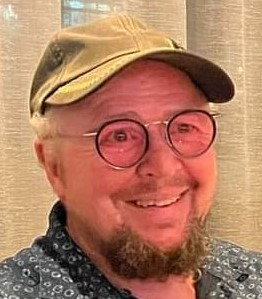 BFC hosted LSBU’s Fourth Annual Disability Lecture, delivered by Associate Professor Wenn B Lawson, a British Psychologist, a qualified Social Worker, a well-known autistic researcher, author, speaker and poet. Wenn is an Adjunct Associate Professor with Curtin University, Western Australia, and member of CARG (Curtin University’s Autism Research Group). This lecture opens the conversation to explore redesigning relationships and environments that enable autistic flourishing. It highlights aspects of the neurodiversity paradigm, and paints the picture of how to move from the ‘medical model’ alone to a more inclusive, neuro-affirming place Following the Annual Disability Lecture, we also heard from Michael Arhin-Acquaah, Clinical Research Assistant, West London NHS Trust and LSBU alumnus, who shared his work and research around autism, gender identity and autism. A recording of the lecture is available here. |
 where autism and its very foundation are welcome. It’s in acceptance and understanding of autism that autistic humanity has a chance to thrive. When we understand we are less fearful. When we are less fearful we are open to ideas and ways to accommodate difference. These concepts pave the way for a truly inclusive and neuro-affirming society that crosses the triple empathy divide and connects all the elements enabling and building an architecture of belonging.
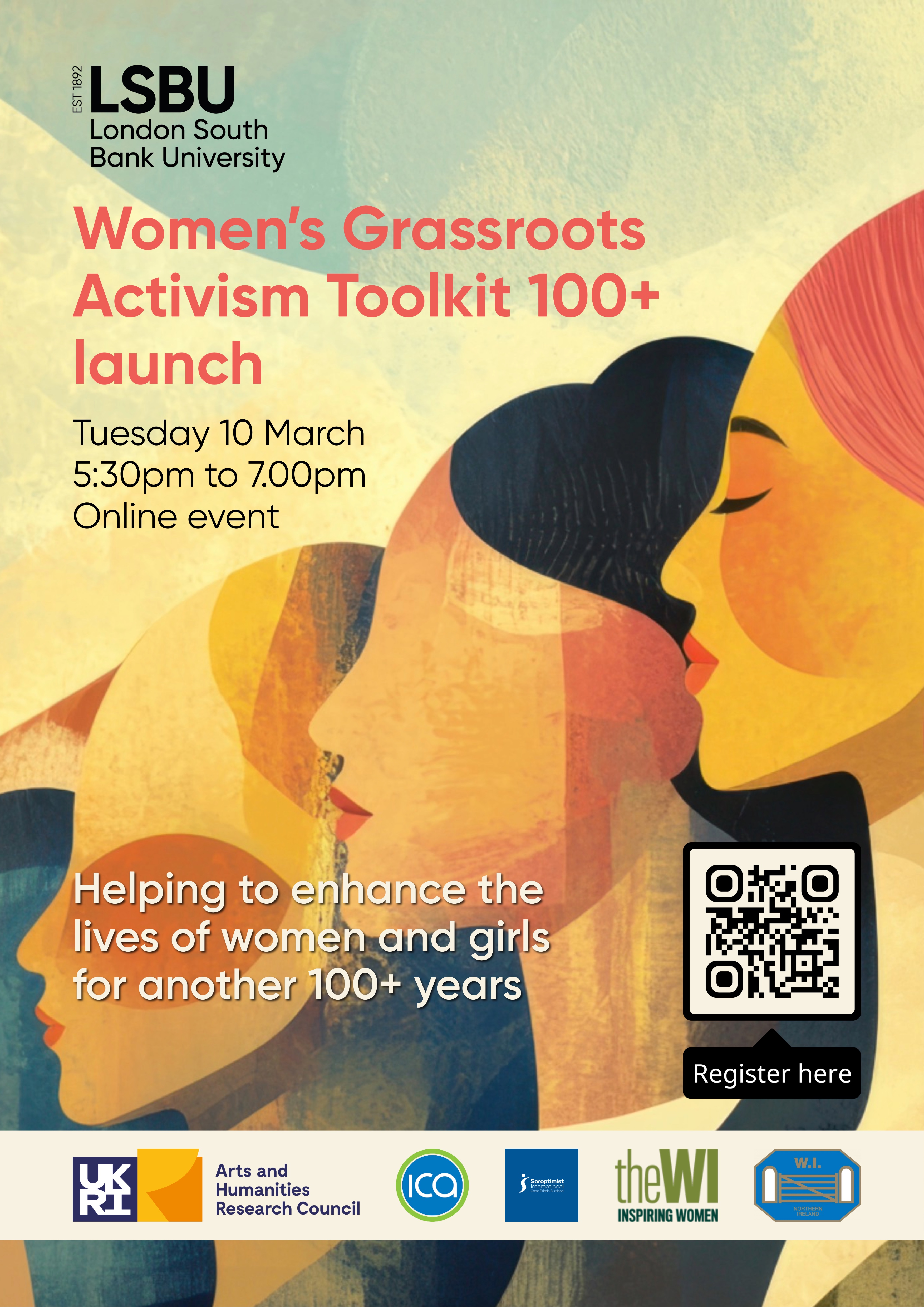
| Women’s Grassroots Activism Toolkit 100+ launch 10 March 2026 |
|---|
To celebrate International Women’s Day 2026 and to mark Women’s History Month, LSBU recently hosted the launch of the ‘Women’s Grassroots Activism Toolkit 100+: enhancing the lives of women and girls for 100+ years ’. This new co-produced Toolkit has been created by the UKRI AHRC funded project Women’s Grassroots Activism in England and Ireland 1918 to the present. This project ran from August 2023-January 2025 and set out to identify how grassroots women’s organisations can co-identify strategies to safeguard their future activities and activism for the next 100+ years. The network worked hand-in-hand with our participant women’s organisations: the Irish Countrywomen’s Association (ICA); the National Federation of Women’s Institutes (NFWI); the Federation of Women’s Institutes of Northern Ireland (WINI); the Soroptimists Tunbridge Wells and District Club; Soroptimists South East Region; Soroptimists Republic of Ireland and Soroptimists Northern Ireland, all affiliated to the Soroptimists International Great Britain and Ireland (SIGBI). Together these groups represent over 200,000 women enabling members to come together for friendship, education, crafting and activism. Our launch event included representatives from our participating women’s groups and the project research team, including BFC's Caitríona Beaumont, who came together to reflect on their experiences of being involved in the project, the important history and on-going activism of voluntary women’s organisations across Britain and Ireland, and to celebrate the launch of our project’s Women’s Grassroots Activism Toolkit 100+, available here (PDF File 969 KB). Prof Beaumont also delivered an invited paper on 18 May 2026 to the Voluntary Action History Society seminar series at the Institute of Historical Research, reflecting on the project and its impacts. A recording of the presentation is available here. |
| Thinking Allowed for Dr Alex Prior |
|---|
Dr Alex Prior, lecturer in Politics with International Relations, appeared on BBC Radio 4’s Thinking Allowed on 3/2/2026 to discuss insights from Go-along research in the UK Parliament, the article he co-authored exploring how movement
|
 through the Palace of Westminster shapes people’s sense of power, belonging and exclusion.
| Windrush Justice Enquiry Truth, Accountability and Repair: A Survivor-Centred Pathway to Justice 14 January 2026 |
|---|
LSBU accommodated this symposium coordinated by the Windrush Justice Clinic, a collaboration of university law clinics, including our own clinic at LSBU, law centres, Windrush scandal survivors and grassroot charities. The event, which attracted more than 60 attendees, built upon the Windrush Justice Inquiry Report: Towards Justice: Truth, Accountability, and Repair launched in the House of Lords in November 2025, an event hosted by Baroness Floella Benjamin. The report outlines the rationale and framework for holding a Delegates heard from survivors on what justice means to them, legal experts and speakers on trauma-informed, survivor-centred inquiries and truth commissions. The discussions were continued in February 2026 at a symposium for Windrush survivors held in the Bernie Grant Centre. BFC’s Catherine Evans was one of the report contributors: Priscellia Robinson, Anna Steiner, Catherine Evans, Andreas Papamichail, Olayinka Lewis, Subira Cameron-Goppy, ‘Windrush Justice Inquiry Report: Towards Justice: Truth, Accountability, and Repair’ (Birthmark of Africa,30 June 2025). To read the research, visit the webpage here. Please see links to news articles below: https://www.lawgazette.co.uk/news/windrush-commissioner-to-probe-legal-support/5125837.article |
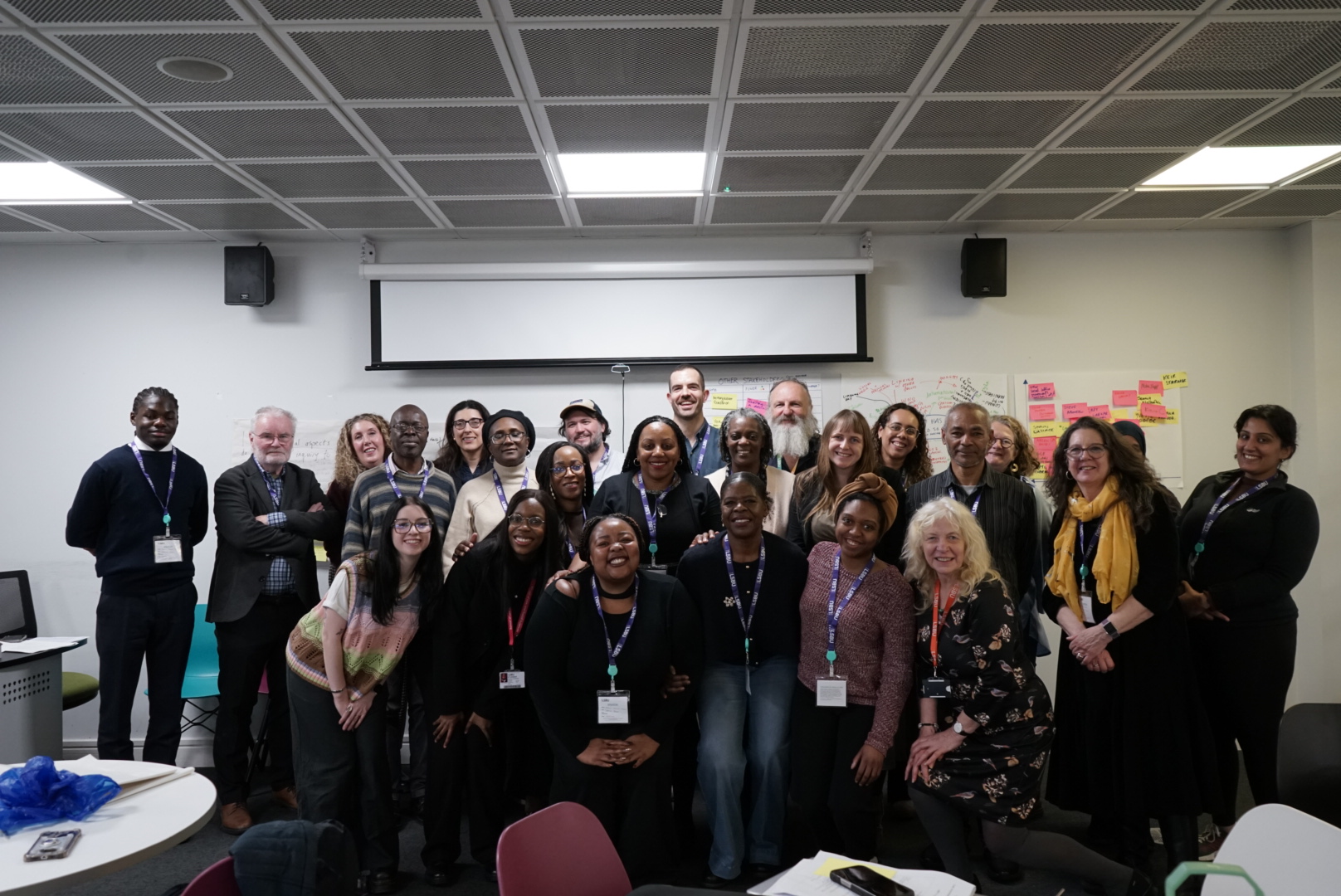 ‘People’s Inquiry’ into the Windrush scandal to investigate the continuing injustices, putting the affected communities' lived experience at the centre.
| PARC Double Empathy Workshop Series |
|---|
| BFC has close links with the Participatory Autism Research Collective (PARC). You can find links to recordings of previous workshops in the series here. |
| Understanding the Interplay: Education, Lived Worldviews and Citizenship 23 September 2025 |
|---|
LSBU hosted this free event for RE and Citizenship practitioners, launching the report of the Understanding the Interplay (UI) project. More than 70 attendees included this year's student-teacher cohorts for RE and Citizenship from UCL and Kingston University, as well as practising teachers and teacher-educators. A panel discussion, 'Citizenship, Religion and Worldviews - Challenges and opportunities for collaboration in a revised national curriculum' , included leads from the national teacher associations from both subjects. The day also saw the launch of set of free resources for teachers, exploring identity and belonging in schools, that embody a creative methodology based on a framework of Worldview Literacy developed by BFC's Martha Shaw. This is detailed in the latest publication in the British Journal of Sociology of Education: Shaw, D. M. and Stones, A. (2025) Understanding the interplay: A new methodology for education, religion, worldviews and lived citizenship. British Journal of Sociology of Education, pp. 1–18. doi: 10.1080/01425692.2025.2560409. To read the report and access the resources, please visit the webpages here. |
| Caitríona’s Talk on The WI at 110 Years – The Story of a Movement for Women 16 September 2025 |
|---|
BFC's Caitríona Beaumont was invited to deliver a talk to the Women's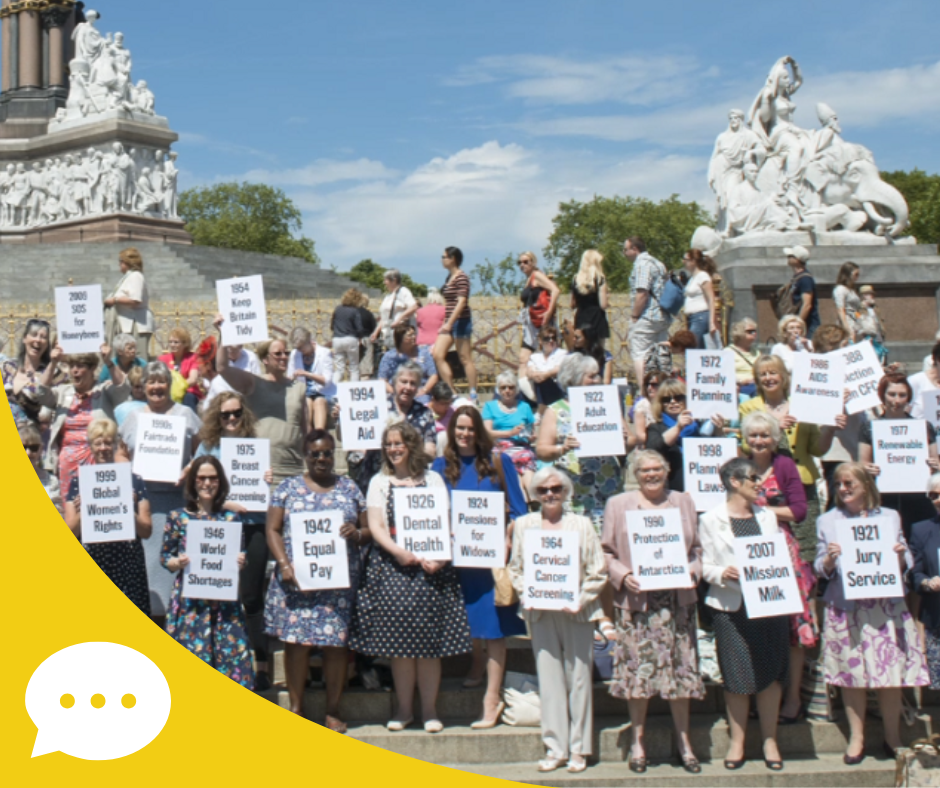 Institute for WI Day, an annual celebration of the establishment of the WI in 1915. The webinar celebrated WI Day 2025 by looking at the history of the organisation, showcasing its legacy and thinking about how it has transformed the lives of women over the past 110 years. Caitríona's talk also highlighted her involvement in the AHRC Women's Grassroots Activism project (see below). Institute for WI Day, an annual celebration of the establishment of the WI in 1915. The webinar celebrated WI Day 2025 by looking at the history of the organisation, showcasing its legacy and thinking about how it has transformed the lives of women over the past 110 years. Caitríona's talk also highlighted her involvement in the AHRC Women's Grassroots Activism project (see below). |
| Building Future Communities Research Conference 4 July 2025 |
|---|
| The BFC Research Centre recently held its first conference, bringing together researchers and collaborators working on creative participatory projects with a focus on social justice and citizen engagement. The day began in tandem with the Data & Digital Research Centre, with a keynote speech from Columbia University's Professor Ezekiel Dixon-Román: Diffractive Politics: Accelerationism, Computation, and the Political. BFC's conference then continued with a set of dynamic presentations on Creative Approaches to Research from BFC members Martha Shaw, Nicole Brown, Pippa Palmer and Nate Rae, including photovoice and Lego. Sandra Vacciana, from BFC partner organisation Partnership for Young London, talked about the Partnership's work in 'Authoring Our Own Stories: Participatory Research with Young People', and was joined by young co-researchers. The afternoon sessions began with an introduction to BFC's Research Strands from strand leads/representatives, followed by a keynote lecture from Professor Jonathan Glazzard from the University of Hull. 'The School Exclusion to Prison Pipeline: Compounding Multiple Disadvantage' explored school exclusion, the criminal justice system, education quality in Young Offender Institutions, and systemic failures contributing to reoffending cycles. Finally, BFC's Professor Eddie Chaplin and David Mahon, together with a team from the Foundation for People with Learning Disabilities, discussed their research on online shopping experiences of people with learning disabilities, including presenting examples of their own lived experience. |
| Beautiful Lives by Stephen Unwin Book Launch 4 July 2025 |
|---|
Following the conference, BFC presented an evening of discussion, reflection and celebration to mark the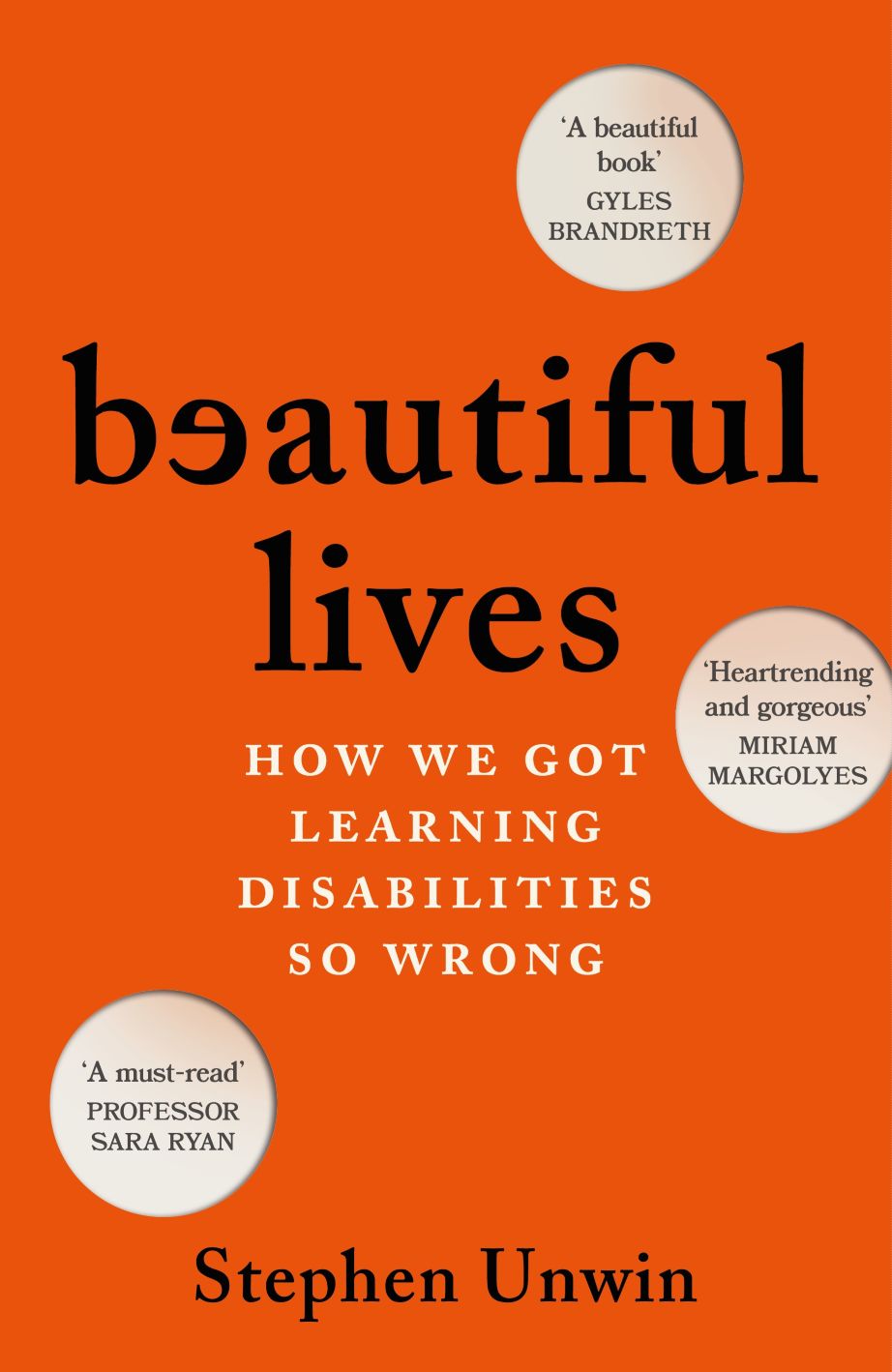 publication of Beautiful Lives by Stephen Unwin, CADS' Writer in Residence. Beautiful Lives is a personal and pragmatic account, rich with history, culture and philosophy, told through the eyes of a father whose son has profound learning disabilities. publication of Beautiful Lives by Stephen Unwin, CADS' Writer in Residence. Beautiful Lives is a personal and pragmatic account, rich with history, culture and philosophy, told through the eyes of a father whose son has profound learning disabilities.Stephen engaged in a fascinating and moving conversation with the journalist and author John Harris, whose own memoir Maybe I'm Amazed, an account of how music became a source of connection between him and his autistic son, was recently published to great acclaim; and took questions from the audience. Highlights from the discussion are available here. |
23 May 2025 Amplifying Marginalised Voices in Research: A Virtual Showcase |
|---|
This online event showcased the work of researchers at London South Bank University who lead projects focusing on marginalised communities, including work related to race and ethnicity, gender identity, and underrepresented lived experiences. Hosted by BFC's Marginalised Research Group (MRG), this session gave attendees the opportunity to engage with powerful presentations, network with like-minded individuals, and explore how research can actively shift higher education toward inclusion and justice. |
11 April 2025 International Symposium: Complicating Experiential Expertise and Activism in Modern British History |
|---|
This event, hosted by the BFC Research Centre, LSBU’s Justice, Communities, |
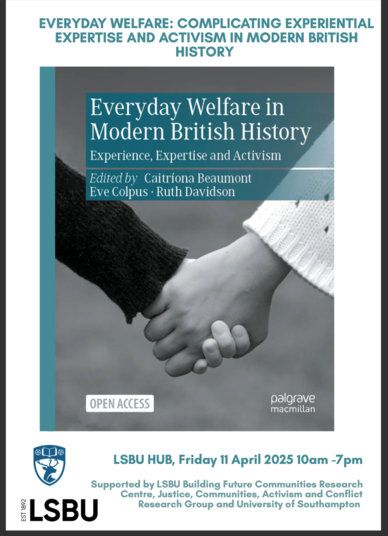 Activism and Conflict Research Group (JCAC), and the University of Southampton, celebrated the publication of a new open access edited collection,
 1 May 2025innovATe 2025 London - Showcasing the future of Assistive Technology! |
|---|
BFC recently hosted Habitat Learn's innovATe 2025 London Roadshow. This accessible event focussed on strategies and resources to improve the disabled student experience, relevant to all students and staff working with students. Exhibition rooms and breakout rooms enabled suppliers to demonstrate software and hardware to promote inclusive practice. |
Following the innovATe Roadshow, LSBU also presented i We also celebrated the publication of |
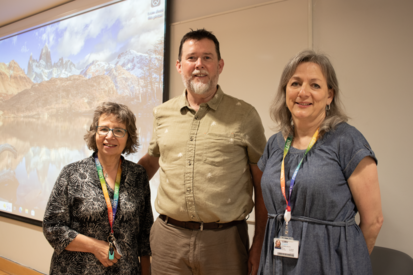 ts Third Annual Disability Lecture. Dr John Harding, Head of the Accessibility & Disability Resource Centre, University of Cambridge, gave an inspiring lecture on: ‘From reasonable adjustments to inclusive practice: the undiscovered country? What is the future for university disability services?’ A recording of this lecture is available
Windrush Community ChampionsHosted by London South Bank University |
|---|
On Thursday, 6th February 2025, during Race Equality Week, London South Bank University hosted a virtual and in-person event organised by the Windrush Justice Clinic (WJC). The meeting focused on the lived experiences of Windrush survivors, provided a platform for their voices to be heard, and discussed approaches aimed at addressing the ongoing challenges faced by this community. The Windrush Compensation Scheme was established for people to claim for losses suffered as a result of the Windrush Scandal. However, the Scheme has been criticised as slow, complex, and unnecessarily onerous by various bodies including the Home Affairs Select Committee, Human Rights Watch, Justice and most recently Age UK. A report published on 7 November 2024 on the Scheme, The Windrush Justice Clinic Policy Briefing: Time for Justice, written by Samantha Hunt and BFC's Catherine Evans, analysed governmental and non-governmental reports on the Windrush Compensation Scheme. All the evidence describes a scheme which was poorly designed from the outset and has failed to secure justice to the victims. The Windrush Justice Clinic provides free legal representation to help victims of the Scandal secure adequate compensation from the Home Office, and policy work to ensure lessons are learnt from the Scandal. The Clinic is a collaboration between Community Organisations, Law Centres and Universities. LSBU’s role in the partnership is to provide advice on compensation and lead WJC’s research working group. The event was hosted by Glenda Caesar, Windrush survivor and advocate, and heard first-hand accounts from those most affected by the Scandal, outlining their difficulties in claiming compensation without legal support and the trauma caused by dealing with the Home Office, the key perpetrator of the Scandal. Seema Malhotra MP, the Parliamentary Under Secretary of State (Minister for Migration and Citizenship) was present. The Minister listened carefully to the survivors’ testimonies and promised change. Attendees included representatives from Action for Race Equality and Black Lives Matter. |
| Newstalk (Ireland) Talking History Podcast 40 Years On: Contraceptives Legalised in Ireland |
|---|
| This episode of Newstalk (Ireland) Talking History marks the 40th anniversary of the legalisation of the sale of contraceptives in Ireland. The episode reflects on the challenges faced by women and men in navigating religious doctrine and the law versus social justice and health care in twentieth-century Ireland. Our panel features: Dr Jennifer Redmond, Associate Professor in 20th Century Irish History, Maynooth University; Dr Mary McAuliffe, historian and Director of Gender Studies at UCD, specialising in Irish women's/gender history; Prof Caitríona Beaumont, Professor of Social History at London South Bank University, and Visiting Full Professor at the School of Social Policy, Social Work and Social Justice/Gender Studies at UCD; and Prof Lindsey Earner-Byrne, Professor of Contemporary Irish History, Trinity College Dublin. You can listen to the podcast here: 40 Years on: Contraceptives Legalised in Ireland |
| Women's Grassroots Activism |
|---|
This podcast series tells stories of women’s grassroots activism across the island of Ireland and in England from 1918 to the present. These stories highlight the diverse ways that members of the Irish Countrywomen’s Association (ICA), the Soroptimists International Great Britain and Ireland (SIGBI), the National Federation of Women’s Institutes (NFWI) and the Federation of Women’s Institutes of Northern Ireland (WINI) contributed to enhancing the lives of women and girls locally, nationally and globally. The podcast series is funded by the United Kingdom Research Innovation (UKRI) Arts and Humanities Research Council (AHRC) as part of the grant awarded for Agency and Advocacy: Locating Women’s Grassroots Activism in England and Ireland, 1918 to the present (Project Reference: AH/X008606/1, August 2023 -January 2025). The research team is made up of Principal Investigator Professor Caitríona Beaumont (London South Bank University and Visiting Full Professor at University College Dublin), Co-Investigator is Dr Anne Logan (University of Kent), Dr Ruth Davidson (Institute of Historical Research, University of London), Dr Anna Muggeridge (University of Worcester) and Rachel Collett (University of Liverpool). The podcast series is supported by the participating women’s organisations the ICA, SIGBI, NFWI and WINI. You can listen to the podcast series here: Women's Grassroots Activism |
| Boarding on Insanity: London Film Premiere and Director's Q&A |
|---|
On 1st March, Pippa Palmer, LSBU Research Strategist and BFC's Thriving Homes strand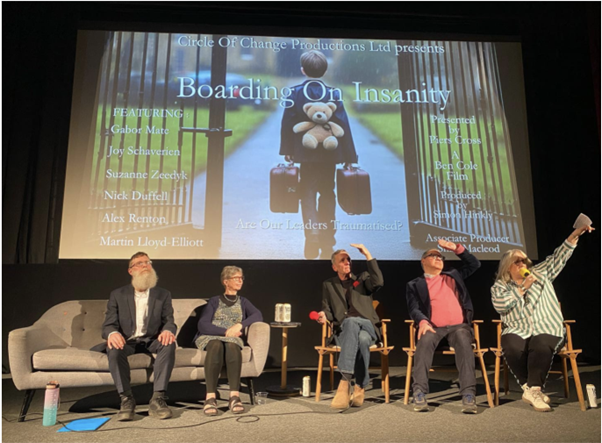 lead, moderated a Director’s Q&A at the London premiere of Boarding on Insanity at the Rio Cinema in Dalston. This documentary film, written by boarding school survivor and campaigner Piers Cross, examines how abandonment, institutionalization and a culture of abuse permanently affect the child’s psyche (Boarding School Syndrome), and the social and political impacts when a disproportionate number of those in power are deeply wounded ‘ex-boarders’. lead, moderated a Director’s Q&A at the London premiere of Boarding on Insanity at the Rio Cinema in Dalston. This documentary film, written by boarding school survivor and campaigner Piers Cross, examines how abandonment, institutionalization and a culture of abuse permanently affect the child’s psyche (Boarding School Syndrome), and the social and political impacts when a disproportionate number of those in power are deeply wounded ‘ex-boarders’.The sell-out event touched a nerve, with former boarders and their families queuing round the block for tickets. A screening with an academic panel hosted by the Building Future Communities Research Centre is in the pipeline. |
| Justice for LB Sir Robert Buckland Review of Autism and Employment Embracing Autism and Neurodiversity in the Workplace Borough of Sanctuary Scheme |
|---|
| In the first two months of operation during the Summer of 2024, BFC held various large-scale events with citizen groups focusing on the priorities of social justice and inclusive practice. These were designed to be a catalyst for subsequent research and enterprise work coalescing around themes of interest to the BFC research centre. Building on LSBU’s Annual Disability Lecture, Justice for LB was our first event which included a relaxed inclusive conference and a visit to the West End to see the play Laughing Boy written by our Writer in Residence, Stephen Unwin. We considered ways in which we could contribute to the work of The Baroness Hollins Review of the  incarceration of autistic people with additional learning disabilities in long term assessment and treatment centres. Speakers included Stephen Unwin, Professor Sara Ryan who is the mother of Connor Sparrowhawk whose death inspired Stephen’s play, Professor Rosemarie Garland Thompson from the USA, Professor Eddie Chaplin from LSBU and Peter Cronin from The Foundation for People with Learning Disabilities. A group from CADS had the opportunity to meet with Baroness Hollins to discuss further work which builds on a body of research CADS has undertaken for NHS England and The John and Lorna Wing Foundation. We have since won additional funding to focus on transition to residential care of older autistic adults. incarceration of autistic people with additional learning disabilities in long term assessment and treatment centres. Speakers included Stephen Unwin, Professor Sara Ryan who is the mother of Connor Sparrowhawk whose death inspired Stephen’s play, Professor Rosemarie Garland Thompson from the USA, Professor Eddie Chaplin from LSBU and Peter Cronin from The Foundation for People with Learning Disabilities. A group from CADS had the opportunity to meet with Baroness Hollins to discuss further work which builds on a body of research CADS has undertaken for NHS England and The John and Lorna Wing Foundation. We have since won additional funding to focus on transition to residential care of older autistic adults.LSBU highlights teen's death in second Annual Disability Lecture |
| The second event focused on the Buckland Review of Autism Employment. Speakers from parliament were due to contribute, including Sir Robert Buckland and Barry Sheerman MP. (Barry is founder of the Westminster Autism Commission which has close links with CADS.) Because the general election was called, we had to redesign the conference which was still extraordinarily successful and included employers, representatives from charities and neurodivergent job seekers. The conference built on a body of research undertaken at LSBU, for funders including The Cabinet Office and Research Autism, around employment and disability, and laid foundations for the further development of our already established research-informed CPD offer. A follow-up event was subsequently organised for 26th September 2024, in collaboration with Microlink PLC, and attracted over 500 participants. Exploring the Buckland Autism Employment Review with Professor Nicola Martin |
Embracing Autism and Neurodiversity in the Workplace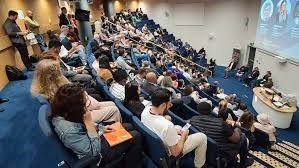 The Buckland Review distilled down to 19 action points, the operative word being action. As we know, the Disability Confident ethos is all about ‘a little less conversation, a little more action.’ For our third event we invited Sir Robert Buckland, Professor Nicola Martin from LSBU , and David Forbes-Nixon of DFN Foundation to share how their work supports neurodiverse and autistic people. We looked at the ‘why’ and the ‘how’ to be much more inclusive employers. David talked about the amazing work the foundation does with supported internships, and Nicola spoke about supporting at university and into work. |
The fourth event was around the Borough of Sanctuary scheme and involved 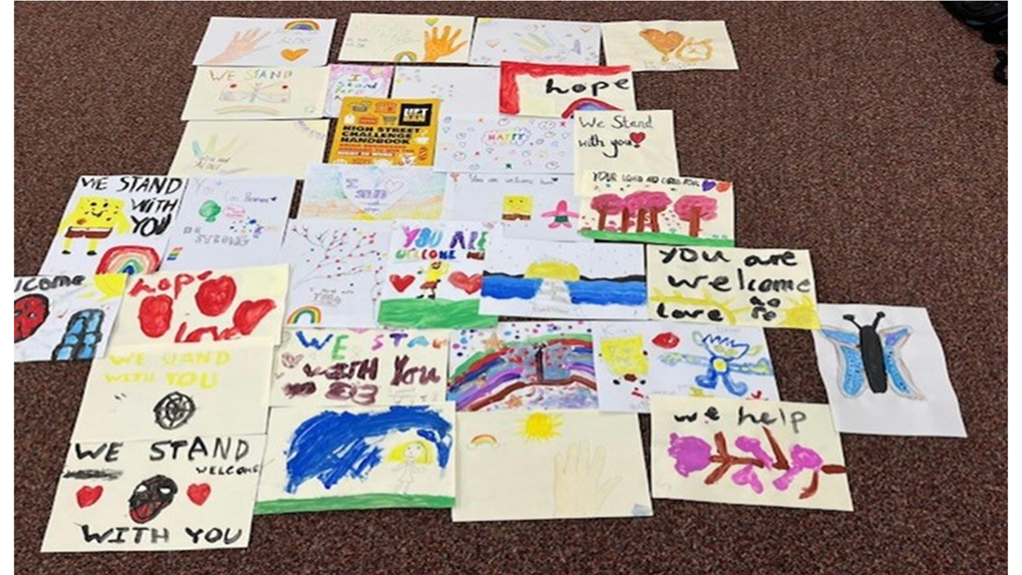 various local authority and community groups including Southwark Day Centre for Asylum Seekers with which we have close links. We were recently commissioned to evaluate the City of Sanctuary Schools of Sanctuary scheme and plan to build on this area of work. various local authority and community groups including Southwark Day Centre for Asylum Seekers with which we have close links. We were recently commissioned to evaluate the City of Sanctuary Schools of Sanctuary scheme and plan to build on this area of work. |