ADVANCED BUILDING SERVICES ENGINEERING MSc

Overview

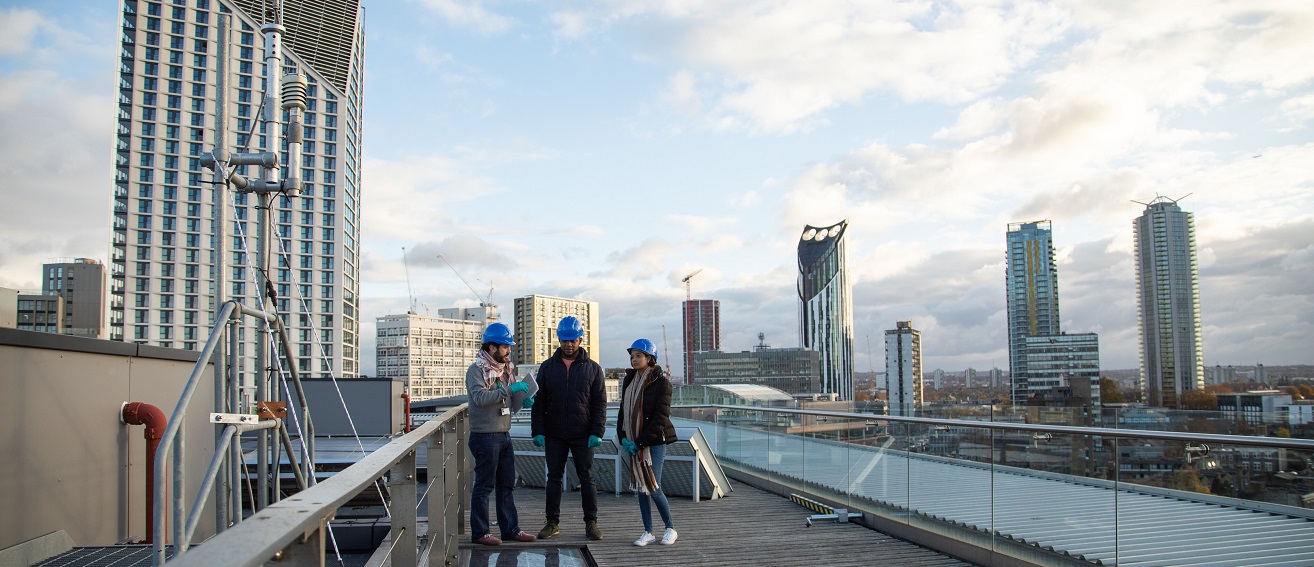
Beautiful architecture. Solid structure. What else do buildings need? Try living in one without any heating, cooling, electrical power, lighting, water or drainage. What would it be like to work in a tower without lifts? How would you manage without telephones, an IT system or an internet connection? All of these systems and many more are designed by building services engineers. They turn buildings from empty shells into spaces fit for people to use.

What could you achieve?

From the very start of a building's design, building services engineers are involved helping architects and other members of the design team to get the size, shape and configuration of the building right, as well as determining strategies for designing energy efficient buildings, making them sustainable in the long term.

Buildings are responsible for a large chunk of carbon emissions, so this work makes a critical contribution to reducing a building's impact on climate change.

Of all the disciplines working in the built environment today, the building services engineer has the broadest reach and the deepest impact, affecting virtually every aspect of building design.

This course provides a broad basis of the technological areas of building services and energy engineering, with particular emphasis on the interaction between the built and natural environments, modern industry, and the analysis of developing technologies.

Professional and industry experienced, many of our teaching staff are recognised by the industry as Chartered Engineers. They have the knowledge, skills and experience to help you hit the ground running in your future careers. Browse our staff profiles to learn more about our teaching staff, including teaching background, research interests and academic areas of expertise.

Why study Building Services Engineering at LSBU?

Heritage: we have been running courses for the Building Services Engineering industry since 1947.
Professional accreditation: accredited by Chartered Institution of Building Services Engineers (CIBSE) and the Energy Institute.
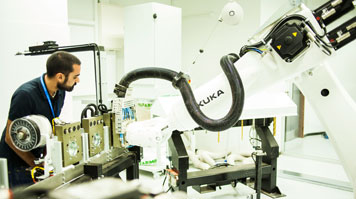
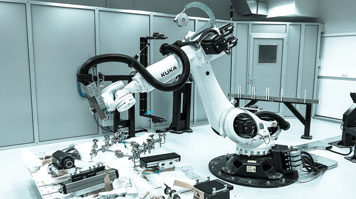
We have one of the best laboratory–workshop complexes in London. Find out more information about our facilities.
Mode Duration Start date Application code Application method
ModeFull-time Duration12 months Start dateSeptember Application code6185 Application method Direct to LSBU
ModePart-time Duration24 months Start dateSeptember Application code6186 Application method Direct to LSBU
ModeFull-time Duration12 months Start dateJanuary Application code6187 Application method Direct to LSBU
ModePart-time Duration24 months Start dateJanuary Application code6188 Application method Direct to LSBU

Watch our video to see how you can make yourself at home studying at LSBU.

Location

London South Bank University student union is located at 103 Borough Rd, London SE1 0AA.

If you are visiting our Southwark Campus, you may wish to use our downloadable campus map (PNG File 466 KB). For information on accessibility, see our DisabledGo access guides. See our location page for more details.

Entry Level Requirements

Need further information? Call us on 0800 923 8888 to discuss entry requirements.

To be considered for entry, applicants will normally be required to hold one of the following qualifications:

  • A bachelor’s degree in engineering (minimum BEng (Hons) Lower Second Class (2:2) or an equivalent qualification in an appropriate engineering or closely related discipline; or
  • Appropriate and relevant professional engineering experience deemed equivalent to an undergraduate degree.

Applicants without a formal undergraduate engineering qualification may be considered on an individual basis. In such cases, prior learning and professional experience will be assessed and mapped against the programme learning outcomes to ensure that equivalent Level 6 knowledge and skills have been achieved.

Applicants whose first language is not English will be required to demonstrate proficiency in English with an IELTS score of 6.5 overall (or an equivalent recognised English language qualification).

Missing English and Maths qualifications?

If you do not have the required English and Maths qualifications needed to satisfy the entry requirements for this programme, we have courses available at our partner College that you can take to upskill in these areas. Find out more at South Bank College.

United Kingdom

£11500

Tuition fees for home students

International

£16000

Tuition fees for international students

Tuition fees are subject to annual inflationary increases. Find out more about tuition fees for Undergraduate or Postgraduate courses.

  • Part-time

    part-time

    MSc Building Services Engineering (PT) (JAN) - Year 1

    The fee shown is for entry 2026/27
    UK fee: £5111.11 International fee: £7111.11
    AOS/LSBU code: 5386 Session code: 1PS00
    Total course fee:

    * The full amount is subject to fee increases, the total shown below is based on current fees.

    UK: £11500
    International: £16000

    MSc Building Services Engineering (PT) - Year 1

    The fee shown is for entry 2026/27
    UK fee: £5111.11 International fee: £7111.11
    AOS/LSBU code: 5224 Session code: 1PS00
    Total course fee:

    * The full amount is subject to fee increases, the total shown below is based on current fees.

    UK: £11500
    International: £16000

    MSc Building Services Engineering (PT) (JAN) - Year 2

    The fee shown is for entry 2026/27
    UK fee: £6388.89 International fee: £8888.89
    AOS/LSBU code: 5386 Session code: 2PS00
    Total course fee:

    * The full amount is subject to fee increases, the total shown below is based on current fees.

    UK: £11500
    International: £16000

    MSc Building Services Engineering (PT) - Year 2

    The fee shown is for entry 2026/27
    UK fee: £6388.89 International fee: £8888.89
    AOS/LSBU code: 5224 Session code: 2PS00
    Total course fee:

    * The full amount is subject to fee increases, the total shown below is based on current fees.

    UK: £11500
    International: £16000
  • Full-time

    full-time

    MSc Building Services Engineering (FT) (JAN) - Year 1

    The fee shown is for entry 2026/27
    UK fee: £11500 International fee: £16000
    AOS/LSBU code: 5223 Session code: 1FS00

    MSc Building Services Engineering (FT) - Year 1

    The fee shown is for entry 2026/27
    UK fee: £11500 International fee: £16000
    AOS/LSBU code: 5222 Session code: 1FS00

For more information, including how and when to pay, see our fees and funding section for postgraduate students.

See our Tuition Fees Regulations (PDF File 391 KB) and Refund Policy (PDF File 775 KB).

Possible fee changes

The University reserves the right to increase its fees in line with changes to legislation, regulation and any government guidance or decisions.

The fees for international students are reviewed annually and the University reserves the right to increase the tuition fees to reflect increased costs of delivery and to maintain an a high-quality student experience. This increase would be no more than Consumer Prices Index (CPI) increases plus 5%

Postgraduate loan (PGL) for Masters study

If you are starting a Masters course, studying either full- or part-time, you may be entitled to apply for a postgraduate study loan. Find out more at our postgraduate fees and funding section.

Scholarships

We offer several types of fee reduction through our scholarships and bursaries. Find the full list and other useful information on funding your studies on the scholarships and fee discounts page.

Fee status

Please check your fee status and whether you are considered a Home, EU or International student for fee-paying purposes and for our regulatory returns, by reading the UKCISA regulations.

Stuart Johnson scholarship

We are able to offer a subject scholarship from the generous donations of alumnus Stuart Johnson. Read more about the Stuart Johnson scholarship.

A student can change to writing up status for the purpose of a lower fee when the examination arrangements have been submitted and approved. Examination arrangements are submitted 3 months prior to submission of the thesis for examination. A student only has one year of writing up at the reduced fee that covers submission, viva, and minor corrections. The writing up fee 25/26 is £1,246

International students

International applicants can apply directly to LSBU and should consult our international how to apply guide for further information on the application process and key dates.

Course delivery modes and application methods

Mode Duration Start date Application code Application method
Mode Full-time Duration 12 months Start date September Application code 6185 Application method Direct to LSBU
Mode Part-time Duration 24 months Start date September Application code 6186 Application method Direct to LSBU
Mode Full-time Duration 12 months Start date January Application code 6187 Application method Direct to LSBU
Mode Part-time Duration 24 months Start date January Application code 6188 Application method Direct to LSBU

Postgraduate students and research students should apply through our dedicated application system. Full details of how to do this are supplied on our How to apply section for postgraduate students and our How to apply section for research students.

See our admissions policy (PDF File 1,520 KB) and complaints policy (PDF File 516 KB).

Accommodation

Students should apply for accommodation at London South Bank University (LSBU) as soon as possible, once we have made an offer of a place on one of our academic courses. Read more about applying for accommodation at LSBU.

Finance

It's a good idea to think about how you'll pay university tuition and maintenance costs while you're still applying for a place to study. Remember – you don't need to wait for a confirmed place on a course to start applying for student finance. Read how to pay your fees as a postgraduate student.

Prepare to start

We help our students prepare for university even before the semester starts. To find out when you should apply for your LSBU accommodation or student finance read the How to apply tab for this course.

Enrolment

Before you start your course we’ll send you information on what you’ll need to do before you arrive and during your first few days on campus. You can read about the process on our Enrolment pages.

The course provides a practitioner perspective to analyse building energy requirements in terms of the external environment and internal space, and the effect on energy resources. We consider the principles of associated building engineering systems to understand control, simulation and modelling techniques.

Course structure: Full-time

  • Four core compulsory modules (20 credits × 4) = 80 credits
  • Two optional modules (20 credits × 2) = 40 credits
  • MSc Project (60 credits)

Course structure: Part-time

Year 1

  • Four core compulsory modules (20 credits × 4) = 80 credits
    • Typically two modules in Semester 1 and two modules in Semester 2

Year 2

  • Two optional modules (20 credits × 2) = 40 credits
    • One in Semester 1 and one in Semester 2
  • MSc Project (60 credits), delivered across both semesters

Total: 180 credits

Compulsory Modules

  • Energy Resources and Use Analysis
    By developing your ability to critically assesses conventional and renewable energy systems within global sustainability frameworks this module makes you work ready in the field. Over the course of the module, you will learn the latest approaches to evaluate thermodynamic performance, economic viability and environmental implications that inform strategic engineering decisions. There is an emphasis on energy optimisation, system resilience and long-term decarbonisation pathways that support an understanding of the latest legislation from across the world on the topic of energy and analysis.
  • Thermal and Environmental Control in Buildings
    Advance your expertise in the design and optimisation of mechanical building services systems. Analyse heating, ventilation and air conditioning processes using first-principles engineering approaches supported by digital tools. Emphasis is placed on energy efficiency, system integration, occupant comfort and operational reliability. Develop the capability to evaluate, size and optimise environmental control systems aligned with sustainability objectives and net-zero performance targets in modern building environments.
  • Electrical Systems and Power Electronics
    The key aspects of this module are to develop your understanding of advanced electrical circuits, power generation, electrical installation, distribution systems and power electronics. We take you further to enable you to complete a full evaluation of these electrical systems. You will learn to evaluate modern power infrastructure, including cable and plant sizing within building and industrial environments. Through an emphasis on structured system analysis, integration and performance optimisation within contemporary electrical engineering contexts by the end of the module you will be able to undertake complex analysis and specify detailed system installations.
  • Advanced Thermofluids and Energy Analysis
    A key outcome of this module is the ability to analyse thermodynamic and fluid dynamic processes within modern energy and high-performance mechanical systems. You will gain experience in evaluating heat transfer, combustion and renewable technologies using industry relevant analytical and computational approaches. During the module emphasis is placed on system efficiency, environmental performance and optimisation of power-producing devices, this enables you to strengthen your ability to assess and enhance complex thermal systems within advanced engineering environments.
  • MSc Project
    The MSc Project is a substantial independent investigation that allows you to explore a complex engineering challenge in depth. Working with academic supervision, you will integrate knowledge from across your programme to deliver a rigorous piece of research, design or technical development. The project strengthens analytical capability, independent thinking and professional communication skills, preparing you for advanced industry roles or doctoral study.


Optional Modules: Semester 1

  • Built Environment Design
    Key to this module is an approach to develop your understanding of advanced structural design capability within contemporary civil engineering practice. You will evaluate structural systems using performance-based approaches and professional standards, integrating safety, serviceability and long-term resilience to standards set by industry leaders. The module places emphasis on whole-life performance, embodied carbon and climate-responsive design in response to evolving sustainability requirements. By the end of the module, you will developed competencies in applied design work aligned with industry practice. This will strengthen your ability to deliver technically robust and environmentally responsible infrastructure solutions.
  • Advanced Environmental and Water Engineering
    This module builds on previous learning around environmental and water engineering to give you a deeper understanding of fluid flow and transport processes in natural and engineered systems applicable to the workplace. You will analyse groundwater behaviour, contaminant transport, and environmental protection strategies using contemporary analytical and computational approaches. By the end of the module, you will have improved your ability to evaluate and design resilient systems that integrate technical performance, regulatory compliance, and environmental stewardship.
  • Integrated Structural Design
    Upon completion of this module, you will have developed an understanding to assess and design masonry and timber structural systems within contemporary engineering practice. The module is designed to enable you to critically assess mechanical behaviour, stability and durability while applying professional design standards and performance-based methodologies to a variety of structures. Key is developing skills required in the workplace and so emphasis is placed on whole-life performance, material efficiency and climate-responsive structural solutions. The module will enable you to strengthen your ability to deliver technically robust and sustainable designs using structured analytical approaches and professional engineering judgement.
  • Advanced Materials Engineering
    This module is informed by contemporary research and innovation and enables you to examine advanced materials engineering at the forefront of high-performance technologies. You will develop skills that develop your ability to critically evaluate how materials are engineered and characterised. This leads to your ability to optimise and deliver the required mechanical, thermal, electrical and environmental performance. During the module we explore how advanced materials underpin next-generation energy systems, sustainable technologies and complex engineering applications. By the end of the module, you will have developed expertise to make strategic material selection and optimisation decisions that enhance system efficiency, reliability and long-term sustainability.
  • Advanced Instrumentation and Design
    The module enables you will develop understanding of techniques in programmable data acquisition, virtual instrumentation, embedded system design and digital control. By using industry-standard development environments a focus on the application of current hardware and software tools to design and prototype complex instrumentation systems is embedded. We use laboratory experiments and project-based assignments to support learning around system integration and performance evaluation. Emphasis is placed on structured design, implementation and validation within advanced instrumentation environments that ensure you are ready to tackle problems in the workplace.
  • Design-Led Engineering Analysis
    This module focuses advancing your capability to deliver highly innovative engineering solutions and high-performance engineering solutions through systems-based design. The module integrates analytical modelling, simulation tools and performance evaluation to improve your ability to deliver technically rigorous decisions across mechanical and multidisciplinary systems. We emphasise optimisation, manufacturability and evidence-based design validation. By using collaborative project work the module will strengthen your ability to translate complex engineering challenges into robust, efficient and commercially viable mechanical solutions.
  • Robotics, Machine Learning and AI
    This module delivers training that will enable you to develop advanced understanding of robotics, machine learning and artificial intelligence. Key aspects of this broad portfolio include, integrating perception, control, optimisation and intelligent decision-making. During the module you will explore mathematical and computational foundations including kinematics and dynamics and motion planning. We cement this classroom learning with supervised and unsupervised laboratory practical work. This practical work involves algorithm development and system simulation using industry-standard tools. By the end of the module, you will have a keen understanding of how to complete performance evaluation and system integration within automated engineering environments.

Optional Modules: Semester 2

  • Engineering Dynamics and Vibration
    This module will enable you to develop advanced understanding of structural dynamics and vibration behaviour in engineered systems. This understanding will be delivered through training in contemporary approaches to analytical and modelling. This will enable you to examine free and forced vibration of single and multi-degree-of-freedom systems, evaluating natural frequency, damping and mode shapes. Emphasis is placed on structural response to dynamic and seismic loading, including performance under transient conditions. At the end of the module, you will have applied structured analysis to real design scenarios and strengthen your ability to predict, assess and design for dynamic effects in complex structural systems.
  • Advanced Solid Mechanics and FEA
    This module is focused on developing the tools required to examine solid mechanics through rigorous analytical and computational modelling. This will enable you to evaluate structural behaviour under complex loading using classical theory and Finite Element Analysis (FEA). The module emphases the critical path that is placed on systematic problem-solving, performance optimisation and modelling integrity in advanced mechanical systems. Upon completion of the module, you will have developed the expertise required to integrate simulation into high-level design processes, ensuring structural efficiency and reliability in demanding engineering applications.
  • Advanced Geotechnical Engineering
    Over the course of this module, you will develop an enhanced capability to analysing soil behaviour and ground–structure interaction under complex loading conditions. You will apply analytical and computational modelling techniques to evaluate stability, settlement and foundation performance. There is an emphasis on critical evaluation of modelling assumptions, safety considerations and long-term infrastructure resilience to prepare you to implement the content of the module in a work environment. When you have completed the module, you will have strengthened your ability to address challenging geotechnical problems with professional rigour and technical judgement.
  • Highway and Railway Engineering
    During this module you will be introduced to industry relevant tools and approaches that will enable you to critically evaluate the planning, design and long-term performance of transport infrastructure systems. There is a focus on developing understanding around geometric and structural design, operational efficiency and asset management strategies within sustainable transport frameworks. The key focus of the module is to develop core understanding around safety, resilience and lifecycle performance of transport networks. When you have completed the module you will have a system-level understanding required to deliver robust and future-ready civil infrastructure solutions.
  • Signal Processing and Communications Systems
    In this module you will develop a high level of capability in digital signal processing and communication system analysis. This will be achieved using methods of robust sampling, filtering, spectral methods and link performance. We also introduce methods to analyse modulation and noise of the signal. A range of communication channels, optical and microwave, are considered to link performance through simulation and optimisation exercises using MATLAB/Python. When you have completed the module, you will have expanded your ability to analyse sensing, monitoring and data systems within complex engineering environments.
  • Modelling and Computer Simulation
    This module is designed to develop high-level competence in formulating and evaluating mathematical models of complex chemical and process systems. You will apply industry standard computational tools to simulate system behaviour, optimise performance and support evidence-based engineering decisions across a variety of chemical processes. The module develops an understanding of critical assessment of modelling assumptions to understand how the prediction can be implemented in a reliable way. You will build a depth of analytical understanding required to model industrial-scale processes with professional rigour.
  • Advanced Reaction Engineering
    The focus of this module to further your capability in analysing and designing catalytic and non-catalytic reactor systems within complex industrial contexts. You will learn how to critically evaluate reaction kinetics, reactor performance and safety considerations using structured analytical approaches. The module places emphasis on translating theoretical principles into scalable and optimised reactor design strategies. By the end of the module, you have developed new skills that strengthen your ability to balance efficiency, environmental responsibility and operational reliability in advanced process systems.

Students typically take one optional module per semester. Optional modules are subject to scheduling considerations.

Careers

Employability Service

At LSBU, we want to set you up for a successful career. During your studies – and for two years after you graduate – you’ll have access to our Employability Service, which includes:

  • Free employability workshop and events for student all year round, more details can be found on our event section.
  • Online board where you can see a wide range of placements: part-time, full-time or voluntary. You can also drop in to see our Job Shop advisers, who are always available to help you take the next step in your search.
  • LSBU Careers Hub offering group workshops on CVs, interview techniques and support, guidance on future careers, as well as loads of career resources, connecting you with employers, exciting events, 1-1 support and relevant workshops.

Our Student Enterprise team can also help you start your own business and develop valuable entrepreneurial skills.

Employment prospects are excellent. Construction and engineering activity is expected to accelerate in the UK, Europe and worldwide over the next 20 years and demand for building services engineers continues to outstrip supply.

Recent guest lecturers

  • Dr Guy Hundy, President, Institute of Refrigeration
  • David Hughes, President, CIBSE
  • Professor Martin Fry, Energy Consultant
  • Jonathan Evans, Norton Rose

Expertise

The course is based in what was formerly the National College for Heating Ventilation and Refrigeration Engineering as well as Centre for Energy Studies, and maintains extremely strong links with all areas of the associated industries. Many of the leaders in energy and building services engineering fields are former LSBU students, lending much support in guidance and industrial collaboration, placement and employment.

Accreditation

This course is accredited by the Chartered Institution of Building Services Engineers (CIBSE) and the Energy Institute as meeting the academic requirements to become a Chartered Engineer (with a suitable first degree). The course is accredited on behalf of the Engineering Council.

Chartered Institute of Building Services Engineers logo
The Chartered Institution of Building Services Engineers (CIBSE) is the standard setter and authority on building services engineering in the UK and overseas. It speaks for the profession and supports career development.
Energy Institute logo
The Energy Institute is the professional members' body for the energy industry, delivering good practice and professionalism across the sector. Its purpose is to develop and disseminate knowledge, skills and good practice towards a safer, more secure and sustainable energy system.
The Engineering Council
The Engineering Council is the UK regulatory body for the engineering profession. It sets and maintains the internationally recognised standards of professional competence and ethics that govern the award and retention of Engineering titles.

Teaching and Assessment

Conducted through coursework and applied in-class evaluation. Methods include design assignments, analytical and computational projects, technical reports, in-class tests, presentations and professional discussions. Emphasis is placed on critical analysis, practical problem-solving and professional engineering judgement. The MSc Project is assessed through a dissertation and formal presentation and viva.

Register your interest

Contact information

Course Enquiries - UK

Tel: 0207 815 7500

International team enquiry

Tel: +44 (0) 20 7815 6189