Book an Open DayGet info and updates

icon_cup_white.svg

Our academics are dedicated to your success: 90% of students highly rate the teaching on this course (NSS 2025).

icon_rocket_red.svg

From joining a big tech firm to a smaller enterprise or launching your own business, we’ll help you find your version of success. We also offer a work-placement year option.

icon_people_red.svg

Get hands-on experience with industry-standard software, operating systems and high performance computing labs and Raspberry Pi devices. We have cutting-edge technology in deep learning, computer vision, natural language processing and Python for AI and visualisation.

Overview

Step into the future with the AI skills the world needs most

This specialist AI pathway of our BSc (Hons) Computer Science programme will give you the skills and confidence to thrive in Artificial Intelligence. AI is one of the most exciting areas of technology today, from powering self-driving cars and personalised healthcare to creating smarter apps and entertainment. You’ll learn how AI is used in industries that are shaping the future, from big data and analytics to cutting-edge technologies, and graduate with the expertise employers are looking for.

Meet the needs of the ever-growing tech market and become the kind of Computer Scientist employers are looking for. Study a curriculum that is always evolving, changing and adapting to keep up with advances in the industry, and build the advanced skills and practical, real-world experience employers demand.

Discover real-world learning with industry-standard tools in high-performance computer labs, equipped with Intel Core i7 and i9 machines, NVIDIA GPUs and 16GB-32GB RAM. Our facilities will help you develop advanced AI skills, with a strong emphasis on Python programme. You’ll gain expertise in deep learning, computer vision, natural language processing and python for AI and visualisation. See the full list of facilities and software.

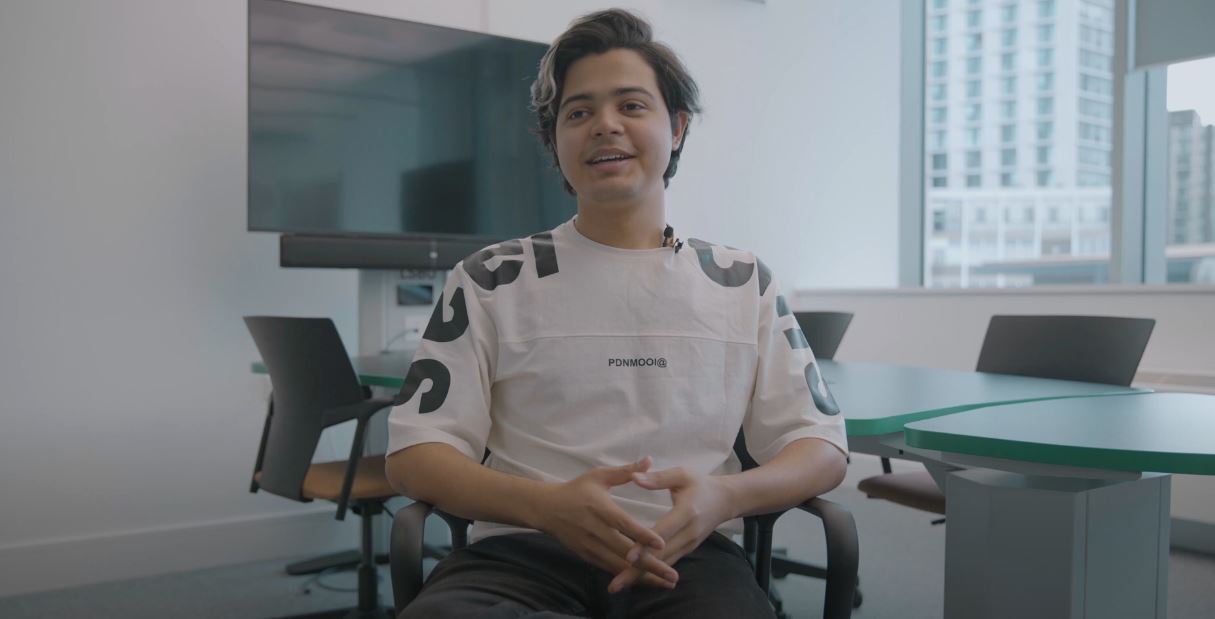
Meet Neyamut - Computer Science student

You will be taught by an award-winning academic team recognised for teaching excellence and innovation. Our expert academics use cutting-edge technology and collaborative approaches to drive the future of education. When you’re not in the classroom, you’ll get the chance to take part in a range of fun extracurriculars like specialist bootcamps, tech meet ups, national conferences and networking events, just some of the ways we help you start applying your skills to the working world.

You’ll get invaluable insight and support from our lecturers and staff, as they get to know you and your peers on a personal level, and helping you all achieve your goals and ambitions, all while setting you up for engaging and lucrative careers that can take you anywhere in the world. You have the option of undertaking a work placement  year in industry, and after graduating,  our students have gone on to work with the likes of F5, Framatome, JP Morgan and the NHS, taking on roles such as Computer Programmer, IT Consultants, Web Developers and App Designers.

Our students have even go on to start their own businesses, with Reward Gateway and Silicone Rhino to name a few. You don’t have to follow exactly in their footsteps though, as an LSBU Computer Science degree could be a stepping stone to almost any industry in the world.

Our Central London location puts the whole world on your doorstep, giving you access to placements, networking events and future career opportunities. As part of their degree course, past students have also helped design a chatbot for Southwark Council’s website and built an automated billing platform for RICS, while also benefiting from networking events and conferences all in the heart of London’s tech hub.

Is this course right for me?

If you’ve got the vision to see how advancements in tech can improve the world around you then this course is for you. If you’re ready to harness your entrepreneurial spirit, bringing your intellect and your innovation to the world, then this course is for you. If you’re ready to get stuck-in and build a community that lifts each other up, opening the tech industry to anyone from any background, then this is the course for you.

Above all though, if you’re hungry to create your own version of success then LSBU is right for you. Because the making of you doesn’t begin and end with just your degree, everything that’s brought you here today is part of your story; your experiences, the life you’ve lived, the skills you’ve gained and the goals you’re chasing.

Not only do we see this, but we value that in you. We’re not in the business of forcing you into moulds, instead we’re here to help you break them. If you’re ready to embark on a journey of hard work, fulfilment and self-discovery, then Computer Science at LSBU is definitely right for you.

Does this sound like the right fit for you? Then read on to discover our course content.

Course Content

What will I learn?

You’ll develop a diverse range of AI skills on this course, each providing a unique set of skills and perspective on the world of Computer Science.

On this course, you’ll explore the foundations of Artificial Intelligence and Machine Learning, while gaining hands-on experience with the tools, programming languages and software used in industry today. You’ll learn how to design, test and develop AI systems, work with big data and analytics, and understand the challenges of security, ethics and social impact in a fast-changing field. Along the way, you’ll build the skills to research and predict future AI developments, solve real-world problems in collaboration with others, and communicate your ideas clearly. By the time you graduate, you’ll have the technical expertise, critical thinking and teamwork skills that employers are looking for in one of the world’s most exciting and in-demand areas of technology.

With so much guidance from academics who are just as passionate as you, you don’t have to have everything figured out when you join LSBU. Just bring your curiosity and a desire to get stuck in and we’ll help you build your skills and find your niche.

You can find a detailed look at each of the modules below.

This module will introduce you to the logical and discrete mathematical structures and models, which are commonly used in the field of Computer Science and which underpin any study of this discipline. The module will emphasise the formulation of problems into mathematical forms, the interpretation of solutions and the identification of problem characteristics to help suggest modelling approaches. Provisions will be made (typically one hour per week) to allow us to bring you, if necessary, to a level of confidence and expertise in those areas of essential basic mathematics that should have been covered at earlier levels. Assessment method: 100% coursework.

This module teaches the fundamentals of computer programming covering variables, datatypes, arrays, algorithms, conditional and iterative code and the use of functions. Students will learn to write simple programs making use of a contemporary programming language and development environment. Assessment method:  100% coursework.

The history of computing, the role and the science of algorithms, abstraction, the binary numbering system and its representations, Boolean logic and gates, fundamentals of computer hardware, building computer circuits, the von Neumann model, introduction to hardware, data, and software, the nature of data and its operation. Assessment method: 100% coursework. 

As a new entrant to the university, this module prepares you for developing an understanding of - and skills for - academic study and the world of work, and the professional and personal skills you'll need. You'll be introduced to all aspects of university study and being an IT professional, allowing your ideas to be explored and developed throughout your time at LSBU and beyond. The topics studied will be used to develop the skills that both a graduate and an IT professional will require, and will give you ample opportunities to develop your intellectual skills as well as your practical ones. In addition to these topics on professionalism, the module will introduce you to a range of topics relating to computer-based information systems, e-business and how business organisations work. The module is largely based on some existing model syllabi as devised by professional bodies such as the Association for Computing Machinery (ACM) and The Chartered Institute for IT (BCS), but this has been adapted for the particular needs of LSBU’s new entrants. Assessment method: 100% coursework. 

This module teaches the definition of data structures, attributes, arrays, records, linked lists, binary trees and hash tables, using the fundamental elements of programming languages to construct them (for example using pointers). Also, the derivation of algorithms, problem solving techniques, sequences, selections, and repetitions, sorting and searching. The relationship between abstract data types and object-oriented classes is introduced and the ready-made implementation of common structures such as hash tables in software libraries is explored. Assessment method: 100% coursework.

This module provides the practical tools and techniques required to design, develop and evaluate effective interactive systems in an ever-changing digital age. User-centred design and usability are recognised as major contributing factors in the success of business and mass market information systems. The rise over the last 2 decades of the internet/web along with graphical user interfaces (GUIs), multimedia and ubiquitous mobile devices has led to an almost universal uptake of highly sophisticated interactive systems. Assessment method: 100% coursework. 

The Ethics, Policy and Regulation module explores the ethical, legal, and regulatory frameworks shaping the use and governance of technology in contemporary society. Students delve into critical issues such as privacy, data protection, intellectual property, and social responsibility within the context of emerging technologies. Through case studies and discussions, students examine the ethical implications of technological innovations and analyze the role of policy and regulation in addressing societal challenges. By engaging with current debates and exploring real-world examples, students develop a comprehensive understanding of the ethical considerations and regulatory complexities inherent in technology-driven environments. Assessment method: 100% coursework.

This module develops practical skills in Statistics and Modelling used in Artificial Intelligence/Data Engineering.  Having a fundamental understanding of statistics concepts this module builds on this knowledge to develop skills in Hypothesis testing. These skills are in demand from employers across a wide range of industries, where without hypothesis tests there is a strong risk of making bad decisions. Assessment method: 100% coursework.

Exploratory Data Analysis (EDA) offers a concise foundational principles and tools vital for data exploration. Through hands-on exercises, students develop proficiency typically in Python libraries for pre-processing, cleansing, and visualizing datasets. With a focus on real-world applications, learners gain insights into data patterns, trends, and anomalies, enhancing their ability to derive actionable insights. By course end, students are adept at employing tools for EDA, equipped to drive informed decision-making across a spectrum of industries.

This module covers all aspects of Software Engineering, the application of systematic, disciplined approaches to the development, testing, maintenance and ongoing development of software. It covers the fundamental requirements and established concepts necessary for effective software development projects and investigates diverse methodologies we seek to attain them. Assessment method: 100% coursework.

This module introduces Artificial Intelligence (AI) Modelling concepts and skills helping Data Scientists and Data Engineers to effectively identify opportunities to embed AI technologies in web and mobile applications. These skills are in demand from employers across a wide range of industries, utilising web/mobile applications. Assessment method: 100% coursework.

The visual analytics module provides you with a concrete knowledge of the main principles, approaches, tools, and skills in visual analytics for data-driven decision-making and creation of actionable insight in various business sectors. The focus of the practical aspect of this module is information dashboard design, development, and evaluation based on a real-world case study using Tableau Desktop Pro, Tableau Prep, and MS Power BI. Assessment method: 100% coursework.

Optional sandwich year

This module provides a broad introduction to the basic theory, concepts, and techniques of data mining, and its role in business and scientific research. It will cover the main topics in the area. The focus of the practical aspect of this module is to develop hands-on experience and skills in solving real-world data mining problems. SAS® Enterprise Miner and SAS® Enterprise Guide will be taught and used throughout module for practical data mining projects. Simple Python scripts for data manipulation will be discussed and used. Assessment method: 40% exam, 60% coursework.

The Data Scraping and Text Mining module for BSc (Hons) Computer Science (Data Engineering) level 6 provides a comprehensive introduction to extracting, processing, and analysing data from various online sources. Through practical exercises, students master techniques using Python libraries like BeautifulSoup and Scrapy for web scraping, and NLTK for text mining. Emphasizing real-world applications, learners delve into sentiment analysis, topic modelling, and information retrieval methods. By course completion, students adeptly harness Python tools to gather and analyse unstructured data, empowering them to uncover valuable insights from text-rich sources, crucial for informed decision-making in diverse fields.  Assessment method: 100% coursework.

This module covers the technologies and the algorithms required to develop and deploy virtual reality and augmented reality applications. The module will cover VR and AR hardware, stereoscopic vision, rendering, AR/VR software development, 3D user interfaces and presence and 360 video. Assessment methods: 60% coursework, 40% exam.

This module covers the history and contemporary development of artificial intelligence systems and looks forward to likely near-future developments. It will cover all the major techniques of problem description, knowledge representation and data searching that represent the current toolkit for developing intelligent applications. Assessment method: 40% exam, 60% coursework. 

The project contributes significantly towards the final degree. In the final year you spend about 2 days a week on your project. Future employers will probably ask you about your project and use performance in the project as one of the most reliable guides to your potential. Requests for references often ask about the project. As a final year level 6, 40 credit module for the Honours degree, the project allows you to demonstrate, through a practical application, the extent of theoretical knowledge gained in the first two years of study, practical skills acquired in the subsequent year of industrial or commercial training and further theoretical and practical skills acquired during the final year of study. The project is therefore a very important piece of work. The project is intended to demonstrate to the examiners your ability to undertake and complete, to a satisfactory standard, all the parts of a professional piece of work. Assessment method: 100% coursework.

Where will I learn?

Explore life at LSBU from anywhere - Take a virtual tour to explore our campus, discover key facilities and experience what student life is like.

Teaching and Assessment

How will I learn?

Practice makes perfect. So, you’ll be putting theory into application as much as possible. Whether that’s group projects, real-life cases or placements, it all comes back to LSBU helping you prepare for the working world.

You’ll learn through a mix of lectures, tutorials and hands-on computer lab sessions, working to understand the key concepts in real-life settings and developing your skills through discussion, problem-solving and practical activities, all in our industry-standard facilities.

As well as exploring the technical side of things, you’ll develop essential skills in communication, self-management and teamworking, sometimes even working with students from other courses. Peer-to-peer learning will play a big part in your journey as well, as we encourage second and third years to help first year students get to grips with more complex topics, giving you the opportunity to do the same when it comes your time to lead by example.

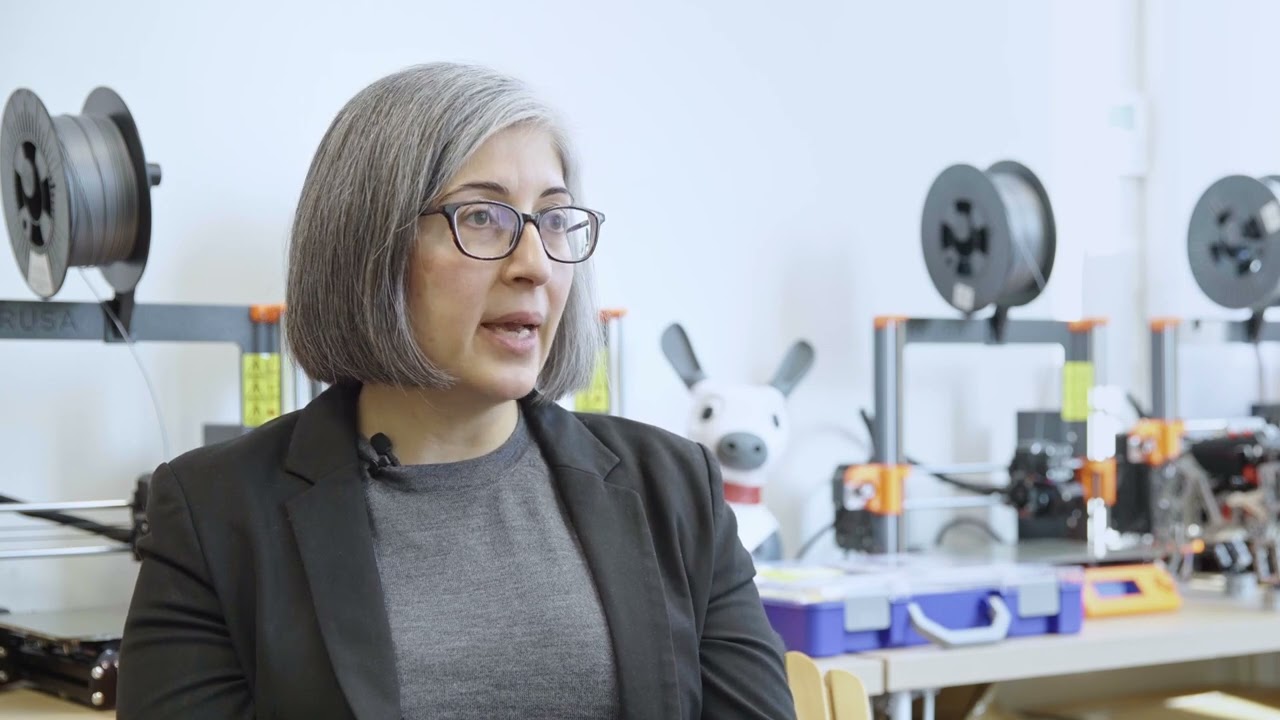
All of your lecturers are renowned computer scientists with a range of industry experience. Meet Dr. Safia Barikzai, who was recently named a Finalist in the 2025 Women in Tech Awards, below!

Careers

What’s in it for me?

This is your future. Your career. Your success. And we’re here for it.

Going to university might just be the biggest investment you ever make, but with us by your side you can turn a degree into a bright future, full of purpose, passion and career you can be proud of (which may be why our graduates earn the highest average salaries across London Modern universities).

With Computer Science at LSBU you get:

  • An optional placement year to gain real-world experience and add standout skills to your CV before you graduate
  • To utilise tools and technologies used in the industry like Python, Open CV, AWS and Kali Linux
  • Plenty of extracurricular activities like Hackathons, AI Boot Camps and Silent Film Processing
  • Connection to the computer science profession through our strong links with the Chartered Institute for IT
  • The chance to build a professional portfolio you can pitch to future employers

Recent graduates from the BSc (Hons) Computer Science programme have gone on to start tech careers at companies including:

  • Accenture
  • F5
  • Framatome
  • JP Morgan
  • NHS
  • PWC
  • Skanska

LSBU CareerSmart is your ultimate gateway to career success. Our innovative programme is designed to ensure you graduate with more than just a degree, providing the support you need to stand out in a competitive job market. We've got all the tools you need, including:

  • AI Powered Career Sets - Get instant personalised feedback on your CV and cover letter by submitting it via our AI powered career tool.
  • Gamification Interviews - Get ready to pass those interviews with unlimited training access to our gamification interviews and psychometric tests!
  • Personalised Career Development Dashboard - Keep up with your skills progression with free access to practical assessments, LinkedIn learning, mentoring, and industry-standard facilities.

We understand that you’re in the driver’s seat of your career, which is why we’re committed to matching your passion and energy every step of the way.

Find out more

Entry Level Requirements

  • 112 UCAS points.  Visit UCAS for guidance on the tariff.
  • GCSE Maths grade 4 (C) or equivalent.
  • If you do not meet the entry criteria above we also review any previous skills, knowledge or experience you have gained outside of your education and are happy to talk through any extenuating circumstances you feel relevant. You may also be interested in our Computer Science with Foundation Year BSc (Hons) programme.

Advanced entry

If you have already completed some studies at another university, we may be able to consider you for advanced entry. Please see our advanced entry page for more information.

Choose your country

  • Afghanistan
  • Albania
  • Algeria
  • Angola
  • Argentina
  • Australia
  • Austria
  • Azerbaijan
  • Bahrain
  • Bangladesh
  • Barbados
  • Belgium
  • Botswana
  • Brazil
  • British Council Women in STEM Scholarships
  • Bulgaria
  • Cambodia
  • Cameroon
  • Canada
  • Chile
  • China
  • Colombia
  • Croatia
  • Cyprus
  • Czech Republic
  • Denmark
  • Dominican Republic
  • Egypt
  • Estonia
  • Ethiopia
  • Finland
  • France
  • Gambia
  • Georgia
  • Germany
  • Ghana
  • Greece
  • Hungary
  • India
  • Indonesia
  • Iran
  • Iraq
  • Ireland
  • Italy
  • Jamaica
  • Japan
  • Jordan
  • Kazakhstan
  • Kenya
  • Kuwait
  • Latvia
  • Lebanon
  • Libya
  • Lithuania
  • Luxembourg
  • Malaysia
  • Malta
  • Mauritius
  • Mexico
  • Mongolia
  • Morocco
  • Myanmar
  • Nepal
  • Netherlands
  • New Zealand
  • Nigeria
  • Norway
  • Oman
  • Pakistan
  • Poland
  • Portugal
  • Qatar
  • Romania
  • Russian Federation
  • Saudi Arabia
  • Senegal
  • Serbia
  • Sierra Leone
  • Singapore
  • Slovakia
  • Slovenia
  • Somalia
  • South Africa
  • South Korea
  • Spain
  • Sri Lanka
  • Sweden
  • Switzerland
  • Thailand
  • Trinidad and Tobago
  • Tunisia
  • Turkiye
  • Uganda
  • Ukraine
  • United Arab Emirates
  • United States of America
  • Uzbekistan
  • Venezuela
  • Vietnam
  • Zambia
  • Zimbabwe

Need further information?

Call us on 0800 923 8888 to discuss entry requirements.

More contact info

Apply

Course delivery modes and application methods

Mode Duration Start date Application code Application method
Full-time 3 years September G411 UCAS
Sandwich 4 years September G411 UCAS

International (non Home) applicants should follow our international how to apply guide.

How to apply

International students

International applicants can apply directly to LSBU and should consult our international how to apply guide for further information on the application process and key dates.

Accommodation

Prepare to start

Applicant events
After you’ve received your offer we’ll send you emails about events we run to help you prepare for your course. You’ll also be invited to our Applicant Taster Day so keep your eyes peeled!
Enrolment
Before you start your course, we’ll send you information on what you’ll need to do before you arrive and during your first few days on campus. You can read about the process on our enrolment pages.

Fees

United Kingdom

£9790

Tuition fees for home students

International

£17880

Tuition fees for international students

Tuition fees are subject to annual inflationary increases. Find out more about tuition fees for Undergraduate or Postgraduate courses.

full-time

Full-time Year 1 - All Available Courses

BSc (Hons) Computer Science (FT) - Year 1 FT Southwark SEPT
The fee shown is for entry 2026/27
UK fee: £9790 International fee: £17880
AOS/LSBU code: 4637 Session code: 1FS00
Total course fee for this location/stream:

* The full amount is subject to fee increases, the total shown below is based on current fees.

UK: £29370
International: £53640
BSc (Hons) Computer Science (FT) - Year 1 FT Southwark SEPT (Artificial Intelligence)
The fee shown is for entry 2026/27
UK fee: £9790 International fee: £17880
AOS/LSBU code: 4637 Session code: 1FS01
Total course fee for this location/stream:

* The full amount is subject to fee increases, the total shown below is based on current fees.

UK: £29370
International: £53640
BSc (Hons) Computer Science (FT) - Year 1 FT Southwark SEPT (Cyber Security)
The fee shown is for entry 2026/27
UK fee: £9790 International fee: £17880
AOS/LSBU code: 4637 Session code: 1FS02
Total course fee for this location/stream:

* The full amount is subject to fee increases, the total shown below is based on current fees.

UK: £29370
International: £53640
BSc (Hons) Computer Science (FT) - Year 1 FT Southwark SEPT (Data Engineering)
The fee shown is for entry 2026/27
UK fee: £9790 International fee: £17880
AOS/LSBU code: 4637 Session code: 1FS03
Total course fee for this location/stream:

* The full amount is subject to fee increases, the total shown below is based on current fees.

UK: £29370
International: £53640

Full-time Year 2 - All Available Courses

BSc (Hons) Computer Science (FT) - Year 2 FT Southwark SEPT
The fee shown is for entry 2026/27
UK fee: £9790 International fee: £17880
AOS/LSBU code: 4637 Session code: 2FS00
Total course fee for this location/stream:

* The full amount is subject to fee increases, the total shown below is based on current fees.

UK: £29370
International: £53640
BSc (Hons) Computer Science (FT) - Year 2 FT Southwark SEPT (Artificial Intelligence)
The fee shown is for entry 2026/27
UK fee: £9790 International fee: £17880
AOS/LSBU code: 4637 Session code: 2FS01
Total course fee for this location/stream:

* The full amount is subject to fee increases, the total shown below is based on current fees.

UK: £29370
International: £53640
BSc (Hons) Computer Science (FT) - Year 2 FT Southwark SEPT (Cyber Security)
The fee shown is for entry 2026/27
UK fee: £9790 International fee: £17880
AOS/LSBU code: 4637 Session code: 2FS02
Total course fee for this location/stream:

* The full amount is subject to fee increases, the total shown below is based on current fees.

UK: £29370
International: £53640
BSc (Hons) Computer Science (FT) - Year 2 FT Southwark SEPT (Data Engineering)
The fee shown is for entry 2026/27
UK fee: £9790 International fee: £17880
AOS/LSBU code: 4637 Session code: 2FS03
Total course fee for this location/stream:

* The full amount is subject to fee increases, the total shown below is based on current fees.

UK: £29370
International: £53640

Full-time Year 3 - All Available Courses

BSc (Hons) Computer Science (FT) - Year 3 Sandwich Southwark SEPT
The fee shown is for entry 2026/27
UK fee: £0 International fee: £0
AOS/LSBU code: 4637 Session code: 3FS00
Total course fee for this location/stream:

* The full amount is subject to fee increases, the total shown below is based on current fees.

UK: £29370
International: £53640
BSc (Hons) Computer Science (FT) - Year 3 FT Sandwich Southwark SEPT (Artificial Intelligence)
The fee shown is for entry 2026/27
UK fee: £0 International fee: £0
AOS/LSBU code: 4637 Session code: 3FS01
Total course fee for this location/stream:

* The full amount is subject to fee increases, the total shown below is based on current fees.

UK: £29370
International: £53640
BSc (Hons) Computer Science (FT) - Year 3 FT Sandwich Southwark SEPT (Cyber Security)
The fee shown is for entry 2026/27
UK fee: £0 International fee: £0
AOS/LSBU code: 4637 Session code: 3FS02
Total course fee for this location/stream:

* The full amount is subject to fee increases, the total shown below is based on current fees.

UK: £29370
International: £53640
BSc (Hons) Computer Science (FT) - Year 3 FT Sandwich Southwark SEPT (Data Engineering)
The fee shown is for entry 2026/27
UK fee: £0 International fee: £0
AOS/LSBU code: 4637 Session code: 3FS03
Total course fee for this location/stream:

* The full amount is subject to fee increases, the total shown below is based on current fees.

UK: £29370
International: £53640

Full-time Year 4 - All Available Courses

BSc (Hons) Computer Science (FT) - Year 4 FT Southwark SEPT
The fee shown is for entry 2026/27
UK fee: £9790 International fee: £17880
AOS/LSBU code: 4637 Session code: 4FS00
Total course fee for this location/stream:

* The full amount is subject to fee increases, the total shown below is based on current fees.

UK: £29370
International: £53640
BSc (Hons) Computer Science (FT) - Year 4 FT Southwark SEPT (Artificial Intelligence
The fee shown is for entry 2026/27
UK fee: £9790 International fee: £17880
AOS/LSBU code: 4637 Session code: 4FS01
Total course fee for this location/stream:

* The full amount is subject to fee increases, the total shown below is based on current fees.

UK: £29370
International: £53640
BSc (Hons) Computer Science (FT) - Year 4 FT Southwark SEPT (Cyber Security)
The fee shown is for entry 2026/27
UK fee: £9790 International fee: £17880
AOS/LSBU code: 4637 Session code: 4FS02
Total course fee for this location/stream:

* The full amount is subject to fee increases, the total shown below is based on current fees.

UK: £29370
International: £53640
BSc (Hons) Computer Science (FT) - Year 4 FT Southwark SEPT (Data Engineering)
The fee shown is for entry 2026/27
UK fee: £9790 International fee: £17880
AOS/LSBU code: 4637 Session code: 4FS03
Total course fee for this location/stream:

* The full amount is subject to fee increases, the total shown below is based on current fees.

UK: £29370
International: £53640

part-time

Part-time Year 1 - All Available Courses

BSc (Hons) Computer Science (PT) - Year 1 PT Southwark SEPT (4 year course)
The fee shown is for entry 2026/27
UK fee: £7335 International fee: £13410
AOS/LSBU code: 4638 Session code: 1PS00
Total course fee for this location/stream:

* The full amount is subject to fee increases, the total shown below is based on current fees.

UK: £29340
International: £53640

Part-time Year 2 - All Available Courses

BSc (Hons) Computer Science (PT) - Year 2 PT Southwark SEPT (4 year course)
The fee shown is for entry 2026/27
UK fee: £7335 International fee: £13410
AOS/LSBU code: 4638 Session code: 2PS00
Total course fee for this location/stream:

* The full amount is subject to fee increases, the total shown below is based on current fees.

UK: £29340
International: £53640

Part-time Year 3 - All Available Courses

BSc (Hons) Computer Science (PT) - Year 3 PT Southwark SEPT (4 year course)
The fee shown is for entry 2026/27
UK fee: £7335 International fee: £13410
AOS/LSBU code: 4638 Session code: 3PS00
Total course fee for this location/stream:

* The full amount is subject to fee increases, the total shown below is based on current fees.

UK: £29340
International: £53640

Part-time Year 4 - All Available Courses

BSc (Hons) Computer Science (PT) - Year 4 PT Southwark SEPT (4 year course)
The fee shown is for entry 2026/27
UK fee: £7335 International fee: £13410
AOS/LSBU code: 4638 Session code: 4PS00
Total course fee for this location/stream:

* The full amount is subject to fee increases, the total shown below is based on current fees.

UK: £29340
International: £53640

For more information, including how and when to pay, see our fees and funding section for undergraduate students.

Please check your fee status and whether you are considered a Home, EU or International student for fee-paying purposes and for our regulatory returns, by checking at the the UK Council for International Student Affairs (UKCISA) find your fee status page.

Visit our Policies and procedures page for details on fees policies.

Possible fee changes

The University reserves the right to increase its fees in line with changes to legislation, regulation and any government guidance or decisions.

The fees for international students are reviewed annually and the University reserves the right to increase the tuition fees to reflect increased costs of delivery and to maintain an a high-quality student experience. This increase would be no more than Consumer Prices Index (CPI) increases plus 5%.

Scholarships

We offer several types of fee reduction through our scholarships and bursaries. Find the full list and other useful information on our scholarships page.

Contact information

International team enquiry

Register your interest