Overview
Why Advanced Engineering at LSBU?
- trophy
- Shape your own Engineering pathway, by specialising deeply or combining modules across industries to build a degree aligned to your career goals.
- level-up
- Learn through real Engineering challenges, and develop advanced skills in modelling, simulation and system design using industry-relevant tools and applied coursework.
- fa fa-users
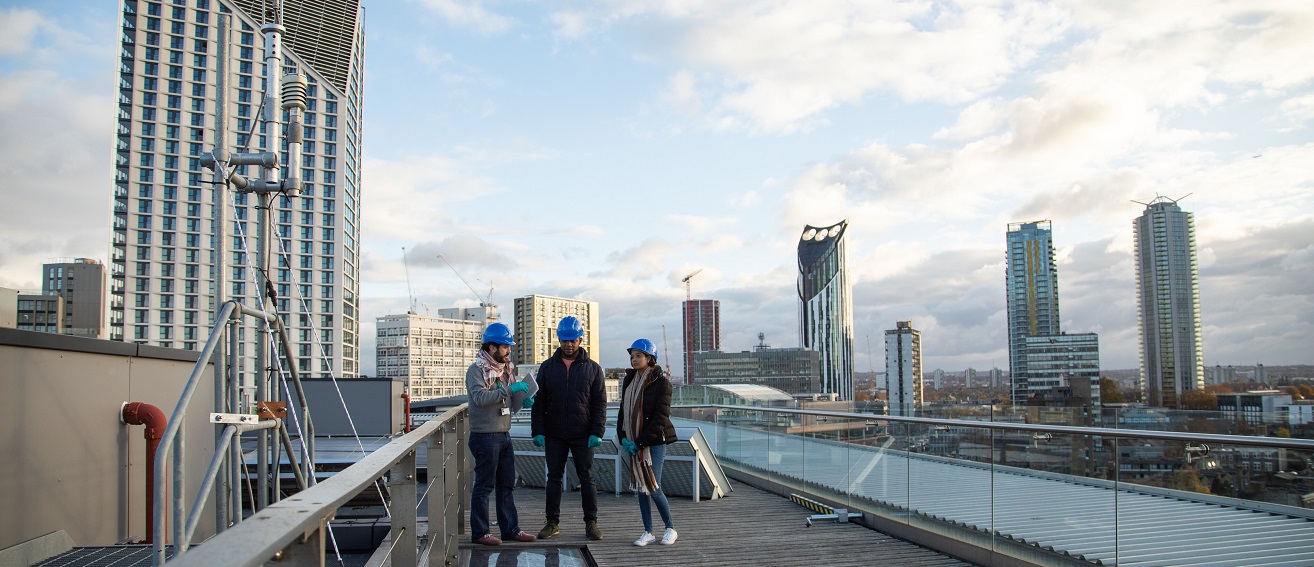
- Studying in Central London, surrounded by global infrastructure, energy and technology, will enhance your employment prospects.
Master complex Engineering. Deliver real-world impact
This MSc Engineering portfolio offers advanced, research-informed study across mechanical, civil, electrical, chemical and building services engineering. Designed for ambitious engineers seeking specialist depth or multidisciplinary breadth, the programme develops high-level analytical capability, systems thinking and professional engineering judgement aligned with contemporary industry practice.
You will engage with rigorous analytical modelling, computational simulation and performance-based design across complex engineering systems. Modules emphasise optimisation, sustainability, resilience and evidence-based decision-making, supported by industry-standard tools and structured evaluation methods. Assessment is coursework-led, focusing on applied problem-solving, technical reporting and professional communication.
A defining feature of the programme is the 60-credit MSc Project. Conducted across both semesters, this substantial independent investigation enables you to integrate knowledge from across your pathway to address a complex engineering challenge. Whether through advanced modelling, technical development, design optimisation or applied research, the project demonstrates intellectual independence, technical depth and readiness for senior professional responsibility.
You will study at London South Bank University in the heart of London - one of the world’s leading centres for infrastructure, energy, advanced manufacturing and built environment innovation. This location provides proximity to major engineering consultancies, transport networks, sustainable development initiatives and industrial partners, reinforcing the real-world relevance of your studies.
Graduates are prepared for progression into advanced engineering roles across infrastructure, energy systems, process industries, smart technologies and sustainable design. The combination of technical mastery, computational competence and strategic systems understanding positions you for leadership in complex engineering environments, as well as progression to doctoral research.
| ModeFull-time | Duration1 year | Start dateSeptember | Application code6302 | Application method Direct to LSBU |
| ModePart-time | Duration2 years | Start dateSeptember | Application code6309 | Application method Direct to LSBU |
| ModeFull-time | Duration1 year | Start dateJanuary | Application code6316 | Application method Direct to LSBU |
| ModePart-time | Duration2 years | Start dateJanuary | Application code6323 | Application method Direct to LSBU |
Watch our video to see how you can make yourself at home studying at LSBU.
Location
London South Bank University student union is located at 103 Borough Rd, London SE1 0AA.
If you are visiting our Southwark Campus, you may wish to use our downloadable campus map (PNG File 466 KB). For information on accessibility, see our DisabledGo access guides. See our location page for more details.
Entry Level Requirements
Need further information? Call us on 0800 923 8888 to discuss entry requirements.
- A 2.2 or higher first degree in engineering or a physical science from a UK university, or equivalent degree from overseas. Entrants from a science route must, by their degree or otherwise, be sufficiently prepared for the mathematical content of the course.
Valid ATAS for non-UK students that require a visa.
Choose your country
Select country here:
Missing English qualifications?
If you do not have the required English qualifications needed to satisfy the entry requirements for this programme, we have courses available at our partner College that you can take to upskill in these areas. Find out more at South Bank College.
For more information, including how and when to pay, see our fees and funding section for postgraduate students.
See our Tuition Fees Regulations (PDF File 630 KB) and Refund Policy (PDF File 775 KB).
Possible fee changes
The University reserves the right to increase its fees in line with changes to legislation, regulation and any government guidance or decisions.
The fees for international students are reviewed annually and the University reserves the right to increase the tuition fees to reflect increased costs of delivery and to maintain an a high-quality student experience. This increase would be no more than Consumer Prices Index (CPI) increases plus 5%.
Postgraduate loan (PGL) for Masters study
If you are starting a Masters course, studying either full- or part-time, you may be entitled to apply for a postgraduate study loan. Find out more at our postgraduate fees and funding section.
Scholarships
We offer several types of fee reduction through our scholarships and bursaries. Find the full list and other useful information on funding your studies on the scholarships and fee discounts page.
Are you an international student looking to kickstart your global career at LSBU? If so, our new LSBU Future Global Graduate Awards could help you benefit from the high-quality, career focused education that LSBU offers. Find out more about our Global Graduate Awards.
Fee status
Please check your fee status and whether you are considered a Home, EU or International student for fee-paying purposes and for our regulatory returns, by reading the UKCISA regulations.
A student can change to writing up status for the purpose of a lower fee when the examination arrangements have been submitted and approved. Examination arrangements are submitted 3 months prior to submission of the thesis for examination. A student only has one year of writing up at the reduced fee that covers submission, viva, and minor corrections. The writing up fee 25/26 is £1,246
International students
The course is not currently open to international students.
International applicants can apply directly to LSBU and should consult our international how to apply guide for further information on the application process and key dates.
Course delivery modes and application methods
| Mode Full-time | Duration 1 year | Start date September | Application code 6302 | Application method Direct to LSBU |
| Mode Part-time | Duration 2 years | Start date September | Application code 6309 | Application method Direct to LSBU |
| Mode Full-time | Duration 1 year | Start date January | Application code 6316 | Application method Direct to LSBU |
| Mode Part-time | Duration 2 years | Start date January | Application code 6323 | Application method Direct to LSBU |
Postgraduate students and research students should apply through our dedicated application system. Full details of how to do this are supplied on our How to apply section for postgraduate students and our How to apply section for research students.
See our admissions policy (PDF File 1,520 KB) and complaints policy (PDF File 516 KB).
Accommodation
Students should apply for accommodation at London South Bank University (LSBU) as soon as possible, once we have made an offer of a place on one of our academic courses. Read more about applying for accommodation at LSBU.
Finance
It's a good idea to think about how you'll pay university tuition and maintenance costs while you're still applying for a place to study. Remember – you don't need to wait for a confirmed place on a course to start applying for student finance. Read how to pay your fees as a postgraduate student.
Prepare to start
We help our students prepare for university even before the semester starts. To find out when you should apply for your LSBU accommodation or student finance read the How to apply tab for this course.
Enrolment
Before you start your course we’ll send you information on what you’ll need to do before you arrive and during your first few days on campus. You can read about the process on our Enrolment pages.
What will I learn?
This flexible route allows you to choose six modules from across the engineering portfolio, creating a bespoke multidisciplinary pathway shaped around your career ambitions.
Designed for engineers seeking broader technical depth, the programme enables you to select modules spanning mechanical, civil, electrical, chemical and building services engineering. It is ideal if you want to combine advanced technical expertise with systems-level understanding while maintaining the flexibility to define your own specialism.
You have the option of completing your MSc over one or two years. The flexible part-time structure allows you to tailor your studies around professional and personal commitments while building a programme aligned with your interests and career goals.
Course structure (full-time)
- Semester 1: Three selected modules (60 credits)
- Semester 2: Three selected modules (60 credits)
- MSc Project: (60 credits)
Total: 180 credits
Course structure (part-time)
- Year 1: Choose four modules from our full MSc portfolio, typically two per semester (80 credits)
- Year 2: Select two further modules and complete your 60-credit MSc Project, which runs throughout the year. You can usually take one module per semester in Year 2, or if it suits your schedule, take both in a single semester, subject to availability and approval. (100 credits)
Total: 180 credits
Semester 1
- Advanced Materials Engineering
This module is informed by contemporary research and innovation and enables you to examine advanced materials engineering at the forefront of high-performance technologies. You will develop skills that develop your ability to critically evaluate how materials are engineered and characterised. This leads to your ability to optimise and deliver the required mechanical, thermal, electrical and environmental performance. During the module we explore how advanced materials underpin next-generation energy systems, sustainable technologies and complex engineering applications. By the end of the module, you will have developed expertise to make strategic material selection and optimisation decisions that enhance system efficiency, reliability and long-term sustainability. - Advanced Environmental and Water Engineering
This module builds on previous learning around environmental and water engineering to give you a deeper understanding of fluid flow and transport processes in natural and engineered systems applicable to the workplace. You will analyse groundwater behaviour, contaminant transport, and environmental protection strategies using contemporary analytical and computational approaches. By the end of the module, you will have improved your ability to evaluate and design resilient systems that integrate technical performance, regulatory compliance, and environmental stewardship. - Advanced Instrumentation and Design
The module enables you will develop understanding of techniques in programmable data acquisition, virtual instrumentation, embedded system design and digital control. By using industry-standard development environments a focus on the application of current hardware and software tools to design and prototype complex instrumentation systems is embedded. We use laboratory experiments and project-based assignments to support learning around system integration and performance evaluation. Emphasis is placed on structured design, implementation and validation within advanced instrumentation environments that ensure you are ready to tackle problems in the workplace. - Design-Led Engineering Analysis
This module focuses advancing your capability to deliver highly innovative engineering solutions and high-performance engineering solutions through systems-based design. The module integrates analytical modelling, simulation tools and performance evaluation to improve your ability to deliver technically rigorous decisions across mechanical and multidisciplinary systems. We emphasise optimisation, manufacturability and evidence-based design validation. By using collaborative project work the module will strengthen your ability to translate complex engineering challenges into robust, efficient and commercially viable mechanical solutions. - Robotics, Machine Learning and AI
This module delivers training that will enable you to develop advanced understanding of robotics, machine learning and artificial intelligence. Key aspects of this broad portfolio include, integrating perception, control, optimisation and intelligent decision-making. During the module you will explore mathematical and computational foundations including kinematics and dynamics and motion planning. We cement this classroom learning with supervised and unsupervised laboratory practical work. This practical work involves algorithm development and system simulation using industry-standard tools. By the end of the module, you will have a keen understanding of how to complete performance evaluation and system integration within automated engineering environments. - Energy Resource and Use Analysis
By developing your ability to critically assesses conventional and renewable energy systems within global sustainability frameworks this module makes you work ready in the field. Over the course of the module, you will learn the latest approaches to evaluate thermodynamic performance, economic viability and environmental implications that inform strategic engineering decisions. There is an emphasis on energy optimisation, system resilience and long-term decarbonisation pathways that support an understanding of the latest legislation from across the world on the topic of energy and analysis. - Thermal and Environmental Control in Buildings
This module has been designed to enable you to advance your expertise in the design and optimisation of mechanical building services systems. The syllabus covers diverse topics such as analysis of heating, ventilation systems and air conditioning processes using first-principles engineering approaches supported by digital tools. There is emphasis on energy efficiency, system integration, occupant comfort and operational reliability to meet global trends and requirements. By the end of the module, you have developed the capability to evaluate, size and optimise environmental control systems aligned with sustainability objectives and net-zero performance targets in modern building environments. - Built Environment Design
Key to this module is an approach to develop your understanding of advanced structural design capability within contemporary civil engineering practice. You will evaluate structural systems using performance-based approaches and professional standards, integrating safety, serviceability and long-term resilience to standards set by industry leaders. The module places emphasis on whole-life performance, embodied carbon and climate-responsive design in response to evolving sustainability requirements. By the end of the module, you will developed competencies in applied design work aligned with industry practice. This will strengthen your ability to deliver technically robust and environmentally responsible infrastructure solutions. - Integrated Structural Design
Upon completion of this module, you will have developed an understanding to assess and design masonry and timber structural systems within contemporary engineering practice. The module is designed to enable you to critically assess mechanical behaviour, stability and durability while applying professional design standards and performance-based methodologies to a variety of structures. Key is developing skills required in the workplace and so emphasis is placed on whole-life performance, material efficiency and climate-responsive structural solutions. The module will enable you to strengthen your ability to deliver technically robust and sustainable designs using structured analytical approaches and professional engineering judgement.
Semester 2
- Advanced Reaction Engineering
Advance your capability in analysing and designing catalytic and non-catalytic reactor systems within complex industrial contexts. Critically evaluate reaction kinetics, reactor performance and safety considerations using structured analytical approaches. Emphasis is placed on translating theoretical principles into scalable and optimised reactor design strategies. Strengthen your ability to balance efficiency, environmental responsibility and operational reliability in advanced process systems. - Advanced Geotechnical Engineering
Over the course of this module, you will develop an enhanced capability to analysing soil behaviour and ground–structure interaction under complex loading conditions. You will apply analytical and computational modelling techniques to evaluate stability, settlement and foundation performance. There is an emphasis on critical evaluation of modelling assumptions, safety considerations and long-term infrastructure resilience to prepare you to implement the content of the module in a work environment. When you have completed the module, you will have strengthened your ability to address challenging geotechnical problems with professional rigour and technical judgement. - Advanced Solid Mechanics and FEA
This module is focused on developing the tools required to examine solid mechanics through rigorous analytical and computational modelling. This will enable you to evaluate structural behaviour under complex loading using classical theory and Finite Element Analysis (FEA). The module emphases the critical path that is placed on systematic problem-solving, performance optimisation and modelling integrity in advanced mechanical systems. Upon completion of the module, you will have developed the expertise required to integrate simulation into high-level design processes, ensuring structural efficiency and reliability in demanding engineering applications. - Advanced Thermofluids and Energy Analysis
A key outcome of this module is the ability to analyse thermodynamic and fluid dynamic processes within modern energy and high-performance mechanical systems. You will gain experience in evaluating heat transfer, combustion and renewable technologies using industry relevant analytical and computational approaches. During the module emphasis is placed on system efficiency, environmental performance and optimisation of power-producing devices, this enables you to strengthen your ability to assess and enhance complex thermal systems within advanced engineering environments. - Electrical Systems and Power Electronics
The key aspects of this module are to develop your understanding of advanced electrical circuits, power generation, electrical installation, distribution systems and power electronics. We take you further to enable you to complete a full evaluation of these electrical systems. You will learn to evaluate modern power infrastructure, including cable and plant sizing within building and industrial environments. Through an emphasis on structured system analysis, integration and performance optimisation within contemporary electrical engineering contexts by the end of the module you will be able to undertake complex analysis and specify detailed system installations. - Engineering Dynamics and Vibration
This module will enable you to develop advanced understanding of structural dynamics and vibration behaviour in engineered systems. This understanding will be delivered through training in contemporary approaches to analytical and modelling. This will enable you to examine free and forced vibration of single and multi-degree-of-freedom systems, evaluating natural frequency, damping and mode shapes. Emphasis is placed on structural response to dynamic and seismic loading, including performance under transient conditions. At the end of the module, you will have applied structured analysis to real design scenarios and strengthen your ability to predict, assess and design for dynamic effects in complex structural systems. - Signal Processing and Communications Systems
In this module you will develop a high level of capability in digital signal processing and communication system analysis. This will be achieved using methods of robust sampling, filtering, spectral methods and link performance. We also introduce methods to analyse modulation and noise of the signal. A range of communication channels, optical and microwave, are considered to link performance through simulation and optimisation exercises using MATLAB/Python. When you have completed the module, you will have expanded your ability to analyse sensing, monitoring and data systems within complex engineering environments. - Modelling and Computer Simulation
This module is designed to develop high-level competence in formulating and evaluating mathematical models of complex chemical and process systems. You will apply industry standard computational tools to simulate system behaviour, optimise performance and support evidence-based engineering decisions across a variety of chemical processes. The module develops an understanding of critical assessment of modelling assumptions to understand how the prediction can be implemented in a reliable way. You will build a depth of analytical understanding required to model industrial-scale processes with professional rigour. - Highway and Railway Engineering
During this module you will be introduced to industry relevant tools and approaches that will enable you to critically evaluate the planning, design and long-term performance of transport infrastructure systems. There is a focus on developing understanding around geometric and structural design, operational efficiency and asset management strategies within sustainable transport frameworks. The key focus of the module is to develop core understanding around safety, resilience and lifecycle performance of transport networks. When you have completed the module you will have a system-level understanding required to deliver robust and future-ready civil infrastructure solutions.
Full-time: Semester 1 & 2; Part-time: Year 2
- MSc Project in Engineering
The MSc Project is a substantial independent investigation that allows you to explore a complex engineering challenge in depth. Working with academic supervision, you will integrate knowledge from across your programme to deliver a rigorous piece of research, design or technical development. The project strengthens analytical capability, independent thinking and professional communication skills, preparing you for advanced industry roles or doctoral study.
Careers
What's in it for me?
This MSc portfolio is designed for ambitious engineers seeking progression into advanced technical, consultancy, design, systems or leadership roles.
Graduates are prepared for careers in:
- Advanced mechanical and manufacturing engineering
- Civil and structural design consultancy
- Energy systems and decarbonisation strategy
- Electrical power and smart infrastructure
- Chemical and process industries
- Sustainable building services engineering
- Transport and infrastructure development
The analytical depth, modelling capability and optimisation expertise developed throughout the programme are highly valued in sectors requiring complex systems evaluation and evidence-based engineering judgement.
The substantial MSc Project further strengthens your professional profile, demonstrating your ability to independently scope, execute and defend a complex engineering investigation — a key differentiator for senior engineering roles and doctoral research pathways.
LSBU CareerSmart
LSBU CareerSmart is your ultimate gateway to career success. Our innovative programme is designed to ensure you graduate with more than just a degree, providing the support you need to stand out in a competitive job market. We've got all the tools you need, including:
- AI Powered Career Sets - Get instant personalised feedback on your CV and cover letter by submitting it via our AI powered career tool.
- Gamification Interviews - Get ready to pass those interviews with unlimited training access to our gamification interviews and psychometric tests!
- Personalised Career Development Dashboard - Keep up with your skills progression with free access to practical assessments, LinkedIn learning, mentoring, and industry-standard facilities.
We understand that you’re in the driver’s seat of your career, which is why we’re committed to matching your passion and energy every step of the way.
You will study in central London - one of the world’s leading engineering, infrastructure and technology hubs.
London provides direct proximity to:
- Major infrastructure developments
- Advanced manufacturing and automation industries
- Global energy and sustainability organisations
- Engineering consultancies and contractors
- Transport and built environment megaprojects
This location strengthens your exposure to real-world engineering challenges in areas such as transport infrastructure, sustainable energy systems, smart buildings, advanced materials and digital manufacturing.
Guest lectures, industry engagement and applied project opportunities reflect the professional ecosystem surrounding the University, reinforcing the practical and strategic relevance of your studies.
Teaching and Assessment
How will I learn?
This MSc Engineering portfolio is designed to deliver advanced technical mastery, analytical depth and professional engineering judgement across specialist and multidisciplinary pathways.
You will engage with research-informed teaching that reflects contemporary engineering practice across mechanical, civil, electrical, chemical and building services disciplines. Modules are structured around:
- Rigorous analytical modelling and computational simulation
- Systems-based design and optimisation
- Performance validation and evidence-based engineering decisions
- Sustainability, resilience and whole-life system thinking
Across all pathways, you will develop high-level capability in structured problem-solving, modelling integrity, and technical evaluation using industry-standard tools such as MATLAB, Python and advanced simulation environments.
MSc Project (60 credits)
The MSc Project is a substantial independent investigation completed across both semesters. Working under academic supervision, you will define, analyse and deliver a complex engineering challenge aligned to your specialist pathway or professional interests.
This may take the form of:
- Advanced analytical research
- Computational modelling and simulation
- Engineering design and optimisation
- Applied technical development
The project integrates knowledge from across your programme and culminates in a dissertation and formal viva. It is designed to demonstrate intellectual independence, technical depth and professional communication - key attributes for senior engineering roles or progression to doctoral study.
Assessment
Assessment is conducted through coursework and applied evaluation rather than traditional examinations. Methods include:
- Technical design assignments
- Analytical and computational projects
- Simulation-based modelling tasks
- Professional reports and presentations
- In-class tests and structured discussions
Emphasis is placed on critical analysis, practical problem-solving and defensible engineering decision-making consistent with professional standards.
Register your interest
Gecko content requires marketing cookies
This content is provided by a third party. To view it, please enable marketing cookies. This may involve the processing of personal data.