
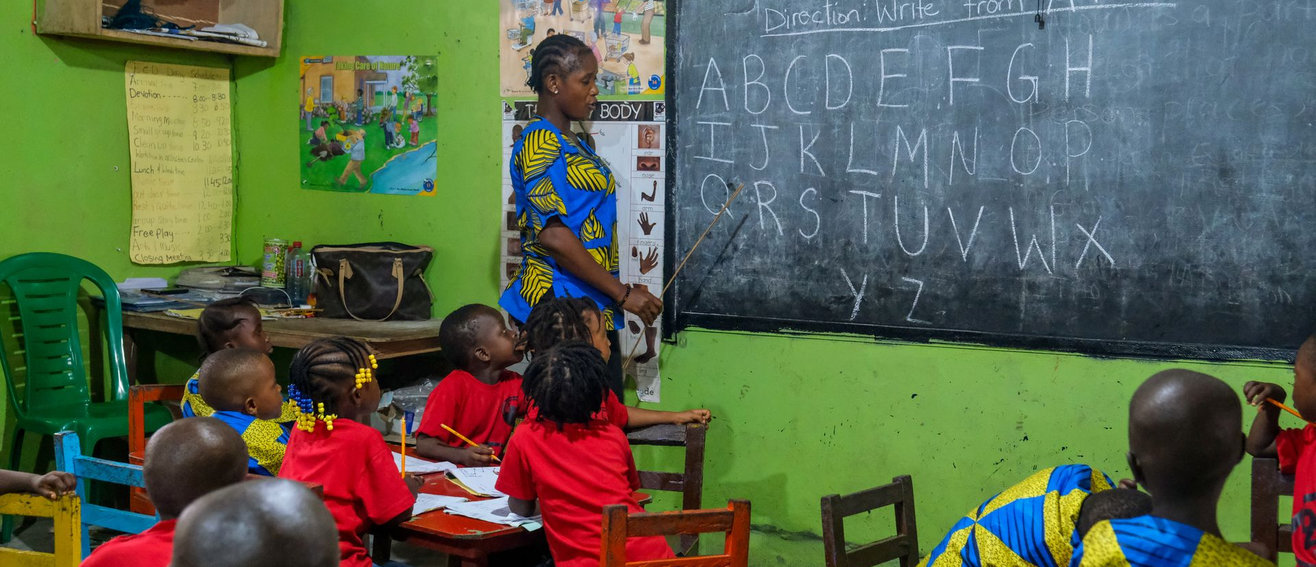
Transforming learning and wellbeing for children in rural South Africa
London South Bank University (LSBU) is a partner in a groundbreaking international project to improve education, health and wellbeing for children in rural South Africa — helping schools become spaces where every child can thrive.
The three-year research project was led for LSBU by Professor Patrick Callaghan, from the Health and Wellbeing Research Centre, in partnership with University College London and the University of Pretoria. Funded by the Economic and Social Research Council, the work focused on creating optimal practices, cultures and conditions to improve young children’s learning and health.
Professor Callaghan explained: “Children in rural South Africa often face barriers to learning, health and wellbeing that can limit not only their opportunities but also their quality of life. We wanted to strengthen schools and teachers, helping them build a culture that enabled children to learn better, feel happier and be healthier.”
Building stronger schools and healthier futures
The project used a stepped-wedge design — an ethical and pragmatic approach that ensured all participating schools benefited from the intervention. Grounded in principles of social justice, the research involved teachers, principals, families and pupils across 10 primary schools in South Africa’s North West province.
From this collaboration, the team developed the Enabling Schools Toolkit, which helps teachers create positive “reading for enjoyment” environments. Activities included bringing children’s voices into the classroom through writing storybooks that reflected their lives and communities. More than 8,000 copies of these books have been distributed, and mini libraries have been launched in participating schools.
The project also produced a Setswana version of a globally recognised resilience measure, enabling teachers and researchers to understand and support children’s wellbeing in a culturally relevant way. Setswana is one of South Africa’s official languages and is spoken by around eight million people across southern Africa, making this adaptation vital for ensuring the tool reflects local culture and context.
Highlighting the importance of partnership during the project, Professor Callaghan added: “The contributions of school leaders, teachers, fieldworkers and community members ensured that the outcomes reflected local needs and experiences.”
Global impact and future potential
The impact has been significant. The South African Department of Basic Education now uses the toolkit to support teacher training and strengthen rural schools. The University of Pretoria has adopted the resources for its teacher training courses, and the intervention is being rolled out from the Foundation Phase to older children.
Beyond South Africa, the project has attracted international attention. The First Lady of Ukraine has seen the toolkit in action and expressed interest in introducing it into Ukrainian schools.
“Our work has made primary school children more engaged, teachers feel empowered, and families see real benefits in their children’s learning and wellbeing,” said Professor Callaghan.