
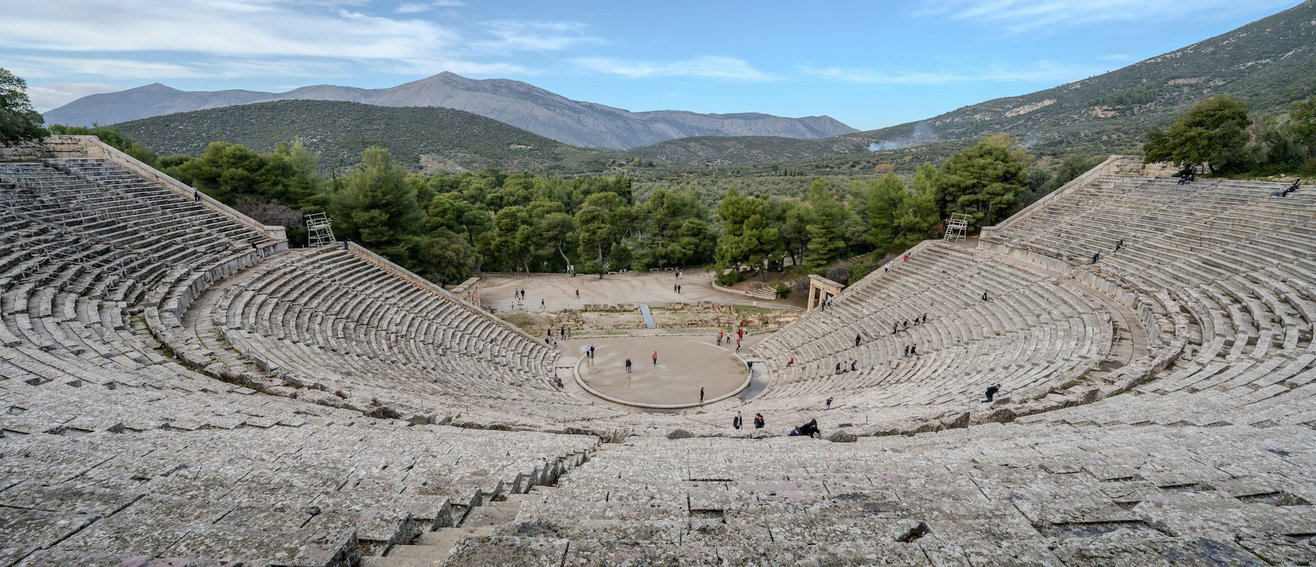
Reviving lost Greek plays through groundbreaking research project
London South Bank University (LSBU) has played a pivotal role in bringing back to life a series of ‘lost’ plays by Aeschylus, the father of Greek tragedy.
The research and performance project set out to revive Aeschylus’ The Danaïds Tetralogy — a series of plays that had been lost for over 2,000 years. Led by Professor Gill Foster, Head of the School of Performance at LSBU, the project aimed to reimagine these ancient stories in a way that spoke powerfully to contemporary audiences.
“This was an astonishingly ambitious project as these plays are all lost in the mists of time with only fragments remaining,” explains Professor Foster, of the four plays that make up the tetralogy: The Suppliants (or The Suppliant Women), Egyptians, Danaïds and the satyr-play Amymone.
“However, they ask questions that still define our world — about asylum and belonging, democracy and collective action, the rights and voices of women. They aren’t just ancient texts; they’re living stories about who we are.”
From ancient plays to future talent
The project came about after playwright David Greig’s 2017 translation of The Suppliant Women was produced at the Royal Lyceum and The Young Vic. It received rave reviews — partly due to the decision to cast non-professional performers in the chorus, just as Aeschylus would have done.
Working in partnership with Wild Yak Productions and David Greig, Professor Foster developed a collaborative approach that brought together professional creatives and LSBU BA Acting for Stage and Screen students.
Rather than relying solely on experienced actors, the project integrated LSBU students into the creative process, allowing them to train and perform alongside industry experts. This gave students their first professional roles and introduced a new model of actor training; from training for the industry to training with the industry.
The creative team used workshops and rehearsals to explore how the surviving fragments of text could be transformed through music, movement and collective storytelling.
Creative breakthroughs in the land of Aeschylus
To deepen the creative process, the team moved the project to the island of Hydra in Greece, just 30 miles from where Aeschylus lived and worked. This residency provided an immersive environment that transformed the project. Surrounded by the landscapes that inspired the original plays, the writer and actors were able to experiment in real time — developing text and performance together in a living, embodied process.
Professor Foster explained: “Being in Hydra gave the creative team and our students new perspectives on the writing. It was there that we began to fully understand the power of the co-creative methodology we had been developing.”
The result was the first complete staging of The Danaïds Tetralogy in 2,000 years at the Gulbenkian Arts Centre in Canterbury. It was performed by choruses and community participants from Athens, LSBU and Canterbury alongside leading theatre professionals. The production is now ready for funding and a global tour.