
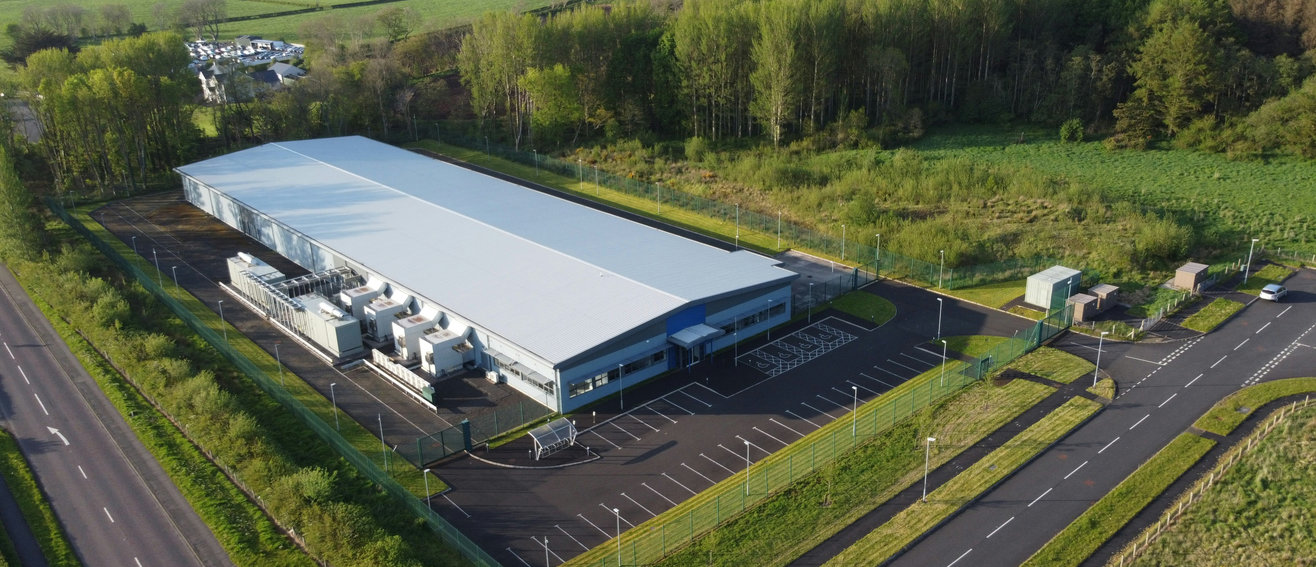
LSBU research offers solutions as concern grows over data centres
As international headlines focus on the environmental impact of data centres, research at London South Bank University (LSBU) is helping to shape practical solutions for a rapidly expanding digital world.
Deborah Andrews, Emeritus Professor of Design for Sustainability and Circularity at LSBU, has been widely quoted in global media highlighting how the expansion of AI-driven data centres is having a more immediate environmental impact than previously understood. Her comments reflect a broader concern about the environmental cost of the infrastructure that underpins everyday digital life.
“Digital technology is present in every aspect of our daily lives, and we are all increasingly hungry for it,” said Professor Andrews. “But it comes at an environmental cost.”
The hidden impact of digital infrastructure
Behind every online transaction is a data centre processing and storing data using vast amounts of electronic and electrical equipment. Millions of data centres worldwide now support essential services across education, healthcare, business and government.
Collectively, data centres consume around two per cent of the world’s electricity each year, alongside billions of litres of water and millions of tonnes of raw and manufactured materials. Demand is rising rapidly in line with the growth of AI, increasing pressure on systems already operating at scale.
A major challenge lies in how data centre equipment is designed and replaced. Much of it has a very short lifespan — sometimes as little as three years — and is developed with limited consideration for what happens at end of life. At present, only four metals are widely recycled, meaning many valuable materials are lost to landfill.
Reliance on global supply chains adds further risk. Many of the raw materials used in electronic components are sourced from geopolitically sensitive regions, creating the potential for instability, rising costs and conflict as demand continues to increase.
Designing a circular future for data centres
In response, Professor Andrews led research applying circular economy principles to the data centre industry, focusing on waste reduction, material security and long‑term resilience.
The project, CEDaCI (Circular Economy for the Data Centre Industry), brought together an interdisciplinary team of experts from across northwest Europe and places collaboration at its core. Through industry‑focused co‑creation workshops and training, the team developed the Data Centre Compass, a tool designed to assess the life‑cycle impacts of data centre equipment and support more sustainable decision‑making.
Alongside the Compass, the research also produced open‑source designs for a circular server, enabling industry partners to adapt and implement more sustainable approaches in practice.
The research demonstrated that a circular approach can deliver environmental, economic and social benefits. It supported reductions in waste, emissions and pollution by encouraging properly managed, legal processes, while also strengthening resilience in critical digital infrastructure.
Sustainable access to data centres is essential for modern societies. Without them, education, healthcare and businesses are disrupted, and lack of access can fuel information poverty, deepening inequalities.
“Ultimately, the sustainable data centre industry is good news for everyone,” said Professor Andrews.
Photo by Geoffrey Moffett on Unsplash.