

LSBU-led global consortium to tackle one of climate's most powerful threats
Following another spell of record-breaking summer heat in the UK, experts from across the world gathered at London South Bank University (LSBU) this week to kick off a project targeting one of the most potent, yet least visible, contributors to global warming.
The two-day gathering marked the start of the new Horizon Europe-funded project, IMPACT-F (Integrated Mitigation Platform for Assessing Climate Targets for F-Gases), which will see partners from Europe, Africa, Asia and South America map, model and accelerate action on fluorinated greenhouse gases, known as F-gases.
F-gases are a family of manmade chemicals used widely in everyday systems: air conditioning, refrigeration, heat pumps and industrial processes. Though they represent a fraction of total greenhouse gas emissions by volume, they are extraordinarily powerful; some are thousands of times more effective at trapping heat than carbon dioxide and they can persist in the atmosphere for decades.
As global temperatures rise and demand for cooling surges, the challenge of managing F-gas emissions is becoming more urgent. Without intervention, growing reliance on cooling technology risks creating a damaging feedback loop: hotter temperatures drive more cooling demand, which in turn drives more emissions.
A platform for global climate decision-making
IMPACT-F will address this by developing an open-access modelling platform enabling governments, industry and international organisations to visualise F-gas use, emissions and mitigation pathways at global, regional and national levels. Building on the established HFC Outlook Model, the platform will allow users to test how different combinations of policy and technology choices can reduce emissions while meeting wider energy and climate goals.
Led by LSBU, the project brings together 14 organisations spanning academia, research, industry associations, training providers and consultancy, with the United Nations Environment Programme (UNEP) Cool Coalition participating as an associated partner. Over three years, the consortium will develop modelling tools, deliver capacity building activities worldwide and generate the evidence base needed to support effective F-gas policy.
A critical decade for international climate commitments
IMPACT-F launches at a significant moment. This year marks the tenth anniversary of the Kigali Amendment to the Montreal Protocol, the landmark 1987 agreement originally designed to protect the ozone layer. Adopted in 2016, the Kigali Amendment extended the Protocol's scope to include a legally binding phasedown of hydrofluorocarbons (HFCs), a category of F-gases that became widely adopted as ozone-friendly refrigerant alternatives, but which carry an enormous climate cost.
The Amendment is widely regarded as one of the most consequential climate agreements of recent decades, with the potential to avoid up to 0.5°C of global warming by the end of the century if fully implemented. But as countries move to meet their Kigali commitments alongside broader decarbonisation targets, the need for rigorous, accessible evidence to guide those decisions has never been greater. IMPACT-F is designed to fill that gap.
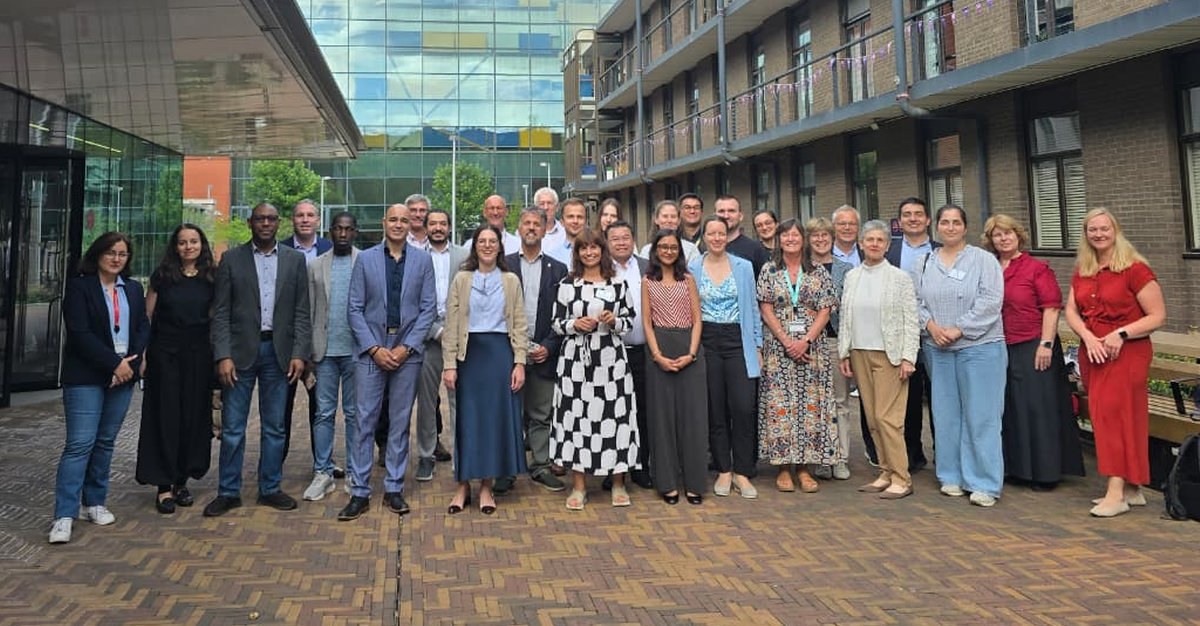
The project officially launched at a two-day kick-off meeting hosted by LSBU, where consortium partners aligned on priorities and participated in workshops covering data collection, policy pathways, platform design, stakeholder engagement and project impact.
Project director, Professor Graeme Maidment, from LSBU’s School of Engineering and Design, said: "F-gases don't make headlines in the way that carbon dioxide does, but their impact on the climate is profound. IMPACT-F brings together some of the world's leading expertise in refrigerant policy, energy systems and climate modelling to build the kind of evidence base that policymakers urgently need.
“We're proud that LSBU is part of this consortium and that our researchers are playing a central role in work that could have real consequences for how the world manages one of its most stubborn but solvable climate challenges."