
Providing biomechanical insights into the gait of the world's tallest man
When the world's tallest man needs answers about why he struggles to walk, you need a world-class biomechanics team.
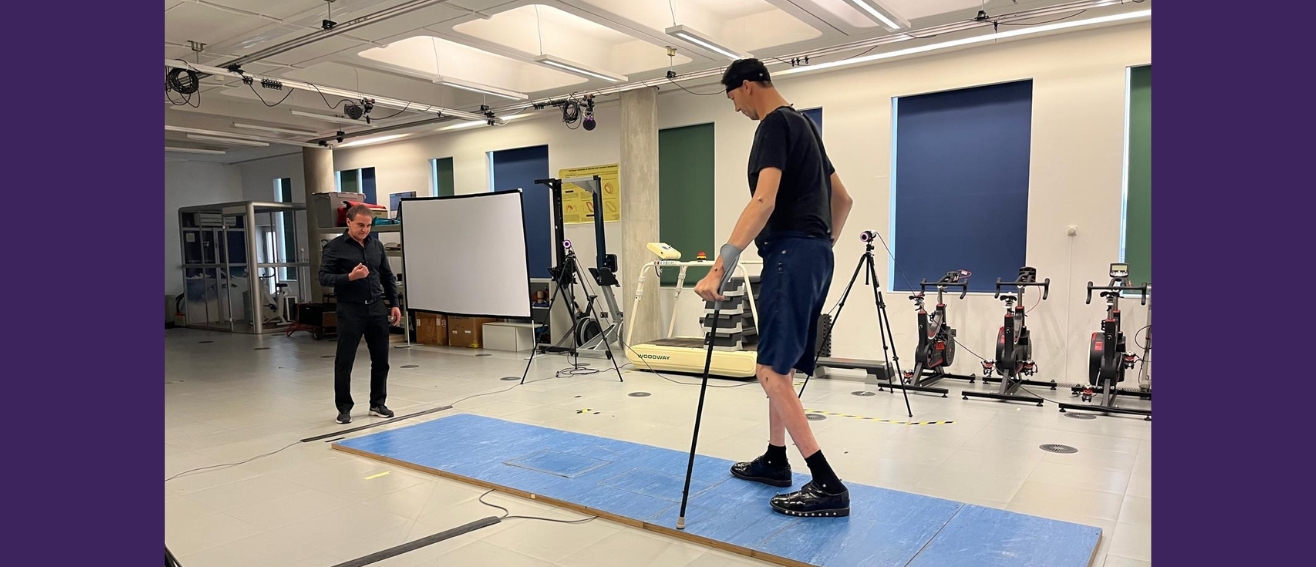
The London South Bank University (LSBU) Sport and Exercise Science Research Group's biomechanics team conducted one of the most detailed gait assessments ever performed on an individual with extreme body proportions, following a visit to London by Sultan Kösen — recognised by Guinness World Records as the tallest living man at 2.51 metres (8 ft 2.8 in).

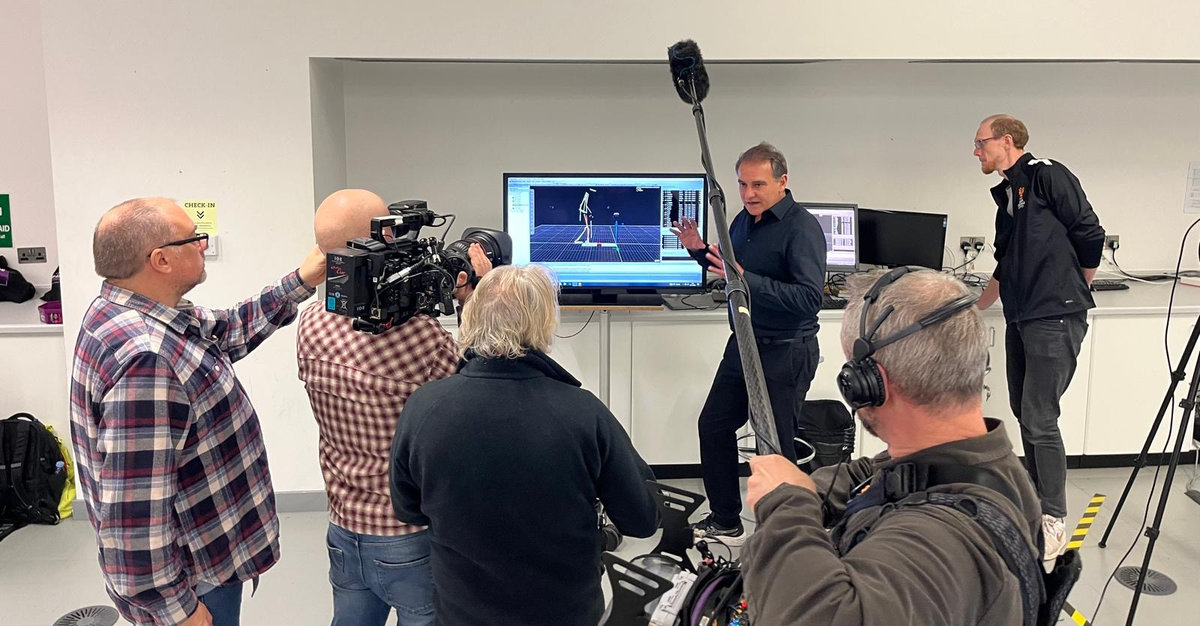
The assessment formed part of the Channel 4 documentary The World's Tallest Man: The Next Chapter. It was led by Professor Kiros Karamanidis, professor of ageing and exercise science in LSBU's School of Allied Health and Life Sciences, alongside Dr Gaspar Epro and PhD researcher Mateus Albuquerque Placido — all members of the Sport and Exercise Science Research Group and the Bioscience and Bioengineering Research Centre — with support from undergraduate sport and exercise science students.
In the gait laboratory in LSBU's K2 building, 36 tiny reflective markers were placed across Sultan's hips, knees, ankles and spine. With each step Sultan took, infrared cameras tracked every marker, building a 3D map of how his body moves — where force travels, where muscles are working hardest and where his body is struggling to cope.
Ground reaction force measurements and ultrasound imaging of the leg muscles completed the picture, giving the team an exceptionally detailed view of how his extreme body dimensions affect the way he walks.

Sultan Kösen is one of only around 10 people in recorded history to exceed 8 ft and has held his Guinness World Record for over 16 years. His extraordinary height is the result of gigantism and acromegaly caused by a pituitary tumour, a condition that brought profound physical challenges long before it brought global fame.
He walks with crutches, has broken bones from falls and at 165 kilos (26 stone), even moderate movement is demanding. Maintaining leg strength and mobility is, as the LSBU team notes, essential to protecting his independence.
The central question the assessment set out to answer was a deceptively simple one: why does Sultan find walking so difficult? The findings pointed to something more specific than his height alone.
What the data revealed: it’s not just about height
As Professor Karamanidis explains in the documentary, Sultan's calf muscles are surprisingly thin for a man of his size, meaning they generate far less force than is needed for effective walking, despite being critical to every step we take.
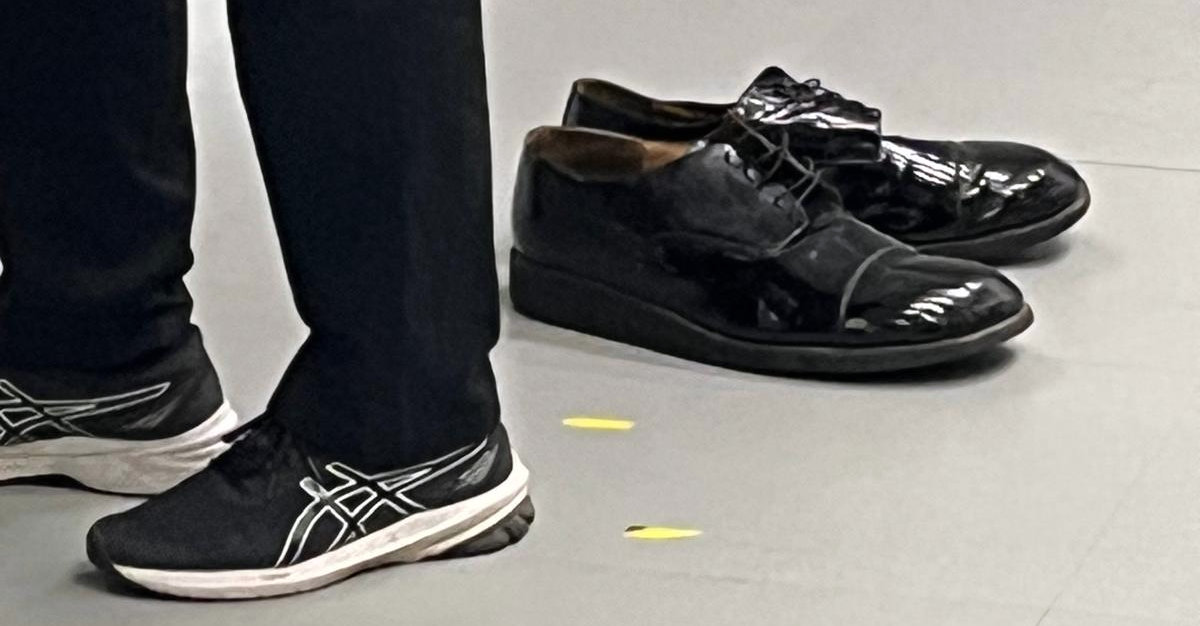
Compounding this, Sultan's feet measure approximately 36.5 cm (requiring a UK shoe size 18–19), and the sheer length of them means his already weakened calf muscles must work even harder to push off against the ground with each step. The result is a weakened push-off and a reduced ability to lift his foot clear of the ground as it swings forward, significantly raising the risk of trips and falls.
Crucially, the team found that foot size — not height — is at the root of the problem. The effect on Sultan's walking is clear: "He seems to be very unstable when he walks, and I can imagine that he fatigues very fast so he cannot walk for long distances,” said Professor Karamanidis. “He needs to lift his legs much, much higher than a normal person, otherwise he will hit the ground with his foot, and he would stumble and fall."
Sultan's body has adapted to compensate. His knee and hip muscles take on much of the work that his ankles cannot, helping to keep him moving and stable. But this comes at a cost and Professor Karamanidis and Dr Epro identified this as a likely contributor to Sultan's longstanding knee problems, which are common in people with similar conditions or impaired ankle function. The findings give Sultan's medical team concrete, clinically useful information to inform his rehabilitation and ongoing care.
Professor Karamanidis said: "Sultan's case presented us with a truly unique scientific opportunity. What we found challenges some assumptions about how body size alone drives walking difficulties and shows that understanding the specific mechanics at play, joint by joint, is essential to helping someone like Sultan maintain his mobility and independence. This is exactly the kind of work we do at LSBU: taking advanced measurement techniques and applying them where they can make a real difference to someone's life."
The documentary The World's Tallest Man: The Next Chapter aired on Channel 4 in the UK. The LSBU team features from 24 minutes, 49 seconds onwards.